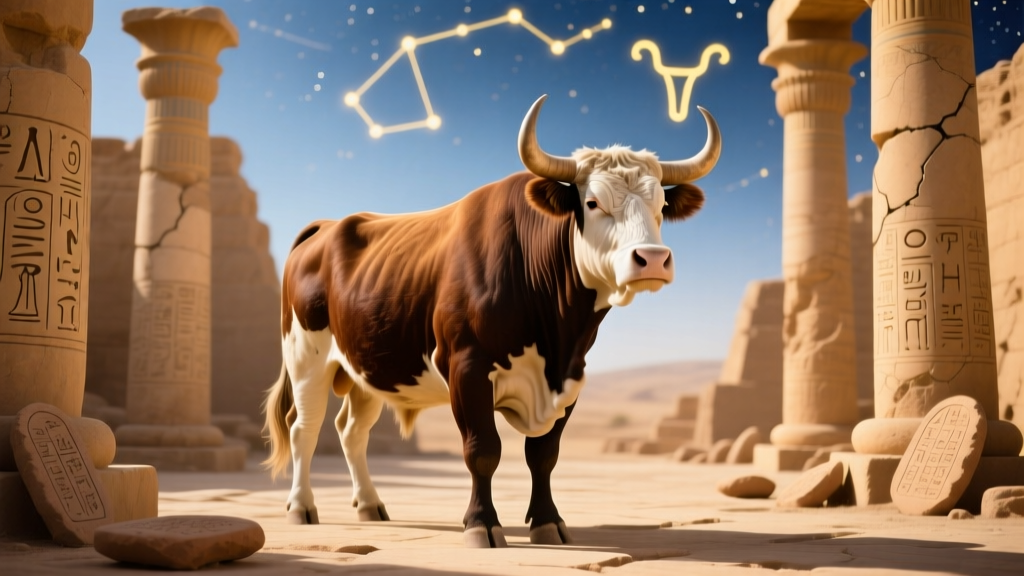
The 14th May zodiac signature represents a highly specific coordinate in the astrological calendar, falling at approximately 23 to 24 degrees of Taurus. While modern horoscopes frequently reduce this placement to simple tropes about stubbornness and a love of luxury, the historical origin story of this date reveals a far more complex archetype. To understand the true astrological DNA of those born on May 14, we must bypass contemporary pop-astrology and examine the ancient Mesopotamian star catalogs, Hellenistic decan systems, and agricultural mythologies that forged the Bull archetype millennia ago. The evolution of this specific zodiacal degree provides profound insights into the psychological and material drives associated with this birthdate.
The Babylonian Roots: GUD.ANNA and the MUL.APIN
Long before the Greeks formalized the twelve-sign zodiac, Babylonian astronomers mapped the ecliptic based on the constellations that rose during specific agricultural seasons. The origins of the Taurus archetype are documented in the MUL.APIN, a comprehensive Babylonian star catalog compiled around 1000 BCE. In this ancient text, the constellation we now recognize as Taurus was designated as GUD.ANNA, or "The Bull of Heaven."
According to the British Museum's cuneiform archives, the Bull of Heaven was not merely a symbol of pastoral life; it was a terrifying instrument of divine will. In the Epic of Gilgamesh, the goddess Ishtar unleashes GUD.ANNA upon the earth to punish Gilgamesh for rejecting her advances, resulting in catastrophic droughts and the swallowing of hundreds of men. This early mythological origin establishes the foundational Taurean theme of resource control and the devastating consequences of disrupting natural or material equilibrium. For the 14th May zodiac profile, this ancient association highlights an underlying capacity for immense, earth-shaking determination when core values or resources are threatened.
Decoding the 14th May Zodiac Through the Hellenistic Decan System
The most critical piece of historical information gain for understanding the May 14 birthdate lies in the Hellenistic decan system. Originating from Egyptian and Chaldean astrologers, the decan system divides each of the twelve zodiac signs into three 10-degree segments, each with a sub-ruler that modifies the primary sign's expression.
May 14 falls squarely into the Second Decan of Taurus (spanning 10° to 20° of the sign, though precession shifts modern tropical dates slightly). In the traditional Chaldean rulership system, the first decan of Taurus is ruled by Venus, but the second decan is co-ruled by Virgo and its planetary ruler, Mercury. This Mercurial sub-influence fundamentally alters the historical archetype of the Bull.
Where the first decan of Taurus is purely sensual and driven by Venusian aesthetics, the Mercury-ruled second decan introduces an analytical, meticulous, and highly systematized approach to material reality. Historically, astrologers noted that individuals born in this specific decan possessed a unique ability to categorize resources, manage complex agricultural ledgers, and apply intellectual rigor to physical crafts. This explains why the May 14 personality often exhibits a nervous energy, a penchant for data analysis, and a critical eye for detail that contradicts the typical "slow and relaxed" Taurus stereotype.
Evolution of the Taurus Archetype Across Eras
| Era & System | Designation | Planetary Rulership | Core Archetypal Attribute |
|---|---|---|---|
| Babylonian (c. 1000 BCE) | GUD.ANNA (Bull of Heaven) | Ishtar / Venus | Divine Wrath, Agricultural Fertility, Resource Dominance |
| Hellenistic (c. 200 BCE) | Tauros (Fixed Earth) | Aphrodite / Moon (Exaltation) | Material Accumulation, Sensory Grounding, Stubborn Endurance |
| Chaldean Decans (c. 100 CE) | 2nd Decan of Taurus | Venus / Mercury (via Virgo) | Meticulous Resource Management, Analytical Craftsmanship |
| Modern Astrology (20th C.) | Taurus (Mid-Sign) | Venus / Earth Element | Financial Security, Aesthetic Refinement, Sensory Analysis |
Mythological Shifts: From Divine Wrath to Material Wealth
As astrological knowledge transferred from Babylon to Hellenistic Egypt and eventually to the Greco-Roman world, the mythology surrounding the Bull shifted dramatically. The terrifying GUD.ANNA was replaced by the Greek myth of Zeus and Europa. According to classical texts, Zeus transformed himself into a magnificent, docile white bull to seduce the Phoenician princess Europa, eventually carrying her across the sea to Crete.
This mythological pivot is crucial for understanding the psychological profile of the 14th May zodiac. The narrative transitioned from a symbol of destructive natural force to one of sensual abduction, material wealth, and the founding of the Minoan civilization (which was heavily centered on bull iconography and immense material prosperity). The Europa myth embeds a deep-seated association with cross-cultural exchange, the acquisition of wealth through charm rather than force, and the establishment of long-lasting material legacies. Those born on this date often possess an innate understanding of how to leverage aesthetic appeal and physical presence to secure tangible, long-term assets.
The Pleiades and the Agricultural Calendar
No historical analysis of the Taurus constellation is complete without examining the Pleiades, the prominent asterism located on the shoulder of the Bull. In the Bronze Age Mediterranean and Near East, the heliacal rising and setting of the Pleiades dictated the agricultural and maritime calendars.
In his foundational didactic poem Works and Days, the ancient Greek poet Hesiod explicitly ties the movement of the Pleiades to the harvest and the sailing seasons. As noted in the Perseus Digital Library's translation of Hesiod, the setting of the Pleiades in the autumn signaled the time to plow and sow, while their rising in May signaled the time to reap and sail. Therefore, the Sun's transit through this sector in mid-May historically coincided with the culmination of the agricultural year—the harvest of winter crops and the opening of safe maritime trade routes. This cements the May 14 archetype as a "harvester" and a "navigator." The historical imperative of this date is not merely to accumulate, but to bring long-term projects to fruition and to safely transport goods (or ideas) across new territories.
Practical Application: Utilizing Historical Taurus Traits Today
Understanding the ancient origins of the 14th May zodiac provides a highly specific framework for personal and professional development. By moving beyond generic horoscopes, individuals born on this date can leverage their unique historical and astrological signatures in the following actionable ways:
- Leverage the Mercurial Decan for Systems Design: Recognize that your Taurus placement is heavily modified by Mercury via the second decan. You are uniquely suited for roles that require both physical/material understanding and data analysis. Careers in supply chain logistics, architectural engineering, agricultural technology, or financial auditing allow you to satisfy the Taurean need for tangible results while engaging the Mercurial need for complex problem-solving.
- Channel the GUD.ANNA for Boundary Enforcement: The Babylonian Bull of Heaven was a force of nature that punished those who disrupted equilibrium. In a modern context, use this historical archetype to inform your boundary-setting. When your core resources, time, or financial stability are threatened, do not default to passive stubbornness. Instead, deploy decisive, overwhelming action to protect your assets and restore balance.
- Honor the Pleiades Navigation Imperative: Since the mid-May Taurus placement historically aligns with the opening of maritime trade and the harvest, structure your annual goals accordingly. Use the period around your solar return (your birthday month) not to start entirely new, unproven ventures, but to "harvest" the results of projects you initiated six months prior, and to launch the distribution or scaling phases of your business.
- Curate Sensory Environments for Cognitive Output: The synthesis of Venus (ruler of Taurus) and Mercury (ruler of the decan) means your cognitive processing is directly tied to your physical environment. Unlike air signs that can work in chaos, your analytical output will degrade in aesthetically displeasing or physically uncomfortable spaces. Invest heavily in ergonomic, high-quality, and sensorially pleasing workspaces to maximize your intellectual yield.
By anchoring the 14th May zodiac profile in its authentic historical, mythological, and astronomical origins, we reveal a highly sophisticated archetype. Far from a simple symbol of pastoral stubbornness, the mid-May Bull represents the ancient, meticulous, and powerful synthesis of earthly resources, intellectual categorization, and the enduring drive to build civilizations that withstand the test of time.