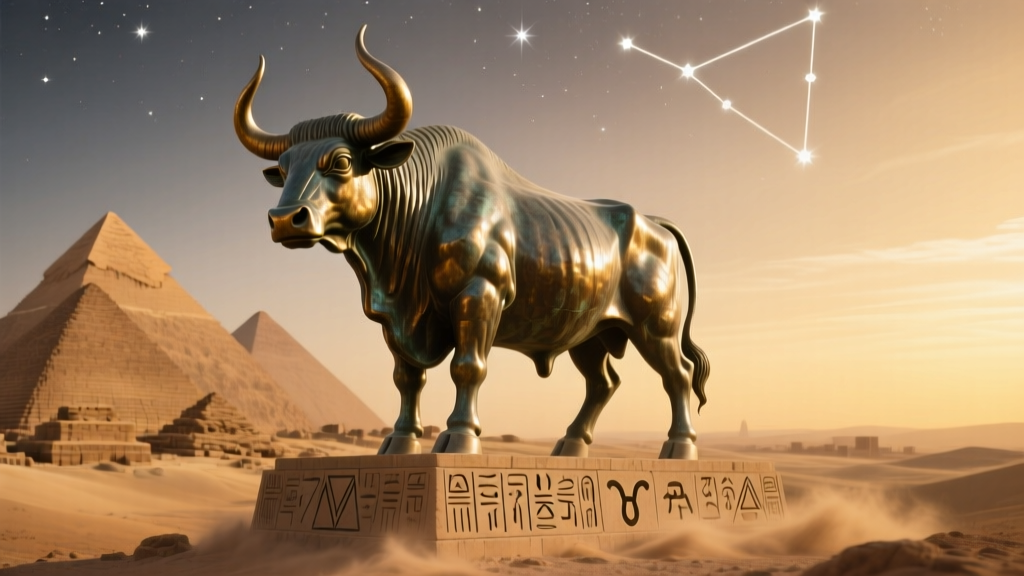
Individuals born under the 17 May zodiac sign fall squarely within the final third of Taurus, a period steeped in ancient agrarian mythology and celestial observation. To understand the true origin story of this specific birth date, we must look far beyond modern newspaper horoscopes. The historical roots of the mid-May Taurus archetype trace back over 4,000 years to the mud-brick observatories of Babylon, where the movement of the stars dictated the survival of empires. By examining the Babylonian MUL.APIN texts, Hellenistic decan rulerships, and the mythological Bull of Heaven, we can decode the ancient DNA of the May 17 astrological profile.
The Babylonian Roots: Gugalanna and the Agrarian Calendar
The foundation of Western astrology was laid in ancient Mesopotamia, where the constellation we now call Taurus was recorded in the MUL.APIN astronomical compendium (c. 1200 BCE). According to the British Museum's Cuneiform Collection, the Babylonians designated this star pattern as GU4.AN.NA, or 'The Bull of Heaven.' For the ancient Sumerians and Babylonians, the Bull was not merely a symbol of stubbornness or material comfort; it was a terrifying and awe-inspiring celestial entity associated with the god Anu and the destructive, unpredictable springtime thunderstorms.
By mid-May, the violent spring storms of the Near East began to subside, giving way to the stable, dry heat required for the final stages of the barley harvest. The 17 May zodiac date historically marks this exact transitional window. The ancient astrologer-priests observed that as the sun moved deeper into the Bull, the chaotic waters of the spring floods receded, leaving behind fertile, hardened earth. This meteorological reality birthed the core Taurus archetype: the stabilization of resources, the grounding of chaotic energy, and the endurance required to bring a harvest to fruition.
This duality is immortalized in the Epic of Gilgamesh. When the goddess Ishtar unleashes the Bull of Heaven upon Uruk, it brings drought and destruction, drinking the rivers dry. Only through the combined, grounded strength of Gilgamesh and Enkidu is the beast subdued. This mythological blueprint explains the profound psychological resilience found in those born on May 17; they possess an innate, historical capacity to absorb chaotic environmental shifts and convert them into enduring material security.
Hellenistic Evolution: The Third Decan and Saturnine Influence
As astrological knowledge migrated from Babylon to Hellenistic Alexandria, the zodiac was subdivided into smaller increments to allow for more precise natal interpretations. The most critical of these for the 17 May zodiac is the decan system, which divides each 30-degree sign into three 10-degree sectors. As documented in Ptolemy's Tetrabiblos and earlier Hellenistic texts, the final ten degrees of Taurus (roughly May 14 to May 20) are governed by the Chaldean planetary ruler Saturn.
This creates a fascinating astrological paradox. Taurus is inherently ruled by Venus, the planet of aesthetics, harmony, and sensory pleasure. However, individuals born on May 17 are born in the Saturnian decan. Saturn is the planet of restriction, time, architecture, and stoicism. This sub-rulership fundamentally alters the expression of the Taurus archetype. While an early-degree Taurus (ruled by the Venusian first decan) might seek immediate sensory gratification, the late-degree, Saturn-ruled Taurus of May 17 is driven by legacy, structural integrity, and long-term endurance.
Astrological Mechanics of the Venus-Saturn Synthesis
The synthesis of Venus and Saturn in the May 17 profile produces a personality that views beauty and value through the lens of permanence. This is the archetype of the master architect, the generational wealth builder, and the stoic guardian. The historical friction between Venus (desire) and Saturn (delay) manifests as a deep-seated ambition. Those born on this date do not merely want to possess beautiful things; they want to build institutions and structures that will outlast their own mortality.
The Pleiades Cluster: Navigating the Ancient Mediterranean
Any historical analysis of the Taurus constellation is incomplete without addressing the Pleiades star cluster (known to the Babylonians as MUL.MUL, or 'The Stars'). Located on the 'shoulder' of the celestial Bull, the Pleiades held immense practical and mythological significance in the ancient Mediterranean. According to research published in the Journal for the History of Astronomy, the heliacal rising of the Pleiades in May was the primary celestial marker for ancient agricultural and maritime calendars.
In ancient Greece, the poet Hesiod wrote in his Works and Days that the rising of the Pleiades in May signaled the beginning of the summer harvest and the opening of the sailing season. For the May 17 archetype, the Pleiades represent a historical mandate for navigation and resource distribution. While the Bull provides the raw material and the plowed earth, the Pleiades provide the celestial map for trade and expansion. This explains the latent entrepreneurial and logistical brilliance often found in late-degree Taurus natives; they are historically coded to manage the distribution of the harvest, not just its cultivation.
Mythological Archetypes Shaping the 17 May Zodiac
To fully grasp the psychological depth of this birth date, we must map the evolution of the Bull archetype across different ancient civilizations. The table below illustrates how the core themes of the 17 May zodiac were interpreted by distinct historical cultures, highlighting a universal focus on endurance, sacrifice, and material foundation.
| Historical Era | Designation | Ruling Entity | Societal Function & Archetype |
|---|---|---|---|
| Babylonian (c. 1200 BCE) | GU4.AN.NA (Bull of Heaven) | Anu / Ishtar | Barley harvest omens; the containment of chaotic spring storms. |
| Minoan Crete (c. 2000 BCE) | The Sacred Bull of Knossos | Poseidon (Earth-Shaker) | Ritual endurance; mastery over raw, untamed natural forces. |
| Hellenistic (c. 150 CE) | Taurus (Third Decan) | Venus / Saturn | Agricultural legacy; architectural permanence and stoic wealth. |
| Medieval Astrology (c. 1200 CE) | The Exaltation of the Moon | Lunar / Earthly | Fertility, physical nourishment, and the stabilization of the bloodline. |
Practical Chart Synthesis for the Late Taurus Archetype
Understanding the historical origins of the 17 May zodiac provides a distinct advantage for modern astrological interpretation. When analyzing a natal chart for this specific date, practitioners must move beyond superficial traits and apply the ancient Venus-Saturn framework. Here is a concrete methodology for synthesizing this historical data into modern chart analysis:
- Evaluate Venus-Saturn Aspects: In a May 17 chart, any hard aspect (square or opposition) between Venus and Saturn is not merely a marker of romantic restriction. It is the activation of the ancient third-decan archetype, demanding the native build enduring material structures or generational wealth before experiencing personal luxury.
- Analyze the Second House Cusp: Given the Babylonian focus on the barley harvest and resource stabilization, the condition of the Second House and its ruling planet will reveal how the native processes the ancient mandate of 'earthy accumulation.' Earth or fixed sign placements here amplify the historical Taurus drive for permanence.
- Monitor Lunar Transits through the Pleiades: Historically, the Pleiades cluster (around 29 degrees Taurus) was a sensitive point for navigation and physical vitality. Transits or progressions activating the late degrees of Taurus often trigger significant shifts in the native's logistical responsibilities or physical endurance, echoing the ancient maritime calendars of the Mediterranean.
The history of the 17 May zodiac reveals a profound evolutionary journey from the terrifying, storm-bringing Bull of Heaven to the stoic, Saturn-ruled architect of the Hellenistic era. By anchoring modern astrological practice in these ancient agrarian and mythological realities, we uncover a deeply resilient archetype designed to weather chaos, cultivate enduring value, and navigate the complex material landscapes of human civilization.