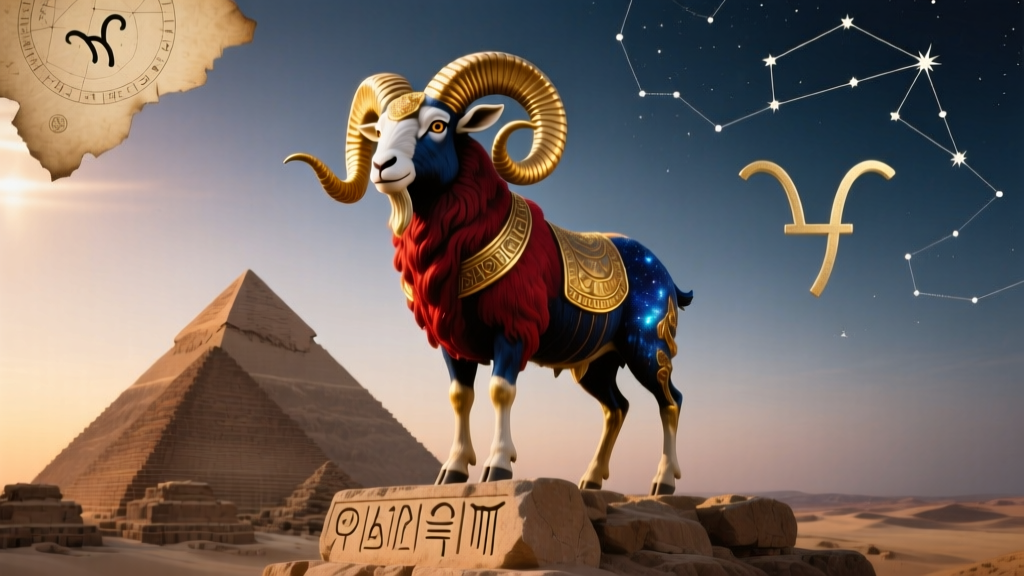
The Ancient Roots of the 29 March Horoscope Sign
Individuals researching the 29 march horoscope sign are investigating the astrological profile of early Aries, specifically falling around the 8th and 9th degrees of the zodiac. While modern pop astrology reduces this placement to simple traits like impulsivity and courage, the historical origin of this specific coordinate reveals a much deeper agrarian and martial lineage. To understand the true architecture of the March 29 Aries archetype, we must bypass contemporary sun-sign columns and examine the Babylonian star catalogs, Hellenistic mythological syncretism, and the astronomical phenomenon known as the Precession of the Equinoxes, which fundamentally altered how ancient astrologers viewed the spring onset.
Babylonian Origins: From the Agrarian Worker to the Ram
The foundational text of Mesopotamian astronomy, the MUL.APIN compendium (compiled circa 1000 BCE), catalogs the stars along the ecliptic with precise observational data. The constellation we now call Aries was originally designated as MUL.LU.HUN.GA, translating directly to 'The Hired Man' or 'The Agrarian Worker.' This designation was intrinsically linked to the Mesopotamian agricultural calendar. Late March marked the critical period when the spring barley harvest required the mass hiring of temporary laborers. The 29 march horoscope sign, therefore, originally possessed an earthy, labor-oriented archetype focused on collective duty rather than individualistic martial prowess.
Over the subsequent centuries, a phonetic and theological shift occurred in the Akkadian language. The Sumerian word for 'hired man' sounded remarkably similar to the word for 'ram' or 'sheep.' Concurrently, the cult of Dumuzi—the Sumerian god of shepherds, vegetation, and fertility—grew in political and religious prominence. As detailed in the Metropolitan Museum of Art's analysis of Babylonian astronomy, this linguistic overlap allowed the agrarian worker to gradually morph into the Ram in the astrological consciousness. This pivot laid the iconographic foundation for the zodiacal symbol recognized today, transitioning the archetype from human labor to pastoral wealth and animalistic vitality.
The Shift to the Hellenistic Aries Archetype
When the Greeks adopted the Babylonian zodiacal framework around the 5th century BCE, they engaged in profound mythological syncretism. The Ram was no longer viewed merely as an agrarian marker; it was elevated to Chrysomallus, the mythical flying ram that bore the Golden Fleece. This Hellenistic overlay fundamentally altered the psychological profile of the early Aries degrees. The focus shifted from collective agricultural labor to individualistic heroism, questing, and martial initiative.
The planetary rulership was assigned to Ares (Mars), the god of war, cementing the pioneering and aggressive traits associated with the modern Aries archetype. For a birthdate of March 29, the Sun typically occupies the 8th or 9th degree of Aries. In the Hellenistic decan system, this places the Sun firmly in the first decan of Aries, which is also ruled by Mars. According to Skyscript's historical documentation of Hellenistic decans, the first decan represents the purest, most unadulterated expression of the sign's ruling planet. The imagery associated with this specific decan in medieval texts like the Picatrix describes a figure of immense physical vitality, girded for action, and possessing an innate drive to initiate new cycles without hesitation.
Evolution of the Early Aries Archetype
To contextualize the transformation of the late-March zodiacal coordinate, the following table outlines the historical and thematic evolution of the archetype across major astrological epochs.
| Era / Tradition | Designation | Ruling Concept | Core Archetypal Theme |
|---|---|---|---|
| Early Babylonian (c. 1000 BCE) | MUL.LU.HUN.GA (Hired Man) | Agrarian Calendar | Collective labor, spring harvest, duty |
| Neo-Babylonian (c. 600 BCE) | The Ram | Cult of Dumuzi | Pastoral wealth, fertility, shepherding |
| Hellenistic (c. 200 BCE) | Krios (The Ram) | Ares (Mars) | Heroic quest, martial initiative, individualism |
| Modern Psychological (20th C.) | Aries (First Decan) | Mars / Pluto (Esoteric) | Ego genesis, assertiveness, raw vital force |
The Precession of the Equinoxes and the Age of Aries
To fully grasp the historical weight of the 29 march horoscope sign, one must understand the astronomical phenomenon known as the Precession of the Equinoxes. Discovered by the Greek astronomer Hipparchus in the 2nd century BCE, this phenomenon describes the slow, cyclical wobble of the Earth's rotational axis. This wobble causes the vernal equinox point to drift backward through the physical zodiacal constellations at a rate of roughly one degree every 72 years.
Between approximately 2000 BCE and 100 BCE—a period known in esoteric traditions as the Age of Aries—the vernal equinox actually occurred within the physical constellation of Aries. During this epoch, a birth on March 29 aligned not just symbolically, but literally, with the astronomical onset of spring in the Northern Hemisphere. The Sun was physically rising against the backdrop of the Ram's stars at the exact moment day and night reached equilibrium. This literal alignment forged an unbreakable psychological and cultural association between late-March births, the concept of new beginnings, and the triumph of light over winter darkness.
Today, due to axial precession, the vernal equinox occurs in the constellation of Pisces. However, the tropical zodiac used by Western astrologers is anchored to the seasons, not the physical constellations. Therefore, the 29 March placement remains permanently fixed at the 8th or 9th degree of tropical Aries, preserving the seasonal symbolism of early spring initiation regardless of the shifting stellar backdrop.
Actionable Historical Integration for the Modern Aries
Understanding the deep historical and astronomical roots of your zodiacal placement provides a robust framework for leveraging its innate energies. Rather than relying on superficial daily horoscopes, individuals born under this specific coordinate can apply these ancient paradigms to modern decision-making and personal development.
- Embrace the Agrarian Cycle: Reconnect with the original Babylonian 'Hired Man' archetype by grounding your Martian energy in tangible, seasonal projects. March 29 is an optimal date to initiate long-term structural efforts that require sustained, disciplined labor rather than mere impulsive bursts of enthusiasm.
- Leverage First Decan Purity: Because the 8th and 9th degrees fall in the Mars-ruled first decan, your initiative is unfiltered by secondary planetary influences. Use this pure Martian force for tasks requiring absolute autonomy, physical courage, and the breaking of new ground. Avoid highly collaborative ventures that require deep compromise during your solar return year.
- Align with Vernal Equilibrium: Historically, this date heralded the literal balance of light and dark. Implement a personal audit during late March to balance your assertive drive with strategic patience, ensuring your pioneering efforts do not outpace your resource management and logistical planning.
- Utilize the Golden Fleece Motif: In Hellenistic myth, the Ram's fleece represented a prize requiring a perilous journey. Frame your annual goals not as mere tasks, but as 'quests' that require navigating specific obstacles, thereby satisfying the archetype's deep-seated need for heroic narrative and conquest.
By anchoring your modern astrological practice in the rigorous historical evolution of the zodiac, the late-March Aries placement transforms from a simple personality descriptor into a profound tool for timing, strategy, and self-actualization.