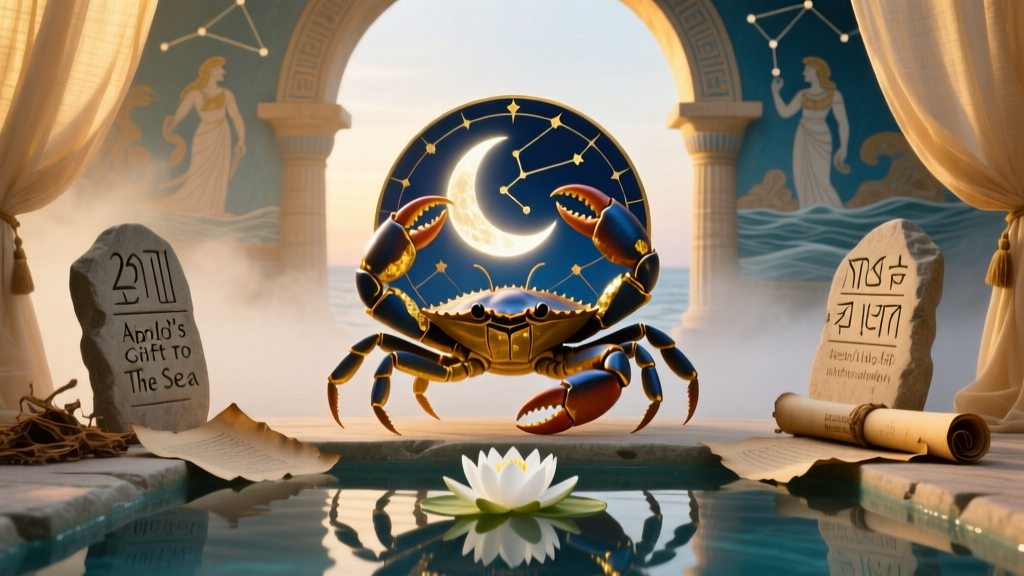
Individuals researching the 29th june zodiac sign are exploring the tropical boundaries of Cancer, specifically occupying the critical threshold between the first and second decans. Unlike modern pop-astrology, which frequently flattens personality traits into generalized daily horoscopes, the historical and mythological origins of this specific birthdate reveal a complex archetype rooted in ancient Mesopotamian astronomy and Hellenistic esoteric philosophy. To understand the psychological and spiritual blueprint of a late-June Cancer, one must examine the celestial history of the crab, the scarab, and the mythological battlegrounds of antiquity. The origins of this zodiacal sector are intrinsically linked to water, gestation, and the emergence of life from dark, subterranean depths.
Mesopotamian and Egyptian Astronomical Predecessors
Long before the Greeks formalized the zodiac, the Babylonians cataloged the stars of Cancer in the MUL.APIN, a comprehensive astronomical text compiled around 1000 BC. According to Ian Ridpath's Star Tales, the Babylonians identified this constellation as MUL.AL.LUL, a term translating to a snapping turtle or a freshwater crab. This was not merely a visual interpretation of stellar alignment; it was deeply tied to the seasonal flooding of the Tigris and Euphrates rivers. The appearance of these stars in the night sky signaled the rising waters, making the constellation a harbinger of agricultural fertility and the dangerous, unpredictable power of freshwater depths.
In ancient Egypt, the same stellar region was associated with the scarab beetle (Khepri), representing the morning sun and the concept of cyclical rebirth. Due to the precession of the equinoxes, the summer solstice historically fell in early Cancer. This solstice marked the beginning of the Nile's annual inundation. Therefore, the ancient origin of this zodiacal sector bridges the Babylonian water-crab and the Egyptian solar-scarab, creating a dual archetype of emotional depth and spiritual resurrection that still defines the late-June birthdate today.
Karkinos and the Lernaean Hydra: The Greek Mythos
The Greek origin story of Cancer centers on the second labor of Heracles. As Heracles battled the multi-headed Lernaean Hydra, the goddess Hera sent Karkinos—a giant, armored crab—to pinch the hero's foot and distract him. Heracles, enraged, crushed the crab underfoot. Hera, honoring the creature's loyal sacrifice and its willingness to face insurmountable odds, placed it in the heavens as a constellation.
This myth provides a crucial psychological key for those born on this date. The Greek astronomer Eratosthenes (c. 276–194 BC) noted that Cancer is the faintest constellation in the zodiac, lacking first-magnitude stars. He theorized this dimness occurred because Heracles had crushed its shell, permanently scarring its celestial light. As detailed in the Constellation Guide's historical analysis of Cancer, the constellation also contains the Praesepe (the Beehive Cluster) flanked by the Aselli (the two donkeys). This rich mythological tapestry mirrors the psychological profile of the late-June Cancer: possessing immense protective resilience and loyalty (a hard shell), but often dimming their own light, retreating into the background, or taking on the burdens of others to support the broader 'battle' of life.
Hellenistic Decans and the Chaldean Order
The tropical zodiac divides each 30-degree sign into three 10-degree decans, a system inherited from the Egyptians and formalized by Hellenistic astrologers. June 29 typically falls around 7° to 8° Cancer, placing it at the very end of the first decan. According to the Chaldean decan system documented by ancient astrologers like Teucer of Babylon, the first decan of Cancer is ruled by the Moon.
This lunar rulership emphasizes raw emotional receptivity, maternal instinct, and psychic permeability. Unlike the second decan (ruled by Pluto/Mars in modern/traditional triplicity systems, indicating more aggressive emotional defense), the first decan is purely foundational. It represents the initial, unfiltered descent of the soul into the emotional matrix. Individuals born on this specific date possess an innate, almost ancestral memory of emotional currents, making them highly attuned to the unspoken needs of their environment.
Evolution of the Cancer Archetype Across Antiquity
| Culture | Symbol | Associated Deity/Concept | Core Esoteric Meaning |
|---|---|---|---|
| Babylonian | MUL.AL.LUL (Snapping Turtle) | Enki (God of Water) | Freshwater depths, hidden danger, agricultural fertility. |
| Egyptian | Scarab Beetle | Khepri (Morning Sun) | Solar rebirth, rolling the sun through the underworld. |
| Greek | Karkinos (The Crab) | Hera | Loyalty, defensive armor, self-sacrifice in battle. |
| Neoplatonic | The Gate of Men | The Moon | Soul descent from the Milky Way into physical matter. |
The 'Gate of Men': Neoplatonic Esoteric History
Perhaps the most profound historical framework for understanding the 29th june zodiac sign comes from 5th-century Neoplatonic philosophy. In his Commentary on the Dream of Scipio, the Roman philosopher Macrobius detailed the esoteric view of the cosmos, identifying Cancer as the Porta Hominum (the Gate of Men).
According to this tradition, the Milky Way intersects the ecliptic at Cancer and Capricorn. Capricorn was the Porta Deorum (Gate of the Gods), where souls ascend back to the divine realm after death. Conversely, Cancer was the portal through which souls descend from the ethereal realms into physical incarnation. Because the summer solstice marks the sun's entry into Cancer, late June represents the immediate aftermath of this soul descent. Individuals born on this date are historically viewed as 'anchors' for spiritual energy, tasked with translating high-frequency intuition into tangible, emotional, and physical nurturing in the material world.
Why the 29th June Zodiac Sign Demands Historical Context
Modern astrology often reduces Cancer to mere sentimentality or moodiness. By applying the historical framework of the Porta Hominum and the Chaldean Moon-ruled decan, we see that the late-June archetype is actually a psychological bridge between the ethereal and the mundane. The 'moodiness' historically attributed to this birthdate is actually the friction of a soul adjusting to the density of physical and emotional reality immediately after its mythological 'descent' through the Gate of Men.
Practical Application: Integrating the Ancient Archetype
Understanding the deep historical and mythological roots of your zodiacal placement allows for targeted psychological integration and shadow work. Here is how individuals born on this date can apply these ancient frameworks to modern life:
- The Karkinos Shadow Work: Recognize the tendency to self-sacrifice. Like the crab crushed under Heracles' foot while trying to aid the Hydra, late-June Cancers often attach themselves to chaotic, 'multi-headed' problems in their family or social circles. Establish rigid boundaries so that your innate loyalty does not devolve into self-erasure. You must learn to fight your own battles rather than being collateral damage in someone else's.
- Navigating the Gate of Men: Implement heavy grounding practices. Since the soul has just 'descended' into the physical matrix according to Neoplatonic myth, late-June Cancers require dense, physical routines to manage their innate psychic permeability. Weightlifting, gardening, working with clay, or deep-pressure somatic therapies are not just hobbies; they are esoteric necessities to anchor your highly receptive nervous system into the physical plane.
- Honoring the MUL.AL.LUL: Embrace the 'snapping turtle' aspect of your Babylonian heritage. The ancient Mesopotamian origin reminds us that Cancer is not merely a soft, nurturing sign; it possesses a formidable, aggressive defensive capability. When your emotional sanctuaries or loved ones are threatened, you are historically and astrologically authorized to deploy the snapping turtle's bite. Suppressing this defensive anger leads to internalized resentment; channeling it into fierce, protective boundary-setting aligns you with your oldest astronomical archetype.