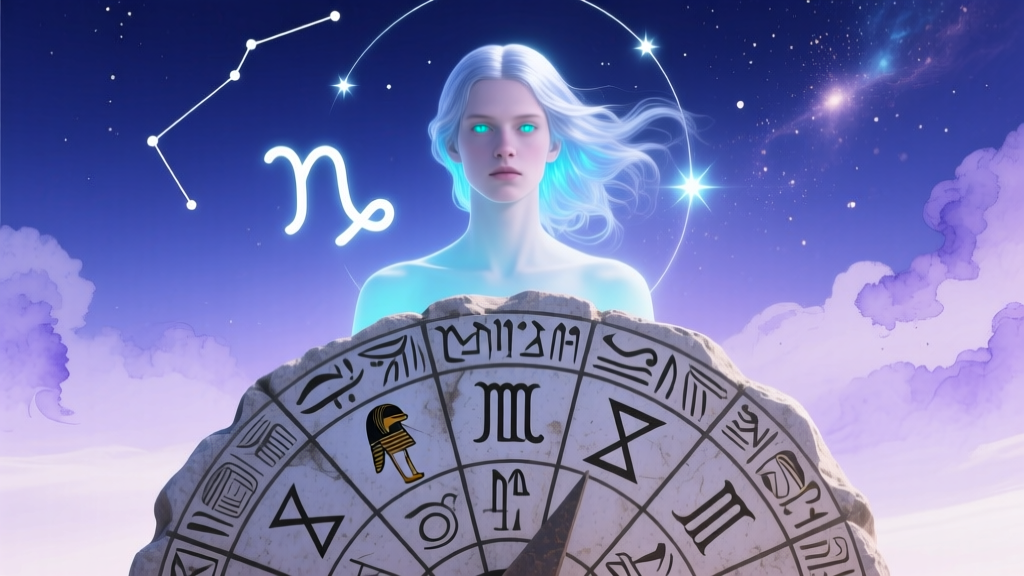
Individuals born under the 31st jan star sign fall squarely within the domain of Aquarius, the eleventh sign of the zodiac. While modern pop culture often reduces this fixed air sign to mere personality quirks or superficial horoscopes, the historical and mythological origins of the Water Bearer reveal a profound, complex lineage. To truly understand the astrological DNA of a January 31st Aquarius, we must bypass contemporary sun-sign columns and examine the ancient Babylonian star catalogs, Egyptian inundation myths, and Hellenistic astronomical shifts that forged this archetype over millennia.
The Babylonian Roots: GU.LA and the God Ea
The earliest recorded origins of the 31st jan star sign trace back to ancient Mesopotamia, specifically the MUL.APIN, a comprehensive Babylonian star catalog compiled on clay tablets around 1000 BCE. In this foundational system, the constellation we now call Aquarius was known as GU.LA, meaning "The Great One." This figure was not merely a random arrangement of stars but a direct celestial representation of Ea (or Enki), the Sumerian and Akkadian god of water, knowledge, mischief, and creation.
Ea was depicted on ancient boundary stones (kudurru) as a figure holding a vase from which two distinct streams of water flowed. This specific imagery is the direct ancestor of the modern Aquarian glyph (♒). According to the World History Encyclopedia's records on Babylonian astronomy, the placement of GU.LA in the winter sky correlated with the seasonal rains and the vital, life-giving properties of water in an otherwise arid landscape. For the ancient Babylonians, the stars comprising this sector of the sky were a celestial promise of agricultural survival, divine wisdom, and the mastery of irrigation systems.
Egyptian Mythology: Hapi and the Nile Inundation
As astrological knowledge migrated westward along ancient trade routes, the Egyptians adapted the Babylonian constellations to fit their own ecological and theological framework. In ancient Egypt, the stars of Aquarius were closely associated with Hapi, the god of the annual flooding of the Nile. The Nile's inundation was the absolute lifeblood of Egyptian civilization, depositing nutrient-rich black silt across the floodplains and ensuring the survival of the empire.
Hapi was often depicted as a robust, androgynous figure pouring water from twin urns, mirroring the Babylonian Ea but contextualized for the Egyptian agricultural calendar. The historical transition from GU.LA to Hapi demonstrates how early astrologers localized the core archetype of the 31st jan star sign—the distributor of life-giving resources—to match regional dependencies. The duality of the water streams represented the unification of Upper and Lower Egypt, emphasizing the Aquarian themes of balance, collective sustenance, and systemic distribution.
Hellenistic Synthesis: Ganymede and the Olympian Cupbearer
The Greeks formalized the zodiac as we recognize it today, blending observational astronomy with their rich mythological pantheon. When Hellenistic astrologers mapped the sky, they associated the Water Bearer with Ganymede, a beautiful Trojan prince. According to myth, Zeus, captivated by Ganymede's beauty, transformed into an eagle and abducted the youth to Mount Olympus to serve as the cupbearer to the gods, replacing Hebe.
Britannica's historical analysis of the Aquarius constellation notes that this myth shifted the archetype from a powerful creator god (Ea) to a mortal elevated to divine service. This Hellenistic rebranding introduced the themes of intellect, divine inspiration, and the bridging of the mortal and immortal realms. Let us compare these historical iterations to understand the evolution of the archetype:
| Era/Culture | Mythological Figure | Core Symbolism | Astrological Impact on Modern Aquarius |
|---|---|---|---|
| Babylonian | Ea / Enki (GU.LA) | Divine wisdom, creation, fresh water | Intellectual depth, innovation, life-giving ideas |
| Egyptian | Hapi | Collective sustenance, Nile inundation | Humanitarianism, systemic distribution, equality |
| Greek | Ganymede | Divine service, elevation, Olympian cupbearer | Visionary thinking, bridging earthly and higher realms |
| Roman | Aquarius | Abstract personification of water | Detachment, fluid intellect, fixed air adaptability |
The Micro-History: January 31st and the Second Decan
To achieve absolute precision, we must look beyond the macro-history of the sign and examine the specific degree of the 31st jan star sign. January 31st typically falls around 11 degrees of Aquarius, placing it squarely in the second decan of the sign. In the traditional Chaldean decan system, this specific ten-degree sector is sub-ruled by Mercury.
This Mercurial influence overlays the fixed air nature of Aquarius with heightened cognitive agility, linguistic prowess, and a focus on the dissemination of information. Historically, medieval astrologers like Heinrich Cornelius Agrippa associated this specific decan with the pursuit of scientific knowledge, the structuring of complex societal networks, and the translation of abstract concepts into tangible data. For the individual born on this exact date, the historical mandate is not just to envision the future, but to codify, write, and communicate that vision with Mercurial precision.
The Astronomical Reality: Precession and the Tropical Zodiac
A critical component of the history of the 31st jan star sign involves the astronomical phenomenon of axial precession. The Earth's axis wobbles over a 25,772-year cycle, meaning the backdrop of stars shifts relative to our calendar over millennia. When the tropical zodiac was codified by Claudius Ptolemy in his foundational text, the Tetrabiblos, during the 2nd century CE, the Sun was astronomically positioned in the constellation of Aquarius during late January.
Today, due to precession, the Sun is actually in the constellation of Capricorn on January 31st. Western astrology, however, uses the tropical zodiac, which is tied to the vernal equinox and the seasons rather than the shifting constellations. Understanding this historical divergence is vital: when you study the 31st jan star sign, you are studying a seasonal and archetypal marker fixed to the mid-winter point in the Northern Hemisphere, not the literal stars currently behind the Sun.
The 1781 Paradigm Shift: From Saturn to Uranus
For nearly two thousand years, traditional Hellenistic and medieval astrologers assigned Saturn as the sole ruling planet of Aquarius. Saturn's influence emphasized the "fixed" nature of the sign, bringing structure, discipline, and a focus on societal frameworks and long-term endurance. This historical continuity was shattered on March 13, 1781, when Sir William Herschel discovered the planet Uranus.
Britannica's biography of William Herschel details how this discovery expanded the known boundaries of the solar system and sent shockwaves through the scientific and esoteric communities. Astrologers quickly co-ruled, and eventually reassigned, Aquarius to Uranus. This historical pivot fundamentally altered the interpretation of the sign. Saturn's structured societal reform was suddenly infused with Uranian electricity, rebellion, and technological disruption. Modern Aquarians carry this dual historical inheritance: the Saturnian architect and the Uranian revolutionary.
Actionable Historical Integration for the January 31st Aquarius
Understanding the deep history of your star sign provides a practical framework for personal development and decision-making. Here is how to apply these ancient origins to modern life:
- Channel Ea's Wisdom (Innovation): Instead of engaging in random rebellion, ground your progressive ideas in deep research. Ea was a god of knowledge and engineering; ensure your disruptions are backed by data, historical precedent, and structural viability.
- Emulate Hapi's Distribution (Humanitarianism): Identify systems in your community, digital networks, or workplace that hoard resources or information. Use your fixed air stamina to redesign these systems for equitable distribution and open-source accessibility.
- Leverage the Mercurial Decan (Communication): Since your birth date falls in the Mercury-ruled decan, prioritize writing, coding, or teaching as vehicles for your vision. Your ideas must be articulated with linguistic precision to gain traction.
- Balance the Saturn-Uranus Axis (Execution): When you experience an Uranian flash of genius, apply Saturnian discipline to build a step-by-step roadmap. Vision without structure remains a hallucination; structure without vision is a prison.
The lineage of the 31st jan star sign is a testament to humanity's evolving understanding of the cosmos and society. From the life-giving waters of the Babylonian Ea to the revolutionary electricity of the modern Uranian era, Aquarius remains the zodiac's great architect of the future. By anchoring your identity in this rich historical continuum, you move beyond superficial horoscopes and step into the profound, world-building legacy of the Water Bearer.