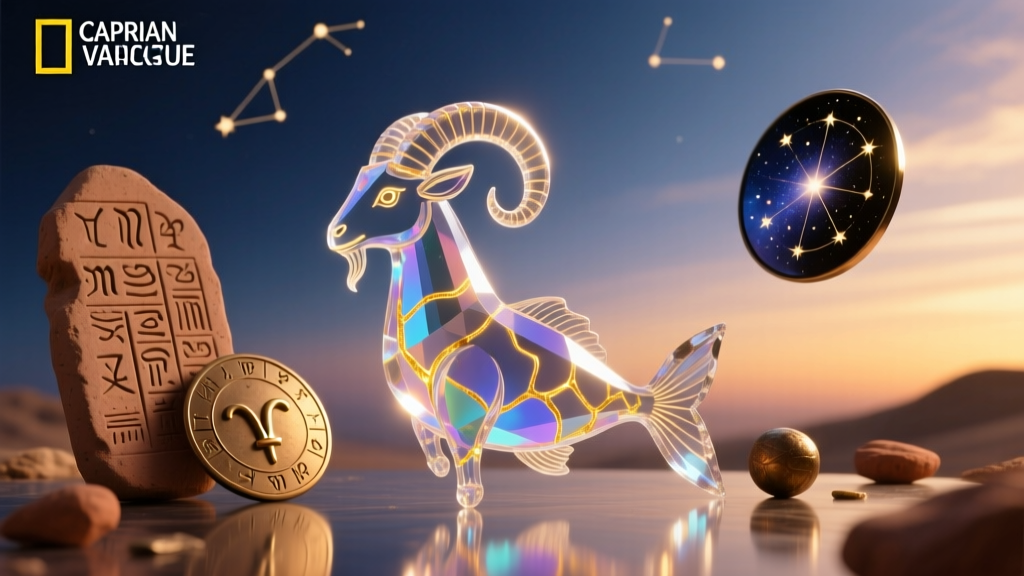
Individuals researching the 6 jan zodiac profile are examining a highly specific coordinate in the tropical zodiac: approximately 15 degrees of Capricorn. While modern horoscopes often reduce this placement to generic traits of ambition and discipline, the historical and astrological origins of this date reveal a far more complex archetype. By tracing the lineage of this zodiacal sector back to ancient Mesopotamia, Hellenistic decan theory, and the mechanics of axial precession, we uncover a synthesis of earthbound materialism and profound spiritual depth. Understanding the 6 jan zodiac requires looking past contemporary sun-sign columns and examining the ancient frameworks that originally defined it.
Sumerian Roots: Enki and the Goat-Fish
The origins of the Capricorn archetype do not begin with the Greeks or Romans, but in the cradle of civilization: ancient Sumer and Babylon. In the Babylonian astronomical compendium known as the mul.APIN (compiled circa 1000 BCE), the constellation we now call Capricornus was recorded as SUḪUR.MAŠ, the Goat-Fish. This hybrid creature was not a mere artistic whimsy; it was a profound theological symbol representing the god Enki (later known as Ea in Akkadian).
Enki was the deity of the Abzu—the primeval freshwater ocean beneath the earth—as well as the patron of wisdom, magic, and creation. The Goat-Fish perfectly encapsulated his dual domain. The goat, a sure-footed mountain climber, symbolized the ascent to material heights, earthly authority, and the rugged terrain of the physical world. The fish tail, conversely, represented the descent into the subconscious, the emotional depths, and the hidden currents of esoteric knowledge. Therefore, the foundational DNA of the 6 jan zodiac is not just rigid ambition; it is the mastery of both the material summit and the emotional abyss.
According to the World History Encyclopedia, Enki was considered the keeper of the Me—the divine decrees or blueprints of civilization. This historical context suggests that individuals born under this specific zodiacal coordinate possess an innate drive to build structures, establish order, and safeguard foundational knowledge, acting as architects of their own environments.
Hellenistic Astrology and the Decan System
To understand the specific nuances of January 6, we must apply the Hellenistic system of decans, which divides each 30-degree zodiacal sign into three 10-degree sectors. January 6 typically falls at 15° Capricorn, placing it squarely in the second decan of the sign.
The Venusian Sub-Rulership
While Saturn is the primary domicile ruler of Capricorn, the Chaldean decan system assigns a secondary planetary ruler to each 10-degree span. The first decan is ruled by Saturn, the second by Venus, and the third by Mercury. Consequently, the 6 jan zodiac placement is heavily influenced by Venus. This sub-rulership fundamentally alters the expression of Saturnian discipline.
Where the first decan of Capricorn is characterized by raw, unyielding survival and structural fortitude, the Venusian second decan introduces diplomacy, aesthetic refinement, and relational intelligence. Claudius Ptolemy, in his foundational text the Tetrabiblos, noted how planetary blends modify the base nature of a sign. The Venusian influence means that the ambition of a January 6 native is rarely brute force; it is achieved through alliance-building, charm, and an acute understanding of social and material value. They do not just want to reach the top of the mountain; they want the summit to be beautiful, comfortable, and shared with selected allies.
The Astronomical Reality Behind the 6 Jan Zodiac
A rigorous historical analysis of astrology must address the astronomical reality of the tropical zodiac versus the sidereal sky. Due to the precession of the equinoxes—a slow wobble of the Earth's axis that completes a cycle roughly every 25,772 years—the tropical zodiac has drifted approximately 24 degrees away from the actual, observable constellations since the time of Ptolemy.
On January 6, the Sun is astronomically located in the constellation of Sagittarius, not Capricornus. The tropical zodiac, which Western astrology utilizes, is based on the seasons rather than the fixed stars. It anchors the first degree of Aries to the Vernal Equinox. Therefore, the 6 jan zodiac is a seasonal marker, representing the mid-winter consolidation of resources in the Northern Hemisphere, rather than a literal alignment with the Goat-Fish stars in the sky.
| Era / Culture | Designation | Core Attributes | Ruling Deity / Planet |
|---|---|---|---|
| Sumerian (c. 3000 BCE) | SUḪUR.MAŠ (Goat-Fish) | Wisdom, freshwater, creation, duality | Enki / Ea |
| Babylonian (c. 1000 BCE) | mul.APIN Constellation | Boundary setting, agricultural cycles | Ea |
| Hellenistic (c. 150 CE) | Aigokeros (Goat-Horned) | Limitation, structure, material ascent | Saturn (Kronos) |
| Modern Tropical | Capricorn (2nd Decan) | Diplomatic ambition, aesthetic structure | Saturn / Venus |
Understanding this distinction is vital for astrological accuracy. As detailed by Encyclopedia Britannica, the precession of the equinoxes was first mathematically calculated by Hipparchus in the 2nd century BCE. The tropical system intentionally preserves the seasonal symbolism of the signs over the literal stellar backdrop, meaning the January 6 archetype is fundamentally tied to the phenomenological experience of deep winter: the preservation of seeds, the structuring of the hearth, and the strategic planning required to survive until spring.
Mythological Syncretism: From Enki to Aegipan
When Hellenistic Greeks absorbed Babylonian astrology, they mapped their own mythological pantheon onto the existing zodiacal framework. The Goat-Fish was Hellenized into Aigokeros (the Goat-Horned). The most prominent myth associated with this imagery involves the god Pan (or his son, Aegipan).
According to the myth, when the monstrous titan Typhon attacked the Olympian gods, the deities fled to Egypt and transformed themselves into animals to hide. Pan attempted to dive into the Nile River to escape, but in his panic, the transformation was incomplete. His upper half became a goat, while his submerged lower half became a fish. Zeus, amused and impressed by this bizarre adaptation, placed the image in the stars. This myth of incomplete transformation under pressure is a highly specific psychological marker for the 6 jan zodiac. It suggests a personality that can adapt to emotional or chaotic crises (the water/fish) while maintaining a pragmatic, grounded exterior (the goat), even if the transition between the two states feels internally disjointed.
Historical Milestones and Calendrical Alignment
The placement of January 6 on the Gregorian calendar is not astrologically random; it is deeply tied to historical and religious consolidations of time. In Christian tradition, January 6 marks the Epiphany (Three Kings' Day), symbolizing the revelation of the divine to the material world. Astrologically, this mirrors the Capricornian mandate: to take abstract, divine, or conceptual blueprints (Saturnian wisdom) and manifest them into tangible, earthly reality.
Prior to the Gregorian reform of 1582, the Julian calendar had drifted significantly, causing seasonal markers to misalign. The fixing of January 6 in the modern calendar re-established its alignment with the deep mid-winter period in the Northern Hemisphere. For the 6 jan zodiac native, this historical anchoring reinforces the archetype's association with revelation, the structuring of time, and the manifestation of hidden truths into the public sphere.
Practical Application: Interpreting the Historical Archetype
Synthesizing the Sumerian, Hellenistic, and astronomical data provides a highly actionable framework for individuals born on January 6, or for astrologers interpreting this placement in a natal chart:
- Leverage the Venusian Decan: Avoid the trap of isolated, ruthless ambition. The second decan demands that you build networks. Your greatest material successes will come through diplomatic partnerships, aesthetic presentation, and the cultivation of social capital, not through solitary force.
- Honor the Enki Duality: You possess a natural capacity to navigate both corporate/material hierarchies (the goat) and deep psychological/esoteric waters (the fish). Do not suppress your emotional or intuitive depths in favor of pure pragmatism; your intuition is the very mechanism that informs your structural decisions.
- Manage the 'Aegipan' Stress Response: Under extreme pressure, you may experience a 'split' adaptation—presenting a rigid, unfeeling exterior while internally drowning in emotional chaos. Recognizing this mythological pattern allows you to integrate your responses, ensuring your external boundaries match your internal emotional reality.
- Align with Seasonal Strategy: As a mid-winter tropical marker, your energy is optimized for strategic planning, resource conservation, and foundational building. Avoid forcing premature 'spring' launches or impulsive expansions. Respect the gestation period required for enduring structures.
The history of the 6 jan zodiac reveals a far richer tapestry than the standard 'hardworking Capricorn' trope. It is the lineage of the civilizing god, the diplomatic architect, and the mid-winter strategist. By engaging with these ancient origins, one can utilize this astrological placement not as a fatalistic prediction, but as a sophisticated blueprint for mastering the intersection of material reality and profound depth.