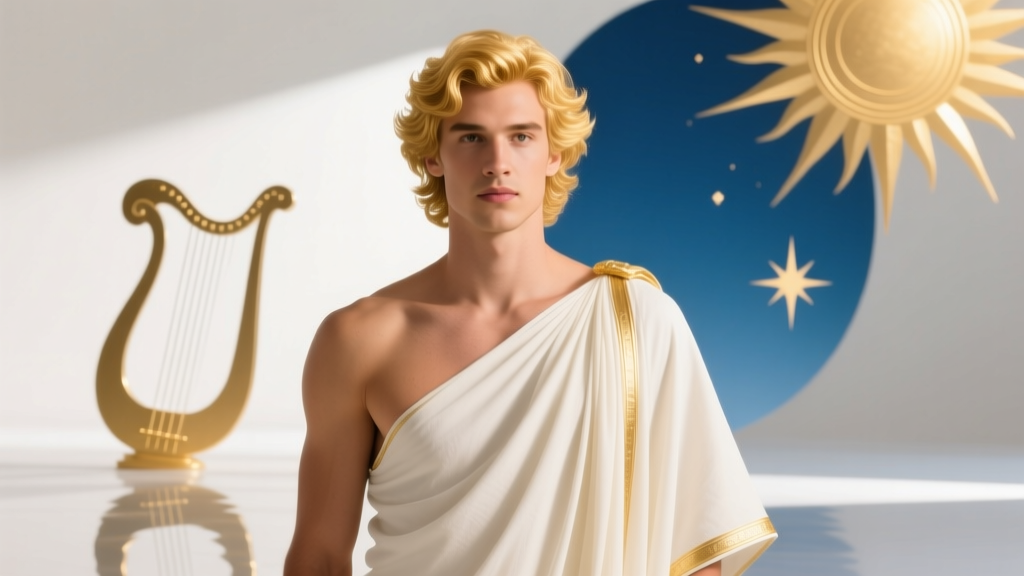
When analyzing classical mythology, the Apollo Greek god archetype represents the pinnacle of order, reason, and artistic mastery. Unlike deities governed by raw emotion or chaotic nature, Apollo governs the intellect, prophecy, healing, and harmonic structure. For modern practitioners of archetypal psychology and esoteric study, understanding this deity requires moving beyond superficial sun-god tropes. This expert analysis deconstructs his complex mythological domains, contrasts his energy with opposing psychological forces, and provides actionable pro tips for integrating Apollonian principles into daily cognitive and spiritual frameworks.
The Core Domains of the Apollo Greek God
Apollo’s portfolio is uniquely synthetic, bridging the gap between empirical logic and transcendent art. He is not merely a solar deity; he is the architect of kosmos (order) against chaos. His dominion over the Delphic Oracle highlights his role as the arbiter of hidden truths, yet his prophecies often demand rigorous intellectual deciphering. According to the Theoi Project, his epithets reveal a multidimensional entity: Phoebus (the radiant), Musagetes (leader of the Muses), and Paean (the healer).
In psychological terms, Carl Jung identified the Apollonian principle as the driving force behind individuation through structure, boundary-setting, and the illumination of the unconscious mind. To work with this energy is to prioritize clarity, discipline, and the pursuit of objective truth over subjective emotional reactivity.
Astrological and Numerological Correlates
Within esoteric traditions, the Apollo Greek god is intrinsically linked to specific astrological and numerological frequencies. Astrologically, he embodies the higher octave of the Sun, representing the conscious ego, vitality, and the drive toward self-actualization. A well-aspected Sun in a natal chart reflects Apollonian traits: leadership, clarity of purpose, and creative brilliance.
Numerologically, Apollo is sacredly bound to the number seven. This correlates to the seven strings of his lyre, the seven Pleiades, and the seventh day of the lunar month, which was celebrated as his birthday. In practical numerology, the number seven signifies introspection, analytical depth, and the pursuit of esoteric truth. When attempting to align with this archetype, scheduling deep work, study, or creative practice on the seventh day of a lunar cycle can provide subtle psychological anchoring.
Apollonian vs. Dionysian: A Structural Analysis
Friedrich Nietzsche’s foundational text, The Birth of Tragedy, established the dichotomy between the Apollonian and Dionysian forces. Understanding this contrast is critical for anyone seeking to balance their psychological or spiritual practice. The Apollonian represents the principium individuationis (principle of individuation), form, and measured restraint, while the Dionysian represents intoxication, dissolution of boundaries, and primal ecstasy.
| Attribute | Apollonian Principle | Dionysian Principle |
|---|---|---|
| Cognitive State | Rationality, logic, and objective analysis | Intuition, ecstasy, and emotional immersion |
| Boundaries | Strict, defined, and protective of the self | Fluid, dissolving, and merging with the collective |
| Artistic Expression | Sculpture, architecture, and structured poetry | Improvisational music, dance, and raw theater |
| Spiritual Goal | Illumination, order, and harmonic alignment | Liberation, chaos, and primal union |
Pro Tips for Integrating Apollonian Archetypes
1. Cultivate Intellectual Clarity and Rationality
Apollonian energy thrives in environments of structured thought. To channel this, implement rigorous analytical frameworks when facing life decisions. Replace emotional decision-making with dialectical analysis. Write down premises, evaluate evidence, and construct logical syllogisms before acting. This mirrors the god of reason, ensuring your actions are governed by foresight rather than impulse.
2. Master a Creative or Healing Discipline
As Musagetes, Apollo demands mastery over the arts, particularly music and poetry, which require intense technical discipline. Choose one creative or healing modality—such as classical instrumentation, architectural design, or herbal medicine—and commit to the rigorous, repetitive practice required to achieve mastery. The Apollonian path to creativity is not through chaotic inspiration, but through the relentless refinement of technique until the medium becomes transparent.
3. Establish Boundaries Through Truth
Apollo’s silver bow represents the ability to strike from a distance, symbolizing the necessity of healthy psychological boundaries. Practice the art of objective, non-emotional communication. When establishing limits with others, rely on verifiable facts and clear, unambiguous language. Avoid over-explaining or justifying your boundaries with emotional appeals; state them as objective realities, much like the unalterable decrees of the Delphic Oracle.
Ritual and Psychological Framing via Epithets
In esoteric and psychological practices, utilizing specific epithets can help narrow your focus to a particular facet of the deity’s vast portfolio. Use these targeted invocations or mental frameworks to address specific life challenges:
- Apollo Pythios (The Python Slayer): Invoke this aspect when confronting personal shadow material, overcoming toxic habits, or establishing a new foundation. Pythios represents the triumph of conscious light over subconscious chaos.
- Apollo Nomios (The Shepherd): Utilize this framework when taking on leadership roles, guiding a team, or managing resources. Nomios governs the protection of the flock and the establishment of pastoral order.
- Apollo Alexikakos (The Averter of Evil): Apply this mindset for preventative health, risk management, and shielding your environment from negative influences. It emphasizes proactive defense rather than reactive healing.
- Apollo Loxias (The Oblique): Meditate on this aspect when studying complex texts, deciphering dreams, or engaging in strategic planning. Loxias reminds the practitioner that truth is often layered and requires intellectual rigor to decode.
Academic and Esoteric Resources
For practitioners and scholars seeking deeper immersion into classical texts and archaeological evidence, relying on peer-reviewed and academically maintained databases is essential. The Encyclopedia Britannica entry on Apollo provides a comprehensive overview of his cult centers and historical evolution. Additionally, the Perseus Digital Library at Tufts University offers direct access to primary source translations, including the Homeric Hymns and Pindar’s Odes, allowing for unfiltered study of the Apollo Greek god in his original cultural context. Mastery of this archetype requires moving beyond secondary summaries and engaging directly with the foundational texts of antiquity.