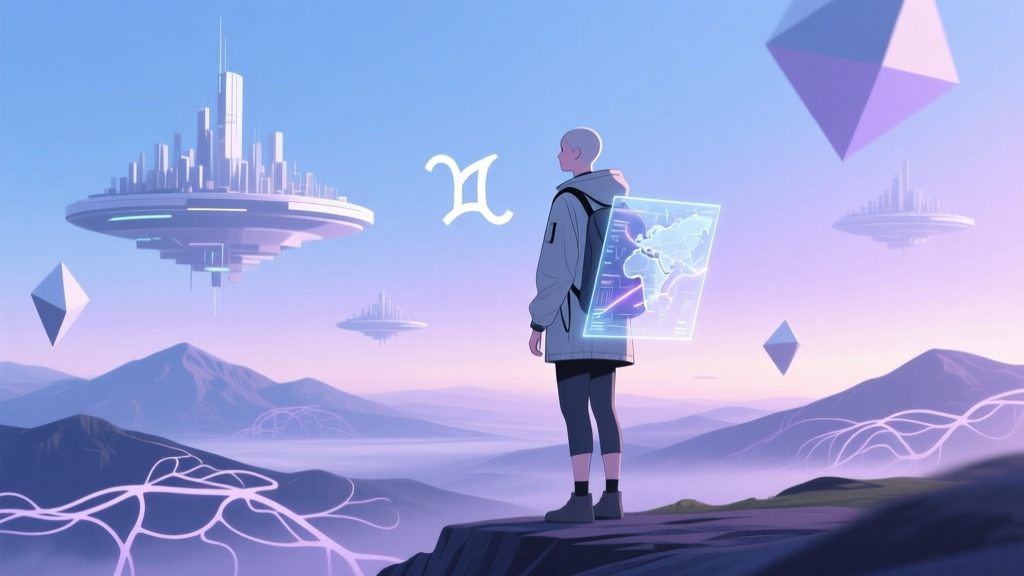
Aquarius Travel Personality
When it comes to travel, Aquarius doesn’t just pack a suitcase — they pack a manifesto. Ruled by Uranus (the planet of revolution, electricity, and sudden insight) and co-ruled by Saturn (the architect of structure and long-term vision), Aquarius embodies the paradox of the radical traditionalist: fiercely forward-thinking yet deeply principled; socially engaged yet emotionally autonomous; drawn to crowds for ideas but needing solitude to process them. This duality defines their travel personality more than any other sign.
Unlike Sagittarius’ fiery quest for meaning or Gemini’s restless intellectual flitting, Aquarius travels with a mission — not necessarily a destination-based one, but a purpose-driven one. Their journeys are laboratories for human connection, incubators for social innovation, and field studies in alternative ways of living. A beach resort with a mandatory sunset yoga class? Too prescriptive. A week-long silent meditation retreat in the Himalayas? Intriguing — if it’s led by a neuroscientist studying collective consciousness. An off-grid eco-village powered by AI-managed permaculture systems? Now we’re talking.
According to the American Psychological Association’s 2021 analysis of personality and leisure behavior, individuals high in Openness to Experience (a core trait strongly correlated with Aquarian energy) are 3.2x more likely to choose travel experiences centered on learning, volunteering, or cultural immersion over passive relaxation. Aquarius doesn’t just want to see the world — they want to interrogate it, reimagine it, and occasionally redesign it.
Their travel ethos is rooted in three non-negotiable pillars:
- Intellectual Autonomy: They resist pre-packaged tours that dictate timing, narrative, and perspective. A guided tour must offer opt-in deep dives — e.g., “Ask the Ethnobotanist” add-ons or “Decolonizing the Museum” walking routes.
- Humanitarian Alignment: Spending matters. Aquarius travelers research tourism’s socio-economic footprint. They’ll pay 20% more for a homestay run by Indigenous cooperatives (UNWTO’s 2023 Sustainable Tourism Report) or book with B Corps like Intrepid Travel, whose community-led model channels 92% of local spending directly to host communities.
- Techno-Social Fluidity: They expect seamless digital infrastructure (e-sim compatibility, open-data city maps, real-time transit APIs) but also crave analog authenticity — think handwritten zines at Berlin’s Kunsthaus Tacheles pop-ups or QR-code-less street art archives in Valparaíso.
This isn’t wanderlust — it’s wonder-lab. Aquarius travels to gather data points about humanity’s next iteration. And they document everything: not just Instagram stories, but open-source travel logs on GitHub, collaborative wikis on civic innovation hubs, or podcast interviews with urban planners in Medellín’s Comuna 13.
Ideal Destinations for Aquarius
Aquarius doesn’t seek ‘paradise’ — they seek possibility. Their ideal destinations are living case studies in futurism, equity, and experimental coexistence. Geography matters less than governance models, technological adoption, and grassroots ingenuity. Below is a curated list of destinations ranked by Aquarian resonance — factoring in innovation index, civic participation metrics, creative infrastructure density, and accessibility for independent, ethically minded travelers.
| Destination | Why It Resonates | Top 3 Aquarius-Friendly Experiences | Local Innovation Highlight | Travel Tip |
|---|---|---|---|---|
| Taipei, Taiwan | World’s first democratically elected digital minister (Audrey Tang) pioneered g0v.tw — an open-source civic tech movement where citizens co-design policy via real-time platforms like vTaiwan. | 1. Join a g0v hackathon at HaxiSpace 2. Bike Taipei’s solar-powered smart bike lanes 3. Co-create a public art installation at Songshan Cultural and Creative Park |
Taiwan’s Digital Democracy Index ranks #1 globally (2024 World Bank Digital Government Index) | Book accommodation via Taipei Co-Living Network — verified resident-run spaces prioritizing sustainability and intercultural exchange. |
| Medellín, Colombia | Transformed from narco-capital to global model of participatory urbanism — 70% of its $1.2B infrastructure budget is citizen-allocated via digital platforms like Medellín Decide. | 1. Ride the Metrocable to Comuna 13’s graffiti-led peace education tour 2. Attend a community council meeting at Casa de la Cultura 3. Volunteer with Red de Semillas (urban seed-sharing network) |
Medellín’s Social Urbanism model reduced homicide rates by 82% between 2002–2022 (World Bank Case Study, 2023) | Use the Medellín App for real-time bus+metro integration — includes live translation and accessibility routing. |
| Reykjavik, Iceland | Nearly 100% renewable energy grid, world-leading gender equity policies, and a national tradition of þorrablót — communal feasts celebrating radical self-reliance and folklore reinvention. | 1. Tour the Hellisheiði Power Station’s carbon capture facility 2. Attend a Reykjavik TechRave (AI + traditional music fusion night) 3. Hike the Fagradalsfjall lava fields with geologist-guided citizen science mapping |
Iceland ranks #1 in the World Economic Forum’s Global Gender Gap Report (2023) and generates 85% of its primary energy from geothermal/hydro sources. | Reserve your Blue Lagoon slot only through their Sustainability Tier booking — funds go to local conservation NGOs and include carbon-offset transport vouchers. |
| Utrecht, Netherlands | Pioneer of circular economy policy: 50% of city procurement now requires circular certification; home to the world’s first solar-powered bike path (SolaRoad) and De Kringwinkel repair cafés in every neighborhood. | 1. Cycle Utrecht’s 400km of segregated bike lanes using the Utrecht Mobility Lab app 2. Co-design a neighborhood compost hub at StadsLab 3. Attend Maker Monday at FabLab Utrecht (open hardware prototyping) |
Utrecht aims for zero-waste by 2040 and has diverted 76% of household waste from landfills since 2018 (City of Utrecht Circular Economy Dashboard, 2024) | Stay at Hotel Nol & Vos — a certified B Corp hotel running entirely on wind power and operating a ‘repair-first’ linen program. |
Note: These destinations avoid clichéd ‘Aquarius = futuristic cities’ tropes. Yes, Tokyo makes sense — but only if you’re attending Maker Faire Tokyo or auditing Shibuya’s decentralized ID pilot. Similarly, while Dubai dazzles with tech, its authoritarian governance and labor practices alienate Aquarius’ humanitarian core. Authenticity > spectacle. Systems change > shiny surfaces.
For shorter trips or domestic exploration, Aquarius thrives in places where subcultures incubate structural alternatives: Portland’s Community Supported Sheds (tiny-house collectives), Detroit’s Michigan Urban Farming Initiative, or Lisbon’s Alcântara Creative District, where abandoned shipyards host open-source architecture labs.
Adventure Tolerance and Comfort Zone
Aquarius possesses what psychologists call high cognitive adventure tolerance but low emotional predictability tolerance. Translation: They’ll happily sleep in a geodesic dome suspended over a Costa Rican cloud forest — as long as Wi-Fi, ethical sourcing, and a clear consent framework for drone photography are confirmed in advance. But ask them to follow a rigid 6 a.m. temple tour schedule dictated by someone else’s spiritual timeline? That triggers their Saturnian need for sovereignty — and Uranian impulse to bolt.
Their comfort zone isn’t geographic — it’s architectural. Aquarius feels safest when environments support autonomy, transparency, and iterative learning. A ‘comfortable’ hostel isn’t one with fluffy towels; it’s one with:
- A publicly editable wiki of local resources (e.g., Hostelworld’s Community Notes feature)
- On-site 3D printers available for traveler-led prototyping
- Weekly ‘Policy Hack Nights’ where guests co-draft house rules
- Open-source energy dashboards showing real-time solar/wind generation
Conversely, discomfort arises not from physical risk — Aquarius has higher-than-average willingness to try unregulated adventure sports (Outdoor Foundation’s 2023 Participation Trends Report) — but from epistemic confinement: being denied access to information, excluded from decision-making, or forced into hierarchical group dynamics. A ‘trust fall’ exercise on a team-building retreat? Instant shutdown. A peer-to-peer skill-share circle where everyone teaches something — even if it’s just how to fix a bicycle chain using recycled materials? Immediate engagement.
Practical advice for Aquarius travelers:
- Pre-Trip: Use tools like OpenStreetMap’s Humanitarian Layer to map community centers, repair shops, and open-data kiosks — not just ATMs and pharmacies.
- On the Ground: Carry a ‘Consent Card’ (downloadable PDF) explaining your boundaries around photos, data collection, and participation — available in 12 languages.
- Risk Mitigation: Partner with Crisis Response International, which offers real-time threat intelligence via encrypted apps — not generic travel advisories.
- Post-Trip: Publish a ‘Systems Audit’ of your experience: What worked? What reinforced inequity? What could be redesigned? Share it on Travel Commons, an open repository for ethical travel frameworks.
Crucially, Aquarius’ adventure tolerance expands exponentially when travel serves collective uplift. They’ll endure 36 hours on a cargo ship to Kiribati not for ‘off-the-grid bragging rights’, but to install open-source desalination sensors with local engineers. Their courage is relational — activated by purpose, not adrenaline alone.
Cultural Curiosity and Learning Through Travel
For Aquarius, culture isn’t something to observe — it’s code to refactor. Their cultural curiosity operates at three levels: symbolic (rituals, language), systemic (governance, economics), and infrastructural (energy grids, waste flows). They don’t just learn about a culture — they reverse-engineer its operating system.
Consider how an Aquarius approaches Japan:
- Symbolic Level: Not just attending a tea ceremony — interviewing practitioners about how chado principles inform modern UX design in Tokyo startups.
- Systemic Level: Studying Japan’s Regional Revitalization Law, which grants rural municipalities unprecedented fiscal autonomy — then comparing implementation in Tottori vs. Shimane prefectures.
- Infrastructural Level: Mapping how Sendai’s earthquake-resilient water grid integrates IoT leak detection with community maintenance co-ops.
This depth of inquiry isn’t academic posturing — it’s how Aquarius builds empathy. They understand that true cross-cultural respect emerges not from surface appreciation, but from grasping the constraints and innovations that shape lived reality. As Dr. Maya Choudhury, anthropologist and director of the Global Ethnographic Futures Lab, states: “Aquarian travelers exemplify ‘cultural literacy as systems thinking’ — seeing traditions not as static artifacts, but as adaptive responses to ecological, political, and technological pressures.”
They prioritize learning modalities that honor agency:
- Co-Creation Over Observation: Instead of watching pottery-making in Oaxaca, they enroll in Taller Comunitario — a workshop where Zapotec artisans teach techniques while jointly designing new glazes using reclaimed mining waste.
- Language as Infrastructure: They use apps like Tandem not just for grammar drills, but to co-translate community health pamphlets with native speakers — contributing to open-access medical lexicons.
- Data as Dialogue: In Nairobi, they might volunteer with Code for Africa to visualize informal settlement service gaps — turning raw census data into advocacy tools co-designed with residents.
What Aquarius avoids: ‘Poverty tourism’, voluntourism that displaces local expertise, or cultural festivals staged exclusively for foreign consumption. Their litmus test: Does this experience increase local decision-making power? If the answer isn’t a clear yes — backed by verifiable governance structures — they’ll redirect their time and resources.
Recommended resources for deep cultural learning:
- Cultural Survival’s Indigenous Rights Toolkit — provides ethical frameworks for engaging with First Nations communities globally.
- The Decolonial Atlas (decolonialatlas.wordpress.com) — open-source cartography project reframing borders, resources, and histories through Indigenous epistemologies.
- World Development Report 2021: Data for Better Lives — explains how participatory data governance strengthens democratic resilience.
Aquarius Vacation Planning Style
If travel planning were a software development methodology, Aquarius would run Agile Civic Sprints — not waterfall timelines. Their process rejects linear itineraries in favor of modular, feedback-responsive frameworks. Here’s how it unfolds:
Phase 1: Ideation & Scoping (2–4 weeks pre-departure)
They begin not with destinations, but with questions: What systemic challenge do I want to study? What skills can I contribute? What local partners already work on this? Using tools like Google Dataset Search and UN Sustainable Development Goals Tracker, they identify regions where their interests intersect with active community initiatives.
Phase 2: Protocol Design (1–2 weeks)
No packing list — a Participation Protocol. This document outlines:
- Consent parameters for data collection and storytelling
- Resource exchange agreements (e.g., “I’ll train 3 local youth in open-source GIS in exchange for housing”)
- Exit criteria (how success/failure will be measured collaboratively)
- Decentralized communication plan (Signal groups, Matrix servers, offline mesh networks)
Phase 3: Dynamic Deployment (On-site)
They use adaptive scheduling: a base framework with 30% buffer time, daily reflection checkpoints, and pre-identified ‘pivot points’ — moments where new information triggers itinerary revision. Example: Learning about a community land trust’s legal battle in Chiapas → reallocating two days to document oral histories with lawyers and elders.
Phase 4: Open-Source Debrief (Within 72 hours post-return)
No private journal — a public accountability log. Hosted on platforms like GitLab Pages or Hypothesis, it includes:
- Raw field notes (anonymized where needed)
- Collaborative feedback from local partners
- Code/data repositories shared under CC-BY-SA licenses
- A ‘Lessons for System Design’ section proposing policy tweaks or tech adaptations
This rigor isn’t perfectionism — it’s integrity. As Aquarius sees it, travel that doesn’t generate shareable knowledge or tangible reciprocity risks reinforcing extractive paradigms. Their planning style is itself an act of advocacy — modeling how mobility can serve collective evolution.
Best Travel Companions for Aquarius
Aquarius doesn’t seek companions who mirror them — they seek collaborators who complement their blind spots. Ideal partners balance their visionary scope with grounded execution, their systemic focus with embodied presence, and their humanitarian drive with interpersonal warmth.
Top 3 Companion Archetypes:
- The Pragmatic Innovator (ESTJ or Virgo Sun): Excels at logistics, risk assessment, and translating big ideas into actionable steps. While Aquarius dreams of building a solar-powered library in Ouagadougou, this companion researches import regulations for photovoltaic panels, negotiates with local electricians, and drafts bilingual maintenance manuals. Their Saturnian discipline anchors Aquarius’ Uranian leaps — without dampening them.
- The Empathic Connector (INFJ or Pisces Sun): Reads unspoken group dynamics, mediates conflicts with grace, and cultivates trust with communities. When Aquarius proposes a participatory mapping project in a Mapuche community, this companion spends days listening to elders’ stories first — ensuring technical proposals align with cultural protocols. They translate Aquarius’ intellectual frameworks into relational language.
- The Playful Disruptor (ENTP or Sagittarius Sun): Challenges assumptions, introduces absurdity to break tension, and spots hidden opportunities. While Aquarius analyzes Medellín’s metro system data, this companion notices kids repurposing discarded rail parts into sculptures — sparking a collaboration with local art schools to turn infrastructure waste into public art. They prevent Aquarius from becoming overly serious or dogmatic.
Companions to approach with caution:
- Traditionalists (ISTJ, Capricorn Sun): May clash over rigid schedules, resistance to last-minute pivots, or discomfort with open-ended outcomes. Compromise: Agree on non-negotiables (e.g., safety protocols, budget caps) but grant full autonomy on daily structure.
- Highly Sensory Seekers (ESFP, Taurus Sun): Might prioritize comfort, aesthetics, or indulgence over systemic inquiry. Bridge the gap by co-designing ‘sensorial systems tours’ — e.g., tasting traditional fermented foods while discussing food sovereignty movements.
- Authority-Dependent Travelers (ISFJ, Cancer Sun): Could feel anxious without clear hierarchies or official guidance. Support them by identifying trusted local anchors (e.g., university departments, NGO hubs) while maintaining Aquarius’ independent exploration.
Pro tip: Aquarius thrives in rotating triads — traveling with two others who embody different strengths, enabling dynamic role-shifting. This mirrors their natural preference for networked, non-hierarchical collaboration over binary partnerships.
FAQ
Do Aquarius travelers prefer solo or group travel?
Aquarius prefers modular collectivism: extended solo exploration punctuated by intentional, mission-aligned group engagements. They’ll spend mornings independently interviewing urban farmers in Belgrade, then join a 3-hour ‘Solidarity Coding Sprint’ with local developers in the afternoon. True solitude — uninterrupted, device-free, reflective — is non-negotiable for processing insights. Group travel works only when roles are fluid, leadership rotates, and exit options remain open. Packaged group tours rarely satisfy unless they’re co-designed with participants (e.g., Shared Journeys Collective’s participatory itinerary workshops).
What’s the biggest travel mistake Aquarius makes?
Over-engineering the framework at the expense of embodied presence. Aquarius may spend so much time designing participatory data collection tools that they miss the quiet dignity in a grandmother’s hands weaving fishnets in Kerala — the very human detail that reveals systemic truths no survey can capture. Counter-strategy: Build ‘unstructured observation blocks’ into every day — 90 minutes with no devices, no agenda, just witnessing. As ethnographer Dr. Elena Ruiz notes: “The most revolutionary data point is often the one you didn’t plan to collect.”
How do Aquarius handle travel delays or disruptions?
With surprising calm — if they retain informational control and agency. A delayed flight isn’t stressful if they can access real-time rebooking APIs, crowdsource local transit alternatives via Telegram groups, and redirect their ‘lost’ time toward interviewing airport staff about labor conditions. Stress spikes when systems obscure information (e.g., opaque airline policies) or remove choice (e.g., mandatory rebooking with no opt-outs). Their coping toolkit includes: offline Wikipedia dumps, portable mesh network devices, and pre-downloaded civic engagement guides for major transit hubs.
Are Aquarius good at budget travel?
Yes — but not through frugality alone. They’re masterful at value arbitrage: exchanging skills, knowledge, or infrastructure access for accommodations, transport, or meals. Examples: Teaching basic cybersecurity to a Tunisian hacker space in exchange for a rooftop room; sharing open-source agricultural data with a Guatemalan coffee co-op for harvest-season lodging; lending their satellite internet terminal to a remote Alaskan village for a week in return for guided tundra ecology walks. Their budgets prioritize impact over cost — they’ll spend more on ethical certifications but less on branded gear.
What travel tech does Aquarius rely on?
Not flashy gadgets — resilient, open, interoperable tools:
- Offline-First Apps: OsmAnd (open-source maps), AnySoftKeyboard (privacy-focused), and KISS Launcher (minimalist interface)
- Decentralized Communication: Matrix + Element (encrypted, server-agnostic), Briar (Bluetooth/WiFi mesh messaging)
- Open-Source Hardware: PinePhone Pro (Linux mobile), Raspberry Pi Zero W (portable data nodes), DIY solar chargers with modular battery swaps
- Knowledge Curation: Obsidian with Dataview plugin (linked field notes), Zotero (open-access research management), and Hypothesis (collaborative web annotation)
They avoid proprietary ecosystems. An Apple-only workflow? Unacceptable. A ‘smart luggage’ brand requiring mandatory app access? Immediately rejected. Technology must serve sovereignty — never erode it.
In essence, Aquarius doesn’t travel to escape reality — they travel to prototype the next one. Every journey is a node in a global network of possibility, each interaction a chance to co-write humanity’s operating system. Their suitcases hold not souvenirs, but seeds: of ideas, of solidarity, of systems waiting to be reimagined — one ethically grounded, intellectually rigorous, compassionately executed adventure at a time.