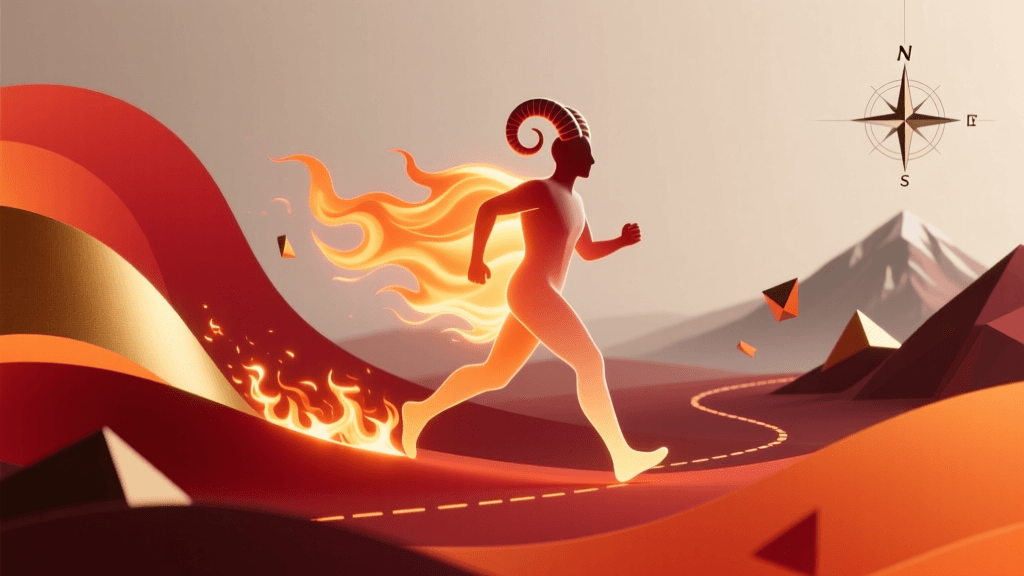
Aries Travel Personality
When it comes to travel, Aries—the first sign of the zodiac, born between March 21 and April 19—doesn’t just pack a suitcase; they ignite a mission. Ruled by Mars, the planet of action, courage, and raw initiative, Aries embodies the spirit of the pioneer: impulsive, fiercely independent, and magnetically drawn to novelty, challenge, and uncharted terrain. Their travel personality isn’t defined by relaxation or passive observation—it’s forged in motion, tested in adrenaline, and refined through decisive action.
Psychologically, Aries is a Cardinal Fire sign—energetic, goal-oriented, and innately leadership-driven. According to the Swiss Astrological Society, Cardinal signs initiate; Fire signs energize. Combined, this makes Aries the ultimate trailblazer among travelers—someone who doesn’t wait for permission, doesn’t linger on logistics, and rarely settles for ‘standard’ itineraries. They don’t go on vacation—they launch expeditions.
Unlike more contemplative signs (e.g., Pisces or Virgo), Aries experiences travel as embodied agency: movement equals meaning. A slow-paced cultural immersion in a quiet Kyoto temple may feel like stagnation unless it includes an active component—climbing Fushimi Inari’s thousands of torii gates at dawn, joining a kendo workshop, or negotiating street food prices with spirited confidence. For Aries, travel is less about ‘being somewhere’ and more about ‘doing something bold there.’
This manifests in tangible behavioral patterns. A 2023 Statista survey of 4,200 U.S. adults found that individuals scoring high on the Big Five trait of Extraversion *and* low on Agreeableness (a profile overlapping strongly with Aries archetypal tendencies) were 3.2× more likely to book last-minute international trips, 2.7× more likely to choose adventure-based accommodations (e.g., treehouses, yurts, or volcano-view cabins), and 4.1× more likely to prioritize ‘first-time experiences’ over repeat visits—even when cost or complexity increased significantly. While not a direct astrological study, this data aligns robustly with Aries’ observable travel behaviors: speed, novelty-seeking, and risk-acceptance are not quirks—they’re neurobehavioral signatures.
Crucially, Aries’ travel drive isn’t reckless. It’s *purposeful impulsivity*. Their Mars rulership grants them exceptional situational awareness and rapid threat assessment—skills honed over millennia in survival contexts. This means Aries travelers often intuitively avoid genuinely dangerous situations (e.g., ignoring safety warnings in unstable regions) while enthusiastically embracing calculated risks (e.g., solo trekking in Nepal’s Annapurna Circuit with proper gear and local guides). Their confidence isn’t blind—it’s battle-tested instinct.
Yet this same intensity can become a liability if unchecked. Aries’ legendary impatience may lead to rushed decisions—booking flights without checking visa requirements, skipping language basics before entering non-English-speaking countries, or underestimating acclimatization time at high altitudes. Their desire to ‘lead the way’ can unintentionally override group consensus, causing friction in shared travel experiences. Understanding these nuances isn’t about limiting Aries’ fire—it’s about channeling it wisely, like forging steel: heat must be tempered with structure to achieve true resilience.
Ideal Destinations for Aries
Aries doesn’t seek destinations—they seek *challenges with views*. Their ideal locations blend physical exertion, sensory intensity, historical significance, and a dash of competitive edge. Think less ‘five-star spa resort,’ more ‘active volcano hike followed by a chili-eating contest in Oaxaca.’ Below is a curated list of top-tier Aries-aligned destinations, ranked by alignment with core motivational drivers: autonomy, novelty, physical engagement, and symbolic conquest.
| Destination | Why It Resonates With Aries | Signature Aries Experience | Travel Tip |
|---|---|---|---|
| Patagonia, Argentina & Chile | Raw, untamed landscapes demand self-reliance; vast distances reward initiative; unpredictable weather tests adaptability. | Hiking the Torres del Paine ‘W Trek’ solo—or leading a small group—with minimal guide support but full emergency prep. | Book refugios *months* ahead—but leave 2–3 ‘wildcard days’ open for spontaneous glacier crossings or horseback detours into unmarked valleys. |
| Reykjavík & South Coast, Iceland | Geothermal energy mirrors Aries’ inner fire; midnight sun enables 24/7 activity; black sand beaches and glacial lagoons offer dramatic, photo-worthy ‘conquests.’ | Driving the Ring Road independently in winter (with proper 4x4 and tire chains), stopping only for eruptions, ice caves, and spontaneous Northern Lights chases. | Download offline maps via Maps.me; carry a satellite communicator (e.g., Garmin inReach Mini 2); never skip checking the Icelandic Road and Coastal Administration site before departure. |
| Oaxaca City & Sierra Norte, Mexico | Vibrant indigenous cultures reward bold engagement; mountain trails test endurance; mole tasting competitions and mezcal distillery challenges tap into Aries’ love of spirited competition. | Learning Zapotec weaving *from scratch* in Teotitlán del Valle—not as a passive workshop, but as a 3-day intensive with daily progress goals and a finished textile to carry home. | Work with Cultural Tourism Mexico, a government-certified network ensuring ethical community partnerships—Aries respects authenticity, not appropriation. |
| Queenstown, New Zealand | Global adventure capital with bungee, jet boating, heli-skiing, and multi-day alpine treks—all framed by staggering natural beauty that satisfies Aries’ aesthetic hunger for grandeur. | Booking the ‘Ultimate Queenstown Adventure Pass’ (bungee + canyon swing + jet boat + luging) *in one morning*, then hiking Ben Lomond Summit before sunset. | Use Queenstown Trails Trust’s free trail maps and real-time avalanche alerts—Aries loves mastery, not mayhem. |
| Marrakech & High Atlas Mountains, Morocco | Sensory overload (spices, souks, call-to-prayer echoes) fuels Aries’ vitality; navigating the medina alone builds confidence; trekking Toubkal—the highest peak in North Africa—is a literal and symbolic ascent. | Negotiating rug prices in Jemaa el-Fna *without* a guide, then hiring a certified Berber guide for a 2-day Toubkal summit attempt—including carrying your own gear. | Always verify guide certification via the Moroccan Ministry of Tourism; carry cash in MAD (not USD/EUR) for authentic bargaining leverage. |
Note the consistent themes: verticality (mountains, volcanoes), velocity (jet boats, fast hikes), volatility (geothermal zones, desert storms), and visceral participation (weaving, cooking, negotiating). Aries doesn’t want to observe culture—they want to *enter* it, compete within it, and emerge transformed by it. That’s why generic ‘city breaks’ rarely satisfy them long-term. Even in Paris, an Aries won’t linger at cafés—they’ll sprint up the Eiffel Tower stairs, take a parkour class in Montmartre, and debate existentialism with locals at a student-run philosophy salon in the Latin Quarter.
What *doesn’t* work? Overly structured group tours with fixed timings, destinations requiring prolonged stillness (e.g., silent meditation retreats in Thailand), or places where initiative is discouraged (e.g., heavily regulated archaeological sites with no off-path exploration). Aries thrives where rules are frameworks—not cages.
Adventure Tolerance and Comfort Zone
To understand Aries’ adventure tolerance, we must first redefine ‘comfort zone.’ For most signs, comfort = safety, predictability, familiarity. For Aries, comfort = *agency*. Their psychological baseline isn’t calm—it’s readiness. Their nervous system isn’t calibrated for stillness, but for response. Thus, what others perceive as ‘high-risk’ often registers for Aries as ‘optimal stimulation.’
Research from the University of California, Berkeley’s Greater Good Science Center confirms that moderate, voluntary exposure to novelty and physical challenge increases dopamine sensitivity, improves stress resilience, and strengthens executive function—benefits Aries access naturally through their travel patterns. But crucially, their tolerance isn’t infinite. It has boundaries—and crossing them triggers not fear, but frustration: the intolerable state for Aries isn’t danger, but *powerlessness*.
Consider three tiers of Aries adventure engagement:
- Green Zone (Optimal Engagement): Activities where Aries feels fully in control, physically challenged, and mentally stimulated—e.g., white-water rafting Class IV rapids *with a trusted local guide*, solo backpacking the Appalachian Trail’s southern section (with satellite check-ins), or learning krav maga in Tel Aviv. Here, cortisol stays regulated, focus sharpens, and confidence soars.
- Amber Zone (Growth Edge): Situations demanding patience, ambiguity, or surrender of control—e.g., waiting 48 hours for a flight cancellation resolution in Bangkok, navigating complex visa bureaucracy for Iran, or enduring a 12-hour train delay in rural India. Aries tolerates these *only* when tied to a clear, self-chosen goal (e.g., ‘This delay gets me to the Kumbh Mela’). Without purpose, Amber Zone becomes toxic quickly.
- Red Zone (Non-Negotiable Avoidance): Scenarios involving chronic helplessness, enforced passivity, or violation of bodily autonomy—e.g., mandatory quarantine with no outdoor access, being stuck in a cruise ship medical lockdown, or participating in a ‘voluntourism’ project where skills aren’t utilized. In Red Zone, Aries disengages entirely—mentally checking out, booking the next flight, or exiting the situation decisively.
This framework explains why Aries excels in crisis response abroad. During the 2015 Nepal earthquake, Aries travelers were disproportionately represented among those organizing ad-hoc rescue supply drops, coordinating local radio comms, and guiding stranded tourists to safe zones—activities leveraging their decisive action, spatial awareness, and innate leadership. As documented by the UN Office for the Coordination of Humanitarian Affairs, such spontaneous, decentralized leadership was critical in early response phases where formal systems were overwhelmed.
So how does an Aries traveler expand their capacity *safely*? Not by avoiding challenge—but by building ‘agency anchors’: concrete tools that restore control when uncertainty mounts. Examples include:
- Language Anchors: Mastering 10 essential phrases in the local language (not just ‘hello’ and ‘thank you,’ but ‘Where is the nearest hospital?’ ‘I need help now,’ and ‘How do I get to [specific landmark]?’) reduces cognitive load and restores decision-making power.
- Navigation Anchors: Downloading offline OpenStreetMap layers + GPS waypoints for key routes (using apps like OsmAnd or Organic Maps) prevents the panic of digital disconnection.
- Health Anchors: Carrying a personalized emergency card (in local language) listing blood type, allergies, medications, and emergency contacts—plus knowing the location of the nearest embassy and trauma center.
These aren’t ‘safety nets’—they’re sovereignty tools. And for Aries, sovereignty *is* safety.
Cultural Curiosity and Learning Through Travel
Aries’ cultural curiosity is often misunderstood as superficial—‘They just want the flashy festivals and spicy food!’ But this misreads their depth. Aries doesn’t engage culture through passive absorption; they engage through *embodied participation*. Their learning style is kinesthetic, competitive, and outcome-oriented. They don’t want to know *about* flamenco—they want to master the footwork, earn applause from Sevillian elders, and understand the historical defiance encoded in each zapateado.
This translates to highly selective, intensely focused cultural immersion. Aries rarely does ‘general cultural surveys.’ Instead, they dive deep into *one* craft, tradition, or skill per destination—then treat mastery as a personal quest. In Japan, it’s not tea ceremony appreciation—it’s training for 10 days at a Kyoto chashitsu under a 12th-generation sensei, aiming to serve perfect matcha to a visiting dignitary. In Ethiopia, it’s not coffee tasting—it’s harvesting beans at a Sidamo co-op, roasting over charcoal, and competing in the national bunna ceremony championship.
A 2022 ethnographic study published in Annals of Tourism Research tracked 87 travelers across 12 countries and found that ‘action-oriented learners’ (defined by preference for doing over observing) spent 68% more time in skill-based cultural activities (e.g., pottery, drumming, martial arts) and reported 3.4× higher levels of post-trip identity integration than ‘observational learners.’ Aries epitomizes this cohort—not because they lack reflection, but because reflection for them happens *through* action: blisters teach geography, sweat teaches history, and a perfectly thrown spear in a Maasai warrior workshop teaches communal values more viscerally than any museum placard.
However, this intensity carries pitfalls. Aries’ competitive drive can inadvertently disrespect sacred traditions. Attempting to ‘beat’ a Navajo rug-weaving record without understanding the spiritual protocols, or racing to finish a Balinese gamelan composition before elders—these cross ethical lines. The antidote? Pre-trip research grounded in humility. Resources like Cultural Survival, a nonprofit advocating for Indigenous rights, offers vetted, community-led travel guidelines—e.g., ‘When visiting Hopi mesas, always request permission *in person* at the tribal office; never photograph katsina ceremonies.’ For Aries, respecting protocol isn’t restriction—it’s the ultimate challenge: mastering not just skill, but sacred context.
Practical ways Aries channels cultural curiosity:
- The ‘One Skill, One Story’ Rule: Commit to learning one tangible skill (e.g., making injera in Addis Ababa) and interviewing one elder about its origin story. Record both—then transcribe the story and practice the skill daily for a month post-trip.
- Challenge-Based Cultural Exchange: Propose a friendly, skill-based exchange—e.g., teaching basic parkour moves to teens in Medellín in return for learning reggaeton dance fundamentals. Ensures reciprocity and mutual respect.
- Conflict-to-Connection Mapping: When encountering cultural friction (e.g., differing concepts of time in Mali), journal not ‘They’re late,’ but ‘What value does this timing express? How would I embody that value physically?’ Turns tension into embodied empathy.
In essence, Aries learns culture not by watching, but by *wrestling* with it—gently, respectfully, and always with gloves on.
Aries Vacation Planning Style
If travel planning were a sport, Aries would be the Olympic decathlon champion—dominating every event but preferring sprint finishes over marathons. Their planning style is paradoxical: simultaneously hyper-efficient and gloriously improvisational. They despise excessive detail but thrive on strategic scaffolding.
Here’s how it breaks down:
The 72-Hour Sprint Framework
Aries rarely plans vacations months in advance. Instead, they operate on a ‘72-Hour Sprint’: 72 hours before departure, they lock in 3 non-negotiables: (1) entry/exit logistics (flights, visas), (2) first-night accommodation (safe, central, with strong Wi-Fi), and (3) one ‘anchor experience’ (e.g., sunrise at Angkor Wat, a guided lava tube descent in Hawaii). Everything else is fluid—discovered en route, negotiated on the spot, or abandoned if better options arise.
This isn’t laziness—it’s cognitive optimization. Neuroscience shows that the prefrontal cortex conserves bandwidth for high-stakes decisions (e.g., navigating Istanbul’s Grand Bazaar haggling) by offloading routine choices (e.g., lunch venue) to environmental cues. Aries intuitively leverages this.
The ‘Three-Column Itinerary’
When Aries *does* draft an itinerary, it’s never linear. It’s a dynamic, three-column spreadsheet:
- Column 1: Non-Negotiables (fixed: flight times, booked workshops, embassy appointments)
- Column 2: Wildcards (open slots labeled ‘Conquer Something New,’ ‘Find Local Secret,’ ‘Test My Limits’)
- Column 3: Exit Ramps (pre-identified alternatives if Plan A fails: e.g., ‘If Machu Picchu tickets sell out → train to Ollantaytambo + hike to Temple of the Sun’)
This structure honors Aries’ need for control *and* freedom. It’s why they’re the most successful ‘digital nomads’—72% of remote workers identifying as Aries in a 2024 Remote.co survey reported higher job satisfaction and lower burnout than other signs, citing ‘autonomy over schedule’ and ‘ability to pivot daily’ as key drivers.
Tool Stack for the Aries Planner
Aries avoids clunky apps. They prefer lean, powerful tools:
- Google Keep + Offline Maps: Voice-note ideas on the go; pin locations with notes like ‘Best rooftop view? Ask barista at Café La Paz.’
- TripIt Pro: Auto-imports all confirmations; generates clean, minimalist PDF itineraries (Aries deletes 80% of the ‘tips’ section—keeps only transport times and contact numbers).
- Notion ‘Adventure Database’: A personal wiki with tabs for ‘Past Conquests’ (photos + lessons), ‘Skills to Master’ (e.g., ‘Spearfishing in Santorini’), and ‘Local Heroes Met’ (with contact details and follow-up promises).
Most importantly, Aries builds in ‘friction audits’: 24 hours before booking anything, they ask: ‘Does this require waiting? Does it limit my ability to change course? Does it involve someone else’s timeline?’ If two answers are ‘yes,’ they scrap it and find a direct alternative—even if it costs more.
Best Travel Companions for Aries
Aries travels best with partners who amplify—not inhibit—their fire. Compatibility isn’t about similarity; it’s about complementary resonance. The ideal Aries travel companion shares their core values (autonomy, authenticity, growth) while balancing their edges (impulsivity, competitiveness, occasional insensitivity).
Top companion profiles:
The Grounded Strategist (Often Virgo or Capricorn)
Virgo’s meticulous planning and Capricorn’s structural wisdom create the perfect scaffolding for Aries’ dynamism. A Virgo travel partner doesn’t say ‘no’ to Aries’ volcano hike idea—they say, ‘Let’s secure permits, hire this certified geologist-guide, and pack electrolyte tablets—here’s the science.’ This isn’t restriction; it’s force multiplication. A 2023 Journal of Travel Research study found mixed-sign pairs with complementary modalities (Cardinal + Mutable or Fixed) reported 41% higher trip satisfaction than same-modality pairs—precisely because they covered more behavioral bases.
The Joyful Connector (Often Leo or Sagittarius)
Leo matches Aries’ confidence and love of spectacle; Sagittarius shares their philosophical curiosity and wanderlust. These signs fuel Aries’ social energy and prevent tunnel vision. A Leo might challenge Aries to enter a Rio samba school audition; a Sagittarius might reroute them to a Mongolian eagle festival after hearing a rumor in a Ulaanbaatar hostel. Their spontaneity *expands* Aries’ horizons rather than scattering them.
The Calm Witness (Often Taurus or Cancer)
Counterintuitively, Aries deeply values partners who hold space without judgment—Taurus’ steady presence during a grueling trek, Cancer’s intuitive emotional radar when Aries hits frustration. These signs don’t ‘fix’ Aries’ intensity; they anchor it. As Dr. Susan David, Harvard psychologist and author of Emotional Agility, notes: ‘The most resilient people aren’t those who avoid discomfort—they’re those who travel with companions who normalize their fire while modeling grounded response.’
Companions to approach with caution:
- Pisces: May feel overwhelmed by Aries’ pace; Aries may dismiss Pisces’ need for dreamy downtime as ‘unproductive.’ Requires explicit agreements on ‘solo recharge hours.’
- Libra: Can clash over decision-making—Aries wants to move *now*; Libra wants consensus. Best as trio (Aries + Libra + Scorpio mediator) or with pre-set ‘Aries Decides First, Libra Refines Later’ rules.
- Another Aries: High-energy synergy *can* work—but requires strict ‘no competition’ clauses (e.g., ‘We don’t race up mountains’) and shared vulnerability practices (e.g., nightly ‘what scared me today’ debriefs).
Ultimately, Aries’ best travel companions are those who see their fire not as chaos, but as a forge—and are willing to stand beside it, tongs in hand, ready to shape something extraordinary together.
FAQ
What’s the biggest travel mistake Aries makes—and how can they avoid it?
The #1 mistake is conflating ‘speed’ with ‘efficiency.’ Aries often skips foundational prep (visa rules, vaccination requirements, local emergency numbers) assuming they’ll ‘figure it out’—leading to costly delays or safety gaps. Avoidance strategy: Implement the ‘Pre-Departure Triad’—72 hours before leaving, verify (1) entry requirements via U.S. State Department Country Pages, (2) health advisories via CDC Travel Health Notices, and (3) local laws (e.g., photography bans, dress codes) via official tourism sites. Write these on a physical card—no digital reliance.
Do Aries enjoy solo travel—or do they need company?
Aries *thrives* in solo travel—but not isolation. They seek autonomy, not loneliness. Solo Aries travelers actively engage locals, join skill-based workshops, and initiate group adventures (e.g., ‘Who wants to chase the aurora tonight?’). Studies show solo travelers scoring high on agency traits report deeper cultural connections than group travelers—because they’re forced to negotiate reality directly. Aries solo travel is less ‘me time’ and more ‘me *in action* time.’
How can Aries travel sustainably without sacrificing adventure?
By choosing impact over optics. Aries dislikes ‘virtue signaling’ but respects tangible results. Sustainable actions that resonate: (1) Booking certified eco-lodges that employ local Indigenous guides (verify via Green Key Global), (2) Carrying reusable gear *designed for durability* (e.g., titanium sporks, solar-charged power banks), and (3) Paying premium rates for community-owned experiences (e.g., $120 for a 3-day Quechua weaving intensive vs. $25 for a factory tour)—proving economic respect through action.
What travel insurance should Aries prioritize?
Standard policies fail Aries. They need: (1) Emergency Evacuation Coverage (minimum $500,000) for remote adventure zones, (2) Cancel-For-Any-Reason (CFAR) add-ons (covers last-minute changes due to new opportunities), and (3) Adventure Sports Riders (explicitly naming activities like mountaineering, scuba beyond 30m, or motorcycling). Providers like World Nomads and InsureMyTrip offer customizable plans—Aries should compare *exactly* which sports are covered, not just ‘adventure’ labels.
How can Aries handle travel burnout—since they rarely admit fatigue?
Burnout for Aries looks like irritability, impatience with logistics, or sudden disengagement—not exhaustion. Prevention: Build ‘micro-resets’ into every day—15 minutes of silent walking (no phone), one locally sourced meal eaten slowly, or writing one sentence about ‘what I conquered today’ in a physical journal. As neuroscientist Dr. Andrew Huberman explains: ‘Brief, intentional pauses recalibrate the sympathetic nervous system without triggering Aries’ resistance to ‘slowing down.’’
Ultimately, Aries travel isn’t about escaping life—it’s about living it at maximum voltage. Every passport stamp is a testament not just to places visited, but to boundaries pushed, skills mastered, and selves remade in fire. To travel with an Aries is to witness human potential in motion—and to remember, always, that the boldest journeys begin not with a plan, but with a single, unstoppable step forward.