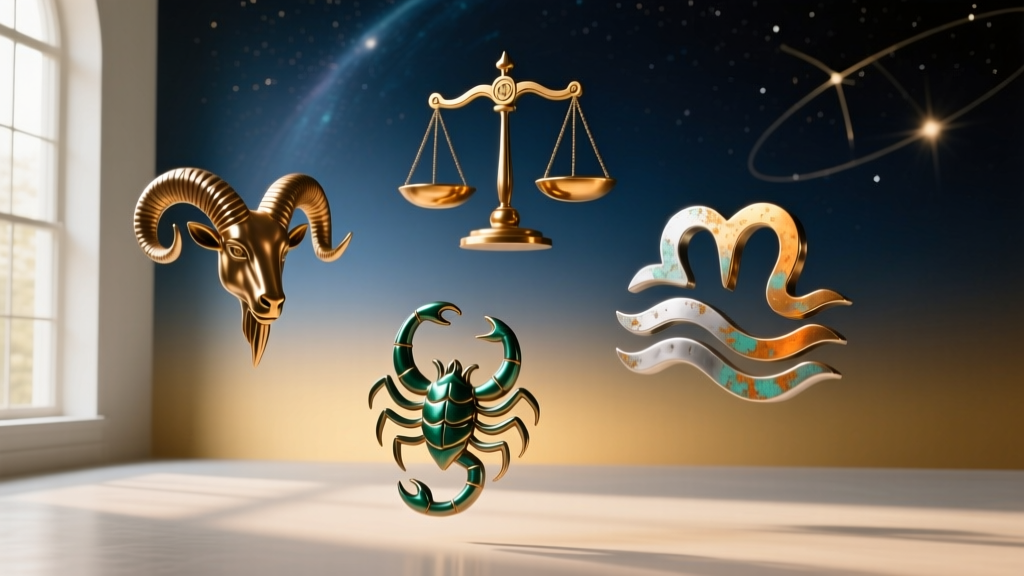
The intersection of natal chart dynamics and authority is one of the most heavily mythologized areas in esoteric psychology. Pop astrology frequently reduces power dynamics to simplistic sun-sign stereotypes, claiming that Fire signs inherently command while Earth signs merely obey. This binary ignores the complex architectural layers of the natal chart. True astrological power is not just about who shouts the loudest; it is about who holds the structural, emotional, and karmic reins. By examining the modalities, the 10th house, and the outer planets, we can dismantle widespread misconceptions about zodiac signs and authority, replacing them with a nuanced framework for understanding leadership, submission, and systemic control.
The Cardinal Signs and Authority: Natural Leaders or Tyrants?
Cardinal signs (Aries, Cancer, Libra, Capricorn) initiate the four seasons. Because they are the 'starters' of the zodiac wheel, they are frequently assumed to be authoritarian by nature. However, initiation does not equate to sustained domination. A common misconception is that all Cardinal placements manifest as overt, dictatorial control. In reality, Cardinal energy simply demands movement and structural genesis.
Aries initiates through direct action and martial assertion, often mistaking speed for leadership. Cancer initiates through emotional anchoring, wielding a subtle, protective authority that controls the domestic or internal group dynamic. Libra initiates through diplomatic consensus, exercising power by controlling the parameters of negotiation. Capricorn initiates through systemic hierarchy, building the very institutions that others must navigate. Recognizing these distinct modalities proves that authority is not a monolith; it is a spectrum of initiation strategies.
Misconceptions About Earth Signs and Structural Power
Earth signs are often mischaracterized as either ruthless corporate climbers or passive subordinates. The myth of the 'submissive Earth sign' stems from a misunderstanding of their core motivation: pragmatism. Earth signs do not crave power for the egoic validation that Fire signs might; they acquire authority to ensure stability, resource security, and tangible results. Below is a breakdown of how the Earth triad actually processes and wields structural power.
| Zodiac Sign | Ruling Planet | Authority Style | Core Misconception |
|---|---|---|---|
| Taurus | Venus | Resource Control | Myth: They are too lazy to lead. Reality: They lead by controlling capital, assets, and sensory environments. |
| Virgo | Mercury | Operational Mastery | Myth: They are merely assistants. Reality: They hold veto power through their monopoly on specialized knowledge and logistics. |
| Capricorn | Saturn | Institutional Command | Myth: They are inherently tyrannical. Reality: They enforce boundaries and systems to protect the longevity of the enterprise. |
FAQ: How Does the 10th House Dictate Your Relationship with Authority?
Question: Is the 10th house only about career success, or does it show how I handle being the boss?
Answer: The 10th house, and specifically the Midheaven (MC), represents the zenith of your public persona and your ultimate relationship with societal structures. According to Astro.com's AstroWiki, the 10th house governs not just your professional achievements, but your internalized image of 'the ultimate authority figure'—often projected from early parental dynamics. If you have harsh aspects to your Midheaven or Saturn placed in the 10th house, you may harbor a deep-seated resentment toward authority figures, or conversely, overcompensate by becoming a rigid micromanager. The 10th house reveals whether you view authority as a heavy burden of responsibility (Saturnian) or a platform for public liberation (Uranian).
FAQ: Do Fixed Signs Naturally Resist Authority?
Question: Why do Taurus, Leo, Scorpio, and Aquarius seem so stubborn when given orders?
Answer: Fixed signs are the stabilizers of the zodiac. Their primary psychological directive is to maintain, sustain, and protect their established territory. The misconception is that they are inherently rebellious. In truth, Fixed signs do not resist authority itself; they resist unjustified disruption. If an authority figure has not earned their respect through proven competence or loyalty, a Fixed sign will employ passive resistance (Taurus), overt defiance (Leo), strategic sabotage (Scorpio), or intellectual detachment (Aquarius). To lead a Fixed sign, you must provide a logical or emotional rationale that aligns with their need for stability and autonomy.
Debunking the 'Mars Equals Power' Myth
A pervasive error in beginner astrology is equating Mars with true authority. Mars represents the will to act, raw assertion, and the ability to conquer immediate obstacles. It is the energy of the warrior, not the king. A heavily aspected Mars makes an individual aggressive, competitive, and highly capable of enforcing their will in the short term. However, aggression is not authority.
True, enduring authority in the natal chart is governed by Saturn and Pluto. Saturn represents the right to rule, institutional legitimacy, boundaries, and the test of time. As noted by The Astrology Dictionary, Saturnian power is earned through discipline, mastery, and the acceptance of responsibility. Pluto, conversely, represents underworld power—the hidden levers of influence, psychological manipulation, and transformative control. A CEO with a strong Mars might yell and drive short-term results, but a CEO with a prominent Saturn-Pluto conjunction holds the institutional keys and dictates the long-term survival of the company.
The Role of the 6th House in Daily Hierarchies
While the 10th house rules the throne, the 6th house rules the daily grind, the cubicle, and the immediate chain of command. Your 6th house placements indicate how you behave as a subordinate and how you manage those directly beneath you on a day-to-day basis. An Aries in the 6th house may chafe under a slow-moving manager, whereas a Pisces in the 6th house might struggle with rigid, micromanaged schedules, preferring fluid, autonomous workflows.
Actionable Framework: Navigating Workplace Hierarchies Using Your Chart
Understanding your astrological blueprint allows you to stop fighting your natural power dynamics and start leveraging them. Use this framework to optimize your professional environment:
- Audit your Saturn Placement: Identify where you naturally demand respect and where you feel insecure. If Saturn is in the 3rd house, you assert authority through communication and data; do not let superiors bypass your intellectual contributions.
- Leverage your 10th House Ruler: Look at the sign and house placement of the planet that rules your Midheaven. If your 10th house ruler is in the 11th house, your path to authority is through networking, collective movements, and technological innovation, not traditional corporate ladders.
- Manage your Mars-Saturn Aspects: Hard aspects between Mars and Saturn often indicate friction with male authority figures or internal burnout from overworking. Mitigate this by establishing rigid boundaries around your labor and refusing to engage in unwinnable power struggles with insecure management.
- Understand your Moon's Needs: Emotional security dictates how long you will tolerate a toxic authority figure. If your Moon requires freedom (e.g., Moon in Sagittarius or Aquarius), prioritize roles with high autonomy over high-paying but restrictive hierarchical positions.
By dismantling these common myths, you can move beyond superficial sun-sign stereotypes and engage with the profound, systemic ways the cosmos maps human power structures. Authority is not merely about who is in charge; it is about the energetic architecture that sustains the hierarchy.