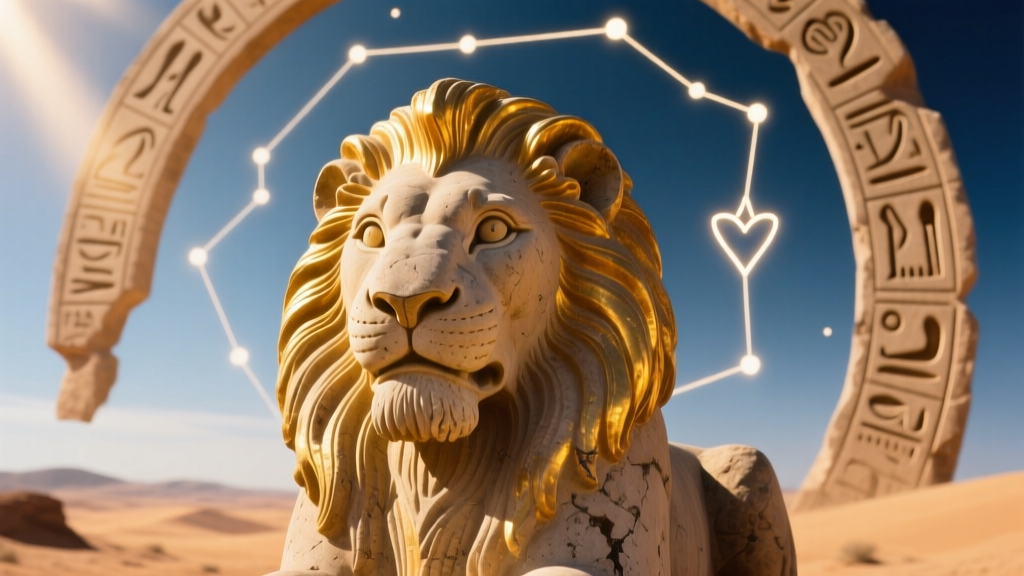
To understand the august 12 zodiac profile, one must look past modern newspaper horoscopes and examine the ancient astronomical frameworks that defined mid-summer celestial mechanics. Individuals born on this date fall near the 19th degree of Leo, a highly specific coordinate in the ecliptic that carries millennia of mythological and observational weight. Before the Hellenistic synthesis of zodiacal signs, the constellations dominating the August sky served as vital agricultural and religious markers for early civilizations. The historical lineage of this specific solar transit reveals a complex evolution from Mesopotamian star catalogs to Greco-Roman decan theory, shaping the archetype of the late-degree Leo native.
The Mesopotamian Roots of the Mid-Summer Lion
The conceptual foundation of the Leo constellation originates in ancient Babylon, documented extensively in the MUL.APIN, a comprehensive astronomical catalog compiled around 1000 BCE. The Babylonians identified this region of the sky as UR.GU.LA, meaning "The Great Lion." However, this was not merely a representation of a wild animal; it was a celestial manifestation of the scorching, unforgiving summer sun that dominated the Levant in August.
For the agrarian societies of Mesopotamia, the Sun's transit through this stellar region in mid-August coincided with the end of the barley harvest and the peak of seasonal drought. The lion archetype was intrinsically linked to solar fury, royal authority, and the protection of granaries. Kings of Babylon and Assyria frequently adopted the lion as a symbol of their divine right to rule, drawing a direct line between the celestial UR.GU.LA and their earthly sovereignty. Therefore, the foundational DNA of the August 12 native is rooted in ancient concepts of resource protection, royal stewardship, and the wielding of undeniable, sometimes intimidating, natural authority.
Hellenistic Astrology and the Second Decan of Leo
Following the conquests of Alexander the Great, Babylonian observational astronomy merged with Egyptian and Greek philosophical frameworks, giving birth to Hellenistic astrology. It was during this period (circa 2nd century BCE to 2nd century CE) that the zodiac was formalized into the 360-degree wheel we recognize today, and the system of "decans" was integrated into natal chart interpretation.
According to traditional astrological texts preserved and analyzed by historians at Skyscript, each zodiac sign is divided into three decans of 10 degrees each, governed by a sub-ruling planet based on the Chaldean order. August 12 falls squarely within the second decan of Leo (spanning 11 to 20 degrees), which is co-ruled by Jupiter. This creates a profound astrological synthesis: the primary rulership of the Sun (vitality, ego, illumination) is filtered through the Jovian lens (expansion, philosophy, benevolence, and law).
How the August 12 Zodiac Differs from Early Leo
While the first decan of Leo (ruled purely by the Sun) is often associated with raw, unfiltered ego and immediate creative impulse, the Jovian influence on the August 12 native introduces a layer of strategic foresight. The historical texts of Vettius Valens, a 2nd-century Hellenistic astrologer, describe natives of this specific decan as individuals who seek to expand their influence through structured systems, education, or legal frameworks rather than sheer force of will. They are the architects of empires rather than the frontline conquerors.
Mythological Predecessors: From Sekhmet to the Nemean Lion
The mythological narratives assigned to the Leo constellation provide a psychological blueprint for those born under the August 12 zodiac. In the Greco-Roman tradition, the constellation is universally identified with the Nemean Lion, the first of the Twelve Labors of Heracles. As detailed in the classical archives of Theoi Greek Mythology, the Nemean Lion possessed an impenetrable golden hide that deflected all mortal weapons. Heracles could only defeat it by wrestling it bare-handed and strangling it, eventually using its own claws to skin it and wearing the hide as armor.
This myth is highly specific to the late-degree Leo archetype. The impenetrable hide represents the psychological defenses and the formidable, unyielding exterior that August 12 individuals often construct to protect their inner vulnerabilities. The act of Heracles wearing the lion's skin symbolizes the integration of primal power with heroic intellect. Natives of this date are historically predisposed to absorb the strengths of their adversaries or challenges, turning external pressures into a protective armor that shields their creative and emotional core.
Prior to the Greek adaptation, the Egyptians associated the mid-summer sun with Sekhmet, the lioness goddess of war, healing, and the scorching desert winds. The historical appeasement of Sekhmet during the late summer months mirrors the August 12 native's dual capacity for immense destructive criticism and profound, restorative healing when their energies are properly channeled.
Astronomical Alignments: The Descent of Regulus
No historical analysis of the Leo archetype is complete without examining Alpha Leonis, the star known as Regulus ("The Little King"). Regulus is one of the four Royal Stars of ancient Persia, historically marking the summer solstice around 3000 BCE. Due to the precession of the equinoxes—the slow wobble of the Earth's axis—Regulus has shifted over millennia, moving from the center of the Leo constellation into the neighboring sign of Virgo in the tropical zodiac by the late 20th century.
However, in the sidereal zodiac and in ancient historical contexts, the heart of the lion was the defining feature of the mid-August sky. Claudius Ptolemy, in his foundational 2nd-century text the Tetrabiblos, noted that the stars in the heart of the Lion possess a nature similar to Mars and Jupiter. This historical astronomical data perfectly corroborates the decan theory: the August 12 native operates on a frequency that blends Martian drive (the courage to face the Nemean Lion) with Jovian wisdom (the royal, expansive nature of Regulus). This celestial coordinate demands a life path characterized by noble leadership and the ethical wielding of power.
Historical Personality Archetypes vs. Modern Interpretations
Modern psychological astrology often reduces Leo to mere traits of extroversion and theatricality. However, a rigorous examination of historical astrological frameworks reveals a much more complex archetype for the August 12 native. The table below contrasts the superficial modern interpretations with the deeply rooted historical archetypes derived from Hellenistic and Babylonian traditions.
| Core Trait | Modern Pop-Astrology View | Historical & Hellenistic Archetype | Origin Framework |
|---|---|---|---|
| Leadership | Attention-seeking, bossy, center of the stage. | Stewardship, judicial authority, the "Lawgiver" who protects the collective. | Second Decan (Jupiter sub-rulership); Babylonian Royal Stewardship. |
| Resilience | Stubbornness, refusal to admit defeat. | The impenetrable hide; absorbing adversity and transmuting it into structural armor. | The Nemean Lion mythos; Heraclean integration of primal forces. |
| Generosity | Extravagant spending, buying affection. | Patronage, the funding of philosophical or civic institutions, magnanimity. | Jovian influence on the Solar ego; Persian Royal Star (Regulus) nobility. |
| Conflict Style | Dramatic outbursts, holding grudges. | Strategic warfare, surgical strikes followed by profound restorative healing. | Egyptian Sekhmet archetype (scorching wind vs. healing medicine). |
Applying Historical Frameworks to Modern Life
For the individual born on August 12, understanding these ancient origins provides a practical decision-making framework. When faced with professional or personal conflict, the native is advised to bypass the modern impulse for theatrical reaction and instead lean into the Hellenistic Jupiter-ruled decan. This means approaching disputes with a focus on long-term expansion, legal or ethical high grounds, and philosophical detachment. By embodying the ancient archetype of the "Lawgiver" rather than the "Performer," the August 12 native aligns with the highest historical frequency of their specific ecliptic coordinate, transforming raw solar energy into enduring, structured influence.