The Historical and Mythological Roots of Beltane
As the Wheel of the Year turns toward the light half, Beltane emerges as one of the most significant cross-quarter days in Celtic and modern Pagan traditions. Falling on May 1st in the Northern Hemisphere, this ancient Gaelic festival marks the beginning of summer and the peak of spring fertility. However, as modern spiritual seekers adopt these ancient frameworks, a critical evaluation is necessary. This review examines the historical realities, psychological benefits, and ethical pitfalls of Beltane, providing a comprehensive pros and cons analysis for contemporary practitioners seeking authentic, grounded observance.
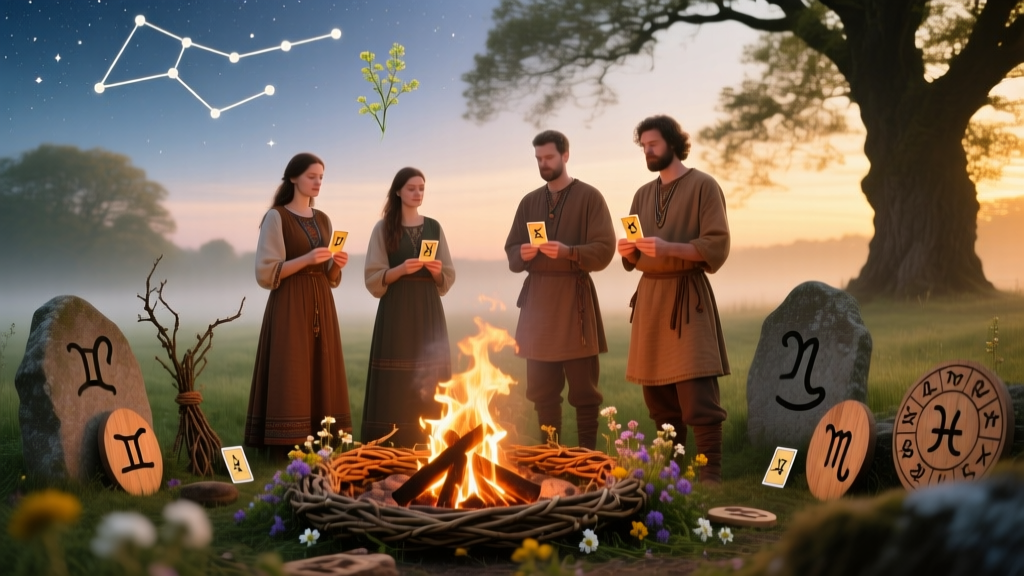
Etymologically, the Old Irish word Beltaine is widely translated as “bright fire” or “Bel’s fire,” referencing the purifying bonfires that were central to the holiday. According to the Smithsonian Center for Folklife and Cultural Heritage, the primary historical function of the festival was agricultural and apotropaic. Cattle were driven between two massive bonfires—known as the teine éigean or “needfire”—to protect them from disease and the Aos Sí (spirits or fairies) before being moved to summer pastures. The veil between the human world and the Otherworld was considered exceptionally thin, requiring rigorous warding rituals rather than mere celebration.
Pros: The Psychological and Spiritual Benefits
Somatic Alignment with Solar Cycles
From a chronobiological perspective, observing Beltane provides a psychological framework for adapting to shifting solar cycles. As daylight hours peak in the Northern Hemisphere, human circadian rhythms undergo significant adjustments, impacting melatonin suppression and serotonin production. Ritualizing this transition helps practitioners consciously integrate the shift from winter introspection to summer extroversion. By aligning personal routines with the solar return, individuals report improved mood regulation and a heightened sense of temporal grounding, mitigating the disorientation often caused by modern, artificially lit environments.
Communal Cohesion and Ritual Catharsis
Traditional Beltane practices, particularly the Maypole dance, serve as powerful sociological tools. The act of weaving ribbons around a central axis requires synchronized movement, fostering group flow states and reinforcing community bonds. In an era marked by digital isolation, participating in communal fire-tending or synchronized movement provides essential tactile and social anchoring. The shared catharsis of the bonfire allows communities to collectively release winter stagnation and publicly commit to mutual support during the demanding agricultural or metaphorical “harvest” months ahead.
Cons: Historical Realities and Modern Pitfalls
The Danger of Romanticized Historical Practices
A significant drawback in modern Beltane observance is the heavy romanticization of historical realities. Contemporary media and eclectic Paganism often frame the holiday exclusively as an erotic celebration of the “Great Rite” or a generic festival of love. Historically, Beltane was a survival ritual. The Aos Sí were not whimsical fairies but formidable, dangerous entities capable of blighting crops and stealing livestock. The original fires were deeply apotropaic, designed to ward off malevolent forces. Stripping the holiday of its protective, survivalist edge in favor of superficial “love and light” aesthetics erases the profound respect ancient peoples held for the untamed forces of nature.
Cultural Flattening and Appropriation
Another critical con is the cultural flattening that occurs when Beltane is absorbed into generalized Wiccan or Neo-Pagan frameworks. Specific regional Gaelic traditions—such as the precise botanical usage of hawthorn, rowan, and primrose, or the specific recitations found in Alexander Carmichael’s Carmina Gadelica—are often discarded. Replacing indigenous Celtic polytheism and localized folk magic with a monolithic, commercialized sabbat structure risks cultural erasure and disconnects practitioners from the specific, localized land spirits (genius loci) that the holiday was originally designed to honor.
Comparative Analysis: Traditional vs. Modern Observances
To understand the evolution and current state of the holiday, it is necessary to contrast how Beltane is approached across different paradigms. The following table outlines the structural and thematic differences between historical, modern spiritual, and secular observances.
| Observance Aspect | Traditional Gaelic (Pre-19th Century) | Modern Neo-Pagan / Wiccan | Secular / Folk May Day |
|---|---|---|---|
| Primary Focus | Livestock protection, apotropaic warding, survival. | Fertility, divine union, personal empowerment. | Labor rights, community fairs, maypole dancing. |
| Fire Usage | Teine éigean (needfire) for purification and warding. | Cauldron fires, candle magic, symbolic passion. | Bonfires for communal gathering and warmth. |
| View of the Unseen | The Aos Sí are dangerous; strict taboos apply. | Fae are whimsical; invited to join celebrations. | Largely ignored or treated as children's folklore. |
| Botanical Focus | Rowan, hawthorn, ash (used for strict warding). | Roses, jasmine, general spring flowers. | Lily of the valley, hawthorn (Mayflower). |
Critical Review: How to Practice Ethically Today
For the modern practitioner, the goal is not to rigidly replicate 9th-century agrarian survival tactics, nor to succumb to commercialized superficiality. Instead, an ethical Beltane practice requires synthesizing historical reverence with modern ecological and psychological awareness. The Beltane Fire Society in Edinburgh demonstrates how ancient motifs can be adapted into massive, community-focused theatrical rituals that honor the past while remaining relevant to contemporary urban populations.
Actionable Framework for a Grounded May Eve
- Ecological Fire Tending: If local fire bans or ecological concerns prevent a traditional bonfire, do not compromise environmental safety for aesthetic purity. Substitute with a managed fire pit, or utilize a cluster of beeswax candles arranged in a hearth pattern. Focus on the psychological intent of purification rather than the literal size of the flame.
- Apotropaic Home Warding: Reclaim the protective aspect of the holiday. Harvest or ethically source local rowan or hawthorn branches. Bind them with red thread and place them above thresholds to ward against negative energy or psychological stagnation, honoring the original protective intent of the Gaelic tradition.
- Localized Land Acknowledgment: Shift focus from generic Celtic deities to the specific genius loci of your immediate environment. Spend time observing the specific flora blooming in your microclimate and make offerings (such as clean water or native seeds) to the local ecosystem, recognizing that true fertility is rooted in local ecological health.
Final Assessment
Beltane remains a profoundly potent cross-quarter day, offering essential psychological markers for the transition into the light half of the year. Its pros lie in its ability to synchronize human biology with solar cycles and foster deep communal cohesion. However, its cons emerge when practitioners ignore its historical roots as a rigorous, apotropaic survival ritual in favor of romanticized, commercialized aesthetics. By critically examining these dynamics and adopting an actionable, ecologically responsible framework, modern seekers can observe Beltane with both historical integrity and profound spiritual depth.