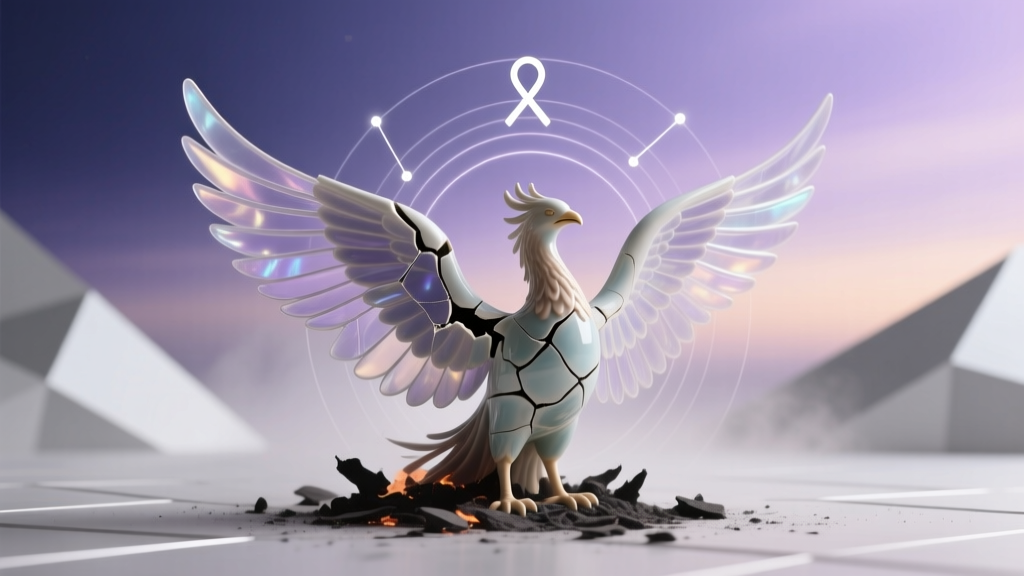
Cancer — the fourth sign of the zodiac, ruled by the Moon and anchored in the water element — is often mythologized as the nurturer, the keeper of home, the empathic heart of the celestial wheel. But beneath its gentle, protective exterior lies one of astrology’s most quietly formidable resilience profiles. Unlike fire signs that blaze through crisis or air signs that intellectualize hardship, Cancer meets adversity not with bravado or detachment, but with deep somatic attunement, ancestral memory, and a fiercely adaptive emotional intelligence. This profile does not romanticize Cancer’s sensitivity; rather, it illuminates how that very sensitivity — when consciously cultivated — becomes the architecture of extraordinary psychological resilience.
How Cancer Handles Crisis
When crisis strikes — whether it’s a sudden family rupture, health scare, financial instability, or existential uncertainty — Cancer doesn’t respond with immediate action or outward protest. Instead, it withdraws inward, like a crab retreating into its shell — not out of fear, but as a vital regulatory strategy. This instinctual pause is neurobiologically aligned with what trauma researcher Dr. Stephen Porges calls the polyvagal theory: the dorsal vagal response, which prioritizes safety-by-stillness before mobilization. For Cancer, this ‘stillness’ isn’t passivity — it’s data-gathering. The Moon-ruled psyche scans emotional atmospheres, recalls past patterns, and assesses relational stakes with uncanny precision.
Consider a real-world parallel: During the early months of the 2020 pandemic, a 2020 American Psychological Association (APA) Stress in America report found that individuals high in emotional awareness and relational attunement — traits strongly associated with Cancer’s archetype — were more likely to engage in anticipatory caregiving (e.g., stocking supplies for elders, checking in on isolated friends) *before* official guidance was issued. Their crisis response wasn’t reactive — it was pre-emptive, rooted in felt-sense foresight.
Cancer’s crisis handling also reveals a distinctive temporal orientation: it operates in cycles, not linear timelines. While Aries charges forward and Capricorn builds step-by-step, Cancer experiences crisis in lunar phases — waxing (gathering energy), full (confronting intensity), waning (releasing), and dark (resting/reintegrating). This cyclical rhythm means Cancer rarely ‘solves’ a crisis in one decisive act. Instead, it metabolizes it across weeks or months, often re-emerging changed but unannounced — like tide returning after a storm, quieter but deeper.
Crucially, Cancer’s initial retreat is often misread as avoidance — especially by Mars-ruled or Saturn-ruled signs. Yet research from the National Institute of Mental Health (NIMH) underscores that ‘social withdrawal during acute stress’ can be an adaptive self-preservation mechanism when coupled with internal processing — exactly Cancer’s modus operandi. The danger arises only when withdrawal becomes chronic disconnection, severed from the Moon’s natural return-to-light cycle.
Cancer Bounce-Back Patterns
‘Bounce-back’ is a misleading term for Cancer. It doesn’t rebound like a ball — it reconstitutes. Its recovery is less about speed and more about structural integrity: rebuilding emotional infrastructure, restoring relational safety nets, and reweaving identity threads that frayed under pressure. Cancer’s bounce-back follows three distinct, interlocking phases:
- The Nesting Phase (Weeks 1–4): Prioritizing physical and sensory safety — cooking familiar meals, rearranging living spaces, curating comforting media, limiting exposure to volatility. This phase activates the parasympathetic nervous system and lowers cortisol, as confirmed by Mayo Clinic research on environmental regulation and stress recovery.
- The Storytelling Phase (Weeks 3–12): Sharing fragments of experience — first with trusted confidants, then through journaling, art, or ritual. Cancer doesn’t ‘vent’; it narrativizes. This aligns with findings from the University of Texas at Austin’s Pennebaker studies, which show expressive writing improves immune function and emotional coherence — especially for highly affective individuals.
- The Threshold Phase (Month 3+): Subtle but irreversible shifts — new boundaries asserted without apology, unexpected creative output (a recipe book, a lullaby composed, a redesigned garden), or a quiet shift in who they allow close. This isn’t ‘back to normal’ — it’s emergence into a calibrated new normal where vulnerability is no longer weakness, but discernment.
To illustrate Cancer’s unique bounce-back signature versus other water signs, consider this comparative table:
| Zodiac Sign | Primary Crisis Response | Bounce-Back Mechanism | Risk if Unbalanced | Resilience Anchor |
|---|---|---|---|---|
| Cancer | Withdrawal → Internal scanning → Relational recalibration | Rebuilding home (literal & symbolic), storytelling, nurturing others as self-soothing | Chronic rumination, enmeshment, emotional hoarding | Rootedness in embodied memory (e.g., scent, taste, touch) |
| Scorpio | Confrontation → Power assessment → Strategic reinvention | Psychological excavation, control restoration, symbolic death/rebirth rituals | Obsession, vengeance loops, secrecy as armor | Depth of transformative will |
| Pisces | Dissolution → Empathic absorption → Spiritual surrender | Artistic sublimation, compassionate service, mystical reframing | Escapism, boundary erosion, compassion fatigue | Transcendent imagination & universal connection |
Note how Cancer’s resilience is architectural — it constructs safety, whereas Scorpio deconstructs to rebuild, and Pisces dissolves to transcend. This distinction is critical for practical support: offering a Cancer a listening ear is helpful, but offering them a meal, helping organize their space, or co-creating a simple ritual (lighting a candle together, planting herbs) engages their native language of care.
Transformation Catalysts for Cancer
For Cancer, transformation rarely arrives via dramatic epiphanies. It emerges from slow, cumulative pressures — what Jungian analyst Marion Woodman called “the alchemy of the ordinary.” Key catalysts include:
1. The Home Disruption Catalyst
Whether it’s selling a childhood home, caring for an aging parent, becoming a parent oneself, or enduring eviction or natural disaster, any event that destabilizes Cancer’s foundational concept of ‘home’ forces profound redefinition. Home isn’t just a location for Cancer — it’s the psychic container for identity, memory, and safety. When that container fractures, Cancer must ask: What is truly portable? What memories sustain me when walls change? Who am I when I’m no longer ‘the one who holds the family together’? This catalyst often sparks vocational pivots — e.g., leaving corporate law to become a hospice counselor, or launching a community kitchen after losing a home to flood.
2. The Boundary Breach Catalyst
Cancer’s greatest vulnerability — and thus its greatest growth point — is porous boundaries. Repeated emotional overextension (absorbing others’ stress, suppressing anger to ‘keep peace’, sacrificing needs for harmony) eventually triggers exhaustion, resentment, or psychosomatic symptoms (digestive issues, insomnia, chronic fatigue — all Moon-ruled bodily systems). This breach becomes transformative when Cancer finally names the pattern: “I thought love meant holding everyone’s pain. Now I see love means holding space *for* them — not *as* them.” This realization often coincides with therapeutic breakthroughs in attachment-focused modalities like Attachment-Based Family Therapy (ABFT).
3. The Ancestral Revelation Catalyst
Cancer rules lineage, heritage, and inherited emotional patterns. A transformative moment may arrive through genealogical research uncovering hidden family trauma, learning a grandmother’s suppressed story, or recognizing a generational coping mechanism (e.g., ‘we don’t talk about feelings’) playing out in their own parenting. This catalyst invites conscious interruption: “This pain was carried for me. Now I choose what to carry forward — and what to lay down.” Therapists specializing in intergenerational trauma observe that Cancer clients often make rapid progress once ancestral narratives are externalized and witnessed.
4. The Nurturance Role Shift Catalyst
When Cancer’s primary role as caregiver ends — children leave home, aging parents pass, a partner becomes independent — the resulting ‘role vacuum’ can trigger identity collapse. Yet this is where profound rebirth occurs. Freed from constant outward focus, Cancer turns inward with startling clarity: “Who have I been tending *to* — and who have I been tending *for*?” Many discover long-dormant creative callings, launch advocacy work rooted in personal healing, or embrace solo travel — not as escape, but as pilgrimage toward self-reclamation.
These catalysts share a common thread: they all challenge Cancer’s core belief that safety is achieved through control of environment and relationships. True transformation begins when Cancer surrenders that illusion — not with resignation, but with the quiet courage to trust its own inner tides.
Phoenix Moments — When Cancer Rises Again
The Phoenix metaphor fits Cancer uniquely: not rising from literal ashes, but from the damp, dark, fertile soil of decay — the compost heap of old roles, outdated loyalties, and unspoken grief. A Cancer Phoenix Moment is rarely loud or public. It’s the woman who, after her mother’s death, stops editing her voice to sound ‘softer’ in meetings and begins speaking with grounded authority. It’s the man who, post-divorce, transforms his ‘fixer’ energy into founding a men’s emotional literacy group. It’s the non-binary Cancer who, after years of performing gendered nurturing, begins creating art that celebrates fluid, ancestral, body-wisdom.
Three hallmarks define a genuine Cancer Phoenix Moment:
- Embodied Shift: A physical sensation — standing taller, breathing deeper into the belly (Moon’s domain), a newfound ease in the jaw/shoulders previously clenched in vigilance.
- Relational Refinement: Not cutting people off, but intuitively releasing relationships that demand emotional contortion. They don’t ‘ghost’ — they simply stop initiating, stop accommodating, stop explaining. Their presence becomes a filter, not a sponge.
- Creative Emergence: Expression that feels inevitable, not optional — a song lyric that arrives whole, a recipe that heals, a garden design that mirrors inner balance. This isn’t hobbyist creativity; it’s soul-language made manifest.
A powerful example comes from cancer survivor and author Suleika Jaouad, whose memoir Between Two Kingdoms chronicles her leukemia diagnosis at 22. Though not astrologically specified, her journey embodies Cancer’s Phoenix arc: withdrawal during treatment, meticulous journaling as storytelling, reclaiming home through cross-country travel in an RV (“The Isolation Diaries”), and transforming her experience into the Emmy-nominated PBS series “The Isolation Diaries” — turning personal vulnerability into communal scaffolding. Her work exemplifies Cancer’s ultimate resilience superpower: transmuting private pain into public nourishment.
Importantly, Cancer’s Phoenix doesn’t fly higher — it roots deeper. Its rise is vertical *and* horizontal: growing stronger internally while expanding its capacity to hold space for others *without* depletion. This is resilience as radical sustainability.
Lessons Cancer Learns Through Adversity
Adversity doesn’t teach Cancer new skills — it strips away illusions so innate wisdom can surface. These are the hard-won, non-negotiable lessons forged in crisis:
1. Safety Is Internal, Not External
Early in life, Cancer learns safety is contingent on circumstances: a stable home, a calm parent, predictable routines. Adversity shatters this. The lesson? True safety resides in the ability to self-soothe — to breathe through panic, name emotions without shame, and access inner resources (a remembered lullaby, a grounding tactile memory) regardless of outer chaos. Neuroscience confirms this: studies on vagus nerve stimulation show self-regulation capacity directly correlates with resilience — and Cancer’s Moon rulership gives it exceptional potential here, once trained.
2. Vulnerability Is the Foundation of Strength, Not Its Opposite
Cancer often equates vulnerability with danger — recalling moments when openness led to betrayal or dismissal. Crisis forces a recalibration: hiding emotions requires more energy than expressing them authentically. The lesson? Courage isn’t fearlessness; it’s feeling fear *and* choosing connection anyway — sharing a need, setting a boundary, admitting uncertainty. Brené Brown’s research on vulnerability, detailed in Daring Greatly, resonates deeply with Cancer’s path: “Vulnerability is the birthplace of love, belonging, joy, courage, empathy, and creativity.”
3. Nurturing Others Is Sustainable Only When Rooted in Self-Nourishment
The martyr complex is Cancer’s shadow. Adversity exposes its cost: burnout, resentment, illness. The lesson crystallizes: You cannot pour from an empty cup — and your cup isn’t filled by giving, but by receiving. This means accepting help without guilt, prioritizing rest as sacred, and recognizing that saying “no” to one person creates space to say “yes” to your soul’s calling. As psychologist Kristin Neff states in her work on self-compassion, “Self-kindness is not selfish; it’s stewardship.”
4. Memory Is Not Just Archive — It’s Compass
Cancer’s famed memory is often seen as nostalgic or burdensome. Adversity reveals its strategic power: recalling past resilience (“I survived X, I can navigate Y”), honoring ancestors’ endurance, or retrieving forgotten strengths (“I used to sing confidently — why did I stop?”). This isn’t dwelling in the past; it’s mining it for navigational data. Therapists using Narrative Therapy help Cancer clients externalize problems and reclaim empowering stories — turning memory from a prison into a library.
5. Protection and Openness Are Not Mutually Exclusive
Cancer’s shell isn’t meant to be permanent. Adversity teaches discernment: the shell closes against toxicity, but opens wide for authentic connection, creative risk, and spiritual awe. The mature Cancer holds both — fortified boundaries *and* tender receptivity — understanding that true protection includes safeguarding one’s capacity for wonder and love.
Building Cancer Resilience Practices
Resilience for Cancer isn’t built through grit or willpower — it’s cultivated through consistent, sensory-rich practices that honor its lunar, watery, nurturing nature. These are not quick fixes, but lifelong rhythms:
Moon-Cycle Alignment Practice
Track the Moon’s phases (use apps like Moon Calendar) and align activities:
- New Moon: Set one small, nurturing intention (e.g., “I will drink warm lemon water each morning”).
- First Quarter: Take one boundary action (e.g., decline an invitation that drains you).
- Full Moon: Release ritual — write what no longer serves on biodegradable paper, burn safely, bury ashes in soil.
- Last Quarter: Rest deeply — no screens after 8 PM, prioritize sleep hygiene, soak in Epsom salts.
This practice leverages Cancer’s natural attunement, transforming cosmic rhythm into embodied resilience.
The 5-Minute Nesting Reset
When overwhelmed, Cancer needs immediate somatic anchoring. Use this sequence daily or during stress:
- Touch: Place hands on abdomen (Moon’s domain). Feel breath move skin.
- Taste: Sip warm herbal tea (chamomile, ginger) — savor flavor, temperature, aroma.
- Sound: Play one calming audio (ocean waves, a favorite lullaby, soft piano).
- Scent: Inhale essential oil (lavender, bergamot, sandalwood) or fresh citrus peel.
- Image: Gaze at a photo of a safe place — real or imagined — for 60 seconds.
This engages all five senses simultaneously, rapidly downregulating the nervous system — proven effective in clinical studies on multisensory grounding.
Boundary Mapping Exercise
Draw three concentric circles on paper:
- Inner Circle (Core Self): Non-negotiable needs (e.g., 7 hours sleep, Sunday silence, creative time).
- Middle Circle (Trusted Inner Circle): People you share vulnerabilities with — list 3–5 names. Define what support looks like *from them* (e.g., “Sarah listens without fixing”).
- Outer Circle (Wider World): How you engage externally (e.g., “I respond to work emails only 9–5,” “I say ‘I’ll think about it’ to requests”)
Review monthly. Cancer’s boundaries strengthen not through rigidity, but through regular, compassionate updating.
Ancestral Gratitude Ritual
Weekly, light a candle and speak aloud:
“I honor the strength passed down to me. I release what no longer serves. I tend my own roots so I may bear fruit for generations to come.”
This integrates Cancer’s lineage focus with conscious choice — transforming inherited patterns into intentional legacy.
Creative Container Practice
Dedicate one small, beautiful object (a journal, ceramic mug, sketchbook) solely for unfiltered expression — no audience, no editing. Fill it with: fragmented thoughts, recipes, doodles, song lyrics, pressed flowers, grocery lists that feel poetic. This container holds the ‘mess’ so the psyche remains spacious. As poet Mary Oliver wrote, “You do not have to be good… You only have to let the soft animal of your body love what it loves.” This is Cancer’s birthright.
FAQ
Why does Cancer seem to take so long to recover from setbacks?
Cancer’s recovery isn’t slow — it’s deep. Its nervous system prioritizes safety consolidation before re-engagement. Rushing this process (or being pressured to ‘move on’) often leads to somatic symptoms or delayed emotional eruptions. Trust the lunar timeline: healing unfolds in phases, not deadlines. As the NIMH notes, “Healing from stress is not linear; it requires periods of integration.”
How can I support a Cancer friend going through crisis?
Avoid advice or problem-solving. Instead: show up practically (drop off soup, tidy their space), hold space silently (sit with them without filling silence), and offer specific, low-pressure invitations (“I’m walking by the river Saturday — want company, or just me to leave tea at your door?”). Your consistency is the anchor they need.
Is Cancer’s sensitivity a weakness in high-stress careers?
Not inherently — it’s a different kind of strength. Cancer excels in roles requiring emotional intelligence, crisis counseling, palliative care, archival work, or sustainable design — fields where depth, memory, and nurturing structure are assets. The key is building resilience practices (like the 5-Minute Nesting Reset) to prevent empathic overload. Many top trauma therapists identify strongly with Cancer’s profile.
Can Cancer ever truly ‘let go’ of past hurts?
Cancer doesn’t erase memory — it reframes it. Through therapy, ritual, or creative expression, old wounds lose their charge and become wisdom-data. The goal isn’t forgetting, but reaching a point where recalling the hurt evokes compassion (for self and others) rather than raw pain. This is neurological rewiring — supported by APA research on narrative therapy and neural plasticity.
What’s the biggest misconception about Cancer resilience?
That it’s passive or fragile. In truth, Cancer’s resilience is profoundly active — it’s the quiet labor of rebuilding a home after flood, the fierce choice to protect a child’s innocence, the relentless tenderness of caring for a dying parent. Its strength is in the sustained, unseen, deeply human work of holding life — and itself — together. As astrologer Steven Forrest writes in The Inner Sky, “Cancer’s power is the power of the tide — invisible, inevitable, and ultimately unstoppable.”
Cancer’s journey through adversity is a masterclass in resilient embodiment. It teaches us that strength isn’t always loud, that healing isn’t always fast, and that the deepest transformations often bloom in the dark, moist soil of surrender. To be Cancer is to know, in your bones, that even the most shattered shell can become the cradle for something new — not despite the cracks, but because of them. In every moonrise, in every returned tide, in every hand that reaches out to nurture — Cancer rises. Not as it was, but as it is meant to be: deeply rooted, fiercely tender, and unbreakably whole.