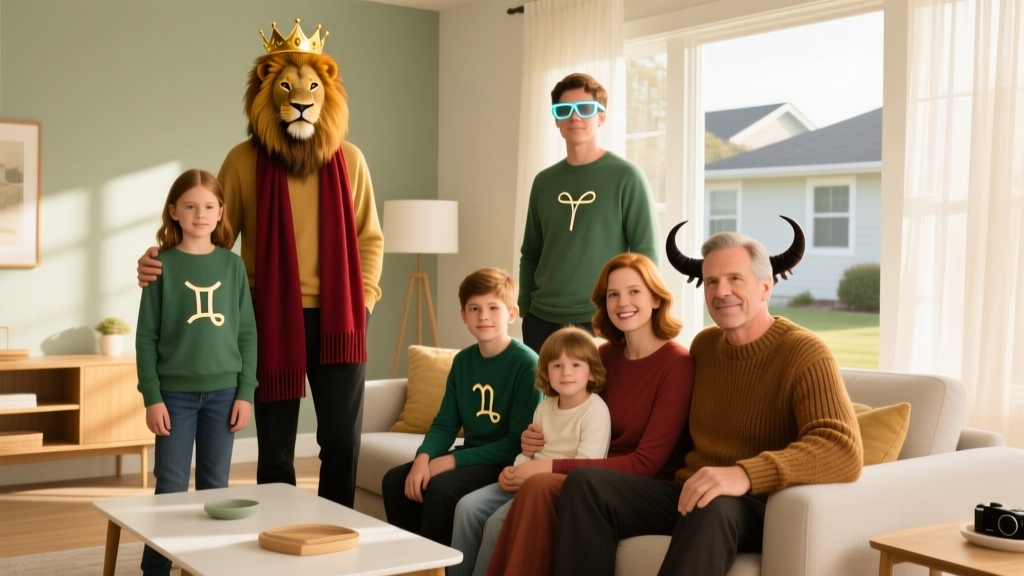
When analyzing large family systems, psychologists and personality experts often look to cultural touchstones to illustrate complex dynamics. The cheaper by the dozen cast provides a masterclass in portraying the chaotic, beautiful, and psychologically dense reality of raising twelve children. Beyond the comedy, the Baker family offers a rich case study in Adlerian birth order theory, Bowen family systems theory, and the spiritual numerology of the number twelve. This expert analysis deconstructs the personality archetypes presented by the ensemble, offering actionable insights for understanding birth order, sibling rivalry, and parental bandwidth in expansive households.
Deconstructing the Cheaper by the Dozen Cast via Birth Order Theory
Alfred Adler’s seminal work on family constellations suggests that a child’s position within the sibling hierarchy profoundly shapes their personality, coping mechanisms, and worldview. When applied to the Adlerian birth order theory, the Baker children perfectly map onto established psychological paradigms of large families.
The Eldest Siblings: Parentification and Functional Over-Responsibility
Nora and Charlie Baker occupy the eldest tier, bearing the brunt of what clinical psychologists term parentification. In families exceeding five children, the eldest siblings are frequently drafted as surrogate parents. Nora’s character arc demonstrates the classic eldest-daughter burden: hyper-vigilance, premature maturity, and an underlying anxiety regarding the family’s structural integrity. Charlie, conversely, exhibits the eldest-son tendency toward functional over-responsibility, often masking his emotional needs to project stability. Their psychological burden is the suppression of their own developmental milestones to maintain the family ecosystem.
The Middle Children: Coalition Building and Identity Fragmentation
The middle tier, notably Lorraine and Sarah, illustrates the phenomenon of middle child syndrome amplified by a massive sibling cohort. Lacking the authority of the eldest and the novelty of the youngest, middle children in large families often resort to coalition building. Lorraine’s rebelliousness and Sarah’s peacemaking are two sides of the same coin: desperate bids for individuation. Lorraine utilizes negative attention-seeking (rebellion against the family’s homogenous “Baker” identity), while Sarah employs emotional labor to secure her indispensability within the group.
The Youngest Tier: Sociometric Visibility and Eccentricity
For the youngest children, the primary psychological challenge is achieving sociometric visibility in a crowded field. Mark Baker’s attachment to his pet frog, Beans, is a textbook example of an eccentric coping mechanism designed to carve out a unique niche. When direct competition with older, more capable siblings is futile, the youngest child often adopts a highly specific, sometimes bizarre, signifier to guarantee parental recognition and secure a distinct psychological territory.
Parental Archetypes: Enneagram and Leadership Styles
The parental dynamic between Tom and Kate Baker is the engine driving the family’s psychological climate. Analyzing them through the Enneagram personality framework reveals a classic complementary, yet highly volatile, leadership pairing.
- Tom Baker (The Enthusiast - Type 7 with a 9 Wing): Tom leads through charisma, humor, and a desire to avoid emotional heaviness. His 7-wing drives the family’s chaotic energy and spontaneous bonding, but his 9-wing causes him to shy away from strict disciplinary enforcement, leading to boundary erosion.
- Kate Baker (The Reformer/Helper - Type 1 with a 2 Wing): Kate is the structural anchor. Her Type 1 perfectionism and need for order clash directly with Tom’s entropy. However, her 2-wing ensures that her strictness is rooted in deep nurturing. She manages the logistical reality of twelve distinct nervous systems, often at the cost of her own autonomous identity.
Structural Analysis: Sibling Subsystems and Psychological Roles
In families of this magnitude, the unit fractures into micro-subsystems. The following table maps the sociometric roles and psychological burdens inherent to the Baker family structure.
| Sibling Tier | Archetypal Role | Primary Psychological Burden | Adaptive Coping Mechanism | Long-Term Adlerian Outcome |
|---|---|---|---|---|
| Eldest (Nora, Charlie) | Surrogate Parents | Parentification & Enmeshment | Hyper-independence & Control | High Achievement / Risk of Burnout |
| Upper-Middle (Lorraine) | The Rebel / Scapegoat | Identity Fragmentation | Defiance & External Validation | Early Departure / Differentiation |
| Lower-Middle (Sarah, Henry) | The Peacemakers / Observers | Emotional Neglect | Diplomacy & Invisibility | Strong Empathy / Conflict Avoidance |
| Youngest (Mark, Twins) | The Mascots / Eccentrics | Lack of Agency | Prop Attachment (e.g., Beans) | Charm / Dependence on the System |
Bowen Family Systems Theory: Triangulation and Differentiation
To truly understand the ensemble, one must apply Bowen family systems theory, specifically the concepts of triangulation and the differentiation of self. In the Baker household, anxiety is highly contagious due to low systemic boundaries (enmeshment). When Tom and Kate experience marital or professional stress, they frequently triangulate the children—drawing Charlie or Nora into the parental conflict to stabilize the emotional field.
Furthermore, the central conflict of the narrative is the struggle for differentiation of self. In a family branded as a single monolithic entity (“The Bakers”), the psychological task of the adolescent children is to separate their individual identities from the family’s collective ego. The friction seen on screen is not merely teenage rebellion; it is the vital, painful process of psychological individuation pushing against a highly cohesive, almost gravitational, family system.
The Numerology and Esoteric Weight of Twelve
From an esoteric and spiritual perspective, the number twelve represents cosmic order, completion, and the mastery of cycles (e.g., the 12 houses of the astrological zodiac, the 12 months of the solar year). The paradox of the Baker family lies in the tension between the archetypal perfection of the number 12 and the messy entropy of human nature. Spiritually, a household of twelve requires a massive grounding of energy. The parents must act as the central axis (the sun) around which the twelve distinct planetary energies orbit. When the parental axis wobbles, the entire zodiac of the household falls into retrograde chaos.
Pro Tips for Navigating Large Family Dynamics
Drawing from the psychological realities mirrored by the cast, family therapists and personality experts recommend the following actionable frameworks for managing expansive households or complex sibling systems.
1. Implement the 15-Minute Dyad Rule
In large families, children are rarely experienced as individuals; they are experienced as a collective. To combat psychological invisibility, parents must institute a daily “Dyad Rule.” Spend exactly 15 minutes of uninterrupted, one-on-one time with a different child each day. The activity does not matter; the exclusive sociometric focus is what regulates the child’s nervous system and reduces attention-seeking behavioral outbursts.
2. Rotate Firstborn Privileges and Burdens
To prevent eldest-child burnout and parentification, systematically rotate leadership roles. Assign a “Captain of the Day” role that moves down the age hierarchy. This allows middle and younger children to develop executive functioning and agency, while granting the eldest siblings explicit, guilt-free permission to step down from their surrogate parenting roles and simply be children.
3. De-Triangulate Parental Conflict
Parents must maintain a strict boundary regarding marital or logistical anxieties. Never use a child as a sounding board for frustrations regarding the other parent or the overwhelming nature of the household. Establish a “Closed-Door Protocol” where systemic anxieties are processed exclusively between the adults, protecting the children from absorbing the family’s ambient stress.
4. Foster Micro-Identities Over Monolithic Branding
While family cohesion is vital, over-indexing on the “family brand” stifles individuation. Actively sponsor and fund the unique, hyper-specific interests of the middle and youngest children, even if those interests have no relevance to the rest of the family. Validating a child’s eccentric niche (their metaphorical “frog”) is the most effective way to build a secure, differentiated sense of self within a massive family constellation.