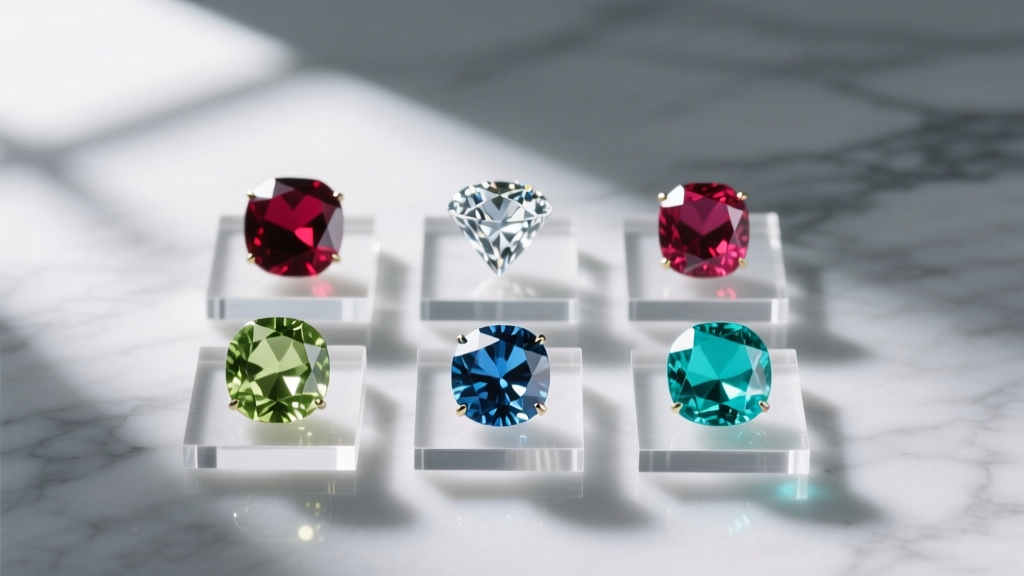
The modern assignment of birthstones is less about ancient mysticism and more about early 20th-century retail standardization. While many wear their designated monthly gems for perceived luck or identity, a critical examination reveals a complex intersection of gemology, marketing, and diluted esoteric traditions. This review evaluates the pros and cons of the current birthstone paradigm, analyzing gemstone durability for daily wear, the historical manipulation of the lists, and how to select a genuinely resonant crystal based on astrological frameworks rather than commercial calendars. Understanding the true nature of these stones requires separating geological fact from jewelry store fiction.
The Historical Manipulation of Birthstone Lists
The concept of linking specific gems to calendar months is frequently, and incorrectly, traced back to the Breastplate of Aaron described in the Book of Exodus, or to the foundational texts of Ayurvedic medicine. In reality, the list recognized globally today was engineered in 1912. During a meeting in Kansas City, the National Association of Jewellers (now Jewelers of America) formalized a standardized list. This was not a spiritual decree; it was an inventory management strategy designed to stabilize the gemstone market and ensure jewelers could move specific stock year-round.
Subsequent updates to the list were driven by trade syndicates and new mining discoveries rather than mystical revelations. For example, the addition of Tanzanite to December in 2002 was heavily lobbied by the American Gem Trade Association (AGTA) following the depletion of other mines and the surge in Tanzanian exports. Recognizing this commercial origin is the first step in critically evaluating the stones you choose to wear.
Pros of the Modern Commercial Paradigm
Market Liquidity and Grading Standardization
Because trade groups and institutions like the Gemological Institute of America (GIA) focus heavily on these specific minerals, consumers benefit from rigorous, standardized grading systems. The commercialization of these stones has resulted in vast market liquidity, making it easier to source, appraise, and insure these gems. The universal adoption of the 4 Cs (Cut, Color, Clarity, Carat) for stones like Diamonds, Rubies, and Sapphires provides a transparent framework for buyers that obscure, non-standardized crystals lack.
Introduction of Durable Alternatives
While the original 1912 list had gemological flaws, modern revisions have occasionally prioritized durability. For instance, Spinel was added to August in 2016. Spinel boasts a Mohs hardness of 8 and lacks cleavage, making it a vastly superior choice for daily-wear rings compared to the traditional August stone, Peridot (Mohs 6.5-7), which is prone to scratching and chemical weathering from sweat.
Cons: Gemological Vulnerabilities and Esoteric Disconnects
The Durability Deficit in Daily Wear Rings
The most glaring flaw in the commercial birthstone system is the assignment of fragile minerals to months where consumers expect to wear them as rings. Rings are subject to high impact and constant abrasion. The Mohs scale is logarithmic, not linear; a Diamond (10) is exponentially harder than Corundum (9). Yet, the modern list frequently ignores basic gemological toughness.
- October (Opal): With a Mohs rating of 5.5-6.5 and high water content, opals are prone to crazing (cracking) when exposed to the temperature fluctuations and chemicals (like hand sanitizer) inherent in daily hand wear.
- June (Pearl): Organic and exceptionally soft (Mohs 2.5-4.5), pearls degrade rapidly when exposed to skin acids, perfumes, and friction. They are entirely unsuitable for rings.
- May (Emerald): While hard enough at 7.5-8, emeralds are heavily included (known as 'jardin') and possess distinct cleavage. A hard knock against a steering wheel or countertop can easily shatter a highly included emerald.
The Dilution of Planetary Resonance
Western commercial lists entirely ignore Vedic planetary gemology (Ratna Shastra). In Jyotish (Hindu astrology), stones are prescribed based on the Ascendant (Lagna) and specific planetary placements, not the Gregorian birth month. The Navagraha (nine planetary influencers) require specific crystalline structures to channel their frequencies. Wearing a Ruby to channel the Sun when the Sun acts as a malefic planet in your specific natal chart can cause severe energetic friction and psychological distress. The commercial list assumes a one-size-fits-all energetic profile, which contradicts foundational astrological mechanics.
Gemological and Esoteric Evaluation Matrix
To bridge the gap between commercial availability and practical wearability, refer to this evaluation matrix detailing the structural integrity and esoteric alternatives for some of the most problematic months on the modern list.
| Month | Modern Standard Stone | Mohs Hardness | Toughness / Cleavage Risk | Astrological / Durable Alternative |
|---|---|---|---|---|
| March | Aquamarine | 7.5 - 8 | Moderate (Distinct cleavage) | Bloodstone (Mohs 7) or Morganite |
| May | Emerald | 7.5 - 8 | Poor (Highly included/fractured) | Green Sapphire (Mohs 9) or Tsavorite |
| June | Pearl / Alexandrite | 2.5 - 4.5 (Pearl) | Extremely Poor (Organic degradation) | Moonstone (Pendant only) or Pearl (Necklace) |
| October | Opal / Tourmaline | 5.5 - 6.5 (Opal) | Poor (Prone to crazing/chipping) | Pink Tourmaline (Mohs 7.5) or Sapphire |
| December | Tanzanite | 6.5 - 7 | Poor (Perfect cleavage, brittle) | Blue Zircon (Mohs 7.5) or Blue Sapphire |
Actionable Framework for Stone Selection
Discarding the Gregorian calendar model requires a systematic approach to selecting gems that align with both your energetic blueprint and your physical lifestyle. Implement the following decision matrix before purchasing your next piece of fine jewelry.
Step 1: Audit Your Natal Chart
Consult a certified Vedic astrologer or utilize advanced Jyotish software to identify your Ascendant lord and the benefic planets operating in your current Dasha (planetary period). Select stones that amplify these specific planetary frequencies. For example, if Jupiter is highly benefic in your chart, Yellow Sapphire (Pukhraj) is the correct resonant stone, regardless of your birth month.
Step 2: Apply the Mohs 7.5 Rule for Rings
For rings and bracelets, which endure high-impact environments, never select a primary center stone with a Mohs hardness below 7.5. Furthermore, evaluate the stone's toughness (resistance to breaking) and cleavage (tendency to split along structural planes). As noted by the American Gem Society, understanding the difference between hardness and toughness is critical for preventing catastrophic jewelry damage.
Step 3: Optimize the Setting Architecture
If your astrological chart mandates the use of a fragile stone like an Emerald or an Opal, you must engineer the jewelry setting to protect it. Avoid standard four-prong settings that expose the gem's girdle to lateral impacts. Instead, mandate a heavy bezel setting or a protective diamond halo that sits slightly higher than the center stone's table, absorbing the kinetic energy of daily impacts. For stones below a 7 on the Mohs scale, restrict their use to pendants or earrings, entirely removing them from the strike zone of the hands.