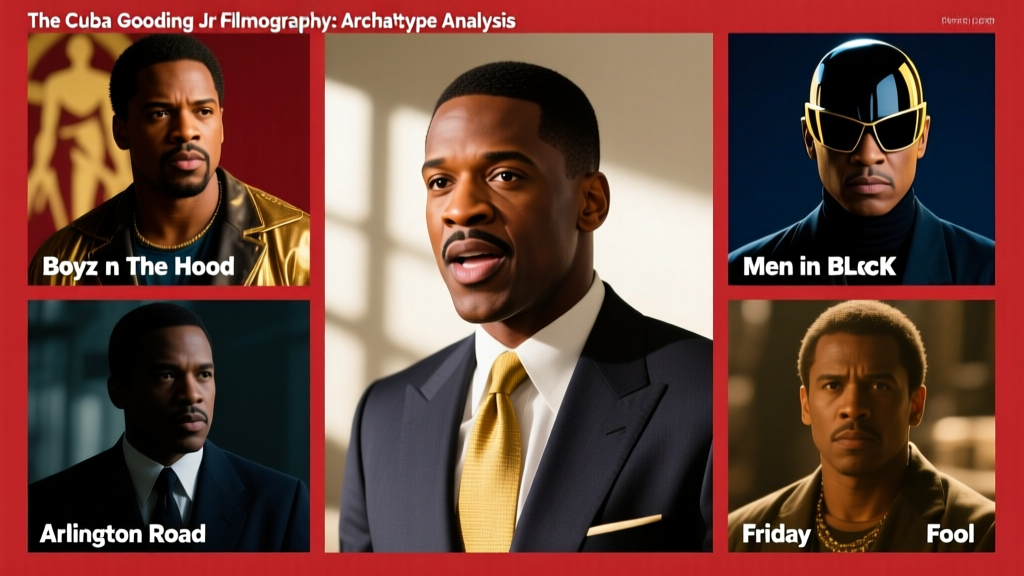
Cinema offers a profound lens for personality psychology and spiritual archetypes. When we examine a prolific actor's body of work, we observe a tapestry of human psychological evolution. The cuba gooding jr filmography provides a unique case study in Jungian psychology, showcasing a dramatic trajectory from the earnest Everyman to complex, shadow-driven figures. For students of personality types, mythology, and esoteric character analysis, his career offers a masterclass in character duality, ego development, and the integration of the human shadow. Let us deconstruct the archetypal resonance embedded within his most defining roles and uncover the psychological frameworks that make his performances enduring subjects of study.
Decoding the Jungian Archetypes in the Cuba Gooding Jr Filmography
Carl Jung posited that universal, mythic characters—archetypes—reside within the collective unconscious. When mapping the cuba gooding jr filmography, we see a distinct clustering of specific archetypes, primarily the Innocent, the Hero, and the Jester, before his later career pivot into the Shadow and the Trickster.
The Innocent and the Struggle for Individuation
In John Singleton’s Boyz n the Hood (1991), Gooding portrays Tre Styles. Tre embodies the Innocent archetype, but situated within an environment of systemic trauma. From a psychological perspective, Tre’s journey is one of Jungian individuation. He must integrate the harsh realities of his environment (the Shadow of the streets) without losing his moral core. His father, Furious Styles, acts as the Wise Old Man archetype, guiding Tre’s ego development and preventing him from falling prey to the destructive impulses that consume his peers. This dynamic perfectly illustrates the necessity of strong paternal archetypes in navigating adolescent psychological fragmentation.
The Persona and the Demand for Validation
Rod Tidwell in Jerry Maguire (1996) is a masterclass in the Jungian Persona. The Persona is the mask we wear to interact with society, often designed to protect a fragile ego. Tidwell’s loud, demanding, and flamboyant exterior—encapsulated by his relentless demand for financial and emotional validation—is a shield. Beneath the Jester archetype lies a deep-seated fear of abandonment and a desperate need for authentic connection (the Anima). His psychological breakthrough occurs only when the Persona drops, allowing him to accept loyalty and love over mere transactional success.
The Shift Toward the Shadow: Complex Character Psychology
As an actor matures, the archetypes they are drawn to often reflect a deeper engagement with the Shadow—the repressed, darker, or socially unacceptable aspects of the psyche. The latter half of the cuba gooding jr filmography demonstrates a fascinating descent into morally ambiguous and psychologically fractured territory.
His Emmy-winning portrayal of O.J. Simpson in The People v. O.J. Simpson: American Crime Story (2016) is a harrowing exploration of narcissistic injury and the collapse of the Ruler archetype. Gooding captures the precise moment a grandiose Self fractures under the weight of its own contradictions. Similarly, his roles in American Horror Story (specifically as Dominic Banks and Matt) lean heavily into the Trickster and Shadow archetypes. These characters operate on manipulation, hidden motives, and the subversion of trust, forcing the audience to confront the unsettling reality of human deceit. For students of shadow work, these performances are vital texts in understanding how unintegrated ego defenses manifest as destructive behavior.
Archetypal Character Matrix
To synthesize the psychological depth of his career, the following table maps key performances to their dominant Jungian archetypes and core internal conflicts.
| Film / Series | Character | Jungian Archetype | Core Psychological Conflict |
|---|---|---|---|
| Boyz n the Hood | Tre Styles | The Innocent | Moral preservation vs. environmental determinism |
| Jerry Maguire | Rod Tidwell | The Jester / Persona | External validation vs. authentic intimacy |
| Men of Honor | Carl Brashear | The Hero | Indomitable willpower vs. systemic oppression |
| Radio | Radio | The Holy Fool | Pure consciousness vs. societal prejudice |
| The People v. O.J. Simpson | O.J. Simpson | The Shadow / Ruler | Narcissistic grandiosity vs. ego collapse |
| American Horror Story | Dominic Banks | The Trickster | Manipulation and the subversion of moral order |
Pro Tips: Applying Cinematic Archetypes to Personal Growth
Watching films passively yields entertainment; watching them with psychological intent yields transformation. Here are actionable frameworks for utilizing the cuba gooding jr filmography as a tool for shadow work, empathy training, and personality integration.
1. Archetype Journaling via 'Jerry Maguire'
Use Rod Tidwell’s character arc to audit your own Persona. Ask yourself: In what areas of my life am I performing loudness or demanding external metrics of success to mask a need for emotional security? Write down three instances where your professional or social mask has hindered authentic connection.
2. Shadow Projection Analysis
When viewing his darker, villainous roles in American Horror Story, monitor your immediate emotional reactions. Jung noted that what triggers us in others is often a projection of our own unintegrated Shadow. If a character’s manipulation or arrogance deeply irritates you, journal on where those traits might exist in your own psyche in subtler forms.
3. The Hero’s Journey Mapping
Map Carl Brashear’s journey in Men of Honor against Joseph Campbell’s 12 stages of the Hero’s Journey. Identify his 'Call to Adventure,' his 'Meeting with the Mentor' (Master Chief Sunday), and his ultimate 'Ordeal' (the diving test in the heavy suit). Understanding this mythic structure helps you recognize the stages of your own life transitions and spiritual trials.
Mythic Structures and the Holy Fool
Beyond Jung, the cuba gooding jr filmography frequently touches upon the mythic archetype of the Holy Fool or the Divine Child. In Radio (2003), Gooding plays a character with an intellectual disability who becomes the emotional and spiritual center of a divided community. In mythology, the Fool is untethered by societal ego and thus possesses direct access to divine wisdom. Radio’s unwavering innocence acts as a mirror, exposing the petty prejudices and spiritual emptiness of the townspeople. This archetype reminds us that true spiritual insight often bypasses the intellect, residing instead in radical empathy and presence.
Recommended Viewing Order for Psychological Insight
- Boyz n the Hood (1991): Study the formation of the ego and the impact of the Wise Old Man archetype.
- Jerry Maguire (1996): Analyze the construction and eventual shedding of the social Persona.
- Men of Honor (2000): Observe the pure Hero archetype navigating systemic adversity and physical limitation.
- Radio (2003): Meditate on the Holy Fool archetype and the power of unconditional presence.
- The People v. O.J. Simpson (2016): Engage in deep Shadow work by witnessing the catastrophic collapse of the narcissistic ego.
By approaching the cuba gooding jr filmography through the lens of depth psychology and mythic structure, we elevate cinema from mere distraction to a profound tool for self-inquiry. For more insights into personality archetypes and spiritual frameworks, consult resources like the Jungian Analysts' overview of Shadow and Archetypes and explore comprehensive character data via IMDb's official Cuba Gooding Jr. profile.