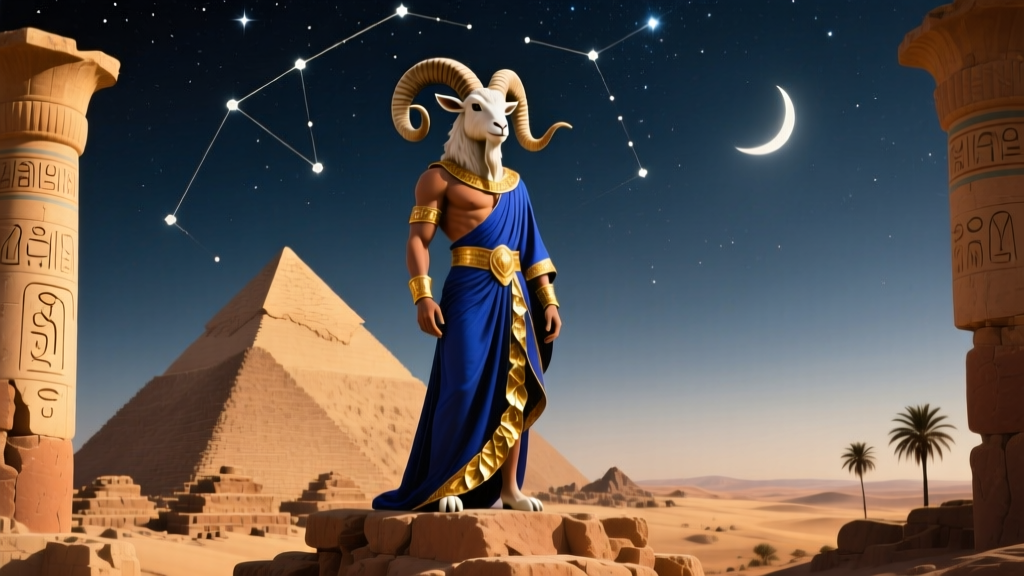
Individuals born under the dec 25 zodiac fall beneath the cardinal earth sign of Capricorn, yet the astrological and historical gravity of December 25 extends far beyond modern horoscope columns. Historically, this specific date marks a profound convergence of ancient celestial observations, Roman agrarian festivals, and Mesopotamian mythology. To understand the foundational archetype of the December 25 Capricorn, one must trace its lineage from the Sumerian deity Enki to the Julian calendar's celebration of Sol Invictus. This analysis reconstructs the origin story of the mid-winter zodiac, providing a historically grounded framework for understanding the Capricornian psyche.
The Historical Weight of the Dec 25 Zodiac Sign
In the tropical zodiac, December 25 sits firmly in the first decan of Capricorn, traditionally ruled by Saturn. This placement occurs just days after the Winter Solstice, a period historically recognized as the rebirth of the Sun. While modern pop astrology often reduces Capricorn to mere ambition and corporate discipline, the ancient origins of this sign reveal a much more complex, dualistic nature. The ancients viewed the mid-winter zodiac not just as a marker of earthly ambition, but as a liminal threshold between the subconscious depths of winter and the structural ascent toward spring. The historical evolution of this sign provides critical context for the psychological makeup of those born on this date.
Babylonian Origins: MUL.SUHUR.MAŠ and the God Enki
The Western zodiac is heavily indebted to Babylonian astronomy. In the ancient Mesopotamian star catalogs, specifically the MUL.APIN compiled around 1000 BCE, the constellation we now call Capricorn was known as MUL.SUHUR.MAŠ, or the "Goat-Fish." This hybrid creature was intrinsically linked to Enki (later known as Ea in Akkadian), the Sumerian god of water, knowledge, mischief, crafts, and creation.
Enki was believed to reside in the Abzu, the primeval subterranean ocean. According to the World History Encyclopedia, Enki was the keeper of the Me—the divine decrees that formed the foundational structures of civilization. This mythological origin perfectly maps onto the modern Capricorn archetype: the Goat-Fish represents the duality of the sign. The goat half climbs the treacherous mountain peaks of material and societal achievement, while the fish tail remains submerged in the profound, hidden depths of ancient wisdom and emotional intelligence. For the December 25 native, this suggests an innate tension between public duty and private, esoteric understanding.
Hellenistic Astrology and the Domicile of Saturn
During the Hellenistic period (roughly 300 BCE to 30 CE), Greek astrologers synthesized Babylonian observations with their own philosophical frameworks, formalizing the tropical zodiac. It was during this era that Capricorn was assigned its traditional planetary ruler: Saturn (Cronus). In Hellenistic astrology, Saturn is the greater malefic, representing time, restriction, boundaries, and karma.
However, Saturn is also the architect of reality. The assignment of Saturn to the mid-winter sign of Capricorn was not arbitrary; it reflected the observable reality of the agricultural cycle. December in the Northern Hemisphere is a time of harsh restrictions, freezing temperatures, and the apparent death of the natural world. Survival required Saturnian traits: meticulous planning, resource conservation, and unyielding discipline. The formalization of Capricorn as Saturn's domicile cemented the sign's association with endurance, structural integrity, and the mastery of time.
December 25 in Antiquity: Sol Invictus and Saturnalia
To fully grasp the unique astrological signature of December 25, we must examine the specific historical events tied to this date in the Roman Empire. Following Julius Caesar's introduction of the Julian calendar in 45 BCE, the Winter Solstice was recorded as falling on December 25. This date became astronomically and culturally significant in Rome, bridging two major observances:
- Saturnalia (Dec 17–23): A festival honoring Saturn, characterized by the temporary subversion of social norms, role reversals, and the celebration of the agricultural harvest. As noted by Britannica, Saturnalia was a time of calculated chaos before the return to order.
- Dies Natalis Solis Invicti (Dec 25): The "Birthday of the Unconquered Sun." Following the solstice and the chaotic freedom of Saturnalia, December 25 marked the precise moment the days began to lengthen again. It was the triumph of light, order, and structural renewal over the darkness of winter.
For the individual born on this exact date, the astrological implications are profound. The December 25 native embodies the transition from Saturnalian chaos to Solar order. They possess the Capricornian drive to build structures (Sol Invictus) but harbor an underlying understanding of necessary disruption and systemic reform (Saturnalia).
The Myth of Pricus: A Capricorn Origin Story
Greco-Roman mythology offers a specific origin story for the Sea-Goat that further illuminates the psychological profile of the December 25 Capricorn. According to later Hellenistic myths, Pricus was a sea-goat and a close companion of Pan. Pricus was the father of a race of sea-goats who were highly intelligent, capable of speech, and favored by the gods.
When Pricus's children swam toward the shore, they transformed into ordinary mountain goats, losing their divine intellect and aquatic grace. Pricus, possessing the power of chronokinesis (time manipulation) granted by Chronos (Saturn), repeatedly turned back time to prevent his children from losing their true nature. Eventually, realizing he could not fight the natural progression of time and destiny, Pricus accepted his fate and asked the gods to place him in the stars as the constellation Capricorn. This myth underscores a core Capricornian struggle: the tension between holding onto the past (Saturnian time) and accepting the inevitable evolution of the future. December 25 natives often grapple with this exact dynamic in their personal and professional lives, learning when to enforce boundaries and when to allow natural evolution.
Archetypal Evolution: Ancient vs. Modern Capricorn Traits
Understanding how the historical perception of this sign has shifted provides a valuable diagnostic tool for modern astrological analysis. The table below contrasts the ancient mythological associations with contemporary psychological interpretations.
| Era / Context | Ruling Deity / Planet | Core Archetype | Modern Psychological Translation |
|---|---|---|---|
| Sumerian / Babylonian | Enki (God of Water & Wisdom) | The Keeper of Divine Decrees (The Me) | Systemic intelligence; ability to master complex, hidden frameworks. |
| Hellenistic / Roman | Saturn / Chronos | The Lord of Boundaries and Time | Discipline, delayed gratification, and structural ambition. |
| Julian Calendar (Dec 25) | Sol Invictus (The Unconquered Sun) | The Rebirth of Light and Order | Resilience; the capacity to initiate new cycles after periods of hardship. |
| Modern Psychological | Saturn (Traditional) / Uranus (Co-ruler of Aquarius polarity) | The CEO / The Architect | Strategic planning, institutional leadership, and legacy building. |
As documented in historical analyses of Capricorn astrology, the shift from a mythological sea-deity to a modern archetype of corporate authority represents a narrowing of the sign's original scope. Reclaiming the "Goat-Fish" duality allows modern Capricorns to access a wider emotional and intuitive range.
Actionable Astrological Guidance for the Dec 25 Native
For those born on December 25, integrating this historical and mythological data yields specific, actionable strategies for personal development and decision-making:
- Leverage the Enki Duality: Do not rely solely on empirical data and material ambition (the Goat). Actively cultivate your intuition and emotional depth (the Fish). Schedule regular periods of unstructured reflection to access the subconscious insights that drive your best strategic decisions.
- Master the Saturn-Sun Transition: Recognize that your innate drive for order (Sol Invictus) can lead to rigidity. Use the historical lesson of Saturnalia to intentionally schedule periods of rest, play, and social subversion to prevent burnout and maintain systemic flexibility.
- Apply the Pricus Paradigm to Leadership: In management or parenting, avoid the trap of chronokinesis—trying to freeze time or micromanage the evolution of your team or children. Focus on establishing strong foundational structures, then allow organic growth to occur without forced intervention.
- Align with the Solstice Cycle: Treat the week surrounding your birthday not just as a personal milestone, but as a macrocosmic reset. Use the days immediately preceding December 25 for auditing and clearing old obligations, and reserve December 25 itself strictly for initiating singular, high-impact structural goals for the coming year.
By anchoring their identity in the deep historical roots of the Goat-Fish and the astronomical triumph of the mid-winter sun, the December 25 Capricorn transcends the limitations of modern stereotypes, accessing a profound legacy of endurance, wisdom, and architectural mastery.