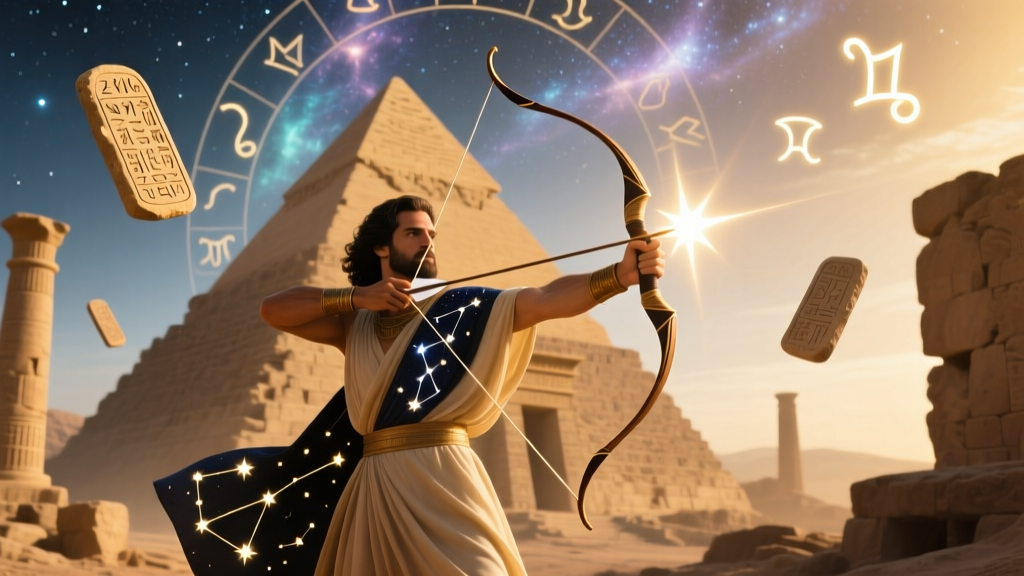
The Ancient Roots of the Dec 3 Zodiac Sign
The astrological profile of an individual born on this date is rooted in centuries of mythological synthesis and astronomical observation. When examining the dec 3 zodiac sign, we are not merely looking at modern pop-astrology sun signs; we are tracing a direct lineage back to ancient Mesopotamia and Hellenistic Egypt. December 3 falls in the second decan of Sagittarius, an astrological sector governed by Mars. This specific planetary sub-ruler adds a layer of martial vigor to the traditional jovian expansiveness of the Archer, creating a highly specific historical and psychological archetype that has evolved over three millennia.
Understanding this specific birthday requires moving beyond the monolithic view of Sagittarius. The ancients divided the zodiac into 36 decans, each spanning 10 degrees of the ecliptic. A person born on December 3 typically has their Sun positioned between 10 and 12 degrees of Sagittarius, placing them squarely in a sector that ancient astrologers associated with warfare, pioneering exploration, and the relentless pursuit of truth. To comprehend this archetype, we must excavate the strata of Babylonian star catalogs, Hellenistic planetary hour systems, and Greek mythological syncretism.
Babylonian Origins: Pabilsag and the Scorpion-Man
The Western zodiac did not originate in Greece; it was inherited from the Babylonians. In the MUL.APIN, a comprehensive Babylonian astronomical compendium compiled around 1000 BCE, the constellation we now call Sagittarius was identified as Pabilsag. Pabilsag was the tutelary god of the city of Isin, depicted not as a simple horse-and-rider hybrid, but as a complex chimera: a winged centaur with the tail of a scorpion and two faces—one human, one leonine.
This Mesopotamian origin story fundamentally alters how we interpret the Archer. Pabilsag was a god of the underworld and a divine warrior, escorting the souls of the dead to the realm of Ereshkigal. This explains the underlying intensity and philosophical preoccupation with mortality often found in those born under this specific sector of the zodiac. The martial energy of the December 3 native is a direct echo of Pabilsag’s role as a divine guardian and psychopomp.
- Astral Geography: The Babylonians mapped the "breast" of the scorpion-man to the star Theta Sagittarii, anchoring the constellation's celestial coordinates.
- Divine Function: Pabilsag served as a mediator between the earthly plane and the underworld, mirroring the modern Sagittarian drive to bridge the mundane with the philosophical.
- Iconography: The bow and arrow were later additions to the mythos, originally representing the god's hunting prowess and martial authority rather than a quest for higher knowledge.
Hellenistic Astrology and the Decan System
As astrological knowledge migrated from Babylon to Alexandria during the Hellenistic period (circa 300 BCE to 30 BCE), the zodiac was formalized into the 12-sign system we recognize today. However, Hellenistic astrologers like Vettius Valens and Claudius Ptolemy retained the older Egyptian and Chaldean decan system to provide granular nuance to natal chart interpretations. For a comprehensive look at how these ancient systems were codified, scholars often reference the translations of Ptolemy's foundational texts.
The Chaldean decan system assigns a planetary ruler to every 10-degree segment of the zodiac, moving in the traditional Chaldean order of the planets (Saturn, Jupiter, Mars, Sun, Venus, Mercury, Moon). Sagittarius is a fire sign ruled by Jupiter. Therefore, the first decan (0°–10°) is ruled by Jupiter. The second decan (10°–20°), which encompasses December 3, falls under the rulership of Mars.
| Sagittarius Decan | Degree Range | Approximate Dates | Sub-Ruler | Core Archetypal Theme |
|---|---|---|---|---|
| First Decan | 00° - 10° | Nov 22 - Dec 1 | Jupiter | Philosophical expansion, optimism, teaching |
| Second Decan | 10° - 20° | Dec 2 - Dec 11 | Mars (Aries) | Martial vigor, pioneering action, ideological combat |
| Third Decan | 20° - 30° | Dec 12 - Dec 21 | Sun (Leo) | Expressive leadership, performative truth, pride |
The Mars Sub-Influence on December 3rd
Because December 3 falls in the Mars-ruled decan, the native possesses a secondary Aries-like influence. While the overarching Jupiterian nature of Sagittarius seeks to understand the world through broad philosophical frameworks, the Mars sub-ruler demands that these philosophies be tested in the crucible of action. Historically, this placement produces individuals who are not content to merely study theology, law, or ethics; they are compelled to fight for their ideological convictions. This creates a psychological profile characterized by a restlessness that can only be quelled through physical movement, debate, or the championing of a cause.
Mythological Evolution: From Nergal to Chiron
When the Romans and Greeks absorbed the Babylonian zodiac, they mapped their own mythological figures onto the constellations. The aggressive, underworld-associated Pabilsag and the Mesopotamian war god Nergal were sanitized into the Greek figure of the Centaur. However, it is vital to distinguish which centaur represents the Sagittarius archetype. While the zodiac is sometimes conflated with the savage centaurs of Greek myth (like Nessus or Eurytion), the esoteric tradition aligns the Archer with Chiron the Centaur.
Chiron was immortal, wise, and the tutor of heroes such as Achilles, Asclepius, and Jason. He represented the mastery of primal, animalistic instincts (the horse body) directed by higher intellect and divine wisdom (the human torso). The tragedy of Chiron—his accidental poisoning by a Hydra-venom arrow and his subsequent sacrifice of immortality to free Prometheus—imbues the Sagittarius archetype with a profound theme of sacrificial wisdom.
- The Wounded Healer: Chiron’s incurable wound translates astrologically to the Sagittarian tendency to seek out healing modalities, often driven by personal physical or existential pain.
- The Mentor Archetype: The drive to teach and guide others is a direct inheritance from Chiron’s role as the preeminent tutor of the heroic age.
- The Arrow of Intent: Unlike the savage centaurs who used weapons for brutality, Chiron’s bow represents focused intent, aiming toward higher truths and distant horizons.
Historical Figures and the December 3 Archetype
Analyzing historical figures born on December 3 provides empirical evidence of how the Jupiter-Mars synthesis manifests in human behavior. The combination of expansive vision (Jupiter) and aggressive execution (Mars) frequently produces explorers, ideological warriors, and pioneers who disrupt the status quo.
| Historical Figure | Birth Year | Domain | Manifestation of the Dec 3 Archetype |
|---|---|---|---|
| Joseph Conrad | 1857 | Literature | Explored the dark, existential frontiers of human morality and imperialism, reflecting the Mars-ruled drive to confront harsh truths. |
| Andy Williams | 1927 | Entertainment | Channeled the expansive, jovial performance energy of the Archer, pioneering new formats in television variety broadcasting. |
| Fritz Lang | 1890 | Cinema | Directed visually expansive, philosophically dense films (e.g., Metropolis) that tackled ideological warfare and societal structures. |
Synthesizing the Ancient Archer for Modern Practice
For modern astrologers and individuals studying their natal charts, the historical origin story of the December 3 zodiac sign offers actionable frameworks for personal development. Recognizing the Mars sub-rulership allows the native to consciously direct their aggressive energy. Rather than engaging in petty conflicts, the native is historically primed for "ideological combat"—advocating for legal reform, engaging in high-level academic debates, or pioneering new physical territories through extreme sports or global travel.
Furthermore, embracing the Chironic mythos provides a pathway for healing. The native must accept that their deepest wisdom often stems from their most incurable frustrations. By positioning themselves as mentors or guides (the Chiron archetype), individuals born on December 3 can transmute their innate restlessness into a structured, lifelong pursuit of educating others, thereby fulfilling the ancient mandate of Pabilsag: to bridge the gap between the mortal experience and the divine horizon.