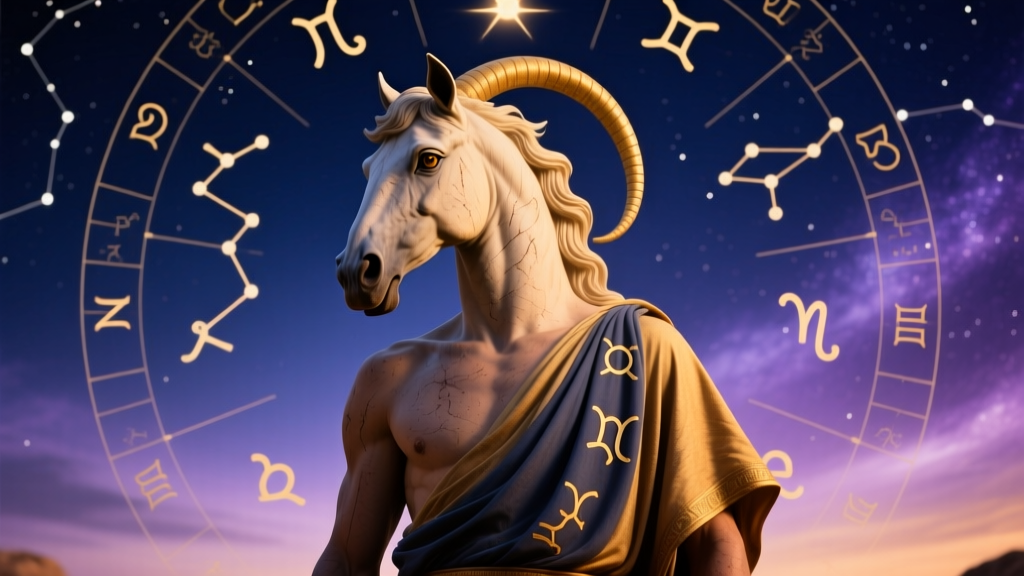
Modern horoscopes often reduce the december 16 zodiac profile to a generic list of adventurous Sagittarius traits, focusing solely on wanderlust and blunt honesty. However, the true astrological DNA of this specific birthdate is far more complex, rooted in ancient Mesopotamian star catalogs, Hellenistic decan theory, and esoteric numerology. To understand the psychological and spiritual architecture of a December 16 native, we must bypass modern pop astrology and examine the historical origin stories that forged this specific celestial coordinate. By tracing the lineage of the Archer from the banks of the Euphrates to the academies of Alexandria, we uncover a highly specialized archetype defined by strategic precision, wounded healing, and ideological reconstruction.
The Babylonian Origins: Pabilsag and the Scorpion-Man
Long before the Greeks mapped the heavens into their familiar mythological pantheon, Babylonian astronomers compiled the MUL.APIN (c. 1000 BCE), a comprehensive star catalog that formed the bedrock of Western astrology. In this ancient text, the constellation we now call Sagittarius was known as Pabilsag. According to historical astrological archives, Pabilsag was a tutelary deity of the city of Isin, depicted not as a horse-man, but as a winged scorpion-man drawing a bow. This imagery was heavily syncretized with Ninurta, the Sumerian god of agriculture, healing, and war.
This Mesopotamian origin introduces a layer of defensive vigilance and sting-like precision to the December 16 personality. Unlike the jovial, blunt archer of modern interpretations, the Pabilsag archetype calculates its shots. The scorpion-man imagery suggests a native who is deeply protective of their inner circle, possessing a strategic mind that anticipates threats long before they materialize. This historical root explains why December 16 individuals often display a surprising degree of caution and tactical planning beneath their outwardly fiery demeanor.
The Hellenistic Shift: Chiron and the December 16 Zodiac Archetype
When Hellenistic astrologers in Alexandria translated Babylonian tablets into Greek around the 3rd century BCE, they adapted Pabilsag into the Toxotes (The Archer). They mapped this constellation to the mythological Centaurs. However, a critical distinction must be made regarding the december 16 zodiac archetype: it is governed specifically by Chiron, not the savage, wine-crazed centaurs like Nessus or Pholus.
As documented by The Theoi Project's mythological archives, Chiron was the immortal son of Cronus and the Oceanid Philyra. Unlike his violent brethren, Chiron was a scholar, a healer, and the mentor to legendary heroes like Achilles, Asclepius, and Heracles. This historical origin story explains the profound 'teacher-student' dynamic inherent in December 16 natives. They possess an innate drive to mentor others, yet they carry the mythological wound of Chiron—an unhealable injury caused by a stray poisoned arrow that forces the native to seek spiritual, philosophical, and intellectual remedies for physical or emotional pain. This creates the classic 'Wounded Healer' psychological profile, where the native's greatest wisdom is forged in the crucible of their own unresolvable struggles.
The Third Decan: Solar Influences on the December 16 Zodiac Profile
To pinpoint the exact historical flavor of December 16, we must apply the Hellenistic system of decans. The zodiac was divided into thirty-six 10-degree segments, each assigned a specific planetary ruler based on the Chaldean order. December 16 typically falls around 24 degrees of Sagittarius, placing it squarely in the third decan of the sign.
In this ancient system, the third decan of Sagittarius is ruled by the Sun (the planetary ruler of Leo). This creates a fascinating astrological paradox. While the overarching sign is a Mutable Fire sign ruled by Jupiter (expansion, philosophy, adaptability), the specific degree of December 16 is infused with Fixed Fire solar energy. Historically, astrologers noted that this decan produced individuals who were far less prone to the scattered, restless energy typical of late Sagittarius. Instead, the Solar sub-rulership grants a regal, fixed sense of purpose, immense personal magnetism, and a stubborn adherence to their personal philosophy. They do not just explore truth; they demand to be the ultimate authority on it.
The Planetary Shift: From Zeus to Jupiter in Hellenistic Texts
The evolution of the ruling planet also deeply impacts the historical interpretation of this birthdate. The Babylonian association with Ninurta transitioned into the Greek association with Zeus, and finally to the Roman Jupiter. In Roman astrology, Jupiter was the 'Greater Benefic,' deeply tied to legal systems, religious institutions, and the expansion of empire.
This historical shift from a localized agricultural deity to the god of universal law and higher education explains the December 16 native's profound affinity for institutional reform. They are not merely rebels; they are historical architects who seek to dismantle corrupt systems and rebuild them on a foundation of equitable, philosophical law. Their expansiveness is inherently tied to structuring knowledge and codifying ethics for the broader society.
Esoteric Numerology: The Pythagorean and Tarot Origins of 16
The historical esoteric traditions surrounding the number 16 further refine this birthdate's psychological blueprint. In Pythagorean numerology, 16 reduces to 7 (1 + 6 = 7). The number 7 was historically revered by ancient mathematicians as the number of the mystic, the seeker, and the analytical mind, governed by the pursuit of hidden truths and spiritual introspection.
Furthermore, in the 15th-century Italian Tarocchi decks that formed the basis of modern esoteric tarot, the 16th Major Arcana is La Maison Dieu (The Tower). While modern readers often fear this card, historical occultists viewed it as the necessary, divine destruction of false dogmas and rigid belief systems. For the December 16 native, this represents a lifelong historical mandate: to act as an intellectual lightning rod, striking down outdated societal paradigms and rebuilding them on a foundation of authentic, hard-won truth.
Historical vs. Modern Astrological Interpretations
| Historical Element | Ancient Origin | Modern December 16 Trait |
|---|---|---|
| Pabilsag (Babylonian) | Winged Scorpion-Man / Ninurta | Defensive precision; strategic planning over blind action. |
| Chiron (Hellenistic) | Immortal Wounded Healer | The 'Wounded Healer' syndrome; mentoring through shared trauma. |
| Third Decan (Chaldean) | Solar / Leo Sub-rulership | Fixed-fire stubbornness; natural authority and magnetic leadership. |
| Number 16 (Tarocchi) | The Tower / Maison Dieu | Dismantling false dogmas; triggering sudden ideological shifts. |
Applying Ancient Archetypes to Modern Decision-Making
Understanding the historical origin story of your astrological placement provides a concrete framework for personal development and decision-making. December 16 natives often struggle with the internal friction between their Jupiter-ruled desire for boundless freedom and their Solar-decan need for authoritative control. To resolve this paradox, you must actively lean into the Chiron archetype.
- Channel the Mentor: Rather than pursuing endless, ungrounded adventures, focus your expansive Sagittarian energy on teaching, healing, or structuring knowledge for others. Your authority is legitimized through your willingness to share your scars.
- Deploy Pabilsag Precision: When faced with ideological conflicts or professional disputes, do not shoot arrows blindly. Use the scorpion-man’s calculated precision to dismantle opposing arguments with surgical, philosophical accuracy.
- Embrace the Tower: When your belief systems collapse or sudden disruptions occur, recognize this as the 16th Arcana at work. Do not cling to the rubble of outdated paradigms; use the clearance to build a more authentic intellectual framework.
By anchoring your mutable fire in the historical discipline of the ancient mentor and the strategic vigilance of the Babylonian guardian, you transform restless energy into enduring, institutional wisdom.