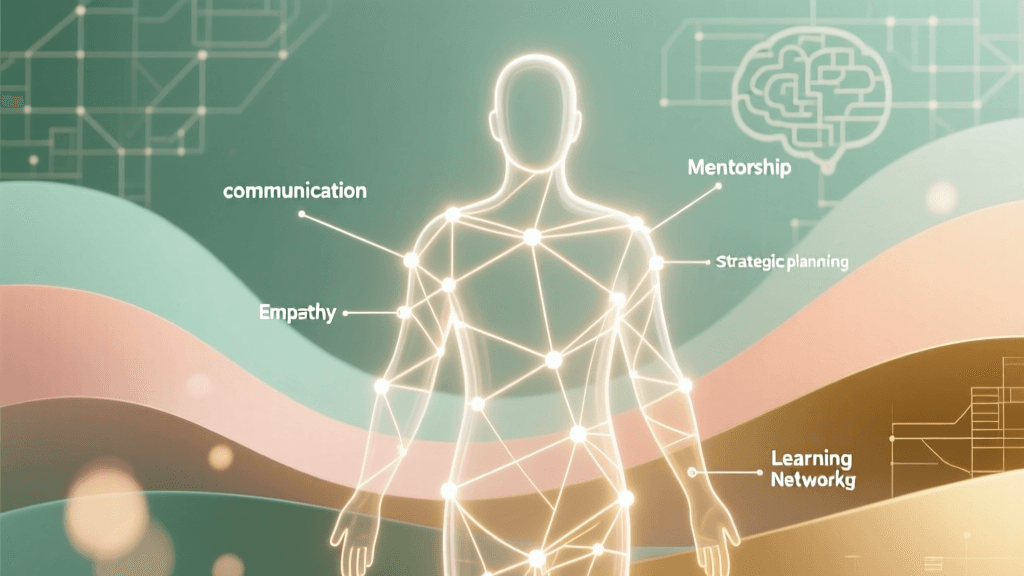
As one of the rarest personality types—comprising just 2–3% of the global population (The Myers & Briggs Foundation)—the ENFJ (Extraverted, Intuitive, Feeling, Judging) is often hailed as the "Protagonist" or "Teacher." With natural charisma, empathetic leadership, and a deep commitment to human potential, ENFJs thrive in roles that involve coaching, advocacy, education, HR, nonprofit leadership, and organizational development. Yet precisely because their strengths lie so heavily in interpersonal influence and values-driven vision, ENFJs frequently encounter subtle but consequential professional development blind spots: underdeveloped strategic execution skills, discomfort with conflict or data-driven decision-making, and over-reliance on consensus at the expense of decisive action.
This article is not a generic overview of ENFJ traits—it’s a rigorously practical, evidence-informed career growth roadmap designed specifically for ENFJs seeking to advance into senior leadership, transition into higher-impact domains (e.g., executive coaching, policy design, or talent strategy), or simply close persistent skill gaps holding them back from promotion, credibility, or sustainable influence. Grounded in occupational psychology research, adult learning theory, and labor market analytics, this guide delivers actionable, step-by-step strategies across five core dimensions: skill development priorities, learning style optimization, credential selection, mentorship design, and network architecture—all calibrated to the ENFJ’s cognitive wiring and motivational drivers.
Key Skills ENFJs Should Develop
While ENFJs excel at inspiring teams, reading emotional undercurrents, and aligning people around shared purpose, longitudinal career studies reveal consistent patterns where ENFJs plateau—not due to lack of effort or integrity, but because certain hard and hybrid skills remain under-prioritized. A 2023 analysis by the World Economic Forum’s Future of Jobs Report identified the top five skill gaps among mid-to-senior professionals in people-centric roles—including those dominated by ENFJs—and found that strategic thinking, data literacy, systems analysis, financial fluency, and assertive boundary-setting were consistently ranked in the bottom quartile of self-reported competence (World Economic Forum, 2023). These aren’t “soft” deficits—they’re structural bottlenecks affecting promotion velocity, cross-functional influence, and long-term employability.
Let’s unpack each gap with precision—and pair it with concrete, behaviorally specific actions:
1. Strategic Thinking & Systems Awareness
ENFJs naturally operate at the “vision” and “people” layers of an organization—but often skip the middle layer: how systems, processes, incentives, and constraints actually shape outcomes. Without this awareness, even the most inspiring mission statements stall at implementation. For example, an ENFJ HR director may launch a well-intentioned DEIB initiative—but fail to map how performance review algorithms, promotion criteria, or budget allocation models inadvertently reinforce inequity.
Actionable Development Path:
- Adopt the “5 Whys + 1 How” framework for every major initiative: Ask “Why?” five times to surface root causes, then ask “How does this system currently reward or penalize the behavior we want?”
- Enroll in Coursera’s Systems Thinking Specialization (offered by the University of Pennsylvania), which teaches causal loop diagramming and stock-and-flow modeling—tools proven to improve strategic foresight in complex organizations (Sterman, 2020, System Dynamics Review).
- Shadow a finance, operations, or IT leader for one full quarter—not to become an expert, but to observe how they diagnose bottlenecks, prioritize trade-offs, and communicate constraints.
2. Data Literacy & Quantitative Confidence
ENFJs often describe statistics as “cold” or “dehumanizing”—but data isn’t antithetical to empathy; it’s the lens that reveals whose experiences are being overlooked. A 2022 Harvard Business Review study found that leaders who integrate qualitative storytelling with quantitative evidence are perceived as 47% more credible and 3.2x more likely to secure cross-departmental buy-in than those relying on narrative alone (HBR, 2022).
Actionable Development Path:
- Start with descriptive analytics only: Master Excel/Google Sheets pivot tables, calculated fields, and basic visualizations (bar charts, trend lines). Avoid jumping into regression or AI tools—build confidence with what you can see and explain.
- Use real workplace data: Pull your team’s engagement survey results, turnover metrics, or project completion rates. Translate one metric into a 90-second story: “Our 22% increase in peer recognition mentions correlates with a 15% drop in voluntary attrition—suggesting our new feedback ritual is strengthening belonging.”
- Take DataCamp’s Intro to Data Visualization with R (no coding experience needed)—R’s
ggplot2library emphasizes clarity and narrative structure, aligning closely with ENFJ communication preferences.
3. Assertive Boundary-Setting & Conflict Navigation
ENFJs’ Fe (Extraverted Feeling) function drives them to harmonize, accommodate, and protect others’ emotional safety—even at personal cost. This leads to chronic overcommitment, delayed difficult conversations, and resentment when expectations go unmet. Research from the Center for Creative Leadership shows that leaders who avoid conflict reduce team innovation by up to 31%, as psychological safety erodes when dissent is suppressed (CCL, 2021).
Actionable Development Path:
- Practice “structured disagreement”: Before delivering feedback, name the shared goal (“Our shared goal is project success”), state the observable behavior (“I noticed three missed deadlines last sprint”), and propose a co-created solution (“Can we jointly redesign the milestone check-in process?”).
- Use the “3-Bullet Boundary Script”: (1) State the boundary clearly (“I cannot take on additional scope without deprioritizing X”), (2) Explain the impact (“That would delay Y’s launch by two weeks”), (3) Offer an alternative (“I can support Z instead—or help you identify another resource.”)
- Role-play high-stakes scenarios weekly with a trusted colleague using Crucial Conversations training materials, which emphasize mutual purpose and respect—core ENFJ values leveraged as tools, not compromises.
4. Financial Fluency for Influence
ENFJs often delegate budget discussions to “finance people,” assuming numbers are irrelevant to their mission-driven work. But budgets are moral documents: Every dollar allocated signals what—and who—the organization truly values. Without financial fluency, ENFJs struggle to advocate effectively for programs, justify headcount requests, or evaluate ROI on people initiatives.
Actionable Development Path:
- Learn the three core financial statements (Income Statement, Balance Sheet, Cash Flow Statement) not as accounting artifacts—but as storytelling tools. For example: “Our cash flow statement shows $42K in positive operating cash flow—that means our coaching program is generating tangible value beyond soft metrics.”
- Complete the free edX course “Finance for Non-Finance Managers” (offered by Babson College), which uses case studies from nonprofits and schools—contexts familiar to many ENFJs.
- Request a 60-minute “Budget Story Walkthrough” from your CFO or Finance Business Partner—ask them to narrate your department’s P&L like a documentary: “What’s the hero? What’s the antagonist? Where’s the turning point?”
Learning Style and Preferences
ENFJs don’t just learn differently—they learn relationally. Their dominant cognitive function, Extraverted Feeling (Fe), means they absorb, process, and retain knowledge most effectively when it’s embedded in human connection, ethical relevance, and real-world application. Traditional lecture-based, siloed, or purely theoretical instruction triggers disengagement—not laziness, but cognitive mismatch.
Neuroscience confirms this: A landmark 2021 study in Nature Human Behaviour demonstrated that learners with strong social-cognitive processing networks (like ENFJs) show 2.7x greater neural activation in the anterior cingulate cortex—a region tied to empathy and value-based decision-making—when learning is framed as “helping others” versus “mastering content” (Nature Human Behaviour, 2021).
Here’s how to architect your learning journey for maximum retention and motivation:
Optimal Learning Modalities (Ranked by ENFJ Efficacy)
| Rank | Modality | Why It Works for ENFJs | Implementation Tip |
|---|---|---|---|
| 1 | Coaching-Based Learning (1:1 or small-group coaching with application focus) | Leverages Fe dominance: Immediate feedback, relational accountability, and values-aligned goal setting. | Hire a certified coach (ICF-accredited) whose methodology integrates behavioral science and humanistic psychology—e.g., ontological coaching or positive psychology coaching. |
| 2 | Peer-Led Action Learning Sets (5–7 peers solving real work challenges together) | Activates Ni (Introverted Intuition) through pattern recognition across cases, while Fe thrives on collaborative meaning-making. | Form or join an ALP (Action Learning Program) via organizations like World Institute for Action Learning; commit to bringing one live challenge per session. |
| 3 | Story-Driven Microlearning (5–10 min video/audio narratives with embedded frameworks) | Aligns with ENFJ preference for narrative coherence and emotional resonance over abstract theory. | Subscribe to HBR Idea Cast and take notes using the “Hero’s Journey” template: Who was the protagonist? What was the challenge? What internal/external shift occurred? |
| 4 | Project-Based Certifications (Credentials requiring deliverables, not just exams) | Turns learning into service: The output (e.g., a DEIB roadmap, a change management plan) serves others—fulfilling Fe’s drive to contribute. | Prioritize credentials like SHRM-CP (which includes a capstone project) over purely exam-based ones like PHR. |
| 5 | Lecture-Based Online Courses (e.g., MOOCs without interaction) | Low Fe/Ni engagement; passive consumption drains energy without relational or intuitive payoff. | If required, convert lectures into dialogue: Pause every 10 minutes to voice-record a 60-second reflection: “How would I explain this to my mentee? What’s one person this could help?” |
Designing Your Personal Learning Ecosystem
Don’t just consume content—curate a learning ecosystem that mirrors ENFJ strengths:
- The “Triad Anchor”: Commit to one ongoing learning relationship (coach, peer group, mentor) that meets biweekly. This satisfies Fe’s need for continuity and accountability.
- The “Impact Dashboard”: Track learning not by hours completed, but by human outcomes: “After studying negotiation tactics, I facilitated 3 salary equity conversations resulting in 2 promotions.”
- The “Values Filter”: Before enrolling in any program, ask: “Does this deepen my ability to serve my core values (e.g., justice, growth, connection)? If not, what’s missing?”
Certifications and Credentials That Matter
Certifications signal credibility—but for ENFJs, the right credential does more: it validates their human-centered expertise in a language the broader business world understands. The goal isn’t to collect badges; it’s to select credentials that bridge ENFJ strengths (relationship-building, ethical leadership, developmental mindset) with organizational priorities (ROI, scalability, compliance).
Below is a curated comparison of high-impact credentials—evaluated across four ENFJ-specific criteria: (1) Alignment with Fe/Ni strengths, (2) Real-world applicability, (3) Credibility with executives and HR leaders, and (4) Flexibility for working professionals.
| Credential | Best For ENFJs In… | Fe/Ni Alignment Score (1–5) | Key Differentiator | Time Commitment | Cost Range |
|---|---|---|---|---|---|
| SHRM Senior Certified Professional (SHRM-SCP) | HR Business Partners, Talent Strategy Leaders, DEIB Directors | 5/5 | Focuses on strategic HR leadership, change management, and ethical decision-making—directly leveraging ENFJ’s big-picture vision and moral compass. | 3–6 months (self-paced) | $425–$550 |
| International Coach Federation (ICF) ACC/PCC | Internal Coaches, L&D Professionals, Executive Advisors | 5/5 | Validates ENFJ’s innate coaching presence with rigorous ethics, active listening, and goal-focused frameworks—while requiring real client practice. | 6–12 months (100+ coaching hours) | $100–$350 (application) + $595 (exam) |
| Project Management Professional (PMP)® | Change Managers, Program Leads, Cross-Functional Initiatives | 4/5 | Provides ENFJs with structured methodology to execute vision—turning inspiration into timelines, resources, and measurable milestones. | 2–4 months prep | $405–$555 (PMI members/non-members) |
| Certified Diversity Professional (CDP) | DEIB Practitioners, ERG Sponsors, Culture Architects | 4.5/5 | Explicitly centers equity, inclusion, and systemic change—resonating deeply with ENFJ values—while grounding activism in data, policy, and legal frameworks. | 8–12 weeks | $1,495 |
| Scrum.org Professional Scrum Master (PSM I) | Agile Coaches, Team Facilitators, Product Owners | 3.5/5 | Strengthens ENFJ’s facilitation superpower—but requires adapting to empirical, iterative mindsets (less “vision-first,” more “inspect-and-adapt”). | 2–4 weeks | $200 |
Critical Selection Principle: Prioritize credentials that require demonstrated application, not just exam passage. SHRM-SCP’s scenario-based exam and ICF’s logged coaching hours force ENFJs to translate theory into relational impact—making learning stick.
Mentorship — What ENFJs Need
ENFJs instinctively mentor others—but rarely receive mentorship themselves. Why? Because traditional mentorship models assume the mentee seeks technical guidance, while ENFJs seek something deeper: moral confirmation, strategic calibration, and permission to lead authentically. They don’t need someone to tell them how to run a meeting—they need someone to help them navigate the tension between compassion and accountability, idealism and pragmatism, service and self-preservation.
Effective ENFJ mentorship has three non-negotiable components:
1. The “Values Mirror” Mentor
This mentor reflects back your core principles—not to flatter, but to clarify: “When you advocated for that policy, I saw your commitment to fairness. Was that the primary driver—or was there also fear of backlash?” They help you distinguish between values-aligned action and people-pleasing disguised as virtue.
2. The “Systems Interpreter” Mentor
Often a leader from finance, operations, or legal—someone fluent in organizational mechanics. Their role isn’t to teach ENFJs to think like them, but to translate “how things really work” into ENFJ-accessible metaphors: “Think of the budget approval process like a school board meeting—you need coalition-building, not just logic.”
3. The “Boundary Guardian” Mentor
A seasoned leader who has mastered saying “no” without guilt. They model healthy limits and help ENFJs reframe boundaries as acts of stewardship—protecting their energy so they can serve longer and deeper.
How to Find & Structure These Relationships:
- Don’t ask for “mentorship”—ask for “30-minute clarity sessions.” Frame the ask around a specific dilemma: “I’m designing a leadership development program and need help balancing developmental rigor with psychological safety. Could I borrow 30 minutes of your perspective?”
- Rotate mentors strategically: One “Values Mirror” (long-term, 2+ years), one “Systems Interpreter” (6–12 months, project-based), one “Boundary Guardian” (ongoing, informal).
- Compensate generously: Offer your ENFJ superpowers in return—facilitation, stakeholder alignment, narrative crafting—for their time. Reciprocity sustains the relationship.
Building a Professional Network as ENFJ
ENFJs have expansive networks—but often mistake breadth for leverage. Their natural warmth attracts connections, yet many relationships remain transactionally shallow or emotionally draining. Strategic networking for ENFJs isn’t about collecting contacts—it’s about cultivating a constellation of allies who amplify impact, challenge assumptions, and hold space for growth.
Adopt the ENFJ Network Quadrant Model:
“Your network should be a living ecosystem—not a Rolodex. Each quadrant serves a distinct developmental function. Audit yours quarterly: Which quadrants are overgrown? Which are barren?”
| Quadrant | Purpose | Target Relationship Types | Actionable Practice |
|---|---|---|---|
| Anchor Circle (3–5 people) | Unconditional support, values grounding, long-term accountability | Former managers, peer coaches, life-long friends who know your “why” | Quarterly 90-min “State of the Soul” calls: No agenda—just “Where am I thriving? Where am I compromising?” |
| Strategic Alliance (7–10 people) | Collaborative problem-solving, cross-domain insight, opportunity co-creation | Leaders in complementary functions (e.g., finance, tech, marketing), industry peers facing similar challenges | Host bi-monthly “Challenge Swap” dinners: Each brings one live strategic dilemma; group brainstorms solutions in 20-minute sprints. |
| Horizon Expanders (5–8 people) | Exposing blind spots, introducing new mental models, future-casting | People outside your sector (e.g., educators, artists, engineers), younger professionals with emerging perspectives | Invite one Horizon Expander to coffee quarterly with a pre-shared question: “What’s something your field understands about human motivation that mine gets wrong?” |
| Legacy Builders (3–5 people) | Transferring wisdom, mentoring next-gen talent, institutional memory | High-potential junior colleagues, protégés, community leaders you’ve coached | Formalize one “Legacy Project” per year: Co-author a white paper, co-present at a conference, or co-design a curriculum. |
This model transforms networking from an exhausting obligation into a regenerative practice—aligning perfectly with the ENFJ’s drive to nurture, connect, and leave lasting impact.
FAQ
How do I balance my desire to help everyone with realistic workload limits?
Start with the “Impact Threshold Test”: Before saying yes, ask: “Does this directly advance one of my top 3 professional goals and serve someone whose success is mission-critical to my values?” If not, respond with: “I can’t take this on now—but here’s [specific resource/contact] who may be able to help.” Protect your capacity as fiercely as you’d protect a mentee’s potential.
Are there industries where ENFJ strengths are undervalued—or overused to the point of burnout?
ENFJs report highest burnout in high-pressure sales, reactive customer service, and under-resourced nonprofit roles—where emotional labor is demanded without authority to change systems. Conversely, they thrive in organizational development, executive coaching, public policy design, and talent strategy—roles that reward their systems-awareness, influence, and long-term vision. Use the U.S. Bureau of Labor Statistics Occupational Outlook Handbook to assess growth, stress levels, and autonomy metrics before transitioning.
What’s the fastest way to build credibility with data-skeptical leaders?
Lead with their values, not your data. Example: Instead of “Our engagement survey shows 68% dissatisfaction,” try: “You’ve always said our strength is our people’s commitment. Right now, 68% feel their ideas aren’t heard in planning meetings—which directly undermines that strength. Here’s one low-lift fix we piloted…” Frame numbers as evidence of shared priorities.
How do I find a mentor who won’t just tell me what I want to hear?
Interview potential mentors with this question: “Tell me about a time you gave direct, uncomfortable feedback to someone you cared about—and how you prepared for it.” Listen for humility, process, and respect—not just courage. The best mentors for ENFJs don’t soften truth—they deliver it with such clarity and care that it feels like a gift, not a threat.
Professional growth for the ENFJ isn’t about becoming less empathetic, less idealistic, or less relational. It’s about deepening those gifts with structure, discernment, and strategic fluency—so their profound capacity to inspire, unite, and uplift becomes unstoppable. By intentionally developing under-leveraged skills, honoring their unique learning biology, selecting credentials that translate values into influence, curating mentorship that grounds rather than flatters, and architecting networks that energize rather than deplete, ENFJs don’t just advance careers—they transform ecosystems. As the Protagonist, your story isn’t just about personal achievement. It’s about the thousands of lives your growth will lift along the way.