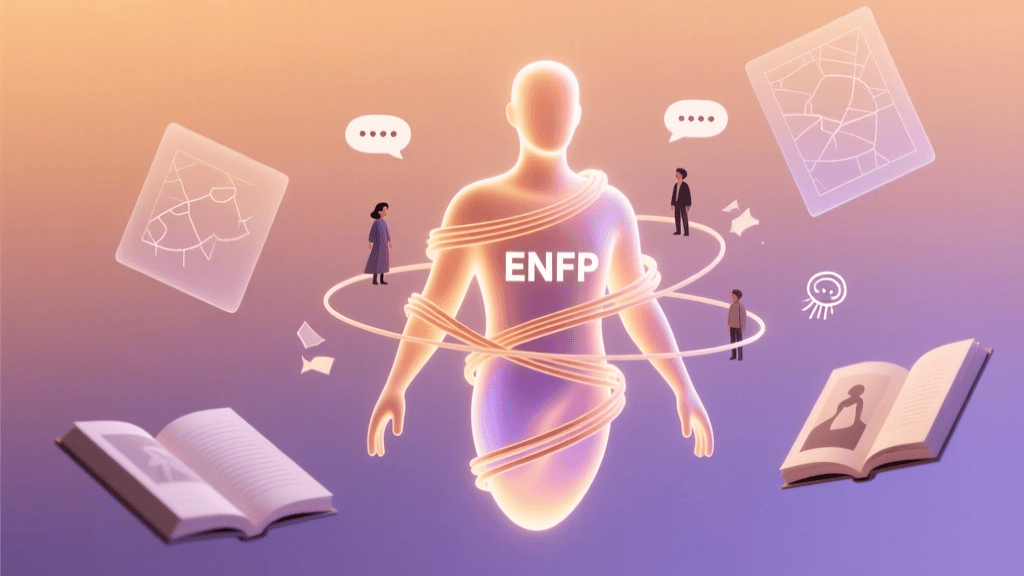
ENFPs — the "Campaigners," "Inspirers," or "Champions" — occupy a singular space in narrative architecture. They are not merely characters; they are engines of story. From Frodo Baggins’ reluctant idealism to Leslie Knope’s boundless civic optimism, from Luna Lovegood’s serene nonconformity to Captain Jack Sparrow’s chaotic magnetism, ENFPs appear across centuries and genres not as outliers, but as structural keystones. This isn’t coincidence. It reflects a deep-seated alignment between the ENFP cognitive stack (Extraverted Intuition → Introverted Feeling → Extraverted Thinking → Introverted Sensing) and fundamental storytelling principles rooted in human psychology, mythic structure, and audience engagement.
The ENFP Story Archetype
The ENFP doesn’t conform to a single archetype like “The Hero” or “The Sage.” Instead, they embody an archetypal function: the Awakener. Coined by Jungian scholar Carol S. Pearson in her seminal work The Hero Within, the Awakener is distinct from the traditional Hero — who seeks external victory — and the Caregiver — who serves selflessly. The Awakener’s core mission is to catalyze perception, awaken possibility, and re-enchant reality. Their power lies not in force, but in resonance.
This manifests narratively through three interlocking traits:
- Perceptual Alchemy: ENFPs see latent meaning, hidden connections, and unrealized potential where others see static facts or dead ends. Their dominant Extraverted Intuition (Ne) scans reality like a radar, generating endless 'what if?' scenarios. In The Lord of the Rings, Frodo doesn’t just carry a ring — he senses its tragic weight, its seductive allure, and the fragile hope it carries for Middle-earth’s renewal. His intuition perceives the moral gravity of the quest long before its tactical dimensions become clear.
- Value-Driven Magnetism: Their auxiliary Introverted Feeling (Fi) anchors them in a fiercely personal moral compass. This isn’t rigid dogma, but a deeply felt, evolving sense of authenticity and compassion. Leslie Knope’s Fi fuels her belief that government can be kind, efficient, and joyful — a vision so potent it reshapes Pawnee’s civic culture. Her values aren’t imposed; they’re contagious.
- Disruptive Generosity: ENFPs rarely seek control. Instead, they create openings — for others to grow, for systems to reform, for truths to surface. Their tertiary Extraverted Thinking (Te) emerges not as cold logic, but as pragmatic, often improvisational, scaffolding to support their vision. Jack Sparrow’s Te appears in his absurdly effective (if unorthodox) navigation of pirate politics and naval warfare — tools deployed solely to preserve freedom and possibility.
This triad forms the Awakener Archetype, which operates via a signature narrative mechanism: the Ripple Effect. The ENFP rarely achieves the central goal alone. Frodo destroys the Ring, but only because Sam carries him, Gollum intervenes, and Aragorn holds the line. The ENFP’s role is to initiate the chain reaction — to ask the question no one else dared voice, to believe in the impossible solution, to hold space for transformation. As mythologist Joseph Campbell observed in The Hero with a Thousand Faces, the true hero’s journey often culminates not in conquest, but in "return with the elixir" — a gift of insight or healing for the community. The ENFP is the ultimate elixir-bearer.
Why Writers Keep Creating ENFP Characters
Writers don’t choose ENFPs arbitrarily. They deploy them deliberately, responding to powerful creative imperatives rooted in craft, psychology, and market dynamics. Understanding these motivations reveals why this type is a perennial favorite — and how to wield it intentionally.
1. Solving the 'Stakes' Problem with Emotional Resonance
One of the most common pitfalls in early drafts is abstract or distant stakes. A world-ending threat feels hollow if the audience doesn’t emotionally invest. ENFPs solve this instantly. Their Fi-driven passion makes stakes personal and visceral. When Leslie Knope weeps over a broken park bench, it’s not about wood and nails; it’s about civic dignity, community pride, and the tangible manifestation of care. Her emotional investment becomes the audience’s anchor. Screenwriting expert Robert McKee emphasizes in Story that “audiences don’t empathize with problems; they empathize with people solving problems.” The ENFP’s passionate, value-laden struggle provides that empathetic bridge faster and more reliably than almost any other type.
2. Generating Organic Plot Momentum Through Ne
Plot shouldn’t feel like a checklist. It should feel inevitable yet surprising. ENFPs’ Ne is a master engine for this. Their constant generation of possibilities creates natural, character-driven complications and pivots. Consider Legally Blonde. Elle Woods’ Ne doesn’t just notice fashion trends; it spots the overlooked alibi in a sorority sister’s testimony, connects a hair product to a murder weapon, and reframes the entire case around social dynamics. Each plot turn arises directly from her unique perceptual lens — not from external contrivance. For writers, building a story around an ENFP’s Ne means plotting becomes an act of discovery, not imposition.
3. Bridging Genre Divides with Authentic Voice
In an era of algorithm-driven content, authenticity is the ultimate differentiator. ENFPs possess an innate, unforced voice — warm, curious, and idiosyncratic. This translates directly to narrative voice and dialogue. Their speech patterns — digressive, metaphor-rich, punctuated by sudden insights — resist cliché. As noted by the Narrative Technology Lab at MIT, stories featuring protagonists with high linguistic novelty and emotional granularity show significantly higher reader retention and sharing rates across platforms. An ENFP’s voice isn’t just charming; it’s a strategic asset for engagement.
4. Fulfilling the Audience’s Unspoken Need for Hope
Cultural psychologists have documented a persistent, cross-generational need for narratives of redemptive hope. Research published in the American Psychologist shows that exposure to stories featuring resilient, values-driven protagonists correlates with increased prosocial behavior and reduced anxiety in readers. ENFPs are hardwired to embody this. Their faith in human potential, even amidst darkness, isn’t naivety — it’s a form of radical courage. Writers intuitively tap into this therapeutic function. Creating an ENFP character is, in part, an act of offering the audience a lifeline.
ENFP Character Arcs
An ENFP arc is rarely about acquiring new traits; it’s about integrating and grounding their existing strengths. Their growth path moves from boundless potential to focused impact, from inspirational spark to sustained flame. There are three primary, actionable arc trajectories writers can employ:
1. The Grounding Arc: From Scattered Visionary to Embodied Leader
Starting Point: Overwhelmed by possibilities (Ne), struggling with follow-through, dismissing practical concerns (Te) as “uninspiring,” prone to burnout from emotional intensity (Fi).
Core Conflict: A crisis forces them to confront the consequences of their lack of structure — a failed project, a fractured relationship, a personal collapse.
Actionable Growth Steps:
- Introduce a Te Mentor: Not a rigid taskmaster, but someone who models pragmatic problem-solving *as a form of care*. Think of Hermione Granger’s role for Harry Potter (an ENFP adjacent type) — her organization isn’t control, but protection.
- Assign a 'Focus Anchor': A single, tangible, values-aligned goal (e.g., “Get this one community garden built”) that requires sustained effort. Success here proves integration is possible.
- Embrace IS (Inferior Sensing) Moments: Use sensory details — the smell of wet earth while gardening, the weight of a finished blueprint — to symbolize grounded presence.
End State: Retains visionary fire but channels it with discipline. Becomes a leader who inspires and executes. Example: Leslie Knope’s evolution from energetic but scattered deputy to a mayor who wins elections and delivers results.
2. The Boundary Arc: From Empathic Sponge to Compassionate Sovereign
Starting Point: Absorbs others’ emotions and problems as their own (Fi overload), struggles to say “no,” sacrifices self to “fix” others, leading to resentment or collapse.
Core Conflict: A relationship fails or a cause is undermined because their lack of boundaries erodes their effectiveness and authenticity.
Actionable Growth Steps:
- Implement the 'Fi Filter': Before helping, ask: “Does this align with my core values, or am I doing it out of guilt/fear?” Teach the character to pause and name their own feeling first.
- Create a 'Boundary Ritual': A small, repeatable action that signals self-protection (e.g., closing a door, lighting a specific candle, a phrase like “I’m holding space for myself right now”). Make it visible and consistent.
- Let a 'No' Have Consequences: Show the short-term fallout (hurt feelings, temporary isolation) and the long-term gain (respect, clarity, renewed energy). This is crucial for authenticity.
End State: Deep empathy remains, but is now coupled with unwavering self-respect. They help from a place of abundance, not depletion. Example: Anne Shirley’s journey in Anne of Green Gables, learning that loving deeply doesn’t require self-erasure.
3. The Integration Arc: From Idealistic Rebel to Wise Reformer
Starting Point: Sees systems as inherently corrupt or broken (Ne + Fi), rejects all structures, operates in chaotic opposition, lacks a viable alternative model.
Core Conflict: Their rebellion inadvertently harms the very people or causes they champion, or they realize pure destruction leaves a vacuum.
Actionable Growth Steps:
- Force Collaboration with a System-Thinker: Pair them with an ISTJ or ESTJ who understands institutional mechanics. The conflict isn’t “right vs. wrong,” but “vision vs. viability.”
- Assign a 'Small-Scale Prototype': Challenge them to build *one* working, ethical micro-system (e.g., a fair-trade co-op, a transparent student council). Success proves reform is possible.
- Confront the Shadow of Ni (Introverted Intuition): Let them have a moment of profound, quiet foresight — not about chaos, but about a sustainable, long-term future. This integrates their Ne with deeper wisdom.
End State: Transforms from a critic into a builder. Their idealism is tempered with pragmatism, their rebellion channeled into systemic innovation. Example: Katniss Everdeen’s arc in The Hunger Games trilogy, moving from survivalist rebel to architect of a new, flawed-but-hopeful republic.
These arcs are not mutually exclusive. A rich ENFP character often navigates multiple threads simultaneously. The key is ensuring each step is earned, visible, and tied to their core cognitive functions.
ENFP in Different Genres
The Awakener’s flexibility is its superpower. Below is a comparative analysis of how the ENFP archetype manifests, with actionable genre-specific writing strategies:
| Genre | Core ENFP Narrative Function | Signature Strength | Pitfall to Avoid | Actionable Tip |
|---|---|---|---|---|
| Fantasy | Bearer of the 'True Name' or 'Lost Lore' | Seeing the magic beneath the mundane; connecting disparate magical systems | Becoming a passive vessel for prophecy instead of an active interpreter | Give them a unique, learned skill (e.g., deciphering ancient star-charts, speaking to forgotten spirits) that requires Fi-driven dedication, not just Ne insight. |
| Science Fiction | Humanity's Moral Compass in a Technological Age | Questioning the ethics of AI, genetic engineering, or societal control through a lens of authentic human connection | Reducing complex tech debates to simplistic 'good vs. evil' binaries | Have them advocate for a nuanced, third-way solution (e.g., AI with embedded empathy protocols, not just banning or unleashing it) that reflects Fi complexity. |
| Romance | The Catalyst for the Partner's Emotional Awakening | Seeing and naming the partner's hidden vulnerabilities and desires before they do | Erasing their own agency to become a mere 'mirror' for the love interest | Ensure their romantic arc has its own Fi-driven goal (e.g., learning to trust their own judgment in love, not just 'fixing' the partner). |
| Mystery/Thriller | The 'Pattern Breaker' Who Sees the Human Truth Behind the Clue | Noticing emotional inconsistencies in alibis, connecting seemingly unrelated victims through shared values or traumas | Relying on 'intuition' as a deus ex machina instead of showing the Ne process | Force them to articulate their hunches as testable hypotheses ('What if the killer hates public displays of affection? Let's check security footage for reactions to couples.') and then validate or refute them. |
| Historical Fiction | The Chronicler of the Marginalized Voice | Using Ne to imagine the inner lives of people erased from official records; Fi to passionately advocate for their humanity | Imposing modern sensibilities without acknowledging historical context and constraint | Anchor their Fi convictions in period-appropriate expressions (e.g., using religious language for moral outrage, channeling activism through art or letter-writing, not modern protest tactics). |
This table underscores a critical principle: the ENFP’s power is contextual. Their Ne and Fi are universal, but their expression is shaped by the genre’s rules and expectations. The writer’s job is to translate the archetype, not transplant it.
FAQ
Can an ENFP be an antagonist?
Absolutely — and it’s a potent, underutilized opportunity. An ENFP villain isn’t a mustache-twirling tyrant. They are the Corrupted Awakener. Their Ne becomes paranoid, generating catastrophic 'what ifs' that justify extreme control (“If I don’t seize power, everyone will die in chaos”). Their Fi curdles into a toxic, absolute certainty about their own righteousness, making them immune to empathy. Think of Commodus in Gladiator — his charisma, his desperate need for love and legacy (Fi), and his delusional, grandiose vision (Ne) make him terrifyingly human. To write this, focus on the moment their values became twisted, not their inherent evil.
How do I avoid making my ENFP character seem 'manic pixie dream girl/boy'?
The MPDG trope reduces the ENFP to a plot device for the protagonist’s growth, stripping them of interiority, flaws, and autonomous goals. To avoid it: 1) Give them a fully realized, off-screen life (e.g., show them stressed about rent, arguing with family, failing at a hobby); 2) Ensure their arc is central and independent (the story should change *them*, not just use them to change someone else); 3) Let them be genuinely, inconveniently difficult (their Ne might derail a plan; their Fi might reject the protagonist’s 'solution' as morally bankrupt). Their purpose is to be a person, not a catalyst.
Is there a difference between ENFP and INFP in storytelling?
Yes, critically. While both share Fi and Ne, their dominant/auxiliary order flips their narrative energy. The ENFP’s dominant Ne makes them outwardly expansive, idea-generating, and socially magnetic — they are the spark that ignites the group. The INFP’s dominant Fi makes them inwardly focused, values-protective, and quietly intense — they are the still center that absorbs and transforms the chaos. An ENFP leads a revolution with speeches and rallies; an INFP writes the manifesto and tends to the wounded. Confusing them leads to mischaracterization. For ENFPs, prioritize their social impact and generative energy.
What’s the biggest mistake writers make with ENFP dialogue?
Overloading it with whimsy and avoiding concrete stakes. While ENFPs use metaphors and tangents, their Fi ensures their words are always anchored in something deeply felt and real. A strong ENFP line isn’t just “Life is like a glittery, slightly dented teacup!” — it’s “Life is like this dented teacup *because* it’s held so many different kinds of warmth, and the dent? That’s where my grandmother gripped it when she told me I was enough.” The whimsy serves the truth, never obscures it. Always ask: “What core value or painful memory is this playful line protecting or revealing?”
Ultimately, the enduring presence of the ENFP in our stories is a testament to a profound human truth: progress is rarely driven by the most powerful, the most logical, or the most disciplined. It is ignited by the one who sees the world not as it is, but as it could be — and who believes, with fierce, contagious, and ultimately transformative conviction, that the difference is worth fighting for. Understanding the Awakener archetype isn’t just about typing characters; it’s about mastering one of storytelling’s most vital, resonant, and hopeful engines.