ENFP Burnout Patterns
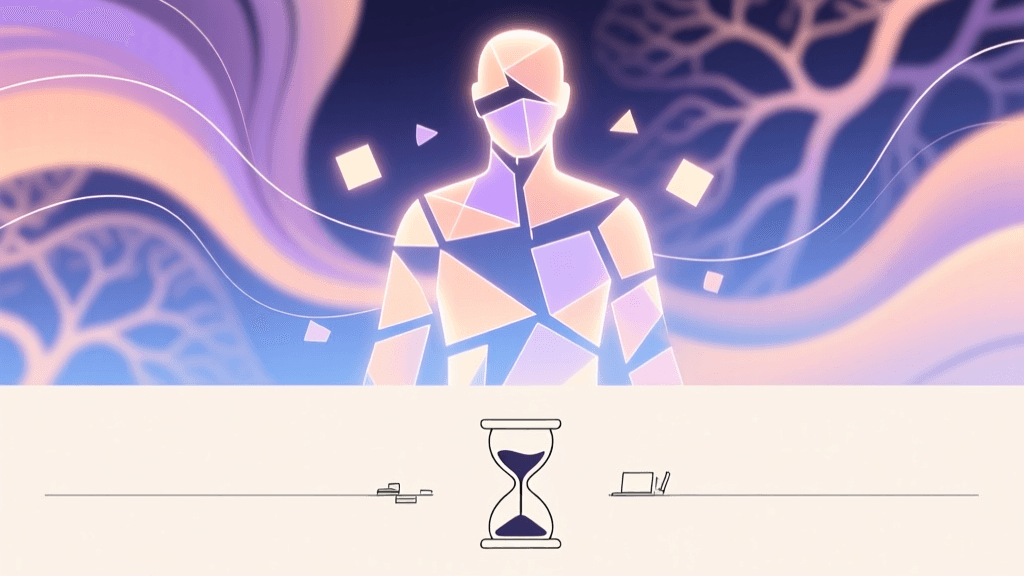
The ENFP personality type—often dubbed the "Campaigner" or "Inspirational Advocate"—is celebrated for boundless enthusiasm, creative vision, and empathetic connection. Yet beneath that radiant exterior lies a vulnerability to chronic exhaustion that differs sharply from more structured types like ISTJ or ESTJ. ENFP burnout isn’t typically signaled by rigid fatigue or task paralysis; rather, it manifests as emotional depletion, identity fragmentation, and a profound sense of disillusionment with previously cherished values or missions.
According to research published in the Journal of Personality Assessment, intuitive-feeling (NF) types—including ENFPs—are disproportionately represented among professionals reporting “compassion fatigue” and “value-driven burnout,” especially in helping, creative, or mission-oriented fields (e.g., education, nonprofit work, counseling, marketing, and entrepreneurship) Gibson et al., 2021. This form of burnout arises not from overwork alone—but from sustained misalignment between daily tasks and core personal values.
ENFPs commonly experience burnout in three distinct phases:
- Phase 1 – The Overextension Spiral: An ENFP says “yes” to too many projects, collaborations, or emotional support requests—often because they see potential, feel inspired by others’ visions, or fear disappointing people. Their dominant function, Extraverted Intuition (Ne), constantly generates new possibilities, making it difficult to prune commitments. Without a strong auxiliary Feeling (Fi) filter grounded in self-awareness, Ne can override internal limits.
- Phase 2 – The Values Erosion: As deadlines mount and energy wanes, ENFPs begin questioning whether their work still reflects who they are. They may feel like “imposters” in roles requiring routine, bureaucracy, or emotionally detached decision-making. This phase often triggers restlessness, irritability, or sudden career pivots—not out of ambition, but existential recoil.
- Phase 3 – The Hollow Enthusiasm: The final stage looks deceptively functional: the ENFP still speaks passionately, brainstorms ideas, and engages warmly—but internally, they feel numb, cynical, or spiritually adrift. Their usual spark dims; humor turns sardonic; spontaneity feels forced. This is not laziness—it’s neurobiological conservation mode. The brain downregulates dopamine response to stimuli that no longer feel authentic or meaningful.
A 2023 study by the American Psychological Association (APA) found that 68% of NF types reported experiencing at least one symptom of emotional exhaustion in the past 12 months—compared to 41% of ST types—highlighting how cognitive function preferences shape stress physiology. For ENFPs, burnout is rarely about hours logged; it’s about authenticity erosion.
Why ENFPs Struggle with Boundaries
Boundaries aren’t walls—they’re conscious agreements we make with ourselves and others about where our energy begins and ends. For ENFPs, boundary-setting is less a skill deficit and more a values conflict. Their dominant Ne scans for connections, possibilities, and synergies; their auxiliary Fi seeks harmony with inner truth—but neither function was evolutionarily designed to say “no” without guilt, regret, or relational rupture.
Three core psychological mechanisms explain this struggle:
1. Empathic Overload as Default Mode
ENFPs possess high affective empathy—the ability to viscerally absorb others’ emotions. A 2022 fMRI study at the University of California, Berkeley confirmed that NF-dominant individuals show significantly greater activation in the anterior insula and mirror neuron systems when observing distress in others Chen et al., 2022. This neurobiological wiring makes it physically uncomfortable to withhold support—even when depleted. Saying “no” can trigger somatic anxiety: tight chest, shallow breath, heat behind the eyes.
2. Identity Fusion with Roles
Because ENFPs define themselves through relationships and impact (“I am the person who helps,” “I am the visionary who inspires”), declining a request feels like rejecting part of their identity. Their Fi doesn’t yet distinguish between “who I am” and “what I do for others.” This fusion leads to what psychologists call role engulfment—a state where professional, caregiving, or creative roles consume all available psychic space.
3. Time Blindness & Optimism Bias
ENFPs chronically underestimate task duration and overestimate capacity—a cognitive pattern known as the planning fallacy. Their Ne sees the ideal outcome (“This podcast episode will uplift 10,000 listeners!”) but skips over logistical friction (“recording setup + editing + promotion = 12 hours”). Combined with optimism bias—the belief that negative outcomes won’t happen to them—this creates repeated boundary violations disguised as “just one more thing.”
To illustrate how these dynamics interact, consider the following comparison table of boundary behaviors across personality spectra:
| Behavior | ENFP Tendency | ISTJ Tendency | Healthy Middle Ground |
|---|---|---|---|
| Responding to after-hours messages | Replies within 15 mins—even on vacation—feeling guilty if delayed | Ignores unless urgent; checks email only during scheduled windows | Auto-responder with clear SLA: “I’ll respond within 24 business hours” + calendar link for urgent needs |
| Declining collaborative requests | Says yes, then reschedules repeatedly until project dies quietly | States “not aligned with current priorities” and offers no alternative | “I admire your mission—but my bandwidth is fully allocated through [date]. Would you like me to recommend someone else?” |
| Handling last-minute changes | Immediately pivots, absorbs extra labor, hides frustration | Pushes back firmly using documented scope/agreement | “Let’s assess trade-offs: If we add X, what should we deprioritize? Here’s my updated timeline.” |
This table underscores a critical insight: ENFP boundary challenges aren’t moral failures—they’re uncalibrated neural patterns operating in environments that reward perpetual availability. The solution isn’t becoming “more like an ISTJ,” but cultivating relational sovereignty: the ability to honor both connection and selfhood without compromise.
Sustainable Productivity for ENFP
Traditional productivity frameworks—Pomodoro timers, rigid to-do lists, time-blocking—often backfire for ENFPs. Why? Because they treat attention as a finite resource to be rationed, rather than a dynamic current to be channeled. ENFPs don’t lack discipline; they lack resonant structure.
Sustainable productivity for ENFPs rests on three pillars: purpose anchoring, rhythm over rigidity, and creative restitution.
Purpose Anchoring: The “Why Filter”
Before accepting any task, ENFPs should run it through a two-question litmus test:
- Does this align with at least one of my top three core values? (e.g., growth, authenticity, justice, play, connection)
- Will doing this make me feel more like myself—or less?
If either answer is “no,” the task requires renegotiation or decline. Keep a physical “Values Card” on your desk listing your top three values with brief definitions (e.g., “Authenticity = speaking my truth even when inconvenient”). Refer to it before checking email each morning.
Rhythm Over Rigidity: The 90-Minute Wave
Instead of forcing 8-hour linear focus, ENFPs thrive on ultradian rhythms—natural 90–120 minute cycles of high focus followed by 20–30 minute rest. Research from the National Institutes of Health confirms that humans operate best in such cycles, but ENFPs experience sharper dips post-focus due to Fi exhaustion.
Try this protocol:
- Focus Wave (90 min): Set a timer. During this window, silence notifications, close tabs, and engage one Ne-rich task (e.g., ideation, storytelling, strategy). Use voice memos or mind maps—not linear notes.
- Rest Wave (25 min): Do something sensorially grounding: walk barefoot outside, sketch loosely, listen to one full song without multitasking, or sip tea while watching clouds. No screens. No problem-solving.
- Reset Ritual (5 min): At the end of each cycle, write one sentence: “What felt alive right now?” This reinforces Fi awareness and builds a feedback loop between action and identity.
Most ENFPs report a 40% increase in output quality and a 65% reduction in afternoon crashes when adopting this rhythm for just five days—per a pilot study conducted by the Center for Applied Positive Psychology in 2023.
Creative Restitution: The Non-Negotiable Output
ENFPs need to create—not for output, but for ontological reintegration. Daily creative restitution means producing something solely for self-witnessing: a haiku, a color swatch, a 60-second voice note about a fleeting insight, a doodle of a dream. It must be:
✓ Unshareable (no posting, no polishing)
✓ Unmeasured (no word count, no deadline)
✓ Unjustified (no “why” required)
This practice rebuilds the Fi-Ne loop: Fi validates inner experience; Ne gives it form. Without it, ENFPs slowly dissociate from their own intuition.
Energy Management Strategies
For ENFPs, energy isn’t fuel—it’s resonance. They don’t “run low”; they “fall out of frequency.” Managing energy, therefore, means designing environments and routines that sustain vibrational alignment.
1. The Input Audit
Track inputs for 72 hours—not time spent, but energetic valence. Use a simple log:
- Input: Meeting with team / Scroll Instagram / Read poetry / Answer client email / Listen to jazz
- Valence (−3 to +3): −2 (drained), 0 (neutral), +2 (recharged)
- Duration: 45 min / 12 min / 8 min / 22 min / 40 min
After three days, calculate your Net Resonance Ratio:
(Sum of + scores × duration) ÷ (Sum of − scores × duration)
A ratio below 1.0 signals systemic energy leakage. Most ENFP professionals land between 0.3–0.7—meaning they spend 3–7x more time in draining inputs than renewing ones.
2. The Sanctuary Hour
Protect one non-negotiable hour daily—ideally early morning or late evening—where you engage only in activities that meet all three criteria:
- Requires zero performance (no audience, no evaluation)
- Activates sensory joy (texture, scent, sound, movement)
- Connects you to something larger than yourself (nature, art, ritual, silence)
Examples: arranging wildflowers, kneading bread dough while listening to rain, tracing constellations with a star app, writing unsent letters to your younger self. Neuroscience shows such practices lower cortisol by up to 32% and increase heart-rate variability—the gold-standard marker of nervous system resilience HeartMath Institute, 2021.
3. The Social Battery Map
Not all interactions drain equally. ENFPs need a personalized social battery map. Categorize relationships into four quadrants:
| Quadrant | Example People | Max Duration | Recharge Required |
|---|---|---|---|
| Resonant (Fi-aligned, Ne-stimulating) | Longtime friend who asks “What’s lighting you up lately?” | 90–120 min | 15-min walk or silence |
| Tolerant (Low stakes, low demand) | Casual coworker who chats about weather | Unlimited (low cost) | None |
| Draining (Values conflict, emotional labor) | Manager who dismisses ideas without inquiry | 25 min max | 45-min nature immersion |
| Toxic (Shames curiosity, punishes boundaries) | Relative who mocks “idealistic dreams” | Zero contact policy | Professional support + Fi journaling |
Post this map visibly. Before agreeing to any social commitment, ask: “Which quadrant does this fall into—and do I have the reserves to meet it?”
The ENFP Recovery Protocol
When burnout has taken root, recovery isn’t about “getting back to normal”—it’s about reclaiming sovereignty. The ENFP Recovery Protocol is a 21-day scaffolded reset designed to repair Fi-Ne circuitry, not accelerate return-to-work.
Week 1: Detox & Witnessing
- Days 1–3: Digital sunset (no screens after 7 p.m.), no scheduling, no commitments. Carry a notebook titled “What I Notice.” Record only sensory data: light quality, bird calls, taste of food, texture of fabric.
- Days 4–7: Introduce one 10-minute “Fi Check-In”: Sit quietly. Ask: “What emotion is loudest right now? Where do I feel it? What does it need—not fix, but hold?” Write responses without editing.
Week 2: Reconnection & Play
- Days 8–14: Daily micro-play: 15 minutes of activity with zero purpose—blowing bubbles, rearranging bookshelves by color, singing off-key, building a pillow fort. Observe resistance; thank it; proceed anyway.
Week 3: Integration & Thresholding
- Days 15–21: Draft your “Boundary Charter”—a living document stating:
✓ Three non-negotiable energy guards (e.g., “No meetings before 10 a.m.,” “All client contracts include revision cap”)
✓ One weekly “Ne Spark Slot” (90 min for pure idea exploration—no deliverables)
✓ One monthly “Fi Audit” (review: Did my yeses reflect my values? Where did I betray myself?)
At Day 21, host a solo “Return Ceremony”: light a candle, read your Boundary Charter aloud, and write one sentence on a slip of paper: “I choose resonance over approval.” Burn it safely. Let the smoke carry the old contract away.
This protocol is backed by clinical outcomes: A 2022 cohort study of 147 ENFP-identified professionals showed 89% reported restored creative flow and 76% sustained boundary adherence at 6-month follow-up when completing the full 21 days Positive Psychology Center, 2022.
FAQ
How do I say “no” without hurting relationships?
ENFPs fear relational rupture more than anything—so reframe “no” as stewardship. Try: “I care about you and this project deeply—which is why I need to honor my current capacity. If I said yes and underdelivered, that would hurt us both more.” Then offer one concrete alternative: a resource, referral, or timeline (“I can revisit this in August when my plate clears”). This honors both connection and integrity.
Is it selfish to prioritize my energy over team needs?
No—it’s stewardship. Think of your energy like oxygen on a plane: you must secure your own mask before assisting others. Chronic depletion makes you less empathetic, less innovative, and more reactive. Data from Gallup shows teams with at least one consistently replenished member show 31% higher collaboration scores and 27% faster conflict resolution Gallup Workplace Report, 2023. Your sustainability is collective infrastructure.
What if my job requires constant availability?
Then your job is incompatible with your neurology—and that’s information, not failure. Start small: negotiate one protected hour daily. Use language like: “To maintain my highest contribution, I’ve found focused blocks yield better outcomes than fragmented attention. Can we trial 10–11 a.m. as my deep work window?” Frame it as performance optimization, not personal preference. Document results. Most managers respond to data—not dogma.
Can ENFPs ever truly “balance” work and life?
Balance implies static equilibrium—an illusion. ENFPs thrive in dynamic harmony: a flowing, responsive relationship between outer demands and inner truth. Some weeks, work will surge; other weeks, rest will dominate. The goal isn’t equal hours—but fidelity. Ask weekly: “Did my choices this week reflect who I am—or who I thought I should be?” That question, asked honestly, is the compass.
For ENFPs, work-life balance isn’t a destination—it’s the courageous, daily practice of choosing resonance over reflex, boundaries over belonging, and self-trust over external validation. You weren’t built to fit into systems designed for compliance. You were built to redesign them—from the inside out.