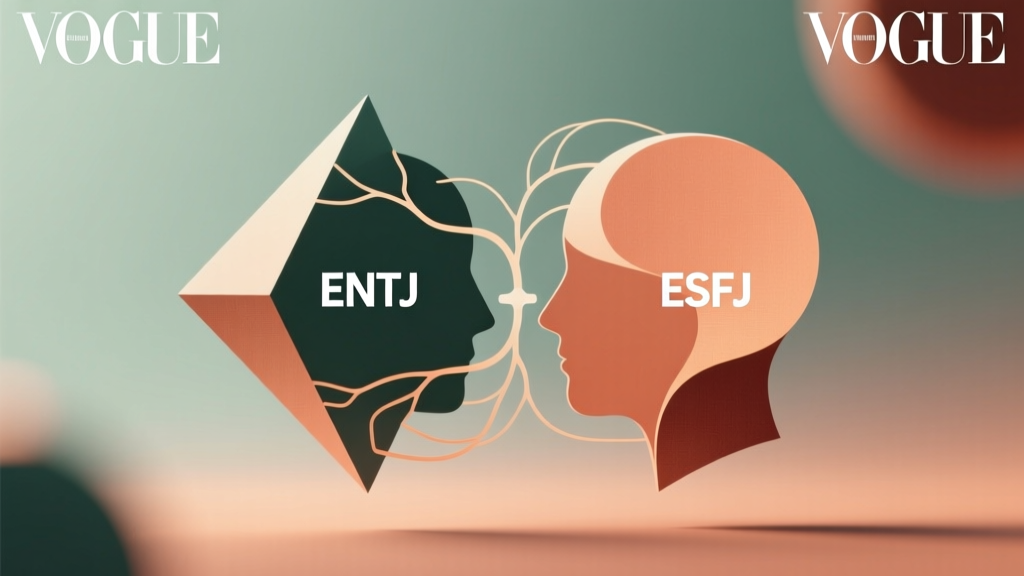
ENTJ Love Language Profile
The ENTJ (Commander) personality type — characterized by Extraversion (E), Intuition (N), Thinking (T), and Judging (J) — approaches love with the same strategic clarity and goal-oriented energy they bring to leadership and problem-solving. While often stereotyped as emotionally reserved or overly rational, ENTJs do experience deep affection — but they express and interpret it through frameworks of competence, loyalty, and shared vision. Their primary love languages rarely align with Words of Affirmation in a sentimental sense, nor with Physical Touch as spontaneous intimacy; rather, ENTJs most authentically feel loved when their partner demonstrates Acts of Service that support long-term goals, offers Quality Time rooted in purposeful engagement, and delivers Words of Affirmation that validate their capability, integrity, and impact.
Research from the Center for Applications of Psychological Type (CAPT) confirms that Thinking-dominant types like ENTJs prioritize objective feedback over emotional validation — yet they deeply value affirmation that acknowledges effort, foresight, and results. As noted in CAPT’s official MBTI® Basics guide, ENTJs “seek partners who are reliable, competent, and share their drive for achievement,” indicating that acts which remove logistical friction (e.g., organizing travel logistics, managing household systems, or proactively solving a work-related challenge) register as profound expressions of care.
ENTJs also respond strongly to Quality Time — but not passive coexistence. For them, quality time means collaborative planning, strategic discussions about future goals, or joint problem-solving. A walk while reviewing next-quarter priorities may feel more intimate than a candlelit dinner without substance. This reflects their auxiliary function, Introverted Intuition (Ni), which seeks meaning, coherence, and forward momentum — even in romance.
It’s critical to note that ENTJs often misinterpret emotional vulnerability as inefficiency. When an ESFJ expresses hurt through tears or asks for reassurance mid-conflict, the ENTJ may instinctively pivot to solution-mode (“Let’s fix this”) rather than attunement-mode (“I see you’re hurting — tell me more”). This isn’t indifference — it’s a neurocognitive reflex tied to dominant Extraverted Thinking (Te). Their love is action-first, logic-anchored, and future-focused. They show devotion by building infrastructure for the relationship: securing financial stability, designing shared routines, or advocating fiercely for their partner’s professional growth.
ESFJ Love Language Profile
The ESFJ (Consul) — Extraverted, Sensing, Feeling, Judging — experiences love as relational harmony, tangible care, and socially affirmed commitment. Their dominant function, Extraverted Feeling (Fe), makes them exquisitely attuned to others’ emotional states and social expectations. ESFJs give and receive love most naturally through Words of Affirmation (especially sincere, specific praise), Acts of Service delivered with warmth and personal attention, and Quality Time marked by presence, active listening, and shared tradition. Physical touch and gift-giving also resonate — but only when imbued with symbolic meaning (e.g., a handwritten note tucked into a lunchbox, or holding hands during a family gathering).
According to the Myers & Briggs Foundation’s research on Fe-dominant types, ESFJs “derive deep satisfaction from nurturing others and maintaining group cohesion” (Myers & Briggs Foundation, Feeling Preference Overview). This translates directly to love: ESFJs feel most cherished when their partner notices small emotional shifts (“You seemed quiet at dinner — everything okay?”), remembers personal details (“You mentioned your mom’s birthday was coming up — did you call her?”), and publicly affirms their role (“I’m so grateful you organized Thanksgiving — everyone felt so welcomed because of you.”)
Unlike ENTJs, ESFJs do not equate efficiency with love. An ESFJ may spend 45 minutes selecting the perfect greeting card — not because the message is complex, but because the ritual itself communicates care. They notice if a partner forgets a pet’s vet appointment or skips a weekly phone call with a parent — these omissions register as relational neglect, regardless of whether larger goals are being met. Their tertiary function, Introverted Sensing (Si), anchors love in consistency, memory, and sensory familiarity: favorite songs, inside jokes, recurring weekend rituals — all serve as emotional scaffolding.
Crucially, ESFJs often internalize conflict as personal failure. If an ENTJ says, “We need to optimize our communication process,” the ESFJ may hear, “You’re doing it wrong.” Their Fe-driven desire to preserve harmony can lead them to suppress concerns until resentment accumulates — a dynamic that frequently triggers misalignment in ENTJ-ESFJ pairings.
Where Love Languages Align and Diverge
At first glance, ENTJ and ESFJ appear highly compatible: both are Extraverted, Judging types who value structure, responsibility, and social contribution. They often meet in professional or community settings — leading volunteer initiatives, co-founding nonprofits, or managing large family gatherings. Their shared preference for organization and duty creates strong external alignment. Yet beneath the surface, their emotional operating systems differ significantly — particularly in how they encode, transmit, and decode love signals.
The following table compares core love language expressions and interpretations between ENTJ and ESFJ:
| Love Language | ENTJ Expression Style | ESFJ Expression Style | Potential Mismatch |
|---|---|---|---|
| Words of Affirmation | Direct, outcome-focused praise: “Your presentation nailed the ROI analysis — that secured the client.” | Warm, identity-affirming praise: “You have such a kind way of making people feel seen — I love how you remembered Maya’s anxiety before her speech.” | ENTJ may omit emotional context; ESFJ may perceive praise as transactional or cold. ESFJ may avoid direct criticism to preserve harmony; ENTJ may interpret silence as agreement or apathy. |
| Acts of Service | System-level solutions: automating bill payments, drafting a 5-year education plan for kids, negotiating a better insurance policy. | Person-centered actions: packing a thoughtful lunch, refilling prescription meds, sending a ‘thinking of you’ text before a stressful meeting. | ENTJ’s macro-level service may feel impersonal to ESFJ; ESFJ’s micro-level care may seem inefficient or unstrategic to ENTJ. Both may overlook the other’s version as ‘real’ service. |
| Quality Time | Time invested in co-creation: planning a home renovation, debating policy reform, optimizing vacation itineraries. | Time invested in co-presence: cooking together while sharing stories, watching a favorite show with commentary, attending a sibling’s recital and cheering loudly. | ENTJ may dismiss ‘unstructured’ time as unproductive; ESFJ may feel rushed or unheard during goal-driven conversations. Neither feels fully seen unless time reflects their preferred mode. |
| Physical Touch | Rarely initiated spontaneously; used pragmatically (e.g., guiding partner through a crowd) or as stress relief (shoulder rub after long day). | Frequent, warm, and expressive: hugs upon reunion, hand-holding in public, gentle touches during conversation. | ESFJ may perceive ENTJ’s restraint as emotional distance; ENTJ may feel overwhelmed by constant physical contact, interpreting it as pressure to perform affection. |
| Gifts | Practical, high-functionality items: noise-canceling headphones for focus, ergonomic office chair, subscription to industry journal. | Symbolic, personalized items: framed photo from first trip, custom playlist titled “Our Summer Drive,” artisan soap from local shop they visited together. | ENTJ’s gifts may feel utilitarian to ESFJ; ESFJ’s gifts may seem frivolous or low-priority to ENTJ. Meaning is encoded differently — utility vs. sentiment. |
This divergence isn’t pathological — it’s functional. ENTJs evolved to scan environments for systemic leverage points; ESFJs evolved to monitor interpersonal resonance and group belonging. When both partners understand this, mismatches become translation opportunities rather than failures.
Emotional Needs of ENTJ and ESFJ
Compatibility isn’t just about shared interests — it’s about reciprocal fulfillment of non-negotiable emotional needs. In ENTJ-ESFJ relationships, unmet needs often manifest as chronic low-grade friction: the ENTJ feels unsupported in ambition; the ESFJ feels emotionally invisible.
ENTJ Core Emotional Needs:
- Competence Recognition: To be trusted as capable, decisive, and intellectually rigorous — especially under pressure.
- Autonomy Within Partnership: Space to lead, initiate, and make unilateral decisions in domains they own (e.g., finances, strategic planning) without micromanagement or second-guessing.
- Constructive Challenge: A partner who engages their ideas rigorously — asking incisive questions, offering counterpoints, and refusing to defer solely to authority or hierarchy.
- Future-Oriented Validation: Affirmation tied to growth, impact, and legacy — e.g., “The way you mentored Alex will shape that team for years” — not just present-moment appreciation.
ESFJ Core Emotional Needs:
- Relational Security: Explicit, repeated verbal and behavioral confirmation of commitment — “I choose you daily,” anniversary rituals, consistent responsiveness to texts/calls.
- Emotional Mirroring: A partner who reflects back their feelings with accuracy and empathy — “That sounds exhausting,” not “Let’s reschedule the meeting.”
- Social Integration: Public acknowledgment of the relationship (introducing partner proudly, including them in family events, posting photos meaningfully) and alignment on communal values (e.g., faith, education, civic duty).
- Routine-Based Care: Predictable expressions of attentiveness — morning coffee made their way, remembering allergy info at restaurants, initiating check-ins after stressful days.
A 2022 study published in the Journal of Social and Personal Relationships found that couples with mismatched emotional processing styles (e.g., Te-dominant vs. Fe-dominant) reported higher satisfaction when both partners engaged in needs mapping exercises — collaboratively listing and ranking non-negotiable emotional requirements, then co-designing rituals to fulfill them (Sage Journals, Vol. 39, Issue 8). For ENTJ-ESFJ pairs, this means moving beyond assumptions (“They know I love them because I provide stability”) to explicit contracts: “I need you to say ‘I love you’ before bed — even if it’s brief. In return, I’ll schedule one unscheduled hour each Sunday just for us, no agenda.”
Building Emotional Fluency Between ENTJ and ESFJ
“Emotional fluency” refers to the ability to accurately identify, articulate, translate, and reciprocate emotional signals across cognitive differences. It’s not about becoming the same — it’s about developing bilingualism in love.
Step 1: Decoding Your Partner’s Emotional Syntax
ENTJs must learn that an ESFJ’s question — “How was your day?” — is rarely informational. It’s an invitation to connect, a bid for shared emotional space. Responding with a bullet-point summary of meetings misses the subtext. A fluent response: “It was intense — three back-to-back pitches. I kept thinking about how calm you were during your presentation last week. How did you center yourself?” This bridges Te efficiency with Fe resonance.
ESFJs must learn that an ENTJ’s silence during emotional escalation isn’t withdrawal — it’s cognitive recalibration. Dominant Te + auxiliary Ni requires time to synthesize data before responding. Interrupting with “Just say something!” triggers defensiveness. A fluent response: “I see this is heavy. Would 20 minutes help you gather thoughts? I’ll make tea and we’ll talk when you’re ready.”
Step 2: Co-Creating Hybrid Love Rituals
Design shared practices that honor both worldviews. Examples:
- The 15-Minute Weekly Sync: ENTJ sets agenda (goals, blockers, resources needed); ESFJ adds “People Check-In” (how key people are doing, upcoming emotional milestones). Ends with one mutual appreciation (“One thing I admire about you this week”).
- The ‘Why’ Dinner: Monthly meal where each partner explains one current priority — not just what they’re doing, but why it matters to their values. ENTJ articulates legacy impact; ESFJ articulates relational significance.
- The Appreciation Jar: Shared container where both write notes — ENTJ focuses on observed competence (“You handled that client complaint flawlessly”), ESFJ focuses on emotional presence (“I felt so held when you listened without fixing”). Read aloud monthly.
Step 3: Developing Shared Emotional Vocabulary
Create a private glossary of translated terms:
ENTJ says: “Let’s optimize this.”
ESFJ hears: “You’re doing it wrong.”
Fluent reframe: “I trust your judgment — could we explore ways to make this sustainable for both of us?”
ESFJ says: “I just need you to listen.”
ENTJ hears: “There’s no problem to solve — so my input is irrelevant.”
Fluent reframe: “I need your presence more than your advice right now. Can you just hold space with me?”
This vocabulary reduces reactive misinterpretation and builds neural pathways for empathy. Neuroscientist Dr. Dan Siegel emphasizes that “name it to tame it” — labeling emotions accurately calms the amygdala and activates prefrontal regulation (Dr. Daniel Siegel, The Developing Mind).
Practical Tips for Expressing Love to Each Type
Abstract understanding isn’t enough — love must be operationalized. Below are concrete, behavior-level strategies:
How ESFJs Can Express Love to ENTJs
- Lead with impact, not emotion: Instead of “I’m so proud of you,” try “Your strategy shifted the board’s timeline by six months — that’s huge.”
- Support autonomy visibly: Say, “I’ve handled the school pickup schedule — you focus on the merger prep. Let me know if you need bandwidth reallocated.”
- Ask for their expertise: “What’s the most efficient way to research summer camps?” or “How would you structure this family budget?” — validates their Te strength.
- Give space without silence: Text “Thinking of you — no reply needed” during high-stakes workdays. Shows care without demand.
How ENTJs Can Express Love to ESFJs
- Initiate Fe-centered check-ins: “Who made you smile today?” or “What’s one small thing that felt meaningful this week?” — invites emotional sharing without pressure.
- Publicly affirm their relational labor: At a family gathering: “Sarah managed every detail so seamlessly — she’s the reason this feels like home.”
- Learn and deploy their love language triad: Combine Words (“You have the kindest heart”), Acts (refill their favorite tea), and Quality Time (watch their favorite show without checking your phone).
- Normalize emotional expression: Share your own feeling with naming and cause: “I felt frustrated in that meeting because my point wasn’t heard — not because of you.” Models vulnerability safely.
Crucially, consistency trumps grand gestures. An ENTJ who sends one “You’re amazing” text per month won’t build trust — but one who says “Good luck on your presentation — I believe in your preparation” before every high-stakes event does. Likewise, an ESFJ who plans one lavish anniversary dinner annually won’t satisfy an ENTJ’s need for ongoing intellectual partnership — but one who reads their industry newsletter and asks one insightful question weekly will.
FAQ
Can ENTJ and ESFJ have a successful long-term relationship?
Yes — and many do, especially when both partners commit to emotional bilingualism. Research from the Gottman Institute shows that relationship longevity correlates less with personality similarity and more with repair skills — the ability to de-escalate conflict, take responsibility, and reconnect (Gottman Institute, Seven Principles). ENTJ-ESFJ pairs excel at repair when they leverage their shared Judging preference for structure: scheduling regular check-ins, creating shared values statements, and defining clear conflict protocols (e.g., “If either says ‘I need pause,’ we stop and resume in 90 minutes”).
Why does my ESFJ partner get upset when I offer solutions during emotional conversations?
Your Te-dominant instinct to fix is misaligned with their Fe-dominant need to feel felt. Neuroscience confirms that when someone is emotionally activated, the brain’s threat-response system (amygdala) overrides logical processing centers. Offering solutions prematurely signals dismissal of their emotional reality. Try this sequence: 1) Validate (“That sounds overwhelming”), 2) Invite depth (“What’s the hardest part for you?”), 3) Ask permission (“Would you like help brainstorming, or just space to vent?”).
How can an ENTJ become more emotionally expressive without feeling inauthentic?
Authenticity isn’t fixed — it expands through practice. Start with micro-expressions aligned with your values: instead of forcing “I love you,” try “I respect your integrity” or “I’m committed to building this life with you.” Use your Te strength to track progress: keep a journal noting when your partner’s face softened after a specific phrase, then replicate that linguistic pattern. As clinical psychologist Dr. Susan David writes in Emotional Agility, “Courage is not the absence of fear — it’s moving toward value despite discomfort” (Susan David, Emotional Agility).
What’s the biggest mistake ENTJ-ESFJ couples make in early dating?
Assuming shared Extraversion and Judging means shared emotional language — leading to premature fusion. ENTJs may rush into logistical planning (joint bank accounts, cohabitation timelines) before establishing emotional safety; ESFJs may over-invest emotionally (introducing partners to family within weeks) before assessing compatibility in core values. The antidote is intentional pacing: agree on a 90-day “discovery phase” with defined checkpoints (e.g., “After 30 days, we’ll discuss how conflict feels,” “After 60 days, we’ll share our top three non-negotiables”). This honors both the ENTJ’s need for forward motion and the ESFJ’s need for relational security.
In conclusion, the ENTJ-ESFJ bond is not a matter of compromise — it’s an opportunity for profound mutual evolution. The ENTJ learns that emotional intelligence isn’t soft skill, but strategic infrastructure; the ESFJ discovers that clarity isn’t coldness, but compassionate precision. When both recognize that love isn’t one language, but a living dialect shaped by two distinct grammars — they don’t just coexist. They co-create.