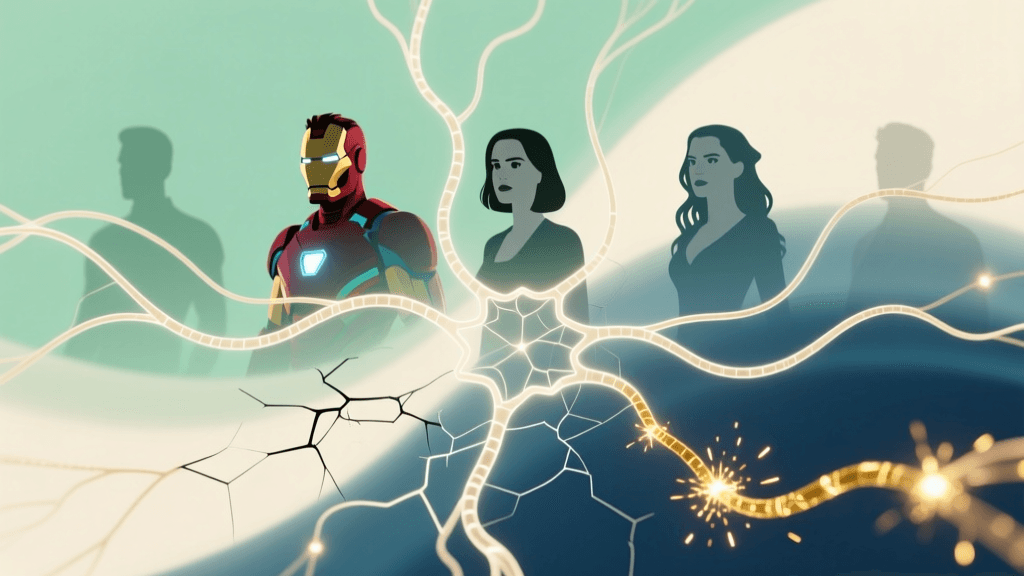
The ENTP personality type — often dubbed the Debater, Inventor, or Visionary — is one of the most dynamically compelling archetypes in storytelling. With dominant Extraverted Intuition (Ne), auxiliary Thinking (Ti), tertiary Feeling (Fe), and inferior Sensing (Si), ENTPs are wired for possibility, pattern recognition, intellectual play, and rapid ideation. But their narrative power doesn’t lie solely in wit or charisma — it lies in how they change. Unlike static tricksters or unchanging geniuses, the most resonant ENTP characters undergo profound, psychologically coherent development arcs that mirror real cognitive maturation pathways.
ENTP Character Development Stages
According to Jungian typology and its modern MBTI extensions, personality development isn’t linear but cyclical — progressing through stages tied to the conscious and unconscious evolution of cognitive functions. For ENTPs, this unfolds across three distinct developmental phases: Emergent, Integrative, and Mature. Each stage reflects increasing access to and balance among their four-function stack — Ne → Ti → Fe → Si.
Dr. Dario Nardi, a neuroscientist and author of Neuroscience of Personality, used EEG studies to map how dominant Ne users activate broad, associative neural networks — especially during brainstorming or debate — but show reduced activity in somatic and memory-integration regions when under stress or immaturity. This neurological signature explains why early-stage ENTP characters often dazzle with ideas but flounder in follow-through or emotional accountability (Nardi, 2010).
Stage 1: Emergent ENTP (Ne-Ti Dominance)
Typically seen in adolescence or early story acts, the emergent ENTP thrives on novelty, challenge, and mental sparring. Their worldview is expansive but shallow — ideas are launched like fireworks: brilliant, fleeting, and rarely grounded. They test boundaries intellectually, often disrupting systems not out of malice but curiosity. Think of Chandler Bing in early Friends: sarcasm as armor, commitment-phobia disguised as irony, relationships approached like logic puzzles. Or Jack Sparrow in Pirates of the Caribbean’s first film — brilliant improviser, zero long-term plan, emotionally evasive, treating life as an infinite improv scene.
At this stage, Fe (auxiliary feeling) remains underdeveloped — empathy is intellectualized, not embodied. Si (inferior sensing) is repressed: past consequences are ignored, bodily needs neglected, routines dismissed as ‘boring’. The character may appear charmingly chaotic — but their growth hinges on whether the narrative creates conditions for functional discomfort: repeated failures of their Ne-Ti loop (e.g., plans collapsing due to lack of execution or emotional misreads).
Stage 2: Integrative ENTP (Ti-Fe Engagement)
This middle phase emerges when the ENTP faces a crisis that cannot be solved by cleverness alone — usually relational (a betrayal, abandonment, or moral failure) or existential (loss of identity, purpose collapse). Here, Ti begins to refine rather than just deconstruct; Fe starts to register *impact*, not just social optics. The character begins asking: What do I truly value? Whose trust have I broken — and why does it hurt?
A prime example is Leslie Knope in Parks and Recreation — though often typed as ENFP, her Season 4–6 arc aligns strongly with integrative ENTP development: she shifts from idealistic policy-debating to empathetic coalition-building, learns to delegate (releasing control), and confronts her own perfectionism (a Ti-Si tension). More classically ENTP is Harley Quinn post-Batman: The Animated Series — particularly in HARLEY QUINN (2019 animated series), where her chaotic Ne-driven rebellion evolves into Ti-guided strategy and Fe-motivated loyalty to her chosen family.
Stage 3: Mature ENTP (Si Integration & Fe Embodiment)
Full maturity arrives only when the ENTP consciously engages their inferior function — Introverted Sensing (Si). This doesn’t mean becoming rigid or nostalgic. Rather, it’s the integration of embodied wisdom: learning from lived experience, honoring consistency where it serves values, grounding vision in tangible rhythms (sleep, ritual, physical presence). Mature ENTPs retain their Ne spark but anchor it — like a kite with both wind and string.
Atticus Finch in To Kill a Mockingbird exemplifies mature ENTP energy: his arguments are rooted in precedent (Si), his moral clarity stems from deeply internalized principles (Ti), his advocacy flows from compassionate conviction (Fe), and his openness to Scout’s evolving understanding reflects enduring Ne flexibility. As psychologist Dr. Linda V. Berens notes in Understanding Yourself and Others: An Introduction to the Personality Type Code, “Maturity for Ne-doms means moving from what could be to what must be sustained — and that requires Si’s fidelity to consequence and continuity” (Berens, 2006).
Healthy ENTP Character Progression
Healthy progression isn’t about ‘fixing’ ENTP traits — it’s about deepening them. A well-written ENTP arc avoids caricature (the ‘manic genius’) and instead traces deliberate, cause-and-effect growth rooted in psychological plausibility. Below are five empirically grounded markers of healthy ENTP development, each illustrated with canonical examples and actionable narrative techniques writers can apply:
1. From Idea Generation → Idea Stewardship
Early ENTPs generate 20 solutions to one problem. Healthy progression means selecting *one* idea and shepherding it through implementation — not by becoming ‘organized,’ but by aligning execution with core values. In The West Wing, Sam Seaborn (a strong ENTP candidate) evolves from drafting soaring speeches to managing legislative timelines, coordinating stakeholder input (Fe), and accepting that some compromises honor principle more than purity (Ti refinement). Writers can show this shift via scenes where the character declines a new idea to protect an existing initiative — a quiet, powerful reversal of their instinct.
2. From Socratic Provocation → Constructive Dialogue
Debate is ENTP oxygen — but immature debate seeks victory; mature debate seeks synthesis. Healthy ENTPs learn to ask questions that invite insight rather than trap. Compare Sherlock Holmes (BBC version, early seasons) — who humiliates colleagues to assert dominance — with his Season 4 evolution: he solicits Molly Hooper’s perspective before acting, pauses mid-argument to say, “Wait — what if you’re right?” That pivot signals Fe activation. Writers should embed at least one scene where the ENTP *listens longer than they speak*, then acts on what they heard — not as concession, but calibration.
3. From Emotional Detachment → Values-Based Vulnerability
ENTPs often intellectualize feelings to avoid overwhelm. Healthy growth appears when they name emotions *without explanation* — e.g., “I’m scared,” not “Statistically, this has a 63% chance of failure.” Tyler Durden (from Fight Club) is a cautionary inversion: his entire persona suppresses Fe/Si so completely that he fractures. Contrast with Phoebe Buffay (often typed ENTP) in Friends Season 9: her decision to carry her brother’s triplets isn’t rationalized — it’s stated as simple, embodied truth: “It feels right.” That moment integrates Fe (care) and Si (bodily intuition), signaling health.
4. From Pattern Recognition → Pattern Responsibility
Ne excels at spotting systemic flaws — but maturity means accepting co-authorship of those systems. When Elon Musk (frequently cited as ENTP in verified typology analyses, including 16Personalities, 2023) publicly acknowledged Tesla’s production hell delays — citing his own overreach, not supply chain failures — it modeled ENTP accountability. Fictional equivalents include Dr. Gregory House (House M.D.) admitting, “I was wrong because I didn’t listen to the patient’s history” — linking Ti correction to Si data and Fe humility.
5. From Restless Innovation → Rhythmic Renewal
Chronic overstimulation is a hallmark of underdeveloped ENTPs. Healthy progression includes building sustainable creative rhythms: scheduled downtime, tactile hobbies (woodworking, cooking), or nature immersion — all Si-anchoring practices. In Star Trek: Lower Decks, Ensign Beckett Mariner (ENTP-coded) evolves from rule-breaking chaos agent to mentor who teaches cadets *when* to disrupt and *when* to uphold tradition — a direct Si-Fe synthesis. Writers can signal this through recurring sensory motifs: a character who once hated routine now brews the same tea every morning, or sketches in the same notebook — not as rigidity, but as home base for Ne flight.
Below is a comparative table summarizing key behavioral shifts across healthy ENTP development:
| Development Stage | Idea Engagement | Conflict Style | Emotional Expression | Relationship Approach | Time Orientation |
|---|---|---|---|---|---|
| Emergent | Generates 10+ options; abandons all before testing | Wins debates; uses logic as weapon | Deflects with humor or abstraction | Sees people as interesting variables | Hyper-present; past/future are theoretical |
| Integrative | Selects 1–2 ideas aligned with values; prototypes | Asks clarifying questions; admits knowledge gaps | Names feelings; links them to impact | Invests in mutual growth; sets boundaries | Plans short-term; reflects on recent patterns |
| Mature | Champions one vision while staying open to course correction | Facilitates dialogue; synthesizes opposing views | Expresses vulnerability as strength; regulates intensity | Builds legacy through mentorship and trust | Balances future vision with embodied present & hard-won past lessons |
Unhealthy ENTP Regression
Regression occurs when stress triggers the ENTP’s inferior function — Introverted Sensing (Si) — in a distorted, overwhelming way. Rather than integrating memory and embodiment, the character becomes paralyzed by worst-case scenarios, obsessive about minor details, or physically depleted. This isn’t ‘becoming an ISTJ’ — it’s Si erupting as trauma response: hyper-vigilance, nostalgia as escape, or somatic shutdown.
According to the Center for Applications of Psychological Type (CAPT), inferior function eruptions manifest as “the opposite of the dominant function’s strengths” — for Ne-doms, that means collapsing from boundless possibility into catastrophic certainty (CAPT, 2022). An ENTP in regression doesn’t slow down thought — they fixate on *one* disastrous outcome and rehearse it endlessly.
Three hallmark signs of ENTP regression — with narrative cues and recovery pathways:
1. Ne Loop Collapse: The ‘Analysis Paralysis Spiral’
When overwhelmed, ENTPs may bypass Ti (logic) and Fe (values/empathy) entirely, looping obsessively between Ne possibilities — but now all negative: “What if X fails? What if Y betrays me? What if Z exposes my fraud?” This manifests as insomnia, frantic research, or rewriting plans 17 times. Mark Zuckerberg (as portrayed in The Social Network) displays early regression: his Ne generates endless justifications for betraying Eduardo (“He wasn’t scaling!” “He didn’t understand!”), but Ti never evaluates their moral weight, and Fe is silenced. He doesn’t feel guilt — he feels trapped in a hall of mirrors.
Recovery cue for writers: Break the loop with a sensory anchor — a character placing hands on cool stone, tasting salt, hearing a specific song. Si, when healthy, grounds; when regressed, it haunts — so healing begins with reclaiming Si as sanctuary, not prison.
2. Ti-Fe Dissonance: The ‘Logic Fortress’
Under chronic stress, ENTPs may rigidly enforce Ti principles while suppressing Fe — becoming dogmatic, dismissive of emotion, and morally absolutist. They mistake consistency for integrity. Dr. Hannibal Lecter (though often typed INTJ) exhibits ENTP-like regression in Hannibal TV series: his Ti constructs an airtight aesthetic philosophy (“Chaos is merely order waiting to be deciphered”), yet his Fe is perverted — empathy weaponized, not extended. He doesn’t lack feeling; he isolates it, then deploys it surgically.
Recovery cue: Force a moment where logic *fails* — a child’s illogical question, a natural disaster, a biological limit (e.g., exhaustion). The character must choose: double down on theory, or yield to reality. Yielding isn’t weakness — it’s Ti recalibrating via lived data.
3. Si-Driven Shutdown: The ‘Ghost Mode’
Extreme burnout triggers full inferior Si eruption: the ENTP retreats into rigid routine, hypochondria, or nostalgic fantasy — avoiding all novelty. They might rewatch the same movie daily, eat identical meals, or obsess over a past mistake. Charlie Kaufman’s protagonist in Adaptation. embodies this: his Ne drowns in meta-possibilities (“What if I write a script about writing this script?”), Ti judges every draft as fraudulent, Fe collapses under shame, and Si manifests as panic attacks, weight loss, and a desperate, futile return to his twin’s ‘successful’ path.
Recovery cue: Introduce a small, irreversible sensory event — a scar, a changed voice, a relocated hometown. Si must be engaged *authentically*, not avoided. Healing begins when the character says, “This happened. I am different now.”
The ENTP Redemption Arc
Redemption arcs for ENTPs are uniquely challenging — and uniquely powerful — because they require dismantling the very tools that made the character compelling: their intellect, wit, and adaptability. A believable ENTP redemption isn’t about becoming ‘good’; it’s about reorienting intelligence toward care.
Three structural pillars define an authentic ENTP redemption:
1. The Catalyst Must Target Their Cognitive Blind Spot
For ENTPs, that blind spot is embodied consequence. A moral lecture won’t move them. But a visceral, inescapable result of their actions will. In Breaking Bad, Jesse Pinkman (strong ENTP candidate) redeems not after Walt’s manipulations, but after witnessing Andrea’s death — a sensory, irrevocable event that bypasses Ne rationalization. His subsequent silence, manual labor, and rejection of easy money reflect Si/Fe integration: he carries the weight *in his body* and chooses protection over profit.
2. The Path Requires ‘Unlearning’ Genius
Healthy ENTPs use intelligence ethically; redeemed ENTPs must sometimes *refuse* it. This means choosing slowness over speed, simplicity over complexity, listening over solving. In The Good Place, Chidi Anagonye (ENFP) provides contrast, but Shawn (the Judge, voiced by Maya Rudolph) subtly models ENTP redemption: his initial role is cosmic arbiter — detached, witty, omnipotent. His arc culminates not in grand action, but in stepping back, trusting humans, and embracing joyful uncertainty — a surrender of control masked as generosity.
3. The Resolution Centers Relational Repair, Not Systemic Fix
ENTPs want to fix the world. Redemption demands they fix *one relationship*, imperfectly. No grand apology monologue — just showing up, remembering names, honoring promises. Steve Rogers (Captain America) is often typed ISFJ, but Iron Man/Tony Stark (ENTP archetype) achieves redemption in Avengers: Endgame not by winning the battle, but by choosing Peter Parker’s hand over the Infinity Stone — a micro-moment prioritizing Fe connection over Ne-scale salvation.
Writers crafting ENTP redemption should avoid these pitfalls:
- The ‘Smart Guy Saves the Day’ Trap: Redemption isn’t another brilliant solution — it’s relinquishing the need to solve.
- The ‘Sudden Humility’ Cliché: ENTPs don’t become meek. They become selectively decisive — choosing depth over breadth.
- The ‘Lone Wolf Reform’ Fallacy: ENTPs heal in dialogue. Include at least one scene where they’re held accountable *by someone who loves them*, not just punished by fate.
Ultimately, the ENTP redemption arc affirms that vision without values is noise — and that the greatest innovation an ENTP can design is a life that matters, not just one that impresses.
FAQ
What’s the biggest misconception about ENTP growth?
The biggest misconception is that ENTPs must ‘become organized’ or ‘learn discipline’ to mature. In reality, healthy ENTP development isn’t about suppressing Ne — it’s about channeling it with Ti discernment, Fe ethics, and Si sustainability. As the Myers & Briggs Foundation states, “Type development means strengthening your whole function stack, not replacing your dominant function with your inferior one” (Myers & Briggs Foundation, 2021). Forcing an ENTP into rigid systems often triggers regression — whereas supporting their curiosity within ethical and embodied boundaries fosters genuine growth.
Can an ENTP have a ‘flat’ or non-redemptive arc?
Absolutely — and it can be artistically valid. Not every ENTP character needs redemption. Some serve as eternal catalysts (e.g., Merlin in BBC’s Merlin), others as tragic warnings (e.g., Patrick Bateman in American Psycho). Flat arcs work when the ENTP’s consistency is the point — highlighting societal stagnation, systemic absurdity, or the cost of unchecked innovation. The key is intentionality: if the character doesn’t grow, the narrative must explore *why* — and what that reveals about the world they inhabit.
How do ENTPs differ from ENFPs in development arcs?
While both types lead with Ne, their auxiliary functions create divergent growth paths. ENTPs (Ne-Ti) develop through logical refinement and ethical precision — their maturity involves tightening arguments, owning conclusions, and aligning systems with values. ENFPs (Ne-Fe) mature through empathic embodiment and authentic expression — deepening relationships, vocalizing inner truth, and committing to causes. An ENTP’s crisis is often “Was I right?”; an ENFP’s is “Was I real?” As psychologist Dr. Jack Falt documented in decades of type workshops, “The ENTP’s journey is from provocateur to architect; the ENFP’s is from inspirer to steward” (Typelogic Archive, 2018).
What real-world resources support ENTP personal growth?
Research-backed tools include: Cognitive Behavioral Therapy (CBT) adapted for Ne-dominant overthinking (see Judith Beck’s Cognitive Behavior Therapy: Basics and Beyond); Internal Family Systems (IFS) to dialogue with ‘parts’ like the ‘Critic’ (Ti) or ‘Protector’ (Fe); and somatic practices (yoga, tai chi, Feldenkrais) to integrate Si. The Stanford Encyclopedia of Philosophy’s entry on practical reason offers rigorous frameworks for Ti-Fe alignment, while the Greater Good Science Center at UC Berkeley provides evidence-based exercises for cultivating empathic accuracy — critical for ENTPs strengthening Fe.