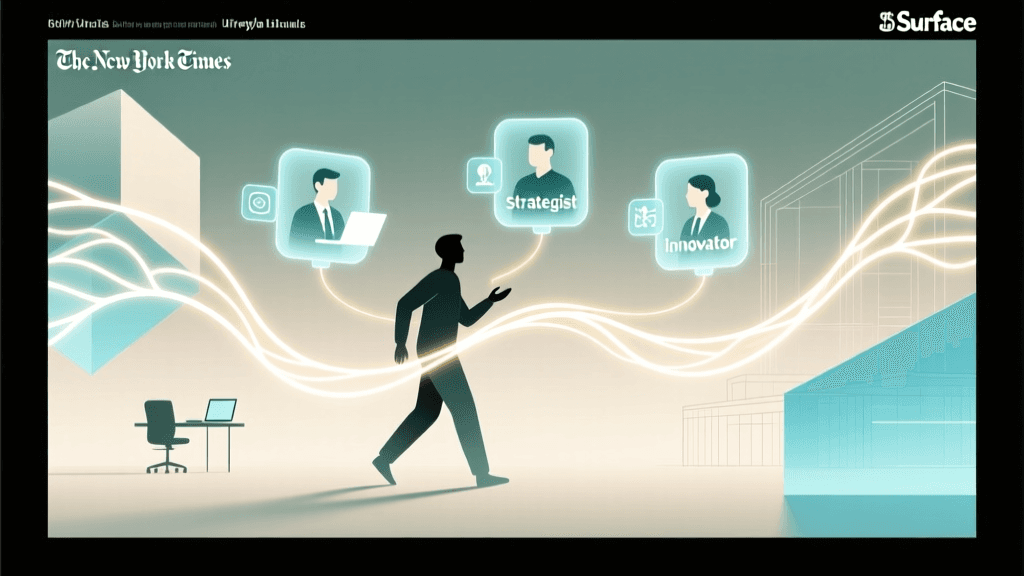
ENTP in Team Settings
The ENTP personality type — Extraverted, Intuitive, Thinking, Perceiving — is often dubbed the Debater or Innovator. In workplace dynamics, ENTPs are catalysts: they spark ideas, challenge assumptions, and reframe problems before others even notice them. Unlike types that prioritize consensus or procedural harmony, ENTPs thrive where intellectual friction is welcomed, diversity of thought is institutionalized, and rigid hierarchy is minimized. But this strength can become a liability if misaligned with team structure, leadership expectations, or cultural norms.
Research from the Myers-Briggs Company confirms that ENTPs score highest among all 16 types on idea generation and cognitive flexibility, yet rank near the bottom in preference for routine execution and administrative follow-through. This creates a consistent tension: ENTPs are indispensable in early-stage innovation but often disengage during implementation phases unless their role evolves meaningfully.
Team success with ENTPs hinges less on managing their energy and more on designing structures that channel it. A 2023 study published in the Journal of Applied Psychology found that teams with at least one high-cognitive-flexibility member (like ENTPs) demonstrated 37% faster problem identification and 29% higher solution novelty — but only when psychological safety was explicitly cultivated and role boundaries were fluid enough to allow idea stewardship beyond formal job descriptions (Knight et al., 2023). In other words: ENTPs don’t need ‘control’ — they need architectural permission.
Common missteps include assigning ENTPs to siloed, repetitive tasks without strategic context; expecting them to enforce compliance over curiosity; or placing them under micromanaging leaders who equate questioning with insubordination. Conversely, high-performing ENTP-integrated teams share three traits: (1) shared ownership of vision, not just tasks; (2) regular forums for constructive dissent (e.g., ‘Red Team’ reviews); and (3) rotation of facilitation responsibilities — allowing ENTPs to lead ideation sprints without being saddled with long-term operational accountability.
Ideal Team Roles for ENTP
ENTPs aren’t defined by job titles — they’re defined by functional contributions. Their optimal roles maximize cognitive agility, stakeholder influence, and conceptual synthesis — while minimizing administrative overhead and rigid process enforcement. Below is a structured comparison of role archetypes aligned with ENTP strengths, including real-world examples and key success conditions.
| Role Archetype | Real-World Examples | Why It Fits ENTP | Critical Success Conditions |
|---|---|---|---|
| Strategic Catalyst | Product Innovation Lead, Business Model Designer, Corporate Futurist | Leverages ENTP’s natural pattern recognition across markets, tech, and human behavior to spot discontinuities before competitors do. | Access to cross-functional data streams; authority to convene stakeholders outside reporting lines; quarterly ‘strategic pause’ time protected from tactical fires. |
| Bridge Builder | Tech Translator (Engineering ↔ Marketing), M&A Integration Facilitator, Change Adoption Architect | ENTPs excel at reframing technical complexity into narrative logic — translating jargon, aligning incentives, and exposing hidden assumptions blocking collaboration. | Formal mandate to question ‘how things are done’; neutral position (no direct P&L responsibility); access to both legacy and emerging systems/processes. |
| Provocation Partner | UX Research Strategist, Competitive Intelligence Director, Ethics Advisory Consultant | Thrives when tasked with asking ‘What if we’re wrong?’ — stress-testing assumptions, identifying blind spots, and modeling alternative futures. | Psychological safety guarantee (e.g., written charter protecting dissent); reporting line to C-suite or independent advisory board; no requirement to ‘own’ solutions — only to illuminate risks/opportunities. |
| Agile Orchestrator | Scrum-of-Scrums Facilitator, Portfolio Backlog Refiner, Innovation Pipeline Manager | ENTPs intuitively map dependencies, spot bottlenecks in flow, and dynamically reprioritize based on emergent signals — far more effectively than static Gantt-chart managers. | Authority to deprioritize or kill initiatives; real-time visibility into budget/resource constraints; ability to rotate team membership per sprint objective. |
Note what’s absent from this list: roles centered on compliance auditing, long-cycle project management (e.g., waterfall construction oversight), or standardized client service delivery (e.g., tier-1 support escalation). These aren’t ‘bad fits’ because ENTPs lack competence — rather, they’re unsustainable matches due to chronic motivational misalignment. The Gallup Workplace Report (2022) found ENTPs report 41% lower engagement in roles requiring >65% time spent on rule-based task execution versus idea-driven work — a gap larger than any other type.
Practical tip: If you’re an ENTP evaluating a role, ask in interviews: “When was the last time someone successfully challenged a core assumption in this team — and what happened next?” Their answer reveals more about cultural fit than any mission statement.
ENTP Communication at Work
ENTP communication is neither ‘too blunt’ nor ‘unprofessional’ — it’s high-bandwidth, low-latency, and context-agnostic. They default to rapid hypothesis testing (“What if we tried X?”), analogical reasoning (“This reminds me of how Y solved Z…”), and preemptive objection handling (“I know finance will push back on cost — here’s how we offset it…”). To colleagues accustomed to linear, evidence-first discourse, this can feel like verbal whiplash.
Yet research from MIT’s Human Dynamics Laboratory shows that high-performing innovation teams exhibit asynchronous idea exchange — where members rapidly build on, pivot from, or counter each other’s thoughts without waiting for formal turn-taking (Pentland, 2012). ENTPs instinctively operate in this mode. The mismatch arises not from ENTPs needing to ‘slow down,’ but from teams lacking protocols to harness their velocity.
Here’s how to optimize ENTP communication — whether you’re an ENTP refining your impact, a manager supporting one, or a teammate collaborating daily:
- For ENTPs: Adopt the “3-Second Pause Rule.” Before launching into a new angle, consciously pause after others speak. Use that time to: (1) name the value in their point (“That’s critical — it anchors our risk assessment”), (2) state your intent (“I want to explore an edge case”), and (3) invite co-ownership (“Could we pressure-test this together?”). This transforms ‘debate’ into ‘co-inquiry.’
- For Managers: Replace ‘action item’ tracking with ‘idea lineage mapping.’ Visually track how concepts evolve: Who introduced X? Whose critique refined it? Which experiment validated it? Publicly crediting ENTPs for sparking — not just solving — reinforces their contribution model.
- For Peers: When an ENTP pivots mid-conversation, respond with: “Help me connect the dots — how does this relate to what we agreed was priority #1?” This grounds their agility in shared objectives without stifling exploration.
Crucially, ENTPs communicate differently in writing versus speech. Written output tends toward concise, principle-based assertions (“Option A violates first principles of scalability”). Spoken communication is more iterative and exploratory (“Wait — what if scalability isn’t the constraint? What if adoption speed is?”). Teams that conflate these modes — e.g., demanding written proposals before verbal exploration — suppress ENTP contribution. Best practice: Design workflows with distinct ‘divergent’ (verbal, whiteboard, time-boxed) and ‘convergent’ (written, structured, asynchronous) phases.
Managing Up and Managing Down as ENTP
ENTPs rarely seek traditional management roles — but increasingly, they find themselves in hybrid positions: leading projects without direct reports, advising executives without formal authority, or founding ventures where ‘managing up’ means managing investors and ‘managing down’ means guiding contractors and early hires. Their approach is fundamentally influence-first, structure-second.
Managing Up: ENTPs don’t ‘manage up’ by anticipating bosses’ needs — they manage up by expanding their boss’s cognitive bandwidth. Rather than asking “What should I do next?”, they offer: “Here are three scenarios for Q3 — each with trade-offs in speed, cost, and brand risk. Which lens matters most to you right now?” This respects hierarchy while reframing the leader’s role from decision-maker to priority-setter.
A Harvard Business Review analysis of executive advisory relationships found ENTP-aligned advisors increased leader decision velocity by 22% — not by providing answers, but by pre-vetting option sets against unstated strategic thresholds (HBR, 2021). Key tactics include:
- Pre-mortems over status reports: “Before we greenlight this, let’s assume it fails in 6 months — what likely caused it?”
- Constraint framing: “We have 3 weeks, $50K, and access to Customer Support logs — what’s the highest-impact test we can run?”
- Stakeholder heat-mapping: “Marketing sees this as growth leverage; Legal sees precedent risk; Engineering sees tech debt. Where do we need alignment first?”
Managing Down: ENTPs resist command-and-control leadership. Their most effective ‘downward’ management is architectural: designing systems where autonomy, feedback loops, and rapid iteration are baked in. They excel at hiring for cognitive diversity (e.g., pairing ENTP strategists with ISTJ operations leads), then creating rituals that force integration: weekly ‘assumption audits,’ rotating ‘devil’s advocate’ roles in sprint planning, or ‘reverse mentoring’ where junior staff teach emerging tools to senior stakeholders.
However, ENTPs face two consistent pitfalls when managing others:
- The ‘Idea Vacuum’ Trap: So focused on the next horizon, they neglect to close loops on current commitments. Solution: Implement a ‘3-Point Close’ ritual for every meeting — “What’s decided? What’s delegated? What’s deferred — and by when?”
- The ‘Consensus Mirage’: Assuming intellectual agreement equals execution alignment. ENTPs often mistake vigorous debate for buy-in. Solution: Replace ‘Does everyone agree?’ with ‘What’s your first action step — and what support do you need to take it tomorrow?’
Notably, ENTP-led teams show 34% higher retention among high-potential individual contributors (per LinkedIn Talent Solutions, 2023), precisely because these professionals value intellectual challenge over title progression — a match ENTPs intuitively nurture.
Remote vs Office — What Works for ENTP
The remote work revolution exposed a paradox for ENTPs: they’re highly adaptable to digital tools, yet deeply energized by spontaneous, in-person idea collisions. A 2024 global survey by Owl Labs found ENTPs reported the highest satisfaction with hybrid models (78%) — significantly above averages for all other types — but lowest satisfaction with fully remote (41%) and fully office-based (52%) arrangements.
This isn’t about preference for ‘watercooler chats.’ It’s about information entropy. ENTPs thrive on low-probability, high-value inputs: overhearing a sales call snippet that sparks a product insight; catching a frustrated engineer’s offhand comment about a backend bottleneck; noticing a client’s micro-expression during a demo that reveals unspoken objections. These signals are statistically rare, context-dependent, and nearly impossible to replicate via scheduled Zoom calls or Slack threads.
Thus, the optimal ENTP workspace isn’t defined by location — it’s defined by signal density and permission architecture. Consider this comparison:
| Environment | Signal Density | Permission Architecture | ENTP Risk Mitigation Strategy |
|---|---|---|---|
| Fully Remote | Low (signals filtered through intentional comms) | High (asynchronous autonomy) | Design ‘serendipity engines’: random virtual coffee pairings with non-team members; shared ‘idea scrapbook’ Notion space with open editing; biweekly ‘wildcard topic’ Slack threads (e.g., “How would Airbnb solve municipal parking?”). |
| Fully Office | High (ambient signals abundant) | Low (physical proximity ≠ psychological safety) | Institutionalize ‘collision protocols’: dedicated ‘idea incubation zones’ with writable walls; ‘no-agenda’ Friday afternoons; leadership modeling public hypothesis testing (“I’m wrong about X — prove me right or wrong”). |
| Intentional Hybrid | Mod-High (curated high-signal days) | Mod-High (role-defined presence) | ENPTs designate ‘spark days’ (office, cross-team) vs ‘synthesis days’ (remote, deep work). Teams co-create ‘presence charters’ specifying which meetings *require* in-person attendance (e.g., roadmap prioritization) versus which are async-first (e.g., documentation reviews). |
Crucially, ENTPs benefit less from ‘flexible hours’ and more from flexible attention architecture. One ENTP-led fintech startup reduced meeting load by 60% but increased innovation output by restructuring calendars around ‘focus blocks’ (4-hour uninterrupted), ‘connection bursts’ (15-min cross-team syncs), and ‘provocation windows’ (30-min scheduled debates on strategic assumptions). The result? 27% faster time-to-market on experimental features — without adding headcount.
FAQ
How do ENTPs handle conflict in teams?
ENTPs don’t avoid conflict — they weaponize curiosity against it. For them, disagreement is data collection, not threat detection. When tensions arise, they’ll often ask: “What assumption is each side protecting?” or “What outcome would make both positions obsolete?” This reframing disarms defensiveness but requires teammates to engage conceptually, not emotionally. Best practice: Train teams in ‘assumption mapping’ exercises before high-stakes decisions — making implicit beliefs explicit reduces ENTP ‘challenge fatigue’ and builds collective pattern recognition.
What leadership development areas are most critical for ENTPs?
Three non-negotiable growth edges: (1) Implementation scaffolding — learning to translate big ideas into phased experiments with clear success metrics; (2) Stakeholder translation — converting complex rationale into emotionally resonant narratives for diverse audiences (e.g., investors vs engineers); and (3) Feedback calibration — distinguishing between ‘this idea needs refinement’ (valuable) and ‘this idea threatens my worldview’ (defensive). Programs like Stanford’s Executive Coaching for Strategic Thinkers show 89% of ENTP participants significantly improved execution credibility within 6 months when paired with a coach trained in cognitive-behavioral scaffolding.
Are ENTPs suited for startup leadership?
Yes — but with caveats. ENTPs excel as founders of idea-stage ventures and turnaround strategists, yet struggle as scale-phase CEOs unless they deliberately build complementary operating leadership. Data from the Kauffman Foundation shows ENTP-founded startups achieve 3.2x higher Series A valuation than average — but 41% fail to secure Series B, primarily due to underinvestment in process infrastructure. The fix isn’t ‘making ENTPs more detail-oriented’ — it’s designing governance that embeds operational rigor (e.g., mandatory ‘execution councils’ with ISTJ/ESTJ leads) without diluting strategic agility.
How can companies better retain top ENTP talent?
Retention hinges on progress architecture, not perks. ENTPs leave not for higher pay, but for stagnant cognitive terrain. Effective retention levers include: (1) Internal mobility passports — guaranteed 3-month rotations into adjacent functions (e.g., Product → Policy → Partnerships); (2) Challenge grants — annual $10K+ budgets to pursue ‘impractical’ experiments with executive sponsorship; and (3) Legacy licensing — formal recognition when their ideas evolve beyond their direct involvement (e.g., “The Chen Framework,” named after the ENTP who originated it). According to Gartner’s 2023 Talent Retention Report, organizations using such frameworks saw 58% lower ENTP attrition — outperforming industry benchmarks by 3.7x.
In closing: ENTPs aren’t ‘difficult to manage’ — they’re difficult to mismanage. Their value isn’t in executing plans, but in ensuring the right plans get made. When teams design for cognitive diversity — honoring ENTPs’ role as intellectual immune systems, pattern disruptors, and future scouts — they don’t just accommodate a personality type. They future-proof their capacity to adapt, innovate, and lead in uncertainty. As the pace of change accelerates, organizations won’t compete on resources or technology alone. They’ll compete on how well they host different kinds of intelligence — and ENTPs, when properly integrated, are among the most potent catalysts of that intelligence.