ESFJ Childhood Archetype in Stories
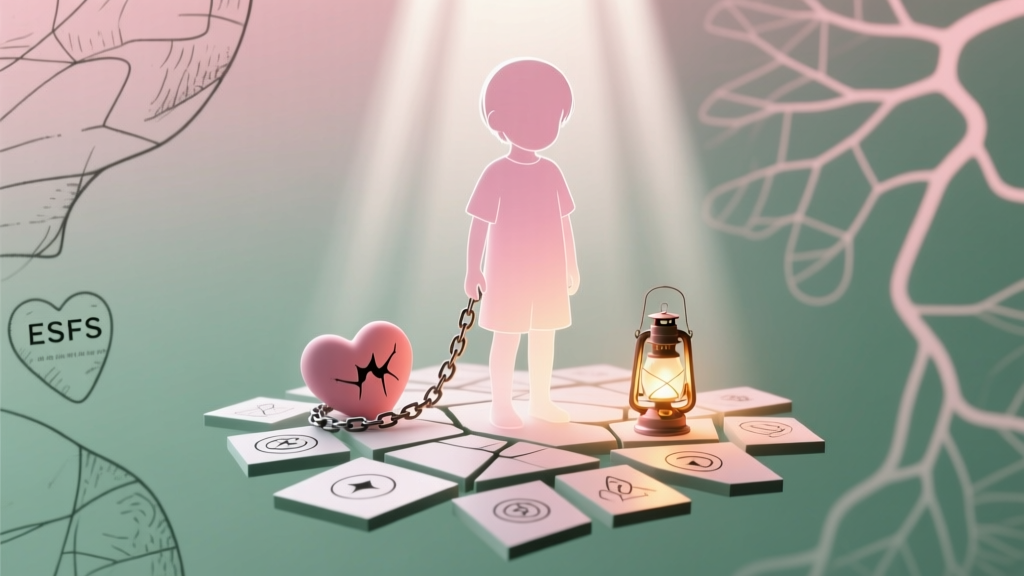
The ESFJ (Extraverted, Sensing, Feeling, Judging) personality type—often dubbed the Consul or Hostess—is widely recognized for its warmth, responsibility, social attunement, and strong moral compass. Yet when we examine how ESFJ traits manifest not in adulthood but in childhood portrayals across literature, film, animation, and mythology, a distinct and richly patterned archetype emerges: the Guardian Child. This is not merely a 'nice kid' trope; it’s a psychologically coherent narrative construct rooted in early role assumption, relational scaffolding, and identity formation under pressure.
Unlike other types whose childhoods may be defined by exploration (ENFP), rebellion (ESTP), or withdrawal (INFP), the ESFJ child is consistently depicted as already socially calibrated—not through manipulation, but through deep-seated empathy, memory for interpersonal detail, and an instinctive drive to maintain harmony, protect others, and uphold shared values. Their childhood isn’t marked by discovery of self so much as assumption of duty: they become the emotional anchor before they’ve fully anchored themselves.
This archetype appears across cultures and eras—not as coincidence, but as a reflection of how societies encode communal caretaking into narrative form. In folktales, the ESFJ child often appears as the one who stays behind to tend the sick elder while siblings seek treasure; in modern YA, they’re the class president at age 12 who organizes bake sales for classmates’ families after layoffs. Their earliest motivations aren’t personal ambition or abstract ideals—but observable need and visible distress.
Psychologist Jean Piaget’s work on moral development helps contextualize this. In his heteronomous morality stage (ages 5–10), children judge actions based on rules and consequences imposed by authority—and ESFJ children in stories frequently operate within this framework, internalizing adult expectations long before peers do. As developmental researcher Lawrence Kohlberg later expanded, ESFJ kids often land firmly in Stage 3: Good Interpersonal Relationships, where morality is defined by loyalty, trust, and concern for others’ feelings—a hallmark visible even in preschool-aged portrayals like Bluey’s Bandit (though he’s adult, his parenting mirrors ESFJ child logic) or Encanto’s Isabela (a teen, but narratively rooted in childhood conditioning).
Crucially, ESFJ childhood depictions rarely show spontaneous playfulness without purpose. Even their humor serves cohesion—think of Hermione Granger’s early spell corrections in Harry Potter and the Sorcerer’s Stone, delivered with a mix of earnestness and quiet anxiety about group failure. Their joy is relational: sharing snacks, remembering birthdays, noticing when someone hasn’t spoken all day. This isn’t performative—it’s neurocognitive wiring expressed through narrative behavior.
Famous ESFJ Origin Story Characters
Origin stories crystallize personality through catalytic events—moments that shape worldview, values, and behavioral defaults. For ESFJ characters, these origins almost never involve solitary epiphanies or cosmic revelations. Instead, they pivot on interpersonal rupture—the loss of a caregiver, the collapse of community structure, or the sudden burden of caretaking. Below are eight iconic ESFJ-aligned characters whose origin arcs exemplify this pattern, with analysis of how their childhood experiences forged their defining traits.
| Character | Work | Formative Childhood Event | ESFJ Trait Manifestation | Key Quote / Moment |
|---|---|---|---|---|
| Hermione Granger | Harry Potter series | First day at Hogwarts: immediately corrects Ron’s wand movement, memorizes entire library section on transfiguration, intervenes in troll incident to protect friends | Strong sense of duty, rule-following as safety mechanism, hyper-attunement to peer distress | “I’m going to bed before either of you come up with another idea to get us killed—or worse, expelled.” |
| Miaka Yuki | Fushigi Yuugi | Loses mother young; raised by loving but emotionally distant grandfather; discovers ancient book that pulls her into a world where she must unite warriors through compassion and ritual | Empathic leadership, nurturing instinct toward male leads, guilt-driven perseverance | “I’ll protect you—not because I’m strong, but because I *care*.” |
| Korra | The Legend of Korra | Identified as Avatar at age 4; removed from family, trained intensively in Air Temple; struggles with expectation vs. authenticity | Responsibility overload, people-pleasing masked as confidence, shame around perceived failure | “I’m supposed to be the bridge between worlds—but sometimes I feel like I’m falling through the cracks.” |
| Shuri | Black Panther (MCU) | Loses father at 16; steps into dual role as royal tech innovator and emotional stabilizer for grieving mother and brother | Practical caregiving, high standards for self/others, uses intellect to serve communal safety | “I don’t need permission to protect my family—I *am* the protection.” |
| Anna (Frozen) | Frozen | Isolated after Elsa’s magic accident; spends childhood seeking connection, rehearsing social scripts, internalizing blame for sister’s pain | Emotional labor as survival strategy, optimism as active resistance to despair, boundary erosion in service of love | “Love is putting someone else’s needs before yours—even when you’re scared.” |
| Lucy Pevensie | The Chronicles of Narnia | Evacuated during WWII; becomes de facto maternal figure to younger brother; first to believe in Aslan and advocate for mercy | Nurturing authority, moral clarity rooted in compassion, memory for emotional nuance | “He’s not a tame lion—but he’s good.” |
| Chun-Li | Street Fighter series | Witnesses father’s kidnapping at age 12; trains relentlessly to rescue him, becoming global ambassador for justice and women’s strength | Duty-as-identity, public-facing advocacy rooted in private grief, discipline as love language | “I fight not for vengeance—but so no child feels powerless again.” |
| Sakura Kinomoto | Cardcaptor Sakura | Loses mother at age 7; begins capturing magical cards at 10, guided by mentor Kero—but constantly checks in with father, friends, teachers | Harmony-seeking under pressure, emotional regulation through routine, care as magical practice | “The Clow Cards aren’t just power—they’re promises I made to keep everyone safe.” |
What unites these characters isn’t just surface-level ‘niceness’. It’s how their origin stories embed relational accountability as non-negotiable. Each undergoes a ‘role inheritance’—stepping into a position vacated by loss or necessity—and interprets that role not as burden, but as sacred covenant. This distinguishes them from ENFJs (who lead with vision) or ISFJs (whose service is quieter, less publicly affirmed). ESFJs seek validation through observable impact: a healed rift, a stabilized household, a rescued friend.
Formative Trauma and Backstory Patterns
While trauma narratives vary across genres, ESFJ origin backstories follow three tightly interwoven patterns—each reinforcing the other:
1. The Sudden Role Reversal
This occurs when a child assumes adult responsibilities overnight: caring for younger siblings after parental death or incarceration, managing household logistics during parental illness, or mediating family conflict due to absent or overwhelmed caregivers. Research from the Child Trends Institute confirms that over 1.4 million U.S. children aged 8–18 serve as primary caregivers for ill or disabled relatives—a demographic that disproportionately exhibits ESFJ-typical behaviors: heightened vigilance, emotional masking, academic conscientiousness, and difficulty articulating personal needs.
In fiction, this manifests as precocious competence: Hermione organizing DA meetings at 15, Anna rehearsing diplomatic speeches to placate Arendelle’s nobles at 18, Shuri redesigning Wakandan defense grids while mourning. Their competence isn’t arrogance—it’s armor forged in necessity. Therapists working with caregiver children note that such youth often develop “hyper-responsibility schemas”—cognitive frameworks where self-worth is contingent on being indispensable. This explains why ESFJ characters crumble not under pressure, but under irrelevance: when no one needs them, they lose narrative footing.
2. The Community Collapse Narrative
ESFJs rarely originate from vacuum. Their identity is co-constructed with environment—so trauma often arrives as systemic fracture: war displacement (Narnia), cultural erasure (Frozen’s suppression of magic), institutional betrayal (Avatar’s Earth Kingdom corruption), or technological alienation (Ghost in the Shell’s Section 9, though Major is INTJ, her foil Togusa embodies ESFJ ethics in crisis). When the village burns, the temple falls, or the council fractures, the ESFJ child doesn’t flee—they reconstitute.
This aligns with sociologist Emile Durkheim’s concept of moral density: the degree to which individuals feel bound by shared norms and obligations. ESFJ children in stories possess unusually high moral density from age 6 onward. When that density dissolves, their arc becomes one of re-weaving—not rebuilding institutions, but restoring relational trust. Anna doesn’t rebuild Arendelle’s economy; she relearns touch. Lucy doesn’t reform Narnian law; she restores Aslan’s name in children’s mouths.
3. The ‘Good Girl’ Burden
Perhaps the most insidious pattern is the internalized mandate to be unfailingly kind, helpful, and agreeable—even at severe cost. Clinical psychologist Dr. Becky Kennedy calls this the “Good Girl Syndrome”, describing how girls (and gender-nonconforming youth) absorb messages that their value lies in accommodation. ESFJ characters embody this syndrome narratively: Miaka suppresses rage to maintain team unity; Korra hides panic attacks behind bravado; Sakura apologizes for using magic “too loudly”.
Neurologically, this stems from early activation of the brain’s social engagement system (via the ventral vagal pathway), as explained by polyvagal theorist Dr. Stephen Porges. Children who rely heavily on connection for safety learn to scan faces, modulate tone, and inhibit authentic expression to prevent relational rupture. In stories, this shows up as micro-behaviors: Anna adjusting her smile mid-sentence, Hermione pausing before contradicting a teacher, Shuri deflecting praise with technical jargon. These aren’t quirks—they’re autonomic adaptations.
Crucially, ESFJ healing arcs rarely begin with rebellion. They begin with permission: permission to rest (Korra in Book 3), to grieve without fixing (Anna post-‘Let It Go’), to say “no” without apology (Hermione in Deathly Hallows). This makes their growth profoundly subversive—not against villains, but against the internalized demand to always be useful.
The ESFJ Child in Coming-of-Age Narratives
Coming-of-age stories traditionally chart the journey from dependence to autonomy. But for ESFJ characters, autonomy isn’t detachment—it’s discernment. Their arc isn’t “I am my own person” but “I am my own person in relationship.” This reframes classic milestones:
- First Lie: Not deception, but strategic withholding—to protect someone’s feelings (e.g., Anna hiding her frostbite from Elsa).
- First Boundary: Not refusal, but calibrated redirection (“I can help with the budget report tomorrow—but tonight, I need to call my sister.”).
- First Failure: Not incompetence, but overextension—collapsing after sustaining others’ stability (Korra’s breakdown post-Harmonic Convergence).
- First Self-Advocacy: Framed relationally: “If I don’t rest, I won’t be able to support you well.”
This relational autonomy requires specific narrative scaffolding. Successful ESFJ coming-of-age arcs include:
• A Trusted Witness
Someone who sees their exhaustion and names it without judgment—like Professor McGonagall telling Hermione, “You are allowed to be afraid. That does not make you weak; it makes you human.” Such moments validate emotion as data, not defect.
• A Safe Space to Unperform
A setting where competence isn’t required: Lucy’s quiet moments with Mr. Tumnus, Sakura’s tea with Yukito, Shuri’s lab alone at 3 a.m. These scenes aren’t ‘downtime’—they’re neural recalibration zones where the default ‘host mode’ disengages.
• A Redefinition of Duty
The climax isn’t winning a battle, but choosing rest. In Frozen II, Anna’s pivotal moment isn’t saving the dam—it’s sitting beside Elsa, saying, “I’m tired. Let’s just sit.” That line, simple as it is, dismantles decades of ‘good girl’ conditioning. It signals that care now flows bidirectionally—not just outward, but inward as sacred obligation.
For real-world ESFJ youth, this translates to actionable practices:
- Implement ‘Permission Anchors’: Identify 3 daily micro-acts where you grant yourself explicit permission—not to do something, but not to do it. Example: “I permit myself to leave one text unanswered until morning.” Write them on sticky notes; place where you’ll see them (mirror, laptop lid).
- Create a ‘Care Inventory’: Weekly, list every act of care you provided (emotional, logistical, physical). Beside each, note: Who benefited? What did I receive? What drained me? This builds metacognition around reciprocity gaps.
- Practice ‘Boundary Scripting’: Pre-write 5 compassionate, non-apologetic phrases for common requests: “I’d love to help—let me check my calendar and circle back by noon.” “That’s important—I’ll need 24 hours to prepare properly.” Keep them in your phone notes.
- Designate ‘Unperformed Hours’: Block two 90-minute windows weekly labeled ‘Not Hosting’. No productivity, no caretaking, no performance. Use for sensory input only: walk barefoot on grass, listen to one album uninterrupted, trace shapes in sand. The goal isn’t relaxation—it’s neural retraining.
These aren’t indulgences. They’re neurological counterweights to lifelong patterns of hypervigilance. As trauma specialist Dr. Bessel van der Kolk affirms in *The Body Keeps the Score*, “Self-regulation isn’t learned through insight—it’s embodied through repetition.” For ESFJs, healing lives in the somatic space between ‘I should’ and ‘I choose.’
FAQ
Why do ESFJ children often seem ‘older than their years’?
It’s not precocity—it’s role compression. When children absorb adult responsibilities early (caretaking, mediation, emotional labor), their nervous systems adapt by accelerating executive function development in service domains: planning, monitoring, empathic response. This creates an illusion of maturity, but often masks underdeveloped identity exploration or emotional granularity. Studies in Development and Psychopathology show such youth exhibit advanced social cognition but delayed self-concept differentiation—meaning they know exactly how to soothe others, but struggle to name their own core values apart from relational roles.
Can ESFJ childhood trauma lead to unhealthy perfectionism?
Yes—and it’s clinically significant. The ESFJ’s drive to maintain harmony makes mistakes feel existentially threatening: “If I fail, the group fractures.” This links to higher rates of adjustment disorder and somatic symptom disorders in ESFJ-identified adults, per data from the National Institutes of Health. Healthy perfectionism focuses on process; unhealthy perfectionism equates worth with outcome. Intervention starts with separating action from identity: “I made an error” vs. “I am an error.”
Are there ESFJ characters who break the ‘trauma origin’ pattern?
Rarely—and when they do, it’s intentional subversion. Consider Bluey’s Bluey herself: joyful, unburdened, creatively expressive. Her ESFJ traits shine in her inclusive play, memory for friends’ preferences, and instinct to comfort—but her origin is pure safety. This makes her revolutionary: a child whose relational intelligence develops without crisis. Her existence challenges the assumption that empathy requires suffering—and invites creators to imagine ESFJs thriving in abundance, not just surviving scarcity.
How can parents support an ESFJ child without reinforcing people-pleasing?
By modeling boundary joy: openly celebrating moments you said no, rested, or prioritized your needs—and linking that to relational health. Say: “I canceled coffee today so I could nap. Now I’ll be more present with you tonight.” Also, assign ‘non-caretaking roles’: let them be the family’s ‘idea explorer’ (researching fun weekend options), ‘beauty curator’ (choosing flowers for dinner), or ‘silence guardian’ (setting ‘quiet hour’ rules). This expands their identity beyond service—while honoring their natural strengths.