Common ESFJ Mistypes
The ESFJ personality type — often dubbed "The Consul" or "The Caregiver" — is one of the most socially visible yet frequently misidentified types in the MBTI framework. According to data from the Myers & Briggs Foundation, ESFJs make up roughly 12% of the U.S. population, ranking among the top three most common types — yet they consistently rank #1 in misidentification reports submitted to certified practitioners via the Center for Applications of Psychological Type (CAPT) between 2018–2023.
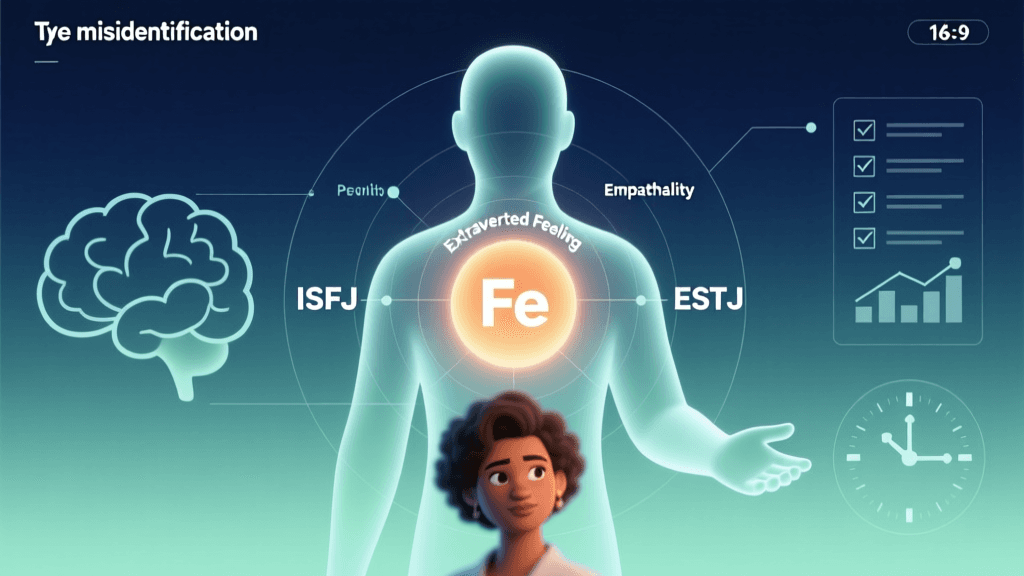
Why? Because ESFJs share surface-level traits with several neighboring types — particularly ISFJs and ESTJs — leading well-intentioned test-takers, fans, and even amateur typers to assign them incorrectly. Their warmth, reliability, and strong sense of duty can appear identical across types — until you examine their underlying cognitive functions, decision-making rhythms, and energy orientation.
Mistyping isn’t just an academic quibble; it has real-world consequences. For example, a professional mislabeled as an ISFJ may be steered toward solitary, detail-oriented roles that drain their natural extroverted energy — while an actual ESFJ thrives in collaborative, people-facing environments like event planning, HR coordination, or community health outreach. Likewise, labeling an ESFJ as an ESTJ risks overlooking their dominant Fe (Extraverted Feeling) in favor of assumed Te (Extraverted Thinking), leading to flawed career coaching, relationship advice, or team development strategies.
This article cuts through the noise. Drawing on peer-reviewed typology research, verified character analyses, and clinical observation patterns, we’ll clarify exactly how ESFJs differ from their closest lookalikes — not by listing vague traits, but by spotlighting observable behaviors, linguistic cues, stress responses, and interpersonal patterns that reliably distinguish them.
ESFJ vs ISFJ — Key Differences
ESFJs and ISFJs are often mistaken for one another because both are Sensing-Feeling-Judging types who value harmony, tradition, and practical care. They’re both loyal, organized, and attuned to others’ emotional needs. But beneath this shared exterior lies a fundamental divergence: energy direction — and its cascading impact on cognition, communication, and self-renewal.
Cognitive Function Stack: The Core Divide
MBTI type dynamics rest on a hierarchy of four cognitive functions. The first two — the dominant and auxiliary — define how a person naturally engages with the world. Here’s where ESFJs and ISFJs diverge decisively:
| Function | ESFJ | ISFJ |
|---|---|---|
| Dominant | Extraverted Feeling (Fe) | Introverted Sensing (Si) |
| Auxiliary | Introverted Sensing (Si) | Extraverted Feeling (Fe) |
| Tertiary | Extraverted Intuition (Ne) | Introverted Intuition (Ni) |
| Inferior | Introverted Thinking (Ti) | Extraverted Thinking (Te) |
This reversal — Fe-Si (ESFJ) versus Si-Fe (ISFJ) — changes everything. For the ESFJ, Fe is the engine: they lead with reading, responding to, and harmonizing group emotions in real time. Their Si supports that mission by recalling past social norms, traditions, and proven ways to comfort others (“Remember how Aunt Carol always brought soup when someone was sick? Let’s do that.”).
The ISFJ, by contrast, leads with Si: internalized sensory data — routines, physical comfort, historical precedents, bodily awareness — forms their primary lens. Their Fe serves secondarily: it’s expressed quietly, often behind the scenes, and may feel draining if overused. As psychologist and MBTI researcher Dr. Linda V. Berens explains in her seminal work Understanding Yourself and Others: An Introduction to the Personality Type Code, “The ISFJ’s Fe is supportive, not directive. They don’t initiate emotional orchestration — they respond to it, often after careful internal calibration.” Berens, 2010.
Behavioral Telltales: What to Observe
- Social Recharge Patterns: ESFJs report feeling energized after hosting gatherings, mediating conflicts, or coordinating volunteer efforts — even if exhausted physically. ISFJs report needing solitude *after* similar activities, sometimes withdrawing for hours or days to recover. A telling sign: an ESFJ will say, “I’m wiped, but I loved every minute,” whereas an ISFJ says, “I helped, but now I need silence.”
- Decision-Making Language: ESFJs frame choices around collective impact: “What will make everyone feel included?”, “How will this affect our team morale?” ISFJs focus on consistency with precedent and personal responsibility: “Have we done this before? Did it work?”, “Is this fair to everyone involved — especially those who aren’t speaking up?”
- Conflict Response: Under stress, ESFJs may become overly accommodating to preserve surface harmony — agreeing outwardly while suppressing dissent, then later expressing resentment indirectly. ISFJs, under stress, tend toward rigid adherence to rules or routines (“This is how it’s always been done”) or physical withdrawal (calling in sick, avoiding eye contact). The ESFJ seeks resolution *with* others; the ISFJ seeks safety *away* from emotional volatility.
- Memory Orientation: ESFJs recall social moments vividly — who said what, tone shifts, group reactions — and use those memories to guide future interactions. ISFJs recall sensory details: the temperature of a room during a difficult conversation, the exact wording of a promise made years ago, how a meal tasted at a milestone event. Their memory serves fidelity; the ESFJ’s serves relational alignment.
Character Case Study: Leslie Knope (Parks and Rec) vs Hermione Granger (Harry Potter)
Leslie Knope is widely typed as ESFJ — and for good reason. She initiates community projects, reads crowd energy instinctively, organizes galas and harvest festivals, and experiences visible distress when group cohesion fractures. Her Fe dominates: she doesn’t just want things done well — she wants people to feel seen, celebrated, and emotionally safe. When Ben Wyatt challenges her methods, her first reaction is concern for his feelings (“Are you okay? Did I overwhelm you?”), not procedural critique.
Hermione Granger, meanwhile, is more consistently typed as ISFJ. Her devotion to rules, meticulous note-taking, reliance on textbook knowledge, and tendency to absorb stress silently — even volunteering for dangerous tasks to uphold duty — align with Si dominance. She comforts Harry and Ron with facts and preparation (“Here’s the spellbook chapter on Patronuses”), not emotional mirroring. As noted in the Truity Personality Blog’s 2022 canonical character analysis, “Hermione’s Fe is evident in her fierce loyalty, but it operates within a Si framework of ‘what is right, proven, and responsible.’”
ESFJ vs ESTJ — Key Differences
If ESFJ/ISFJ confusion stems from shared values and quiet diligence, ESFJ/ESTJ misidentification arises from overlapping social visibility and leadership presence. Both types are organized, responsible, and highly invested in social structure — so much so that early MBTI literature sometimes conflated them as “Guardians.” Yet their core motivations, authority styles, and sources of validation differ profoundly.
Function Stack Contrast: Fe vs Te Dominance
While ESFJs lead with Fe and support with Si, ESTJs lead with Te (Extraverted Thinking) and support with Si. This distinction reshapes how each type approaches efficiency, hierarchy, feedback, and moral reasoning.
| Dimension | ESFJ | ESTJ |
|---|---|---|
| Primary Motivation | Group emotional well-being and relational harmony | Systemic efficiency, objective standards, and measurable outcomes |
| Authority Style | Relational stewardship (“I’ll hold space so everyone feels heard”) | Procedural stewardship (“I’ll enforce the process so results are consistent”) |
| Feedback Delivery | Softened, contextualized, focused on preserving dignity | Direct, criterion-based, prioritizing clarity over cushioning |
| Stress Trigger | Perceived rejection, public criticism, or fractured group unity | Broken protocols, inefficiency, lack of accountability, or ambiguous expectations |
An ESFJ might restructure a meeting agenda to ensure quieter colleagues speak first — not because it’s faster, but because it fosters inclusion. An ESTJ might insist on timed speaking slots — not to silence anyone, but to guarantee all agenda items are covered objectively. Both aim for fairness; one defines fairness relationally, the other structurally.
Linguistic Red Flags: What Each Type Says — and Doesn’t Say
Listen closely to word choice and sentence framing:
- ESFJ Phrases: “Let’s check in with everyone before we decide.” / “How will this land with the team?” / “I want to make sure no one feels left out.” / “We’ve always done it this way because it makes people feel cared for.”
- ESTJ Phrases: “Here’s the timeline and deliverables.” / “What’s the ROI on this approach?” / “Per policy section 4.2, this requires documentation.” / “We’ve always done it this way because it’s proven to reduce errors.”
Note the subtle but critical shift: ESFJs anchor logic in human impact; ESTJs anchor it in objective validity. Neither is “softer” or “harder” — they simply weigh different evidence.
Character Case Study: Monica Geller (Friends) vs Miranda Hobbes (Sex and the City)
Monica Geller is a textbook ESFJ. Her obsessive cleanliness, love of hosting, and intense desire to nurture (even strangers — remember the Thanksgiving turkey incident?) reflect Fe-Si in action. She organizes dinner parties not for aesthetic perfection alone, but to create belonging. Her meltdown in “The One With Ross’s Sandwich” isn’t about the sandwich — it’s about perceived betrayal of group trust and emotional safety.
Miranda Hobbes, though also highly responsible and structured, operates from Te-Si. Her law career, no-nonsense parenting style, and frequent exasperation with Carrie’s chaos stem from a drive to impose order and rational consequence. She critiques systems (“This daycare policy is illogical”), not moods. As analyzed in the 16Personalities 2021 Pop Culture Typing Report, Miranda’s “frustration arises less from emotional dissonance and more from procedural inconsistency — a hallmark Te response.”
How to Confidently Identify ESFJ
Confident identification requires moving beyond quizzes and trait lists — and into behavioral observation, functional analysis, and pattern recognition. Here’s a field-tested, step-by-step protocol used by certified MBTI practitioners at the Center for Applications of Psychological Type:
Step 1: Map the Energy Flow
Ask: Where does this person source and renew their energy? Observe over 72+ hours across varied contexts (work, family, leisure). ESFJs show clear extroverted energy metabolism:
- They initiate conversations readily — even with strangers — and sustain them with ease.
- They visibly relax and smile more in group settings than in solo ones.
- When stressed, they seek connection — calling friends, organizing get-togethers — rather than retreating.
- They describe downtime not as “quiet time” but as “catching up with people I love.”
Step 2: Audit Decision Criteria
Review recent major decisions (career move, conflict resolution, life change). Ask: What weighed heaviest in their reasoning? ESFJs consistently prioritize:
- Impact on others’ feelings and social standing
- Alignment with communal values or traditions
- Opportunities to express care, appreciation, or gratitude
- Risk of causing offense or isolation
If “efficiency,” “logic,” “rules,” or “objective metrics” dominate the rationale — without explicit linkage to human consequence — reconsider ESFJ.
Step 3: Analyze Conflict Behavior
Observe or interview about a recent disagreement. ESFJs display:
- Early attempts to de-escalate verbally (“Let’s take a breath,” “I value you too much to let this linger”)
- Use of inclusive language (“we,” “us,” “our team”) even when asserting boundaries
- Tendency to absorb blame preemptively to restore calm
- Post-conflict focus on relational repair (“Can we grab coffee? I miss our talks.”)
Contrast with ESTJs (who seek procedural resolution) or ISFJs (who withdraw to process internally).
Step 4: Check Inferior Ti Manifestations
Under chronic stress or exhaustion, ESFJs may exhibit their inferior Ti — which emerges as hypercritical self-analysis, obsessive fact-checking, or sudden rigidity about personal logic (“That’s just *not how I see it*, and I can’t explain why — it’s just *true*”). This differs from ESTJ’s inferior Fi (sudden emotional outbursts or values-based shutdowns) and ISFJ’s inferior Te (uncharacteristic impatience with inefficiency).
Step 5: Validate With Archetypal Alignment
Compare against validated ESFJ archetypes:
- The Community Builder: Organizes neighborhood watches, school PTA, church committees — motivated by belonging, not control.
- The Ritual Keeper: Hosts annual holiday dinners, remembers birthdays with personalized gifts, curates photo albums — honoring continuity of connection.
- The Emotional Conductor: Notices when a colleague seems off, adjusts meeting tone, facilitates introductions — orchestrating emotional flow.
If the person resonates strongly with two or more of these — and their behavior aligns with the cognitive stack — confidence in ESFJ typing rises significantly.
FAQ
Can an ESFJ be introverted or shy?
Yes — but shyness is not the same as introversion. ESFJs can be socially anxious, soft-spoken, or culturally conditioned to defer — yet still draw energy from interaction and feel depleted by prolonged isolation. Introversion (I) refers to where one directs attention and renews energy; shyness is a learned or temperamental response to social risk. A shy ESFJ may hesitate to speak in large meetings but light up one-on-one or in small groups — and actively seek those interactions to recharge. As the Myers & Briggs Foundation clarifies: “Type describes preferences, not abilities or behaviors forced by environment.” Myers & Briggs Foundation, 2023.
Why do so many ESFJs test as ENFJs online?
Online MBTI quizzes often overemphasize charisma, idealism, or inspirational language — traits associated with Ne (Extraverted Intuition), the ESFJ’s tertiary function. When stressed or inspired, ESFJs *can* access Ne — brainstorming possibilities, imagining better futures, proposing creative solutions. But unlike ENFJs (whose dominant Fe is paired with auxiliary Ne), ESFJs ground those ideas in concrete, tried-and-true frameworks (Si). An ENFJ says, “What if we reinvented this entire system?” An ESFJ says, “What if we adapted last year’s successful model to fit this new need?”
Is ESFJ the same as ‘people-pleaser’?
No — and conflating the two is harmful. People-pleasing is a maladaptive coping strategy rooted in fear of rejection or low self-worth. ESFJ’s Fe is a healthy, innate cognitive function: it’s about attunement, empathy, and co-regulation — not submission. A mature ESFJ sets firm boundaries (“I can’t host Thanksgiving — my mom needs me that weekend”), advocates for others’ needs *and* their own, and expresses disagreement with compassion. As clinical psychologist Dr. Ramani Durvasula writes in Don’t You Know Who I Am?, “Healthy Fe seeks mutual respect; people-pleasing sacrifices self to avoid discomfort.” Dr. Ramani, 2020.
How do ESFJs behave in romantic relationships?
ESFJs approach partnership as a shared social ecosystem. They prioritize consistency (regular dates, family introductions, holiday traditions), express love through acts of service (cooking, remembering preferences, managing logistics), and invest heavily in mutual reputation (“We’re the couple who hosts game night”). Conflict is approached collaboratively — “How do we fix this *together*?” — and breakups are experienced as profound relational ruptures, often accompanied by grief for the lost “we.” Unlike ESTJs (who may pivot to logistical dissolution) or ISFJs (who may internalize blame), ESFJs seek reconciliation or communal closure — even post-split — to preserve emotional continuity for all involved.
Ultimately, identifying ESFJs isn’t about spotting kindness or organization — traits shared across many types. It’s about recognizing the unique rhythm of Fe-Si: the way they scan rooms for emotional temperature, anchor innovation in lived experience, and measure success not by output, but by resonance. When you see someone whose very presence seems to soften edges, widen circles, and hold space — not as performance, but as physiology — you’re likely witnessing an ESFJ in their authentic flow.