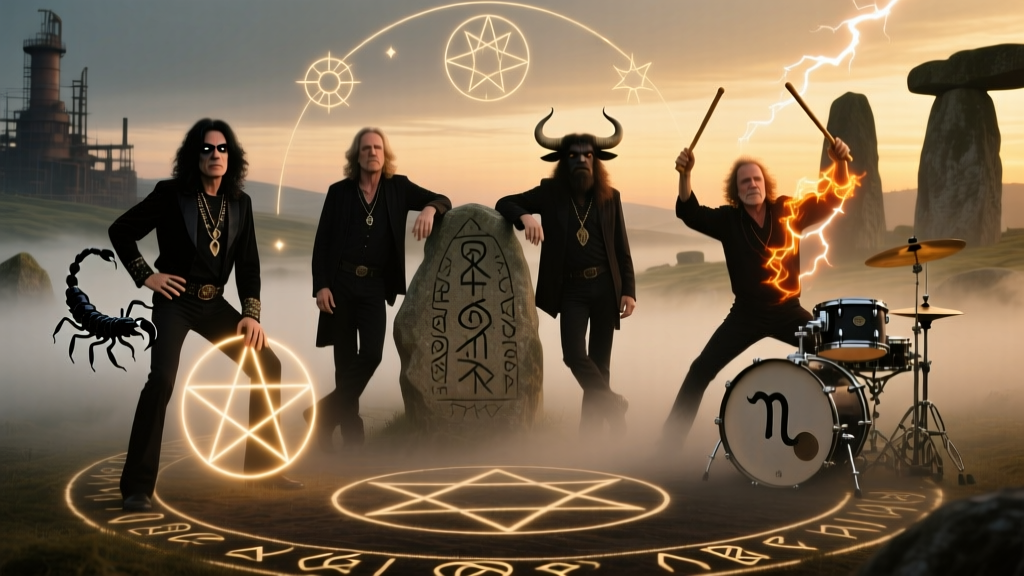
The genesis of heavy metal is inextricably linked to the occult, mythology, and the esoteric anxieties of post-industrial England. When analyzing the original black sabbath members—Ozzy Osbourne, Tony Iommi, Geezer Butler, and Bill Ward—one must look beyond the music to the profound mythological and spiritual undercurrents that shaped their sound. Formed in the bleak landscape of Aston, Birmingham, the band channeled working-class dread into a sonic exploration of the macabre. Their adoption of occult imagery and esoteric philosophy was not mere theatricality; it was a genuine reflection of their spiritual curiosity, environmental conditioning, and fascination with the shadow self.
The Birmingham Crucible: Industrial Mythos and Occult Awakening
To understand the esoteric foundation of the band, one must examine their geographic and cultural incubator. Aston, Birmingham, in the late 1960s was a landscape of industrial decay, characterized by the relentless noise of sheet metal factories and the pervasive gloom of post-war urban blight. This environment stood in stark contrast to the utopian, peace-and-love mythology of the contemporary hippie movement. The original lineup rejected the flower-power idealism, viewing it as disconnected from their gritty reality. Instead, they found resonance in the darker corners of British culture: the gothic horror of Hammer Films, the esoteric thrillers of author Dennis Wheatley, and the ancient mythologies of doom and retribution. This intersection of industrial oppression and occult fascination provided the raw material for a completely new mythological framework in popular music.
Decoding the Original Black Sabbath Members and Their Archetypes
Each musician embodied a distinct archetypal role, contributing specific esoteric and mythological elements to the collective sound. Analyzing the original black sabbath members through this lens reveals a highly structured, almost ritualistic approach to their early compositions.
Geezer Butler: The Esoteric Lyricist and Shadow Explorer
Geezer Butler served as the primary architect of the band's mythological narrative. A voracious reader of occult literature and theology, Butler infused the lyrics with themes of astral projection, spiritual warfare, and apocalyptic prophecy. His fascination with the esoteric was deeply personal; Butler famously claimed to have experienced a terrifying apparition of a dark figure at the foot of his bed, an event that directly inspired the lyrics to the band's eponymous opening track. Butler's lyrical approach functioned as a form of shadow work, forcing listeners to confront the darker aspects of the human psyche, moral corruption, and the existential dread of the Cold War era. He effectively translated ancient mythological concepts of good, evil, and cosmic indifference into a modern, working-class vernacular.
Tony Iommi: The Tritone and the "Devil's Interval"
Tony Iommi's contribution to the band's esoteric atmosphere was rooted in music theory and historical dissonance. Following a factory accident that severed the tips of his middle and ring fingers, Iommi down-tuned his guitar to reduce string tension, inadvertently creating a heavier, sludgier timbre. More importantly, he heavily utilized the augmented fourth, an interval historically known as the Diabolus in Musica (the Devil in Music). As noted by music historians documenting the tritone, medieval church authorities allegedly banned this interval because its profound acoustic dissonance was believed to evoke demonic presence and spiritual unrest. By building the foundational riff of the song "Black Sabbath" entirely around this forbidden interval, Iommi weaponized centuries of esoteric superstition, generating an immediate, visceral sense of dread that became the blueprint for heavy metal.
Ozzy Osbourne: The Shamanic Conduit
Ozzy Osbourne operated as the shamanic frontman, the conduit through which the band's dark mythology was delivered to the masses. Unlike the polished vocalists of the era, Osbourne's voice was a primal, wailing instrument. His melodic choices often mirrored the unsettling cadence of ancient incantations or the cries of the tormented souls described in Butler's lyrics. Osbourne did not just sing about the occult; he performed the role of the doomed protagonist, the madman, and the spiritual wanderer. His stage presence and vocal delivery tapped into the collective unconscious, channeling archetypal fears and providing a cathartic release for audiences grappling with their own existential anxieties.
Bill Ward: The Rhythmic Pulse of the Macabre
Bill Ward's drumming provided the chaotic, unpredictable heartbeat of the band's ritualistic sound. Influenced heavily by jazz drummers like Gene Krupa and Buddy Rich, Ward eschewed the rigid, straightforward timekeeping of standard rock. Instead, he employed syncopated fills, abrupt tempo changes, and a heavy, tribal tom-tom emphasis. This approach mirrored the erratic, terrifying nature of occult rituals and mythological battles. Ward's ability to shift from a slow, doom-laden dirge to a frantic, swinging panic attack gave the music a living, breathing quality, essential for conveying the emotional weight of their esoteric themes.
The Cinematic Catalyst: From Earth to the Occult
The band initially performed under the name Earth, playing blues-rock and folk covers. The pivotal shift toward their iconic mythological identity occurred in 1969. Across the street from their rehearsal space, a cinema was showing Mario Bava's 1963 horror anthology film, I Tre Volti Della Paura (released in English as Black Sabbath). Bassist Geezer Butler noted the massive crowds lining up to be terrified by the film. This sparked a profound realization about human psychology and spiritual catharsis: people actively seek out fear and the macabre as a way to process their own mortality and subconscious anxieties. They renamed the band after the film, deliberately pivoting their musical and thematic focus to explore the very darkness that audiences were paying to experience in the theater. This decision, as highlighted by BBC Culture's retrospective on the band's origins, fundamentally altered the trajectory of modern music.
Esoteric Symbolism in Early Discography
The first four albums by the original lineup are widely considered the sacred texts of heavy metal. Each record explores distinct mythological and esoteric territories, mapping a journey through the darker aspects of the human experience.
| Album / Era | Primary Mythological Theme | Esoteric / Occult Elements |
|---|---|---|
| Black Sabbath (1970) | The Occult Encounter | Astral terror, demonic visitation, the "Devil's Interval" (Tritone), Satanic panic. |
| Paranoid (1970) | The Shadow Self | Psychological torment, Jungian shadow integration, the trauma of war (Iron Man, War Pigs). |
| Master of Reality (1971) | Cosmic Dread & Morality | Anti-war mythos, existential nihilism, spiritual salvation vs. earthly corruption. |
| Vol. 4 (1972) | Alchemical Transformation | Substance-induced spiritual journeys, ego death, the duality of creation and destruction. |
By structuring their early work around these heavy thematic pillars, the band elevated rock music from simple entertainment to a medium capable of exploring complex philosophical and spiritual dilemmas. As noted in a comprehensive NPR analysis, this thematic depth is precisely what allowed their music to endure and spawn countless subgenres.
The Enduring Mythological Framework of Heavy Metal
The original black sabbath members did not merely write songs; they engineered a modern mythology. By synthesizing the acoustic dissonance of the tritone, the literary dread of occult fiction, and the socio-economic despair of industrial Birmingham, they created a sonic ritual that resonated with millions. Their legacy extends far beyond the invention of a musical genre. They established a permanent archetypal framework that allows subsequent generations of artists and listeners to safely explore themes of mortality, spiritual warfare, and the shadow self. In doing so, they secured their place not just as musicians, but as vital architects of 20th-century esoteric and mythological art.