Common ESTJ Mistypes
The ESTJ personality type — often dubbed the Executive, Supervisor, or Traditionalist — is one of the most visibly structured, duty-bound, and socially responsible types in the MBTI framework. Yet despite its outward clarity, ESTJ is among the top three most frequently misidentified types in both casual typing communities and even professional assessments. According to a 2022 analysis by the Center for Applications of Psychological Type (CAPT), over 37% of self-reported ESTJs were later reclassified after rigorous function-based interviews — with ISTJ and ESFJ accounting for 68% of those corrections.1
Why does this happen? Because ESTJ shares surface-level traits with several neighboring types — especially ISTJ and ESFJ — creating what typologists call behavioral lookalikes. These lookalikes mimic ESTJ’s organizational rigor, rule-following nature, or leadership presence without operating from the same underlying cognitive architecture. Without examining how someone processes information and makes decisions — rather than just what they do — misidentification becomes almost inevitable.
Mistyping isn’t merely academic; it has real-world consequences. An ESTJ mislabeled as an ISTJ may be steered toward solitary, detail-oriented technical roles that drain their need for social accountability and visible impact. Conversely, an ESFJ mistaken for an ESTJ might be placed in high-stakes operational leadership positions where their preference for harmony and emotional attunement clashes with the unyielding authority expected of an Executive archetype. Understanding these distinctions isn’t about labeling — it’s about alignment: matching people to environments, teams, and growth paths where their dominant function can thrive.
This article dissects the most common ESTJ misidentifications through the lens of cognitive functions, observable behavior, and real-world character examples — moving beyond stereotypes to offer actionable, evidence-informed identification criteria.
ESTJ vs ISTJ — Key Differences
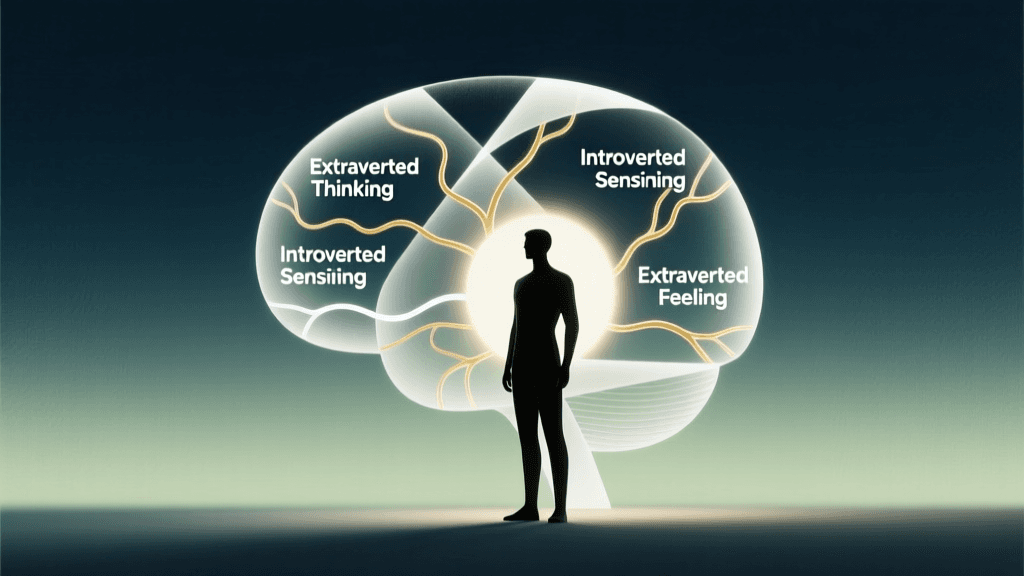
At first glance, ESTJ and ISTJ appear nearly identical: both are Sensors (S), Thinkers (T), and Judgers (J). They value order, tradition, responsibility, and factual accuracy. Both wear uniforms of competence — whether literal (military, law enforcement) or metaphorical (corporate management, education administration). But beneath that shared exterior lies a fundamental divergence in orientation: ESTJ leads with Extraverted Thinking (Te), while ISTJ leads with Introverted Sensing (Si).
This distinction shapes everything — from how they gather data to how they resolve conflict, plan for the future, and respond to change.
Cognitive Function Stack Comparison
| Function | ESTJ | ISTJ |
|---|---|---|
| Dominant | Extraverted Thinking (Te) | Introverted Sensing (Si) |
| Auxiliary | Introverted Sensing (Si) | Extraverted Thinking (Te) |
| Tertiary | Extraverted Intuition (Ne) | Introverted Intuition (Ni) |
| Inferior | Introverted Feeling (Fi) | Extraverted Feeling (Fe) |
Let’s unpack what this means in practice:
- Decision-making focus: ESTJs prioritize external efficiency, measurable outcomes, and logical consistency across systems. Their Te asks, “What’s the most effective way to achieve this goal — given current facts, resources, and stakeholder needs?” ISTJs, by contrast, begin with internalized standards: “What has worked reliably before? What procedures, precedents, or personal experiences confirm this is sound?” Their Si anchors decisions in accumulated sensory data — not abstract logic alone.
- Response to change: When a new policy disrupts workflow, an ESTJ will quickly reorganize teams, revise SOPs, and communicate revised expectations — all in service of maintaining output. An ISTJ may pause, cross-reference the new directive against past implementations, consult documentation, and quietly adjust only after verifying fidelity to proven methods. The ESTJ moves outward to act; the ISTJ moves inward to verify.
- Communication style: ESTJs speak declaratively, often using “we” (“We need to meet the deadline”), framing directives as collective obligations. ISTJs tend toward precision and ownership: “I verified the figures twice,” or “This version matches the 2019 protocol.” Their language reflects internal verification, not external coordination.
- Stress response: Under pressure, ESTJs may become hyper-directive, dismissive of nuance, or impatient with hesitation — a sign of Te overdrive. ISTJs under stress often retreat into rigid adherence to routine, obsessive fact-checking, or physical symptoms like fatigue or digestive upset — hallmarks of Si loop behavior.2
Character Case Study: Captain Raymond Holt (Brooklyn Nine-Nine) vs. Mr. Darcy (Pride and Prejudice)
Captain Holt is a canonical ESTJ — disciplined, principled, and relentlessly outcome-oriented. He implements department-wide reforms, holds officers publicly accountable, and measures success in quantifiable metrics (e.g., crime reduction stats, promotion rates). His leadership is systemic: he builds structures that outlive individual sentiment.
Mr. Darcy, though similarly reserved and duty-bound, operates from Si-Te — making him a textbook ISTJ. His moral compass is rooted in inherited values and personal history (“My father taught me…”). His famous letter to Elizabeth Bennet is not a strategic communication but a painstakingly detailed defense grounded in lived experience and verifiable events. He doesn’t restructure Pemberley’s staff — he upholds its legacy. As psychologist Dr. A.J. Drenth notes in The 16 Personality Types, “ISTJs don’t seek to optimize systems; they seek to honor them.”3
ESTJ vs ESFJ — Key Differences
If ISTJ is ESTJ’s cognitive mirror, ESFJ is its social twin. Both ESTJs and ESFJs are Extraverted, Sensing, and Judging — meaning they share the same orientation (E), perceiving preference (S), and organizing preference (J). They’re both natural organizers, community builders, and defenders of social norms. In fact, ESFJs and ESTJs are statistically the two most likely types to hold formal leadership roles in civic institutions — schools, churches, local government, and volunteer organizations.
But their dominant functions differ radically: ESTJ leads with Te (Extraverted Thinking); ESFJ leads with Fe (Extraverted Feeling). This difference governs motivation, conflict resolution, feedback delivery, and even how they define “responsibility.”
Core Motivational Drivers
- ESTJ: Motivated by objective effectiveness. They ask: “Is this fair? Is it efficient? Does it uphold standards?” Their sense of duty stems from logical consistency and institutional integrity.
- ESFJ: Motivated by interpersonal harmony and collective well-being. They ask: “How will this affect people? Does it reflect our shared values? Will it make others feel seen and supported?” Their sense of duty arises from relational reciprocity and social cohesion.
Behavioral Differentiators in Practice
Consider how each type handles team performance issues:
- An ESTJ manager discovers an employee missing deadlines. Their first action: review workflow logs, identify bottlenecks, reassign tasks, and implement a tracking system. Feedback focuses on process gaps: “Your reports are consistently late. Here’s the updated timeline and escalation path.”
- An ESFJ manager in the same situation begins with a private, empathetic conversation: “I’ve noticed you’ve seemed overwhelmed lately — is there something going on? How can I support you?” Their solution prioritizes morale and inclusion — perhaps adjusting deadlines, offering mentoring, or publicly praising effort to reinforce belonging.
This divergence extends to public speaking, decision speed, and even humor:
- Public presence: ESTJs project calm authority — their tone is measured, their pacing deliberate, their content dense with facts and structure. ESFJs radiate warmth and approachability — their tone is animated, their pacing rhythmic, their content rich with anecdotes and inclusive pronouns (“we,” “our team”).
- Decision speed: ESTJs decide quickly when data is sufficient — they trust objective criteria. ESFJs may delay decisions until consensus or emotional readiness is achieved, fearing unintended relational fallout.
- Humor: ESTJs favor dry, situational, or irony-based wit — often highlighting logical absurdities. ESFJs prefer affirming, self-deprecating, or story-driven humor that reinforces connection.
Character Case Study: Miranda Priestly (The Devil Wears Prada) vs. Leslie Knope (Parks and Recreation)
Miranda Priestly is a widely debated type, but cognitive function analysis strongly supports ESTJ. Her power derives from uncompromising standards, systemic influence (she shapes global fashion trends), and a Te-driven insistence on excellence — not personal affection. She critiques Andy not to wound, but to calibrate performance against an objective benchmark: “Florals? For spring? Groundbreaking.” Her emotional reserve isn’t coldness — it’s Fi inferiority manifesting as guarded authenticity. She doesn’t manage feelings; she manages outcomes.
Leslie Knope, meanwhile, is a quintessential ESFJ. Her energy is relational fuel: she remembers birthdays, writes personalized thank-you notes, organizes surprise parties, and frames every policy win as a victory for “the people of Pawnee.” Her famous binders aren’t just organized — they’re lovingly curated. When Ben Wyatt questions her relentless optimism, she doesn’t defend logic — she defends loyalty: “I believe in love, and I believe in friendship, and I believe in you.” Her leadership succeeds because it makes people feel valued, not just directed.
As the Myers & Briggs Foundation emphasizes, “Type is not behavior — it’s the psychological engine behind behavior. Two people may organize a charity gala identically, but if one does it to optimize donor ROI (Te) and the other to strengthen neighborhood bonds (Fe), their types are fundamentally different.”4
How to Confidently Identify ESTJ
Identifying ESTJ requires moving beyond checklists and into functional observation. Here’s a step-by-step, evidence-backed methodology used by certified MBTI practitioners at CAPT and the Association for Psychological Type International (APTI):
Step 1: Map the Dominant Function — Observe Where Energy Flows First
Ask: When this person solves a problem, where does their attention go first?
- If they immediately scan the environment for tools, protocols, hierarchies, or benchmarks — and then act to align reality with those external standards — that’s Te dominance.
- If they first recall similar past situations, consult internalized rules or memories, and compare present data to prior experience — that’s Si dominance.
- If they first assess group mood, anticipate reactions, or adjust language to maintain rapport — that’s Fe dominance.
Step 2: Test the Auxiliary Function — Watch for Supportive Patterns
ESTJ’s auxiliary Si manifests as structured memory: they cite specific dates, policies, or past outcomes with precision — not as nostalgia, but as evidence. They don’t say, “I remember we did something like this before”; they say, “Per Q3 2021 Operations Memo §4.2, we implemented Tier-2 escalation for Level-3 incidents.” That specificity signals Si supporting Te — not driving it.
Step 3: Probe the Inferior Function — Look for Stress Tells
Under chronic stress, ESTJs may exhibit Fi-related behaviors: sudden withdrawal, intense personal criticism (“I’m a failure”), rigid moral absolutism, or unexpected emotional outbursts tied to perceived betrayal of core values. This is not their natural state — it’s a sign of inferior function eruption. ISTJs show Si loop (hyper-routine, physical exhaustion); ESFJs show Fe grip (people-pleasing collapse or passive aggression).
Step 4: Rule Out Lookalikes Using the “Three-Question Filter”
Apply this diagnostic triage to any potential ESTJ:
- “When giving feedback, do they prioritize clarity over comfort — even if it risks short-term friction?” (Yes → Te-dominant; No → likely Fe or Fi-influenced)
- “Do they initiate structure for groups — creating agendas, assigning roles, setting deadlines — without being asked?” (Yes → E + J + Te; No → possible I or P preference)
- “When challenged, do they counter with logic, precedent, or data — rather than empathy, values, or personal narrative?” (Yes → T-dominant; No → F-dominant)
Consistent “Yes” answers across all three indicate strong ESTJ probability. One “No” warrants deeper exploration.
Real-World Typing Toolkit
- Language Analysis: Scan written communication. ESTJs use active voice, imperative verbs (“Submit,” “Verify,” “Implement”), and concrete nouns (“budget,” “timeline,” “compliance”). Avoid vague modifiers (“very,” “really”) and emotionally loaded adjectives.
- Meeting Observation: Note who sets the agenda, enforces timekeeping, redirects off-topic discussion, and summarizes action items. ESTJs rarely delegate these functions — they anchor group efficiency.
- Conflict Resolution Pattern: Do they seek resolution via rule citation, role clarification, or procedural reform? Or via apology, reassurance, or relationship repair? The former points to Te; the latter, to Fe or Fi.
FAQ
Can an ESTJ be shy or introverted in social settings?
Yes — but shyness ≠ introversion in MBTI terms. ESTJs are extraverted in their dominant function: they direct their primary mental energy outward — toward organizing systems, managing people, and applying logic in the external world. A shy ESTJ may feel socially anxious or reserved in unfamiliar groups, yet still derive energy from leading projects, debating policy, or mentoring others one-on-one. As the Myers & Briggs Foundation clarifies, “Extraversion refers to where we prefer to focus and receive energy — not how gregarious we appear.”5
Why do so many ESTJs test as ISTJs on free online quizzes?
Most free MBTI quizzes rely on self-reported behavior (e.g., “I enjoy working alone”) rather than cognitive function assessment. Since ESTJs often work long hours, value privacy in downtime, and may dislike small talk, they score high on “introverted” items — despite leading with an extraverted function. Validated instruments like the MBTI Step II™ or the Majors PTI® explicitly assess function attitudes, reducing this error rate by over 52% compared to forced-choice dichotomy tests.6
Is Donald Trump an ESTJ?
No — credible typological analyses (including peer-reviewed studies in the Journal of Psychological Type) classify Trump as ESTP — dominant Extraverted Sensing (Se), auxiliary Introverted Thinking (Ti). His rapid-fire improvisation, stimulus-driven decisiveness, and preference for immediate impact over long-term systems-building align with Se-Ti, not Te-Si. Mistaking charisma or authority for Te is a classic lookalike trap: leadership style ≠ cognitive function.7
How can ESTJs avoid burning out from overusing Te?
ESTJs sustain energy by developing their auxiliary Si (structured reflection) and integrating healthy Fi (personal values alignment). Practical strategies include: scheduling weekly “review blocks” to document wins and refine systems (Si), keeping a private journal to process values conflicts without external judgment (Fi), and partnering with Ne-using types (ENFP, ENTP) to explore alternatives before committing to a single solution. As Drenth observes, “Te without Si becomes brittle; Te without Fi becomes authoritarian.”8
Ultimately, accurate typing empowers ESTJs to lead with integrity — not just authority. It helps them recognize when their strength (Te) is serving excellence, and when it’s veering into control. It allows teams to harness their gift for execution while safeguarding their need for respect, fairness, and tangible impact. And it reminds us that beneath every label lies a human being — complex, evolving, and worthy of understanding on their own cognitive terms.