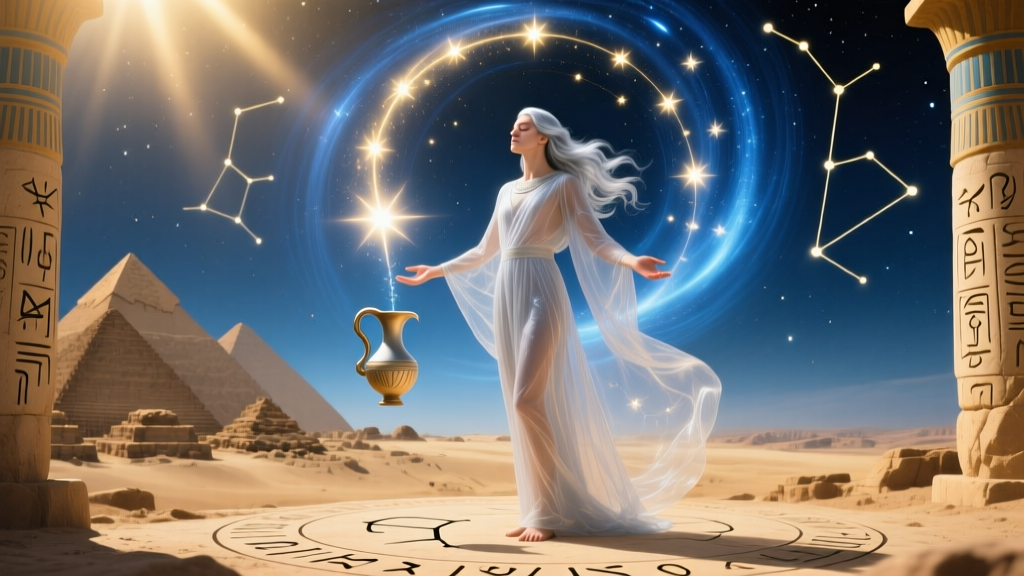
When analyzing the february 17 zodiac placement, one must look beyond modern horoscopes and examine the ancient origin story of the Aquarius constellation. Falling in the final decan of the Water Bearer, this specific birthdate represents a convergence of Babylonian hydrology, Greek mythological tragedy, and Hellenistic astronomical mechanics. The historical evolution of this asterism provides profound context for the psychological profile of those born on this date. By tracing the etymological and mythological roots of the constellation, we uncover the foundational archetypes that continue to govern this specific astrological coordinate.
Astronomical Coordinates of the february 17 zodiac
To understand the historical weight of this birthdate, we must first locate it in the night sky. The sun occupies the 28th and 29th degrees of the tropical Aquarius constellation on February 17. This specific coordinate places the sun in close proximity to some of the most historically significant fixed stars in the celestial equator. According to the International Astronomical Union (IAU), the modern boundaries of Aquarius encompass several ancient asterisms, but the stars most relevant to the February 17 origin story are Alpha Aquarii (Sadalmelik) and Beta Aquarii (Sadalsuud). Both stars bear Arabic names translating to the 'lucky stars of the king' and the 'luckiest of the lucky,' reflecting a time when this region of the sky was associated with divine providence and the life-giving waters of the spring thaw.
Babylonian Origins: GU.LA and the God Enki
The earliest recorded origin story of the Aquarius constellation does not belong to the Greeks, but to the ancient Sumerians and Babylonians. In the MUL.APIN, a Babylonian astronomical compendium compiled around 1000 BCE, the constellation we now call Aquarius was identified as GU.LA, meaning 'The Great One.' This figure was directly associated with Enki (later known as Ea in Akkadian), the god of water, knowledge, mischief, crafts, and creation.
For the ancestors of astrology, the february 17 zodiac position corresponded to the period when the sun's movement signaled the impending spring floods of the Tigris and Euphrates rivers. Enki was depicted as a deity holding a vase from which two streams of water flowed—the exact imagery that survives in modern Aquarian iconography. Therefore, the historical archetype for a February 17 native is not merely a 'rebel' or an 'innovator,' but a custodian of vital, life-sustaining knowledge and a mediator of cosmic resources.
Greek Mythology: Ganymede and the Celestial Eagle
As astrological knowledge migrated from Mesopotamia to Hellenistic Greece, the origin story of the Water Bearer underwent a dramatic mythological shift. The GU.LA was Hellenized into Hydrochoos, and the deity Enki was replaced by the mortal youth Ganymede. According to the Theoi Greek Mythology Project, Ganymede was a Trojan prince of such extraordinary beauty that Zeus, taking the form of an eagle (represented by the adjacent constellation Aquila), abducted him to Mount Olympus to serve as the cupbearer to the gods.
This mythological layer adds a profound psychological dimension to the February 17 astrological profile. The Ganymede narrative introduces themes of sudden elevation, the burden of serving a higher (or more demanding) collective, and the tension between mortal origins and divine responsibilities. The proximity of the February 17 sun to the constellation Aquila in the ancient sky reinforced the idea that those born under this coordinate are often 'chosen' for unique, sometimes isolating, roles within their communities.
The Chaldean Decan System: Venusian Influence
Modern astrology often treats all Aquarius dates as identical, governed solely by Saturn and Uranus. However, historical Hellenistic and Chaldean astrology divided each sign into three 10-degree 'decans' or 'faces,' each with its own sub-ruler. February 17 falls squarely in the third decan of Aquarius (20° to 30°).
In the Chaldean decan system, the third face of Aquarius is ruled by Libra, and by extension, the planet Venus. This historical detail is crucial for understanding the specific origin of the February 17 personality. While the broader Aquarian archetype is rooted in Saturnian structure and Uranian disruption, the February 17 native possesses an underlying Venusian drive for relational harmony, aesthetic refinement, and diplomatic synthesis. This explains why individuals born on this date often exhibit a more tactful, socially calibrated approach to their progressive ideals compared to those born in the first decan of the sign.
Historical Archetype Evolution Matrix
| Era / System | Constellation Name | Ruling Deity / Planet | Core Archetype for Feb 17 |
|---|---|---|---|
| Babylonian (c. 1000 BCE) | GU.LA (The Great One) | Enki / Ea | Custodian of sacred knowledge and life-sustaining resources. |
| Hellenistic (c. 200 CE) | Hydrochoos | Saturn | The structural distributor of collective welfare and civic duty. |
| Chaldean Decan (3rd Face) | Aquarius (20°-30°) | Venus (via Libra) | The diplomatic synthesizer; bridging radical ideas with social harmony. |
| Modern Tropical (20th C.) | Aquarius | Uranus / Saturn | The systemic disruptor and technological innovator. |
The Precession Shift: Tropical vs. Sidereal Realities
Any rigorous historical analysis of the february 17 zodiac must address the Precession of the Equinoxes. The tropical zodiac used in Western astrology is anchored to the seasons, meaning February 17 will always fall in tropical Aquarius. However, the sidereal zodiac, used in Vedic (Jyotish) astrology and aligned with the actual, observable constellations, accounts for the Earth's axial wobble.
Due to this precession, the physical constellation of Aquarius has shifted backward relative to the tropical calendar. Historically, the sun entered the physical constellation of Aquarius in late February. Today, a person born on February 17 under the tropical system is actually positioned in the physical constellation of Capricorn in the sidereal sky. This astronomical reality documented by Encyclopedia Britannica means that the ancient, observable stars overseeing a February 17 birth are technically those of the Sea-Goat. This creates a fascinating historical synthesis: the tropical archetype of the visionary Water Bearer is physically anchored by the sidereal stars of the ambitious, earth-bound Capricorn, resulting in a personality profile that pairs high-level intellectual idealism with pragmatic, structural execution.
Actionable Historical Integration for February 17 Natives
Understanding the deep history of your astrological placement allows for targeted psychological integration. Rather than relying on generic daily horoscopes, February 17 natives can utilize this historical data for concrete shadow work and personal development:
- Integrate the Enki Archetype: Move beyond mere information consumption. Enki was the god of applied wisdom. Audit your current knowledge base and identify one area where you can transform abstract theories into a tangible, community-benefiting resource or system.
- Navigate the Ganymede Burden: The myth of Ganymede warns against losing one's identity in service to demanding institutions or 'gods.' Establish strict boundaries around your intellectual and emotional labor to prevent burnout from over-indexing on collective needs at the expense of your mortal roots.
- Leverage the Venusian Decan: Utilize your third-dean Venusian sub-ruler to soften Saturnian rigidity. When presenting disruptive or unconventional ideas, deliberately frame them through the lens of aesthetic improvement and social cohesion rather than pure systemic teardown.
The history of the February 17 zodiac reveals a lineage far richer than modern pop-astrology suggests. By synthesizing the Babylonian reverence for sacred waters, the Greek tragedy of divine elevation, and the Chaldean emphasis on diplomatic harmony, individuals born on this date can access a highly specific, historically validated framework for navigating their unique psychological landscape.