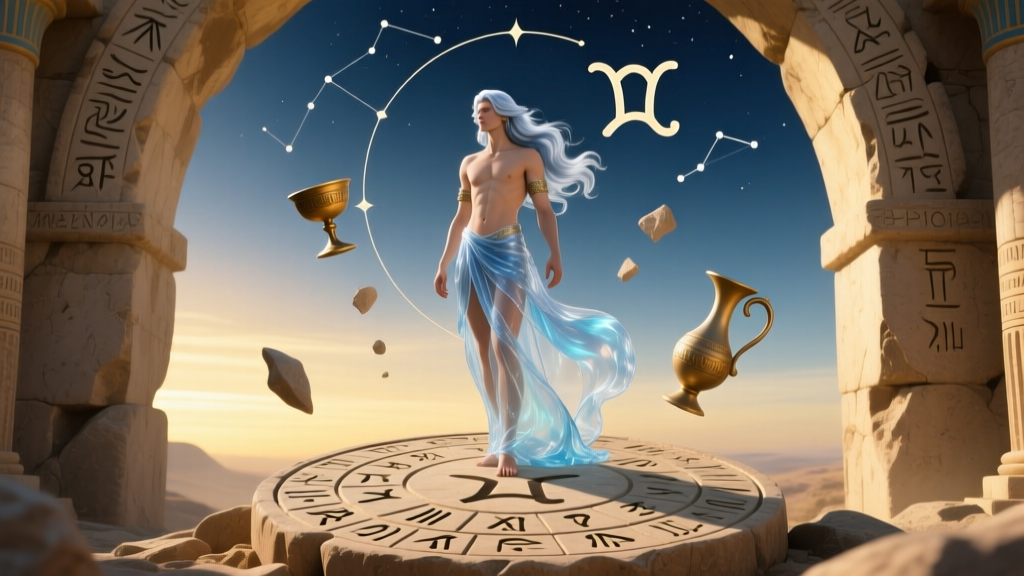
The Historical Roots of the February 3 Zodiac Sign
Individuals researching the february 3 zodiac sign are delving into the heart of Aquarius, a fixed air sign steeped in millennia of astronomical observation and mythological adaptation. While modern pop astrology often reduces Aquarius to mere eccentricity or technological affinity, the historical origins of this zodiacal placement reveal a profound archetype tied to divine knowledge, civilization-building, and the mastery of natural elements. Born on the cusp of winter's deep freeze and the impending spring thaw, the February 3 Aquarian carries the genetic memory of ancient water-bringers who sustained early human settlements. To understand the true nature of this birth date, we must trace its lineage back to the clay tablets of Mesopotamia and the star catalogs of Hellenistic Alexandria, bypassing modern superficial interpretations to uncover the foundational mechanics of this powerful astrological placement.
Babylonian Astronomy: GU.LA and the Waters of Wisdom
The origins of the Aquarius constellation predate Greek mythology by at least two millennia, rooting itself firmly in the fertile crescent of ancient Mesopotamia. In the MUL.APIN, a comprehensive Babylonian star catalog compiled around 1000 BCE, the constellation we now call Aquarius was designated as GU.LA, meaning 'The Great One.' This celestial figure was inextricably linked to Ea (also known as Enki), the Sumerian and Akkadian god of water, knowledge, mischief, crafts, and creation.
Ea was not merely a deity of physical water; he was the master of the Abzu, the subterranean aquifer of fresh water that the Mesopotamians believed was the source of all wisdom and the foundation of agricultural survival. Depictions of Ea from the ancient Mesopotamian civilizations frequently show him holding a vase from which two distinct streams of water flow, representing the Tigris and Euphrates rivers. For those born on February 3, this historical context is vital. The 'water' of the February 3 zodiac sign is not the emotional, turbulent water of the Scorpio or Pisces archetypes; it is the life-sustaining, intellectual, and civilizing water of divine wisdom meant to irrigate the collective consciousness.
Hellenistic Adaptation: Ganymede and the Celestial Cupbearer
As astrological knowledge migrated from Babylon to the Hellenistic world following the conquests of Alexander the Great, Greek astronomers mapped their own mythological pantheon onto the existing Mesopotamian star maps. The figure of GU.LA was reimagined as Ganymede, a prince of Troy renowned for his unparalleled beauty.
According to the myth, Zeus, captivated by Ganymede, transformed into an eagle (represented by the adjacent constellation Aquila) and abducted the youth, bringing him to Mount Olympus to serve as the cupbearer to the gods. In this Hellenistic framework, the water poured by the figure was no longer the rivers of Mesopotamia, but the nectar of immortality and divine inspiration. This shift in narrative fundamentally altered the astrological interpretation of the sign. The Babylonian focus on agricultural survival and civic engineering evolved into the Greek focus on intellectual elevation, the transmission of esoteric knowledge, and the bridging of the mortal and divine realms. The February 3 native, therefore, operates historically as a conduit for higher ideas, tasked with pouring intellectual 'nectar' into the collective human experience.
The Chaldean Decans: Analyzing the 14th Degree of Aquarius
To achieve true astrological precision, we must look beyond the general sign of Aquarius and examine the specific degree occupied by the sun on February 3. In the tropical zodiac, February 3 typically corresponds to the 14th degree of Aquarius. This places the birth date squarely within the second decan (or decanate) of the sign, spanning from the 11th to the 20th degree.
In the traditional Chaldean decan system, which was later synthesized by Hellenistic astrologers, each 10-degree segment of a sign is sub-ruled by a different planet, adding a specific layer of nuance to the core archetype. The second decan of Aquarius is governed by Mercury. This Mercurial sub-rulership profoundly impacts the psychological and historical profile of the February 3 native. While Saturn (the traditional ruler of Aquarius) provides the structural, systemic, and sometimes rigid framework of the sign, Mercury injects intellectual agility, communicative brilliance, and a fascination with data, codes, and language. This specific planetary combination explains why individuals born on this date often exhibit a highly analytical approach to humanitarianism, preferring to solve societal issues through systemic reform, written discourse, and technological innovation rather than purely emotional appeals.
Historical Timeline of the Aquarius Archetype
| Era | Civilization | Designation | Core Archetype & Function |
|---|---|---|---|
| c. 3000 BCE | Sumerian | Enki / Ea | Master of subterranean waters, magic, and foundational wisdom. |
| c. 1100 BCE | Babylonian | GU.LA (The Great One) | Bestower of civilization, agricultural irrigation, and civic order. |
| c. 300 BCE | Hellenistic | Ganymede | Divine cupbearer, transmitter of celestial nectar and inspiration. |
| c. 150 CE | Greco-Roman | Ptolemaic Aquarius | Fixed Air, diurnal, human sign; ruled by Saturn, focused on systemic structures. |
Translating Ancient Myth into Modern Action
Understanding the historical and astrological mechanics of the February 3 zodiac sign provides a distinct advantage in personal and professional development. By aligning with the deeper, historically verified currents of your archetype, you can bypass generic horoscope advice and implement strategies that resonate with your foundational cosmic design.
- Leverage the Mercurial Decanate: Because your specific degree is sub-ruled by Mercury, your greatest historical function is the translation of complex, systemic ideas into accessible formats. Allocate dedicated time weekly to study structural frameworks, coding languages, or systemic philosophy. Your historical mandate is to act as an intellectual bridge, not just a passive observer.
- Emulate the Ea Archetype in Leadership: In Babylonian myth, Ea did not rule through brute force (like Enlil) but through cleverness, craftsmanship, and the provision of essential resources. In professional environments, adopt a leadership style based on resource distribution and strategic problem-solving. Build the 'irrigation channels'—the workflows and communication systems—that allow your team to thrive autonomously.
- Guard Against the Fixed Air Trap: The historical danger of the later degrees of Aquarius is intellectual ossification. The fixed nature of the sign, combined with Saturnian rulership, can lead to dogmatic adherence to your own progressive ideals. Counteract this by actively seeking out primary source texts and opposing historical viewpoints, ensuring your 'nectar' remains dynamic and rigorously tested.
References and Historical Texts
The historical synthesis of the Aquarius archetype relies on foundational astronomical and astrological texts. For those seeking to deepen their understanding of Hellenistic planetary rulerships and the elemental nature of the fixed air signs, Claudius Ptolemy's Tetrabiblos remains the definitive primary source, outlining the diurnal and nocturnal triplicities that govern Aquarian mechanics. Furthermore, the translation of Babylonian star catalogs, specifically the MUL.APIN, provides the essential archaeological evidence linking the Greek Water Bearer to the Mesopotamian god Ea, demonstrating the unbroken chain of astrological transmission from the ancient Near East to modern psychological astrology. Academic analyses published in the Journal for the History of Astronomy continue to refine our understanding of how these ancient cultures utilized the zodiac not merely for fortune-telling, but as a complex language for mapping the relationship between human civilization and the cosmos.