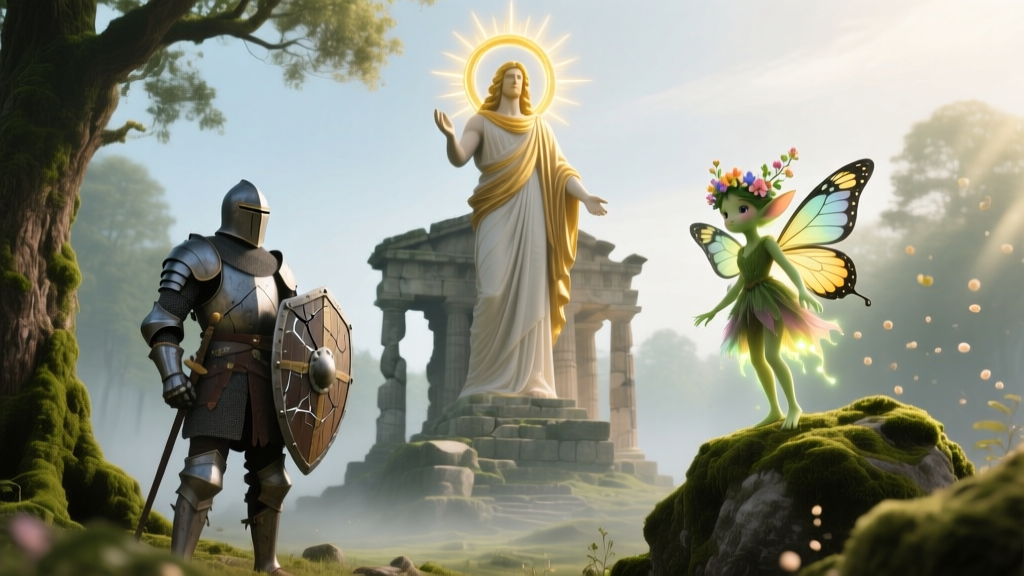
The academic study of traditional narratives often leads scholars into the recursive depths of folklore folklore—the meta-analysis of how myths, legends, and fairy tales intersect, diverge, and evolve across cultures. For spiritual practitioners, astrologers, and mythologists, understanding these distinctions is not merely an academic exercise; it is a vital framework for decoding the human subconscious. By comparing the structural alternatives within global oral traditions, we can identify which narrative vehicles carry divine cosmology, which preserve historical memory, and which map the psychological journey of the soul. This comparative analysis breaks down the core genres of traditional storytelling to reveal their unique esoteric functions.
The Taxonomy of Folklore Folklore: Core Categories
To navigate this complex landscape, we must first establish the boundaries defined by institutions like the American Folklore Society. Folkloristics divides traditional narratives into four primary genres based on their relationship to time, space, and belief. When we engage in folklore folklore, we are essentially studying how these four categories act as alternative lenses for human experience.
- Myth: Sacred narratives concerning the origins of the cosmos, the gods, and the fundamental laws of nature. They are accepted as absolute truth within their originating cultures.
- Legend: Semi-historical narratives set in the relatively recent past, featuring human protagonists who perform extraordinary deeds. They occupy the space between history and fiction.
- Fairy Tale (Märchen):strong> Fictional narratives set in an undefined time and place ('once upon a time'), featuring magical elements, archetypal characters, and psychological transformation.
- Fable: Brief, didactic stories utilizing anthropomorphic animals or natural forces to deliver an explicit moral lesson.
Comparative Analysis: Structural and Spiritual Differences
Understanding the mechanics of these narrative forms requires a side-by-side comparison of their structural DNA. The following table outlines how each genre operates on both a literal and an esoteric level, providing a clear framework for identifying which archetype is at play in a given spiritual or psychological context.
| Narrative Form | Temporal Setting | Protagonist Type | Primary Spiritual Function | Jungian Archetype Focus |
|---|---|---|---|---|
| Myth | Sacred / Pre-creation | Deities / Creators | Explain cosmic origins and divine law | The Self / The Creator |
| Legend | Historical Epoch | Heroes / Kings | Validate cultural identity and moral courage | The Hero / The Ruler |
| Fairy Tale | Undefined / Timeless | Everyman / Orphan | Map subconscious integration and individuation | The Shadow / The Anima/Animus |
| Fable | Irrelevant | Animals / Objects | Instruct on societal norms and practical survival | The Trickster / The Sage |
Myths vs. Legends: The Divine and the Historical
The most common point of confusion in comparative mythology lies between myth and legend. According to Encyclopedia Britannica, myths operate outside of linear time; they occur in the 'Dreamtime' or the primordial past. They are fundamentally theological. The story of Inanna descending into the Underworld is a myth—it explains the changing of the seasons and the psychological necessity of confronting the shadow self. Legends, conversely, are anchored in historical epochs and geographic realities. The tales of King Arthur or Robin Hood are legends. They feature human beings who, while perhaps embellished by time, are believed to have walked the earth. Spiritually, myths connect us to the divine macrocosm, while legends provide actionable blueprints for human virtue, bravery, and societal leadership.
Fairy Tales and Fables: Morality and the Subconscious
While fables rely on anthropomorphic animals to deliver explicit, conscious moral directives (e.g., Aesop's 'The Tortoise and the Hare'), fairy tales operate in the realm of the unconscious. Psychoanalyst Marie-Louise von Franz noted that fairy tales lack the heavy theological baggage of myths, making them purer expressions of the collective unconscious. In the study of folklore folklore, researchers utilize the Aarne-Thompson-Uther (ATU) index to categorize thousands of fairy tale variants. These tales do not preach; instead, they map the psychological process of individuation. When a protagonist enters a dark forest, confronts a witch, and integrates a magical boon, the narrative is mirroring the soul's descent into the unconscious to retrieve repressed psychic energy.
Modern Alternatives to Traditional Oral Narratives
As societies industrialized, the campfire was replaced by the digital screen, necessitating new alternatives to traditional oral folklore. Modern spiritual seekers and psychologists now analyze contemporary narrative structures that serve the exact same archetypal functions as ancient tales.
- Urban Legends: The modern alternative to the cautionary legend. Stories like 'The Babysitter and the Man Upstairs' serve to police social boundaries and express contemporary anxieties about technology and isolation.
- Digital Folklore (Creepypasta): Internet-born myths (e.g., Slender Man) that function similarly to ancient bogeymen, externalizing the collective shadow and fear of the unknown in a hyper-connected world.
- Astrological Archetypes: For many modern practitioners, natal chart readings and planetary transit analyses serve as a living, personalized alternative to static myth. The movements of Saturn or Pluto provide a dynamic, real-time mythological framework that adapts to the individual's psychological landscape.
Practical Application: Using Folkloric Archetypes in Shadow Work
The comparative study of these narrative forms is highly actionable for personal spiritual development. By identifying which folkloric genre your current life challenges resemble, you can apply targeted shadow work techniques to achieve psychological integration.
Step 1: Identify Your Dominant Narrative Genre
Are you facing a crisis of origins and identity (Myth), a test of courage and public legacy (Legend), a journey into the unknown subconscious (Fairy Tale), or a practical lesson in resource management (Fable)? Journaling the 'genre' of your current struggle shifts your perspective from victimhood to archetypal participation.
Step 2: Map the Antagonist
In fairy tales, the antagonist (the witch, the dragon) represents the unintegrated Shadow. Instead of fighting the obstacle, engage in active imagination. Write a dialogue with the 'antagonist' of your current life situation. Ask it what psychic energy it is guarding and what initiation it requires you to undergo.
Step 3: Integrate the Trickster
When trapped in the rigid moralism of a Fable or the heavy fatalism of a Myth, invoke the Trickster archetype (Hermes, Loki, Coyote). The Trickster disrupts stagnant paradigms through humor, paradox, and rule-breaking. Practically, this means introducing radical spontaneity or absurdity into your daily routine to break fixed psychological loops and invite new intuitive insights.
Summary of Narrative Functions
The recursive study of folklore folklore reveals that humanity has always utilized a diverse toolkit of narratives to survive and thrive. Myths anchor us to the cosmos, legends inspire our civic and personal bravery, fairy tales guide our subconscious integration, and fables teach us practical survival. By understanding these structural alternatives, spiritual practitioners can decode the stories playing out in their own lives, transforming passive experiences into active, archetypal initiations.