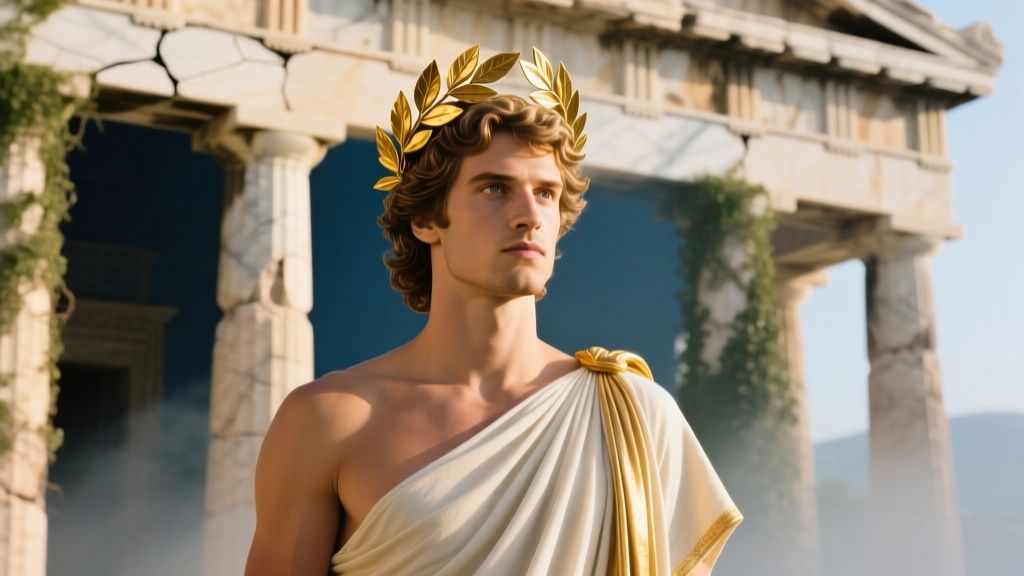
The Duality of the Sun God: Understanding the Greek Myth of Apollo
The Greek myth of Apollo presents one of antiquity's most complex paradoxes: the radiant bringer of light, medicine, and music who simultaneously rains plague and deadly arrows upon mortals. Evaluating this deity requires moving beyond superficial sun-god tropes. By applying a critical review framework to the Apollonian narrative, we can separate the functional psychological benefits of his archetype from the toxic mythological behaviors that offer cautionary tales. This analysis dissects the pros, cons, and ultimate utility of Apollo's energy for modern spiritual, psychological, and personality integration.
Pros of the Apollo Archetype: Order, Reason, and Healing
In Jungian psychology and classical philosophy, Apollo represents the Logos principle—the structuring, rational force that brings order to chaos. When analyzing the pros of integrating Apollonian energy into one's psychological framework, several distinct advantages emerge for personal development and spiritual discipline. Core Apollonian virtues include:
- Logos: The imposition of rational order and boundary-setting over primal chaos.
- Katharsis: Emotional purification and expression through structured artistic form.
- Mantic Truth: Objective foresight, strategic planning, and radical self-honesty.
Cognitive Clarity and Boundary Setting
Apollo is the god of distance, boundaries, and objective truth. In personality psychology, Apollonian traits correlate with high conscientiousness and strong executive functioning. The primary benefit of this archetype is the ability to detach from emotional volatility to make clear, strategic decisions. Spiritual practitioners utilize Apollonian energy for banishing rituals, creating sacred boundaries, and establishing disciplined daily routines that prevent burnout. According to the Theoi Project, Apollo's role as the founder of cities and laws underscores his utility in establishing structural safety.
Catharsis Through Structured Art
As the master of the lyre, Apollo demonstrates that profound emotional expression requires structural discipline. The mythological pros here highlight the necessity of form in art and communication. Unbridled emotion creates noise; Apollonian influence channels raw feeling into poetry, music, and architecture. This translates to a practical advantage for creatives: the ability to edit, refine, and finish projects rather than abandoning them in a fit of uninspired frustration.
Prophetic Insight and the Pursuit of Truth
Through the Oracle of Delphi, Apollo governs the revelation of hidden truths. The Delphic maxim 'Know Thyself' (Gnothi Seauton) is the cornerstone of Western esoteric and psychological inquiry. The pro of engaging with this mythological current is the development of radical self-honesty and the capacity to foresee the long-term consequences of current actions without the distortion of wishful thinking.
Cons and Shadows: Hubris, Cruelty, and Emotional Detachment
A critical review of the Greek myth of Apollo must confront the severe ethical and psychological deficits embedded in his narratives. The shadow side of the sun god reveals the dangers of unchecked intellectualism and divine entitlement.
The Marsyas Flaying: Divine Insecurity and Cruelty
One of the most disturbing episodes in Apollo's lore is his contest with the satyr Marsyas. When Marsyas challenged Apollo to a musical duel and nearly won, Apollo appended a condition that the victor could do as he pleased with the loser. Apollo won, and subsequently flayed Marsyas alive. This myth exposes a critical con of the Apollonian shadow: the use of rigid, legalistic rules to justify extreme cruelty when one's ego or intellectual superiority is threatened. In modern terms, this manifests as the toxic manager or academic who uses institutional power to crush dissenting voices.
The Daphne and Cassandra Complexes
Apollo's interactions with women in myth frequently highlight a profound lack of empathy and an entitlement to affection. His pursuit of Daphne, who was forced to transform into a laurel tree to escape him, and his curse upon Cassandra—condemning her to speak true prophecies that no one would believe after she rejected his advances—demonstrate the predatory nature of the unintegrated masculine intellect. The psychological con here is emotional sterility; an over-reliance on logic that views human relationships as transactions or conquests, leading to profound isolation.
Somatic Disconnect and the Plague Bringer
Apollo is both the healer and the sender of plagues, as documented in the opening of Homer's Iliad via the Perseus Digital Library. When the intellect becomes entirely divorced from the body and the natural world, it breeds disease. The shadow of Apollo warns against the suppression of the physical and emotional self in favor of pure, sterile rationality, which inevitably results in psychosomatic illness.
Critical Review: The Apollonian-Dionysian Spectrum
To fully evaluate the utility of the Greek myth of Apollo, we must contextualize him against his mythological and philosophical counterpart, Dionysus. Friedrich Nietzsche's seminal work, The Birth of Tragedy, analyzed extensively by the Stanford Encyclopedia of Philosophy, posits that human culture and individual psychology require a synthesis of both forces.
| Archetypal Domain | Apollonian Principle (Order) | Dionysian Principle (Chaos) | Integration Strategy |
|---|---|---|---|
| Cognitive Function | Logic, analysis, and categorization | Intuition, synthesis, and flow | Use logic to plan; use intuition to execute. |
| Emotional State | Detachment, stoicism, and boundary-setting | Ecstasy, vulnerability, and merging | Set boundaries first, then allow safe vulnerability. |
| Shadow Manifestation | Tyranny, cruelty, and emotional starvation | Addiction, dissolution, and boundary collapse | Monitor for rigidity (Apollo) or escapism (Dionysus). |
| Spiritual Practice | Meditation, ritual structure, and study | Ecstatic dance, entheogens, and chant | Build a structured container for unstructured experiences. |
A critical review reveals that neither archetype is sufficient in isolation. Pure Apollonian energy leads to rigidity, dogmatism, and emotional starvation. Pure Dionysian energy leads to chaos, addiction, and the dissolution of the self. The goal of archetypal integration is not to choose one over the other, but to utilize Apollo to build the vessel, and Dionysus to fill it with wine.
Actionable Frameworks for Archetypal Integration
For spiritual seekers and students of personality typology, translating the Greek myth of Apollo into practical utility requires targeted, conscious engagement with his positive traits while actively mitigating his shadows.
The 'Delphic Audit' for Decision Making
When facing complex life decisions, apply the Apollonian principle of objective distance. Write down the variables of your dilemma without emotional adjectives. Assign numerical weights to potential outcomes based on empirical data rather than anxious projections. This framework leverages Apollo's gift for prophetic clarity while bypassing the emotional reactivity that clouds judgment. It forces the practitioner to act as the Oracle, delivering truth without attachment to the outcome.
Somatic Anchoring to Prevent the 'Marsyas Shadow'
To prevent the intellectual arrogance and cruelty associated with Apollo's shadow, you must pair intellectual pursuits with somatic grounding. If you spend six hours engaged in deep cognitive work, logic, or coding (Apollonian tasks), you must follow it with an hour of unstructured, non-goal-oriented physical movement, such as ecstatic dance, gardening, or walking in untamed nature (Dionysian tasks). This prevents the psychological 'plague' of burnout and somatic dissociation.
Re-evaluating the Lyre: Structured Creative Output
Use Apollo's association with the lyre to cure creative paralysis. Instead of waiting for divine inspiration, implement a rigid, non-negotiable creative schedule. The Apollonian truth is that mastery requires the repetitive, often boring execution of scales. Commit to producing a flawed, structured draft of your creative project before allowing yourself the freedom to edit or abandon it. Form precedes freedom.
Final Verdict on the Sun God's Utility
The Greek myth of Apollo remains an indispensable psychological tool, provided it is approached with critical awareness. His archetype provides the necessary scaffolding for civilization, personal discipline, and intellectual advancement. However, the myths serve as a stark warning: when the intellect is divorced from empathy, and when order is enforced through cruelty, the light of the sun becomes a scorching desert. By consciously integrating Apollonian clarity with Dionysian vitality, modern practitioners can harness the sun god's brilliance without being consumed by his fire.