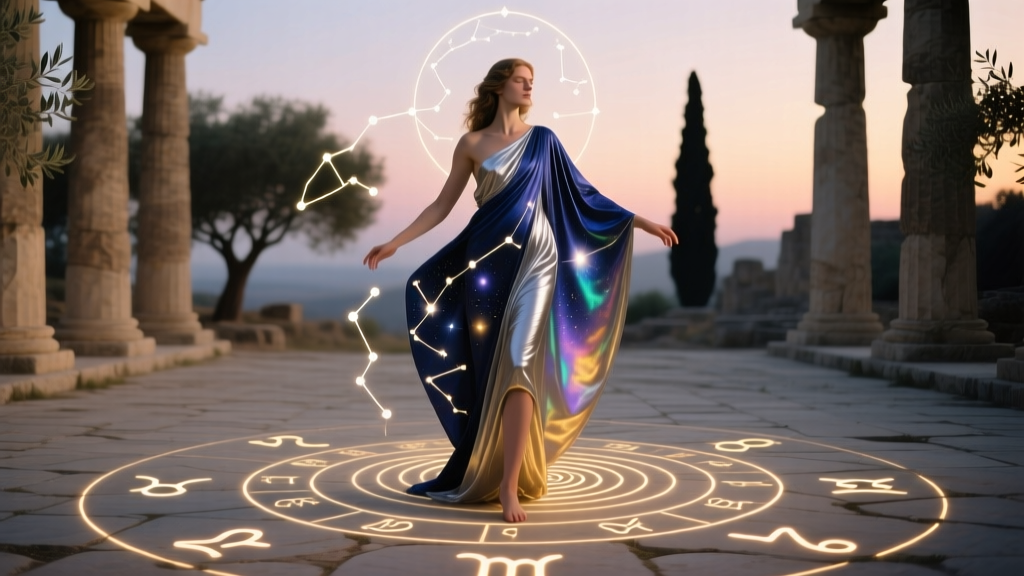
When encountering the search query "Hermes the Greek goddess," classical scholars and mythologists immediately recognize a fundamental categorization error. Hermes is unequivocally a male deity in the Hellenic pantheon—the son of Zeus and the Pleiad Maia, and the herald of the Olympians. However, dismissing this query as a simple mistake ignores the complex evolution of the Hermetic archetype, alchemical traditions, and the fluid nature of divine messengers in esoteric psychology. This expert analysis deconstructs the origins of this gender confusion, explores the androgynous legacy of the Hermetic tradition, and provides actionable frameworks for engaging with this liminal archetype in modern spiritual practice.
The Gender Misconception: Why Search Hermes the Greek Goddess?
The conflation of Hermes with a feminine deity typically stems from three distinct areas of mythological and psychological overlap: phonetic confusion, functional projection, and esoteric syncretism.
First, phonetic similarities often lead beginners in Hellenic polytheism to confuse Hermes with Hera (the queen of the gods) or Hestia (the goddess of the hearth). Second, from a cross-cultural anthropological perspective, the role of the psychopomp—the guide of souls to the underworld—is frequently occupied by feminine figures in global mythologies (e.g., the Norse Valkyries, the Aztec Cihuacoatl, or the folk saint Santa Muerte). Because Hermes serves as the Greek psychopomp, modern seekers often project a feminine archetype onto this liminal function, assuming the guide of the dead must possess a maternal or receptive feminine polarity.
According to the Theoi Greek Mythology Project, classical iconography strictly codes Hermes as male, utilizing the phallic herma (boundary markers) and the kerykeion (caduceus) as symbols of masculine generative power and authority. Yet, the psychological need for a "goddess" of transitions persists, leading seekers toward the deeper, hidden layers of the Hermetic tradition.
Hermaphroditus and the Alchemical Rebis
To understand the feminine echoes within the Hermes archetype, one must examine his offspring. In Ovid’s Metamorphoses, Hermes and Aphrodite conceive Hermaphroditus, a deity who physically embodies both male and female forms after merging with the nymph Salmacis. This myth is not merely an etiological tale; it is the foundational allegory for Western alchemy and Hermetic philosophy.
In alchemical tradition, Hermes Trismegistus (the syncretic combination of the Greek Hermes and the Egyptian Thoth) is the patron of the Magnum Opus (Great Work). The ultimate goal of this spiritual and chemical process is the creation of the Rebis, the divine hermaphrodite. The Rebis represents the syzygy—the perfect union of opposites, integrating the masculine (sulfur/sun) and feminine (mercury/moon) principles into a single, enlightened consciousness. Therefore, while Hermes himself is male, the Hermetic principle he governs is inherently androgynous, requiring the integration of the "goddess" within the seeker's own psyche to achieve spiritual sovereignty.
Olympian Messenger & Liminal Archetypes Compared
To correctly identify the feminine equivalents of Hermes' specific domains, practitioners must look to other deities who govern messages, thresholds, and liminality. The following table maps these functional overlaps:
| Deity | Gender | Primary Domain | Liminal Function |
|---|---|---|---|
| Hermes | Male | Boundaries, Commerce, Thieves | Psychopomp (Guide of Souls) |
| Iris | Female | Rainbows, Sea, Sky | Divine Herald (Olympian Messenger) |
| Hecate | Female | Crossroads, Magic, Necromancy | Liminal Guardian (Threshold Keeper) |
| Sophia | Feminine | Divine Wisdom, Gnosis | Hermetic Counterpart (Esoteric Guide) |
Source: Cross-referenced via the Perseus Digital Library and classical Hellenic texts.
Hermeticism: The Feminine Counterparts in Esoteric Tradition
In the esoteric texts of the Corpus Hermeticum and the Asclepius, the rigid gender binaries of the Olympian pantheon dissolve into abstract cosmic principles. While Hermes Trismegistus acts as the revealer of divine wisdom, the wisdom itself is frequently personified as feminine.
In the Hermetic dialogue Kore Kosmou (The Virgin of the World), Hermes engages in a profound theological discourse with Isis, who here represents the initiated seeker and the feminine embodiment of esoteric knowledge. Furthermore, in Gnostic and later Hermetic traditions, Sophia (Wisdom) acts as the mediating force between the divine mind (Nous) and the material world. When modern seekers search for "Hermes the Greek goddess," they are often intuitively reaching for Sophia or Isis—the feminine wisdom that completes the Hermetic circuit. The messenger (Hermes) is useless without the message of divine wisdom (Sophia).
Pro Tips: Engaging the Liminal Archetype in Spiritual Practice
For spiritual practitioners, astrologers, and shadow-workers, correcting the mythological record does not diminish the power of the archetype; it sharpens it. Working with the Hermetic current requires balancing the active/masculine (Hermes) and receptive/feminine (Sophia/Hecate) poles. Here is an expert framework for utilizing this energy during periods of intense life transition.
Actionable Ritual Framework for Liminal Transitions
Use this framework when navigating career changes, psychological shadow-work, or spiritual awakenings—times when you are "between worlds" and require psychopomp energy.
- Step 1: Threshold Identification (The Hecate Phase)
Locate a physical crossroads or a doorway in your home at twilight (the liminal hour). Acknowledge the boundary you are crossing. Leave an offering of dark wine or honey at the threshold to honor the feminine guardians of the crossroads. - Step 2: Caduceus Visualization (The Alchemical Phase)
During meditation, visualize the caduceus not merely as a medical symbol, but as the central pillar of your nervous system. The two serpents represent the masculine (solar/pingala) and feminine (lunar/ida) currents. Consciously breathe to balance these dual forces, seeking the "Rebis" state of internal equilibrium. - Step 3: The Psychopomp Journey (The Hermes Phase)
Utilize Jungian active imagination. Visualize Hermes in his role as the guide of souls. Ask him to lead you into the unconscious (the underworld) to retrieve a specific repressed trait or lost talent. Record the dialogue immediately upon returning to waking consciousness. - Step 4: Integration via Sophia (The Wisdom Phase)
Translate the retrieved shadow material into actionable wisdom. The Hermetic Library archives suggest that true gnosis is only achieved when the raw data of the underworld is synthesized by the feminine principle of divine wisdom.
Summary of Archetypal Application
While there is no historical "Hermes the Greek goddess," the search intent reveals a profound psychological truth: the modern spiritual seeker requires a holistic, gender-integrated model of the divine messenger. By understanding the male Hermes of antiquity, the androgynous Rebis of alchemy, and the feminine Sophia of Hermeticism, practitioners can access the full spectrum of liminal magic. Mastery of this archetype demands precision in mythology and depth in psychological application, transforming a simple misconception into a gateway for advanced esoteric work.