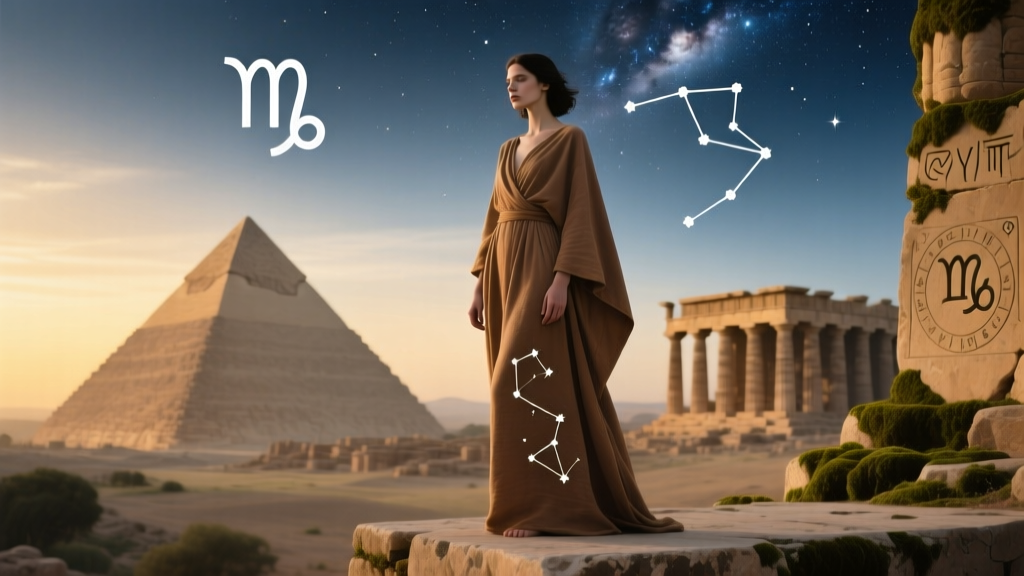
The search for a horoscope aug 27 profile typically yields modern psychological traits, but the true depth of this astrological placement lies in its ancient origins. Individuals born on August 27 fall at approximately 4 to 5 degrees of the sign of Virgo. This specific coordinate in the ecliptic carries thousands of years of astronomical observation, mythological synthesis, and agricultural timing. To understand the foundational blueprint of this date, we must bypass modern pop astrology and examine the Babylonian, Hellenistic, and medieval texts that originally defined the celestial mechanics of late August. This historical analysis reveals how ancient skywatchers mapped the heavens to earthly survival.
The Babylonian Roots: AB.SIN and the Furrow
The astrological framework for late August originates in ancient Mesopotamia, specifically within the MUL.APIN compendium, a Babylonian astronomical text compiled around 1000 BCE but based on observations dating back to 1300 BCE. In this system, the constellation we now call Virgo was known as AB.SIN, meaning "The Furrow." According to Babylonian Horoscopes by Francesca Rochberg, this furrow was intrinsically linked to the goddess Shala, who was depicted holding an ear of barley or grain.
For those born on August 27, the Sun occupies the early degrees of this ancient furrow. Historically, this placement was not about personality quirks; it was an agricultural countdown. The heliacal rising and setting of stars within AB.SIN dictated the exact timing for sowing and harvesting crops in the Tigris-Euphrates river system. The 4th degree of Virgo, where the Sun rests on August 27, represented the initial preparation of the soil—a metaphorical and literal period of sorting, analyzing, and preparing for future yields. This ancient imperative to organize and refine raw materials remains the core psychological driver of the modern Virgo archetype.
Hellenistic Decans and the Horoscope Aug 27 Profile
As Babylonian astrology migrated to Hellenistic Egypt, it merged with the Egyptian system of decans—36 star groups that rose on the eastern horizon every ten days. Hellenistic astrologers like Claudius Ptolemy adapted these decans to divide each zodiac sign into three 10-degree segments. As detailed in Ptolemy's Tetrabiblos and later Hellenistic manuscripts, August 27 falls squarely in the first decan of Virgo (0° to 9°59').
The first decan of Virgo is ruled by Mercury, the planet of intellect, communication, and systemic analysis. This Mercurial sub-rulership amplifies the analytical, detail-oriented nature of the base Virgo sign. The following table illustrates the decan breakdown of Virgo, highlighting the specific planetary influences that shape the horoscope aug 27 profile compared to those born later in the month.
| Decan | Degrees | Planetary Ruler | Historical Attribute |
|---|---|---|---|
| First | 0° - 9°59' | Mercury | Intellectual synthesis, agricultural planning, data sorting |
| Second | 10° - 19°59' | Saturn | Material restriction, structural boundaries, asceticism |
| Third | 20° - 29°59' | Venus | Aesthetic refinement, social diplomacy, artistic harvest |
Because August 27 resides in the Mercury-ruled decan, historical texts describe individuals born on this day as the "architects of the harvest." They were the scribes and accountants of antiquity, tasked with measuring the grain and recording the yields. This translates today into a profound aptitude for systems architecture, data analysis, and logistical management.
Mythological Synthesis: Astraea, Erigone, and Spica
The visual representation of Virgo as a maiden holding a sheaf of wheat is heavily tied to the star Spica (Alpha Virginis). According to Britannica's astronomical archives, Spica is one of the brightest stars in the night sky and historically marked the end of the harvest season in the Mediterranean. While Spica itself sits at roughly 23 degrees of Virgo, the mythological narratives surrounding the entire constellation inform the archetype of all early Virgo placements, including August 27.
Greek mythology offers two primary origin stories for the Virgo constellation. The first identifies her as Astraea, the goddess of justice and innocence. According to Hesiod's Works and Days, Astraea lived among humans during the Golden Age but fled to the heavens in disgust during the Bronze Age, becoming the constellation Virgo. This myth implants a deep-seated sense of moral idealism and a drive for systemic perfection in the August 27 profile.
The second myth identifies the maiden as Erigone, the daughter of Icarius. After Dionysus taught Icarius the art of winemaking, local shepherds mistakenly believed Icarius had poisoned them and killed him. Erigone, guided by her dog Maera, found her father's body and hanged herself in grief. Zeus placed them all in the stars (Virgo, Canis Major/Minor, and Boötes). This darker origin story introduces the themes of service, tragic devotion, and the pursuit of hidden truths that often characterize the psychological depth of those born under this specific degree.
Medieval Astrolabes and the 4th Degree of Virgo
During the Islamic Golden Age and the subsequent European Renaissance, astrology transitioned into a highly mathematical and talismanic discipline. Texts like the 11th-century Ghāyat al-Ḥakīm (translated into Latin as the Picatrix) assigned specific magical and mundane properties to every individual degree of the zodiac.
The 4th degree of Virgo, which the Sun occupies on August 27, was historically categorized as a degree of "acquisition and careful preservation." Medieval astrologers utilized astrolabes to track this precise degree when creating talismans for merchants, scribes, and estate managers. The esoteric tradition dictates that energy accessed through this degree is optimal for auditing resources, drafting binding contracts, and establishing long-term storage solutions. Unlike the expansive, risk-taking degrees of fire signs, the 4th degree of Virgo was strictly associated with risk mitigation and the preservation of capital.
Actionable Framework: Applying Ancient Virgo Wisdom
Understanding the historical and astronomical origins of the August 27 placement allows for highly specific, actionable applications in modern life. By aligning with the original intent of the 4th degree of Virgo and the Mercurial first decan, individuals can optimize their personal and professional strategies.
- Systems Auditing: Schedule deep-dive audits of your financial, digital, or physical environments during late August. The historical energy of the AB.SIN furrow supports the dismantling of inefficient systems and the precise categorization of raw data.
- Contractual Finalization: Leverage the medieval astrological association of the 4th degree for drafting, reviewing, and signing long-term agreements. The Mercurial influence sharpens the ability to detect loopholes and structural weaknesses in legal or professional documents.
- Cognitive Offloading: Because the first decan of Virgo is ruled by Mercury, mental fatigue is a primary vulnerability. Implement strict cognitive offloading protocols (e.g., automated workflows, externalized memory systems like Zettelkasten) to prevent the analytical mind from becoming bottlenecked by minutiae.
- Moral Alignment Checks: Drawing on the Astraea myth, utilize the August 27 solar return or transit periods to evaluate whether your current professional pursuits align with your foundational ethical frameworks. This is the optimal time to abandon projects that compromise systemic integrity.
The historical trajectory of the August 27 horoscope reveals a continuous thread of meticulous preservation, intellectual rigor, and moral idealism. By anchoring modern practices in these ancient astronomical realities, the true utility of the Virgo archetype is fully realized.