The Astronomical and Historical Roots of the Late December Zodiac
When modern seekers query a horoscope december 28, they are typically presented with generic daily forecasts or superficial birthday personality summaries. However, the astrological significance of December 28 extends far beyond contemporary pop astrology and newspaper columns. This date consistently aligns with the 6th to 8th degrees of the tropical Capricorn, a highly specific mathematical and mythological coordinate in the zodiac. To understand the true historical weight of this placement, we must bypass modern psychological archetypes and examine the ancient Mesopotamian, Hellenistic, and Roman frameworks that originally defined this sector of the ecliptic. The history of the late December zodiac sign is a complex tapestry of agrarian cycles, hydrological mythology, and ancient timekeeping.
The Mesopotamian Blueprint: SUḪUR.MAŠ and Enki
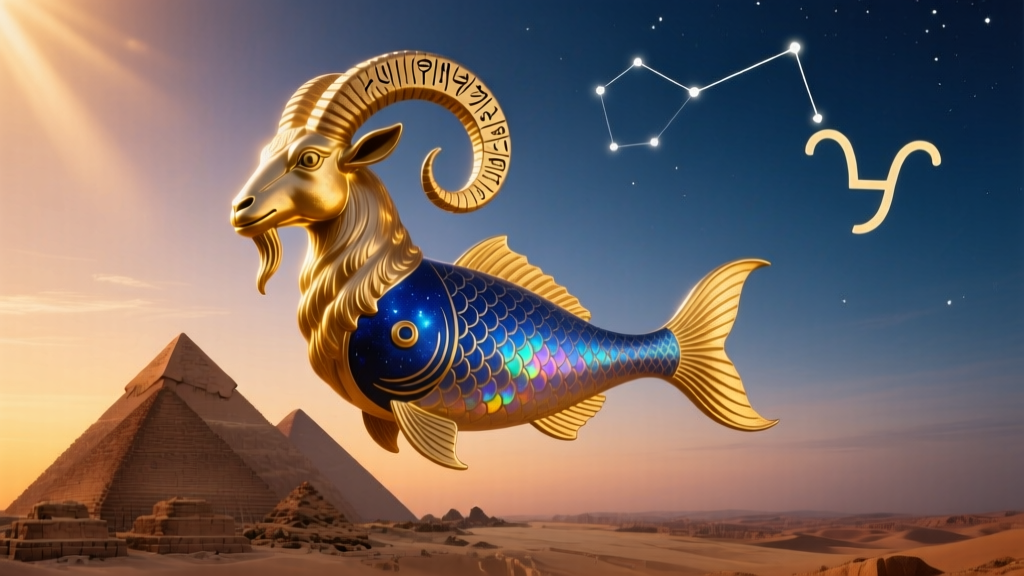
The modern image of Capricorn as a solitary mountain goat is a relatively recent historical deviation. In the ancient Babylonian star catalog known as the MUL.APIN (compiled around 1000 BCE), the constellation was recorded as SUḪUR.MAŠ, the 'goat-fish.' This hybrid creature was not a whimsical mythological accident; it was a profound symbol representing the dual nature of the Mesopotamian landscape, which relied on both the mountain runoff and the fertile river valleys.
The goat-fish was the sacred symbol of Enki (later known as Ea in Akkadian), the Sumerian god of water, knowledge, mischief, crafts, and creation. Enki ruled the Abzu, the primeval subterranean freshwater ocean. According to artifacts preserved by The Metropolitan Museum of Art, Sumerian cylinder seals frequently depict the goat-fish accompanying Enki as he issues the 'me' (the divine decrees of civilization) to humanity. Therefore, the foundational energy of the December 28 birth date is historically rooted in hydrological wisdom, the dissemination of esoteric knowledge, and the structuring of civilization from the depths of the unconscious.
Hellenistic Synthesis and the Myth of Pan
When the Greeks adopted the Babylonian zodiac during the Hellenistic period, they translated SUḪUR.MAŠ into Aigokeros (goat-horned). However, they overlaid their own mythological framework onto the constellation, most notably the myth of Pan. According to the poet Eratosthenes, when the monstrous Typhon attacked the Olympian gods, Pan attempted to escape by diving into the Nile River. In his panic, his transformation was incomplete: his upper half remained a goat, while his submerged lower half became a fish.
While this Greek myth provides a narrative of survival and adaptation, it stripped the constellation of its original Mesopotamian dignity as a supreme creator deity. The Hellenistic astrologers, however, maintained the structural rulership of the sign, assigning it to Kronos (Saturn), the god of time, boundaries, and agricultural harvests. This synthesis created a paradoxical archetype for the late December Capricorn: a creature of deep, chaotic waters ruled by the strict, unyielding lord of time and structure.
Decoding the Horoscope December 28: The 7th Degree of Capricorn
To achieve genuine information gain regarding this specific date, we must analyze the decan system. Originally developed by Egyptian astrologers to track the heliacal rising of stars, the decans were later synthesized into Hellenistic astrology as a method of subdividing the zodiac into 36 ten-degree segments. December 28 typically falls on the 7th degree of Capricorn, placing it firmly in the first decan of the sign.
According to translations of ancient texts preserved by Project Hindsight, the first decan of Capricorn was historically associated with intense labor, the gathering of resources, and the navigation of treacherous environments. The 2nd-century astrologer Vettius Valens noted that this specific sector of the zodiac demanded structural integrity and the burden of foundational responsibility. Unlike the later degrees of Capricorn, which deal with public authority and legacy, the 7th degree is concerned with the unseen, subterranean work required to build a lasting edifice.
| Era | Designation | Ruling Deity/Planet | Core Symbolism & Function |
|---|---|---|---|
| Sumerian (c. 3000 BCE) | SUḪUR.MAŠ | Enki (God of the Abzu) | Hydrological wisdom, creation, esoteric knowledge |
| Babylonian (c. 1000 BCE) | MUL SUḪUR.MAŠ | Ea / Agrarian Cycles | Mountain runoff, river fertility, seasonal transitions |
| Hellenistic (c. 200 BCE) | Aigokeros | Kronos (Saturn) | Structural limits, survival, adaptation, time |
| Roman (c. 100 CE) | Capricornus | Saturn / Solstice Gate | Ascent of souls, winter solstice, boundary of the year |
The Roman Calendar and the Solstitial Gates
The historical context of late December in the Roman Empire further complicates the modern understanding of this horoscope. In the Julian calendar, December 28 fell in the immediate aftermath of the Winter Solstice and the festival of Saturnalia. While Saturnalia (a period of role reversal and chaos) officially ended around December 23, the overarching philosophical theme of Saturn permeated the end of the year.
Macrobius and the Gate of the Gods
The 5th-century Roman philosopher Macrobius, in his seminal work Saturnalia, detailed the esoteric concept of the 'Solstitial Gates.' According to this Neoplatonic and astrological doctrine, Cancer was the 'Gate of Men' (where souls descended into physical incarnation during the summer solstice), while Capricorn was the 'Gate of the Gods' (where souls began their ascent back to the divine realm during the winter solstice). Therefore, the historical and spiritual function of the December 28 Capricorn is not merely about earthly ambition or career climbing, as modern pop astrology suggests. It is fundamentally about spiritual ascent, the shedding of material attachments, and the navigation of the soul's return to the source. This perspective is heavily supported by historical research from The Astrological Association of Great Britain regarding the esoteric traditions of the solstices.
Applying Ancient Capricorn History to Modern Praxis
Understanding the deep historical origins of the December 28 zodiac placement allows for a more rigorous and actionable approach to personal development. By discarding superficial horoscope tropes, individuals born on or interacting with this date can utilize the following historically grounded frameworks:
- Hydrological Shadow Work (The Enki Protocol): Recognize that the Capricornian drive for external success is often a defense mechanism against the chaotic 'Abzu' (the subconscious). Dedicate time to exploring deep emotional currents and esoteric knowledge rather than solely focusing on material structures.
- Structural Auditing (The 7th Degree Mandate): The 7th degree of Capricorn demands foundational integrity. Conduct a rigorous audit of your life's infrastructure—your financial foundations, your physical health routines, and your core belief systems. Repair the subterranean cracks before attempting to build higher.
- Solstitial Alignment (The Gate of the Gods): Utilize the late December period not for initiating new earthly ventures, but for 'ascending' practices. Engage in meditation, philosophical study, and the deliberate release of outdated material obligations to align with the ancient Roman concept of the Capricornian soul-ascent.
- Decanic Timing: When the transiting Moon or Sun activates the 6th to 8th degrees of Capricorn, focus exclusively on solitary, behind-the-scenes labor. Avoid public launches or seeking external validation during this specific astrological weather, as the first decan favors the quiet laying of cornerstones.
The true history of the December 28 horoscope reveals a profound archetype: the architect of civilization who draws blueprints from the depths of the unconscious, governed by the relentless march of time, and oriented toward the ultimate ascent of the human spirit.