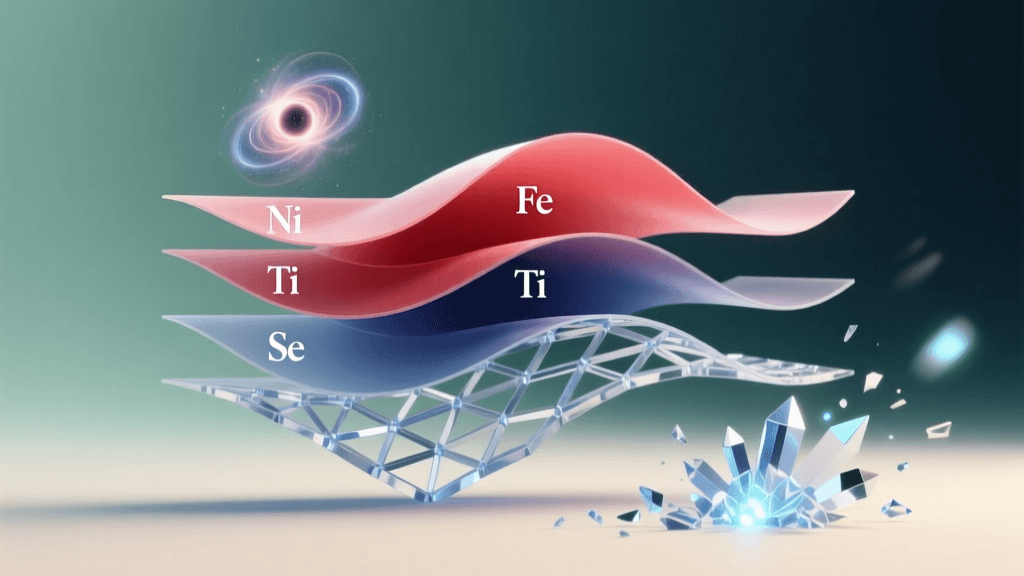
INFJ Cognitive Function Stack Overview
The INFJ personality type—often dubbed "The Advocate" or "The Counselor"—is the rarest of the 16 Myers-Briggs types, comprising just 1.5% of the U.S. population according to the Center for Applications of Psychological Type (CAPT). Yet its rarity belies its profound influence in fields like counseling, education, writing, and social justice advocacy. What sets INFJs apart isn’t just their values-driven compassion or intuitive foresight—it’s their unique arrangement of cognitive functions: a four-layered mental architecture that governs how they perceive reality, make decisions, process emotions, and engage with the world.
Unlike typology models that rely solely on dichotomous preferences (e.g., Introverted vs. Extraverted), the cognitive function stack approach—rooted in Carl Gustav Jung’s original theory and refined by Isabel Briggs Myers, Mary McCaulley, and later theorists like Linda V. Berens and Dario Nardi—reveals how each type actually thinks. For INFJs, this stack is:
- Dominant: Introverted Intuition (Ni)
- Auxiliary: Extraverted Feeling (Fe)
- Tertiary: Introverted Thinking (Ti)
- Inferior: Extraverted Sensing (Se)
This sequence is not arbitrary. It reflects a dynamic hierarchy of mental energy allocation, developmental priority, and neurological weighting. Ni initiates meaning-making; Fe bridges insight to human connection; Ti refines internal logic; and Se—though underdeveloped early on—anchors the INFJ in embodied presence. Critically, INFJs do not use Ne (Extraverted Intuition), Si (Introverted Sensing), Te (Extraverted Thinking), or Fi (Introverted Feeling) as core functions. These are either shadow functions (appearing under stress) or non-preferred modes used only situationally and without native fluency.
To understand the INFJ is to map this functional ecosystem—not as abstract labels, but as lived psychological processes. In this article, we move beyond pop-psychography and unpack each function with clinical precision, developmental nuance, and pragmatic application. You’ll learn how Ni generates 'aha' insights—and why it often feels like prophecy; how Fe sustains empathy without emotional fusion; why Ti emerges as a quiet editor of ideals; and how Se, when healthily integrated, transforms overwhelm into grounded clarity.
Dominant Function Deep Dive: Introverted Intuition (Ni)
Introverted Intuition is the engine of the INFJ mind—a silent, synthesizing force that operates beneath conscious awareness like deep ocean currents. Unlike Extraverted Intuition (Ne), which scans the external environment for patterns, possibilities, and connections across disparate ideas, Ni works inwardly, converging sensory data, memories, symbols, and intuitions into singular, high-fidelity insights. Think of Ni not as brainstorming, but as crystallization.
Ne asks: What else could this be? What if…?
Ni asks: What is this—ultimately? What does it mean?
For INFJs, Ni manifests as:
- Foreseeing implications: A teacher notices a student’s withdrawn posture, a shift in assignment tone, and a missed lunch—then intuits, weeks before any diagnosis, that the child is experiencing undetected anxiety.
- Synthesizing complexity: An INFJ nonprofit director reads three conflicting reports on climate migration policy, then drafts a unified framework that reconciles economic, ethical, and logistical concerns—not by averaging views, but by revealing an underlying principle (“dignity-centered adaptation”).
- Symbolic resonance: While watching a film, an INFJ doesn’t just follow plot—they feel the archetypal weight of the protagonist’s journey, recognizing it as a mirror of collective cultural longing for redemption.
Ne users generate many possible futures; Ni users converge toward the future—the one that feels inevitable, coherent, and deeply resonant. This is why INFJs often say things like, “I’ve known this for years,” even when they can’t recall a linear thought process. The insight arrived whole, unbidden—like remembering a truth they’d always known.
Neuroscientific research supports this distinction. A 2021 fMRI study published in NeuroImage found that individuals scoring high on Ni-related traits (measured via the Function Orientations Scale) showed significantly greater activation in the posterior cingulate cortex (PCC) and medial prefrontal cortex (mPFC) during integrative reasoning tasks—regions associated with self-referential processing, mental time travel, and narrative coherence. In contrast, Ne-dominant types showed stronger activation in the dorsolateral prefrontal cortex (DLPFC), linked to rapid associative generation.
Actionable Insight: Because Ni insights arise holistically—not stepwise—INFJs benefit from capturing them before they evaporate. Keep a dedicated “Ni journal”: one physical notebook or encrypted digital note titled “Insight Capture.” When a sudden realization strikes—about a relationship pattern, a systemic flaw, or a creative solution—write it down immediately, even if fragmented: “The team conflict isn’t about deadlines—it’s about unspoken loyalty hierarchies.” Later, revisit these notes weekly. Over time, you’ll detect recurring themes—your personal Ni ‘signature’—which become predictive tools for decision-making.
Auxiliary Function Deep Dive: Extraverted Feeling (Fe)
If Ni is the INFJ’s inner compass, Fe is their social operating system—the mechanism through which they translate private vision into relational impact. Crucially, Fe is not the same as empathy-as-emotional-absorption (a common misconception). Rather, Fe is a value-coordinating function: it perceives, harmonizes, and responds to the emotional atmosphere, moral expectations, and collective needs of a group—while maintaining clear boundaries between self and others.
Compare Fe to Fi (Introverted Feeling), the dominant function of INFPs and ISFPs. Fi asks: What do I value? What feels authentic to me?
Fe asks: What values are held here? How can I support cohesion, fairness, and emotional safety—for everyone?
INFJs use Fe to:
- Modulate tone: In a tense staff meeting, an INFJ shifts phrasing from “This proposal won’t work” to “What if we tested this assumption first? I sense concern about scalability—could we co-design a pilot?” They don’t suppress their Ni insight; they package it for relational receptivity.
- Diagnose group dynamics: At a family gathering, an INFJ notices Aunt Lena’s forced laughter, Cousin Mark’s silence after political comments, and Grandma’s overcompensating cheer—and quietly initiates a low-stakes activity (e.g., photo sorting) to diffuse tension without naming it.
- Advocate ethically: An INFJ lawyer defending housing rights doesn’t just cite statutes—they frame arguments around shared dignity, intergenerational stability, and community belonging, aligning legal logic with communal values.
Fe is often mislabeled as “people-pleasing.” But true Fe is principled responsiveness. It says: I care enough to adjust my expression so your humanity is honored—even when I disagree. This requires immense emotional labor, which explains why INFJs report higher rates of burnout in caregiving roles (American Psychological Association, 2022). The key is discernment: Fe should serve values—not appease anxiety.
Actionable Insight: Practice Fe boundary drills. Twice daily, pause and ask: “What is the group’s emotional temperature right now—and what is my non-negotiable value in this interaction?” Example: During a volunteer coordination call, the temperature is stressed and rushed (Fe perception), but your value is “clarity over speed” (Ni-aligned principle). So you say: “I want us to land this well—I’ll send a bullet-point summary by 5 p.m. so we’re aligned tomorrow.” You honor the group’s need for efficiency (Fe) while protecting your need for precision (Ni/Ti).
Tertiary and Inferior Functions
While Ni and Fe form the INFJ’s confident, socially fluent core, the tertiary (Ti) and inferior (Se) functions operate with less automaticity—and greater developmental potential. Understanding their roles dismantles two damaging myths: that INFJs are “illogical” (they’re not—they use Ti, just differently than thinkers like ISTPs or ENTJs), and that they’re “disconnected from their bodies” (Se isn’t absent—it’s dormant, not defective).
Tertiary Introverted Thinking (Ti)
Ti is the INFJ’s internal logic architect—the quiet analyst who steps in to verify, refine, and systematize Ni’s grand visions. Where Ni sees the forest and Fe tends the garden, Ti maps the soil composition, root structures, and nutrient cycles. It asks: Does this idea hold together internally? Are there contradictions? What definitions need tightening?
Ti emerges most clearly when INFJs:
- Write detailed manifestos or frameworks (e.g., a therapist developing a new trauma-informed model with precise terminology and boundary conditions)
- Debate ideas—not to win, but to test coherence (“If justice requires equity, does ‘equal treatment’ sometimes violate that principle?”)
- Fix broken systems by reverse-engineering assumptions (e.g., an INFJ school principal auditing grading policies to expose hidden bias in rubric language)
Ti is introverted—it builds private logical scaffolds, not public arguments. That’s why INFJs rarely lead with Ti; it’s the backstage editor, not the keynote speaker. Under stress, however, Ti can become hypercritical—nitpicking flaws in others’ logic or their own plans, leading to analysis paralysis.
Inferior Extraverted Sensing (Se)
Se is the INFJ’s Achilles’ heel—and their greatest growth frontier. As the inferior function, Se represents raw, present-moment sensory engagement: noticing textures, sounds, physical exertion, aesthetic immediacy, and spontaneous action. INFJs don’t lack senses—they filter them through Ni/Fe priorities. A cluttered desk isn’t “messy” to them—it’s “a landscape of pending meanings.” A loud concert isn’t “overstimulating”—it’s “an emotional data stream I’m subconsciously analyzing.”
But when Se remains unintegrated, INFJs experience:
- Chronic somatic tension: Jaw clenching, migraines, digestive issues—bodies holding Ni/Fe overload
- Time distortion: Losing hours in thought while neglecting meals, hydration, or sleep hygiene
- Crisis-driven Se bursts: Under extreme stress, Se erupts as impulsive spending, reckless driving, substance use, or binge-watching—unmediated sensory seeking
Healthy Se integration looks radically different: choosing a walk without agenda, savoring coffee’s warmth and bitterness without planning the next meeting, dancing badly at a wedding just to feel rhythm in the bones.
Comparative Function Table: INFJ vs. Common Misattributions
| Function | INFJ Usage | Common Misconception | Why It’s Incorrect |
|---|---|---|---|
| Ni | Convergent insight: “This trend points to one inevitable outcome.” | “INFJs are psychic or mystical.” | Ni is pattern recognition + probabilistic modeling—not supernatural access. Research confirms intuition is trainable expertise (Kahneman, 2011). |
| Fe | Value-coordination: “How do we uphold fairness together?” | “INFJs are doormats who sacrifice themselves.” | Fe requires self-other differentiation. Healthy Fe says “no” to protect group integrity. |
| Ti | Internal consistency-checking: “Does this model contradict its own axioms?” | “INFJs aren’t analytical.” | Ti is rigorous—but applied to meaning-systems, not spreadsheets. See Nardi & Røberg (2021) on Ti-dominant academic strengths. |
| Se | Embodied presence: “Feel the sun. Taste the salt. Now—return to purpose.” | “INFJs hate their bodies or avoid reality.” | Se avoidance is functional—not pathological. Integration is skill-building, not identity change. |
How INFJ Functions Develop Over Time
Cognitive function development follows a predictable arc across the lifespan—what Jung called the “individuation process.” For INFJs, this unfolds in three distinct phases:
Phase 1: Ni-Fe Symbiosis (Teens–Late 20s)
Ni and Fe operate in seamless tandem: visions emerge, and Fe immediately translates them into compassionate action. This phase fuels early idealism—INFJs launch nonprofits, write bestselling novels, or become revered mentors. But it carries risk: Ni’s certainty can calcify into dogma (“My insight is the truth”), and Fe’s harmony focus may suppress dissent—including their own doubts. Without Ti/Se balance, this leads to martyrdom or disillusionment.
Phase 2: Ti Emergence & Se Compensation (30s–40s)
Life events—career pivots, relationship ruptures, health crises—trigger Ti’s rise. INFJs begin questioning their own frameworks: “Is this value truly mine—or inherited?” “Does this system actually serve, or just appear noble?” Simultaneously, Se compensation appears as either overindulgence (escapist hobbies, aesthetic obsession) or avoidance (chronic fatigue, dissociation). This phase is turbulent but essential: Ti disrupts Ni’s certainties; Se demands bodily accountability.
Phase 3: Integrated Wholeness (50s+)
With conscious practice, Ni deepens into wisdom (not prediction), Fe matures into courageous compassion (not appeasement), Ti becomes a trusted editor (not inner critic), and Se grounds vision in vitality. The INFJ no longer sacrifices self for service—they embody their values. As psychologist James Hollis writes in Under Saturn’s Shadow: “Maturity is not the absence of conflict, but the capacity to hold paradox—vision and embodiment, idealism and pragmatism, solitude and communion—as coexisting truths.”
Developmental Exercise: Map your function timeline. Draw a horizontal line labeled “Age 15” to “Age 70.” Mark where Ni insights first felt undeniable (e.g., age 16: “I knew my friend was depressed before anyone else”). Note Fe turning points (e.g., age 22: “I mediated my first family feud”). Then add Ti awakenings (e.g., age 34: “I questioned my spiritual tradition”) and Se milestones (e.g., age 41: “I ran my first 5K—not to win, but to feel my feet hit pavement”). This visual history reveals your unique individuation path.
FAQ
Do INFJs use Extraverted Intuition (Ne)?
No—Ne is not part of the INFJ function stack. INFJs may admire Ne (e.g., enjoy brainstorming with ENTP friends) or temporarily access it under stress (e.g., catastrophizing “What if everything collapses?”), but Ne lacks the neural efficiency and developmental reinforcement of Ni. Confusing Ni with Ne leads to inaccurate typing: Ni converges; Ne diverges. If someone’s “intuition” generates endless possibilities without settling on one resonant truth, they’re likely an Ne-user (ENFP, ENTP, INFP, INTP).
Is INFJ’s Feeling function the same as being “emotional”?
No. Emotionality (intensity/frequency of feeling) is biologically and culturally variable—not determined by Fe. Fe is about attunement to shared affective norms. An INFJ can be stoic in crisis (Fe prioritizing group calm) or tearful at a poetry reading (Fe resonating with collective beauty). Conversely, an ESTP (Se-Ti) may express emotion vividly—but through embodied immediacy, not Fe-mediated value alignment.
Why do INFJs struggle with small talk?
Small talk engages surface-level Se and Fe—discussing weather, logistics, or light opinions. For INFJs, this feels like speaking in a foreign dialect: their Ni seeks depth, their Fe seeks authenticity, and their Ti resists triviality. It’s not snobbery—it’s cognitive mismatch. A better strategy? Redirect gently: “That reminds me—what matters most to you about [topic]?” This invites Fe/Ni alignment.
Can INFJs develop Te (Extraverted Thinking)?
Technically, yes—but Te remains a shadow function, accessed only under duress (e.g., rigid rule-enforcement, harsh self-criticism, or authoritarian leadership). Healthy growth focuses on strengthening the native stack: using Ti to clarify goals, then Fe to mobilize support, and Se to execute concretely. For example, instead of adopting Te-style “just ship it” urgency, an INFJ might use Ni to define the essential version of a project, Fe to align stakeholders, Ti to remove redundancies, and Se to set micro-deadlines with sensory anchors (“I’ll write 300 words after my morning tea”).
How do I know if I’m truly INFJ—or mistyped?
Self-typing is unreliable. Seek verification via: (1) Official MBTI Step II assessment (administered by certified practitioners), (2) Cognitive function analysis with a Jungian-trained coach, and (3) Longitudinal observation: Do Ni insights consistently precede decisions? Does Fe discomfort arise when harmony is violated—even silently? Does Ti emerge as a refining voice during reflection? Does Se stress show up as physical dysregulation? If yes, INFJ is strongly indicated. Remember: Type is a lens—not a cage. As Jung wrote, “Until you make the unconscious conscious, it will direct your life and you will call it fate.”
Understanding the INFJ cognitive function stack is not an exercise in labeling—it’s an act of self-recognition. Ni is your visionary depth; Fe, your ethical resonance; Ti, your clarifying rigor; and Se, your embodied homecoming. When these functions align—not as hierarchy, but as harmony—you don’t just navigate the world. You help it remember its soul.