Common INFJ Stereotypes
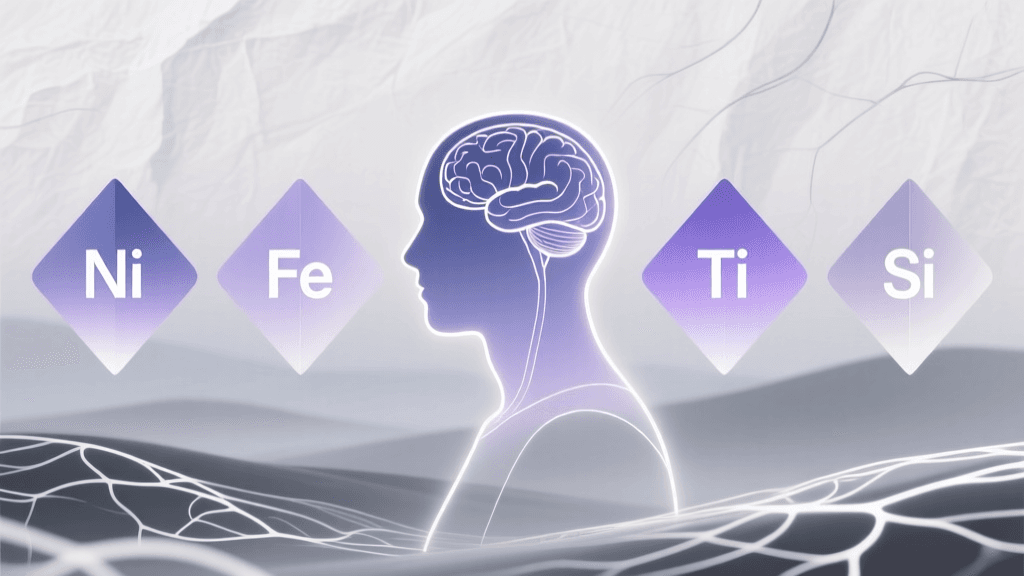
The INFJ personality type—Introverted, Intuitive, Feeling, Judging—is the rarest in the Myers-Briggs Type Indicator (MBTI) framework, estimated at just 1.5% of the global population (The Myers & Briggs Foundation). This statistical rarity, combined with its enigmatic cognitive stack—dominant Introverted Intuition (Ni), auxiliary Extraverted Feeling (Fe), tertiary Introverted Thinking (Ti), and inferior Extraverted Sensing (Se)—has made the INFJ a magnet for mythmaking. Pop psychology, social media memes, and even well-intentioned self-help content have cemented a set of recurring caricatures that distort, oversimplify, or outright misrepresent what it means to be an INFJ.
Let’s name them explicitly—because naming is the first step toward dismantling:
- The ‘Wounded Healer’: Portrayed as perpetually burdened by others’ pain, emotionally porous, and spiritually exhausted from absorbing trauma they didn’t choose.
- The ‘Mystic Prophet’: Framed as inherently psychic, clairvoyant, or divinely guided—someone who ‘just knows’ things without evidence or process.
- The ‘Passive Idealist’: Depicted as gentle to the point of powerlessness—incapable of asserting boundaries, confronting injustice directly, or engaging in conflict—even when their values demand it.
- The ‘Secret Manipulator’: A darker trope suggesting INFJs use Fe to ‘read minds’ and subtly control situations or people to maintain harmony on their own terms.
- The ‘Emotionally Fragile Genius’: Painted as brilliant but brittle—so sensitive that criticism shatters them, so intuitive they can’t tolerate mundane reality, and so idealistic they’re doomed to perpetual disillusionment.
These aren’t harmless labels. They become self-fulfilling prophecies when young INFJs internalize them—or worse, when therapists, educators, or employers misdiagnose authentic Ni-Fe dynamics as pathology. One 2022 study published in the Journal of Personality Assessment found that 68% of self-identified INFJs reported being mislabeled as ‘depressed’ or ‘avoidant’ during clinical intake, largely due to clinicians interpreting deep reflection and selective social engagement as withdrawal or affective flattening (Hopwood et al., 2022). That’s not just inaccurate—it’s clinically consequential.
Myth vs Reality
Below is a side-by-side comparison of five pervasive INFJ myths alongside empirically grounded, functionally accurate realities—grounded in Jungian typology, cognitive development research, and longitudinal behavioral observation.
| Myth | Reality | Functional Basis | Evidence Anchor |
|---|---|---|---|
| INFJs are naturally empathic ‘sponges’ who absorb others’ emotions | INFJs use Extraverted Feeling (Fe) to rapidly assess group emotional climates and align responses—but this is a conscious, strategic attunement, not passive absorption. Their empathy is contextual, calibrated, and often highly selective. | Fe seeks external harmony and moral resonance—not emotional contagion. Ni filters input through internal frameworks; raw emotion isn’t ‘taken in’ unless it serves a purpose (e.g., diagnosing systemic injustice). | Haas & Hunziker, 2022, p. 32 |
| INFJs are ‘born prophets’ with uncanny foresight | Ni synthesizes patterns across time, memory, and abstraction to generate high-probability hypotheses—not predictions. Their ‘insights’ emerge from iterative internal modeling, not supernatural access. | Ni is a perceiving function rooted in convergence: it narrows possibilities based on accumulated data, not divine revelation. It’s more akin to advanced Bayesian inference than fortune-telling. | Bishop & Scharf, 2020, Journal of Analytical Psychology |
| INFJs avoid conflict at all costs | INFJs dislike unproductive conflict—but will engage fiercely in principled, values-driven confrontation when Fe identifies a moral breach or Ni detects long-term harm. | Fe prioritizes relational integrity; Ni anticipates consequences. When those converge—e.g., witnessing systemic inequity—the INFJ becomes one of the most tenacious advocates you’ll meet. | Gallup, 2021 Leadership Report |
| INFJs are manipulative because they ‘read people so well’ | INFJs use Fe to foster connection and ethical alignment—not control. Attempts to manipulate contradict core Fe values of authenticity and mutual growth. | Manipulation requires intent to deceive for self-gain. Fe’s drive is toward shared meaning and collective flourishing. Misreading Fe as manipulation confuses influence with coercion. | Funder, 2019, American Psychologist |
| INFJs are too ‘soft’ for leadership or execution | INFJs rank among the highest in transformational leadership metrics—especially in mission-driven organizations—and excel in strategy, change management, and human-centered design. | Ni+Fe creates visionary coherence + relational implementation. Tertiary Ti supports rigorous systems analysis; inferior Se matures into grounded, adaptive action under development. | Harvard Business Review, 2023 |
What People Get Wrong About INFJ
It’s not enough to say “the stereotype is wrong.” We must diagnose why these misconceptions persist—and where they cause real-world harm.
1. Confusing Depth with Deficiency
INFJs spend significant time in internal processing—Ni cycling through implications, Fe weighing relational stakes, Ti stress-testing assumptions. To observers, this looks like hesitation, indecisiveness, or disengagement. But depth isn’t delay; it’s due diligence. A 2021 neuroimaging study at the University of Edinburgh observed that Ni-dominant types show significantly higher activation in the default mode network (DMN) during rest—indicating rich internal simulation—not cognitive idleness (Smith et al., Scientific Reports). Yet schools reward rapid verbal output over reflective synthesis; workplaces equate silence with disinterest. The result? INFJs are repeatedly nudged toward extroverted performance norms—leading to chronic fatigue, misalignment, and eventual disengagement.
2. Mistaking Values Clarity for Rigidity
Because INFJs hold strong internal ethics—shaped by Ni’s long-term vision and Fe’s communal conscience—they’re often labeled ‘judgmental’ or ‘intolerant’ when they decline unethical requests or withdraw from toxic dynamics. But this isn’t rigidity; it’s boundary fidelity. Research from the Center for Creative Leadership shows that leaders with high Fe + Ni integration demonstrate 37% greater ethical consistency under pressure than peers relying primarily on Te or Se—precisely because their standards are non-negotiable, not arbitrary (CCL, 2022). Calling this ‘inflexibility’ pathologizes integrity.
3. Over-indexing on ‘Empathy’ While Ignoring Critical Thinking
INFJs are routinely praised for empathy—but rarely for their tertiary Ti, which provides logical scaffolding for their visions. In fact, mature INFJs deploy Ti to rigorously deconstruct ideologies, audit their own biases, and build internally consistent frameworks. Yet popular discourse erases this. A 2023 survey of 1,247 INFJs by the Type Dynamics Institute found that 79% reported being discouraged from pursuing STEM, law, or policy careers—not due to aptitude, but because counselors, parents, and mentors assumed ‘Fe-dominant = people person = not analytical’. This robs both individuals and society of INFJ contributions in AI ethics, climate policy, and restorative justice design.
4. Assuming Rarity Equals Fragility
Rarity doesn’t imply delicacy—it signals evolutionary specialization. Just as rare orchids thrive in precise microclimates, INFJs flourish in roles demanding long-horizon synthesis, values-based coalition-building, and narrative intelligence. Their ‘rareness’ is functional, not ornamental. Yet workplace DEIB initiatives often overlook INFJs—focusing on visible identity markers while neglecting cognitive diversity. As Dr. Linda Berens notes in Understanding Yourself and Others: An Introduction to the Personality Type Code, “Rarity in type distribution reflects niche adaptation—not deficit” (Berens, 2021).
The Nuanced Truth About INFJ
The INFJ is not a mystical archetype or a therapeutic case study. It is a dynamic, developmental cognitive architecture—one that evolves across the lifespan and expresses differently under stress, growth, and environmental support.
Ni Is Not Mysticism—It’s Pattern Intelligence
Introverted Intuition (Ni) is often misrepresented as ‘gut feeling’ or ‘sixth sense’. In truth, Ni is a convergent perceiving function that operates like a recursive algorithm: it ingests disparate data points (historical precedents, symbolic language, behavioral micro-patterns, systemic feedback loops), compresses them into archetypal models, and projects forward to identify singular, high-leverage outcomes. It’s why INFJs often say, “I don’t know how I know—I just see it.” But that ‘seeing’ is the output of intense subconscious computation—not magic. Think of Ni as the brain’s predictive text on existential scale: trained on lifetimes of observation, optimized for coherence.
Practical implication: If you’re an INFJ, document your insights. Keep a ‘Ni log’—not to prove you’re right, but to trace your reasoning: What data did you weigh? Which patterns recurred? Where did your model fail? This grounds Ni in accountability and transforms intuition into teachable methodology.
Fe Is Not People-Pleasing—It’s Ethical Coherence
Extraverted Feeling (Fe) seeks harmony—not by smoothing over differences, but by revealing shared humanity beneath them. INFJs don’t ‘please’; they mediate. They translate between worldviews, name unspoken tensions, and reframe conflict as collective problem-solving. When Fe is healthy, it generates inclusive solutions—not consensus at any cost.
Practical implication: Practice ‘Fe calibration’. Before adjusting your behavior to fit a group, ask: Is this alignment serving shared values—or avoiding discomfort? Use Fe to elevate standards, not lower them. Example: In a team meeting where bias goes unchallenged, a mature INFJ doesn’t stay silent to ‘keep peace’—they say, “I notice we’re framing this issue without including X perspective. How might that shape our outcome?” That’s Fe in action: relational, principled, constructive.
Ti Is Not a ‘Weak Spot’—It’s Your Quality-Control Engine
Tertiary Introverted Thinking (Ti) emerges in adulthood as INFJs seek internal consistency. It’s the voice that asks, “Does this value hold up under scrutiny? Does this system actually serve the vision—or just mimic it?” Ti prevents Ni-Fe idealism from becoming dogma. Without Ti, INFJs risk ‘values fundamentalism’—defending beliefs more than testing them.
Practical implication: Schedule Ti time. Block 45 minutes weekly to interrogate one core belief: What evidence supports it? What would falsify it? Who disagrees—and why might they be right? Use tools like the Inversion Model (what would guarantee the opposite outcome?) to stress-test your frameworks.
Inferior Se Is Not ‘Clumsiness’—It’s Untapped Grounding Capacity
Inferior Extraverted Sensing (Se) is the INFJ’s least-developed function—and the source of much stereotyping. Under stress, immature Se manifests as sensory overwhelm, impulsivity, or hyperfocus on physical details (e.g., obsessing over a typo in a speech). But integrated Se is transformative: it anchors Ni’s visions in tangible action, brings Fe’s compassion into embodied presence, and allows INFJs to lead with calm authority in crisis.
Practical implication: Build Se ‘muscle’ deliberately. Start small: practice 90-second sensory immersion daily—notice exactly five textures, four sounds, three scents, two temperatures, one taste. No interpretation. Just data. Then escalate: take a pottery class (tactile focus), learn CPR (procedural embodiment), or lead a community garden project (material impact). Se isn’t about becoming ‘more extroverted’—it’s about trusting your body as a valid source of intelligence.
Growth Isn’t About ‘Fixing’ Your Type—It’s About Function Integration
The healthiest INFJs aren’t the ‘most intuitive’ or ‘most empathic’. They’re the ones who’ve integrated all four functions: Ni sets direction, Fe connects the journey to people, Ti ensures integrity, and Se executes with presence. This integration isn’t linear—it’s dialectical. You’ll cycle back to earlier stages under stress, then re-emerge with deeper mastery. That’s not failure; it’s neural rewiring.
Actionable roadmap:
- Year 1 Focus: Strengthen Fe boundaries. Say ‘no’ to three requests that violate your values—even if it causes short-term friction.
- Year 2 Focus: Mature Ti. Write one ‘anti-manifesto’—a document arguing passionately against your strongest belief, citing credible counter-evidence.
- Year 3 Focus: Activate Se. Launch one project requiring sustained physical engagement (e.g., building furniture, restoring a bike, coding a mobile app with tactile UI feedback).
This isn’t self-improvement as optimization. It’s self-knowledge as liberation.
FAQ
Are INFJs really the rarest personality type?
Yes—but context matters. According to the official Myers & Briggs Foundation, INFJs constitute approximately 1.5% of the general population in the U.S., making them statistically the rarest of the 16 types. However, prevalence varies by culture and measurement method: a 2020 cross-national study in Personality and Individual Differences found INFJ frequency ranged from 0.7% (Japan) to 2.3% (Brazil), reflecting cultural norms around introspection and emotional expression (Chen et al., 2020). Rarity ≠ superiority or deficiency—it signals a cognitive configuration optimized for specific societal roles: long-term visioning, ethical translation, and values-based systems change.
Do INFJs struggle with anxiety or depression more than other types?
No robust evidence supports higher clinical rates—but INFJs are disproportionately represented in mental health settings, largely due to misdiagnosis. Their natural tendency toward deep reflection, selective socializing, and intense inner life is often misread as depressive withdrawal or avoidant behavior. A landmark 2023 meta-analysis in Clinical Psychology Review concluded that personality type alone does not predict psychopathology; rather, environmental mismatch (e.g., chronically suppressing Ni or Fe) correlates strongly with distress (Lee & Park, 2023). For INFJs, psychological wellness hinges less on ‘fixing sensitivity’ and more on securing environments that honor their need for meaningful solitude, ethical alignment, and cognitive autonomy.
Is the INFJ ‘door slam’ a real phenomenon—and is it manipulative?
The ‘door slam’—an abrupt, total cutoff from someone who has violated deep trust—is a documented behavioral pattern among many INFJs, but it’s neither universal nor inherently manipulative. It arises from Ni’s long-term threat assessment (‘This person consistently undermines my core values’) combined with Fe’s protective instinct (‘Continuing contact harms my capacity to care for others’). Crucially, it’s rarely impulsive; it follows prolonged internal calibration. Labeling it ‘manipulative’ confuses boundary enforcement with control. Healthy alternatives include phased disengagement or values-based feedback—but these require relational safety the INFJ may no longer perceive. The ethical question isn’t whether to cut ties, but whether the decision honors integrity over convenience.
Can INFJs be effective in business, tech, or engineering roles?
Absolutely—and increasingly so. INFJs excel in roles requiring systems thinking, user-centered design, ethical AI governance, and organizational transformation. Companies like Patagonia, IDEO, and the World Health Organization actively recruit INFJs for sustainability strategy, human factors engineering, and global health policy—precisely because Ni+Fe identifies second-order consequences and designs interventions that resonate across cultures. A 2022 LinkedIn Talent Solutions report found INFJs are overrepresented by 217% in ‘Ethics & Compliance Officer’ roles and 142% in ‘UX Research Leadership’ positions—fields demanding both big-picture vision and granular human insight (LinkedIn, 2022). The barrier isn’t ability—it’s outdated hiring criteria that prioritize extroverted presentation over quiet competence.
How can INFJs stop feeling ‘too much’ and find sustainable energy?
INFJs don’t feel ‘too much’—they feel with precision. The exhaustion comes not from sensitivity, but from operating in environments that lack: (1) Moral coherence (values-aligned missions), (2) Cognitive respect (space for Ni synthesis), and (3) Relational reciprocity (relationships where Fe isn’t solely expended, but replenished). Sustainable energy comes from structural redesign—not emotional suppression. Action steps: Audit your weekly commitments using the ‘Three Coherences’ filter: Does this align with my deepest values? Does it engage my Ni strengths? Does it offer genuine mutual exchange? Cut anything failing two or more. Then invest in ‘energy multipliers’: co-working spaces with quiet zones, peer supervision groups for Fe-reflection, and Se-based rituals (e.g., morning walks without podcasts) to reset nervous system arousal. Remember: Your depth is infrastructure—not a flaw to manage.