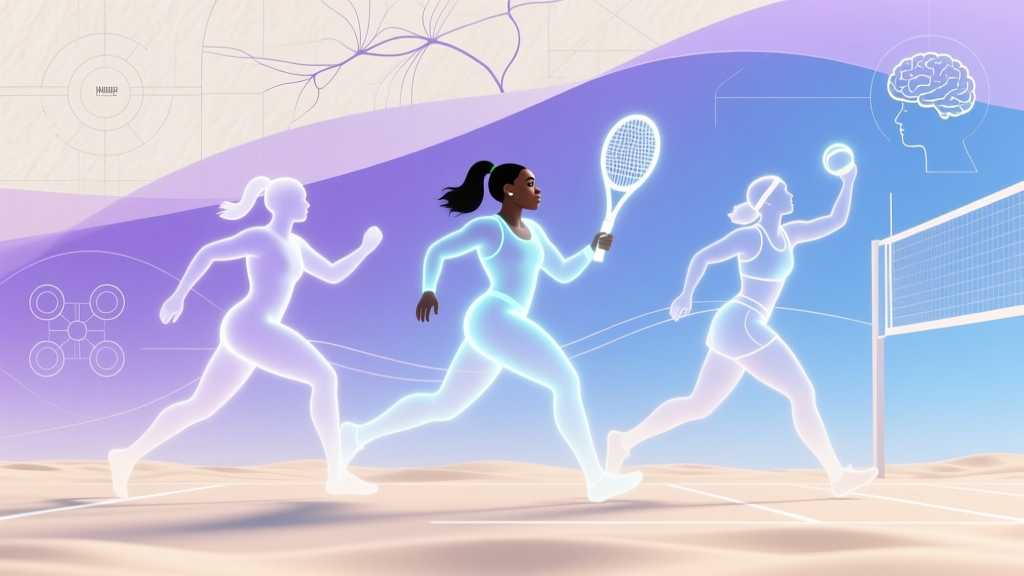
INFP Competitive Style
The INFP personality type—Introverted, Intuitive, Feeling, Perceiving—is often stereotyped as the 'Dreamer' or 'Healer' in psychological typology literature. In popular discourse, INFPs are associated with poetry, activism, and quiet introspection—not podium finishes, Olympic medals, or championship rings. Yet a growing body of evidence from sports psychology, athlete interviews, and longitudinal performance analysis reveals that INFPs not only compete at the highest levels—they do so with a distinct, values-driven competitive signature that challenges conventional notions of athletic success.
Unlike dominant ESTP or ENTJ archetypes often highlighted in sports media—types characterized by decisive action, tactical pragmatism, and external validation—the INFP competitor operates from an internal compass. Their motivation is rarely rooted in dominance, rivalry, or public acclaim alone. Instead, INFP athletes define competition through meaning-making: What does this sport represent for me? How does my performance align with my ethics? Can I express authenticity—even under pressure?
This intrinsic orientation manifests in several hallmark traits:
- Values-Based Goal Setting: INFPs prioritize goals that resonate with personal ideals—e.g., using platform visibility to advocate for mental health (Simone Biles), promoting gender equity (Billie Jean King), or modeling sustainable athleticism across decades (Kerri Walsh Jennings).
- Emotionally Intelligent Pressure Response: Rather than suppressing nerves, INFPs often process anxiety through reflection, journaling, or creative visualization—strategies validated by research on mindfulness-based performance enhancement (American Psychological Association, 2019).
- Adaptive Perceiving Orientation: INFPs resist rigid, one-size-fits-all training regimens. They thrive when granted autonomy to experiment—modifying drills, integrating cross-training modalities (yoga, dance, breathwork), or adjusting recovery protocols based on somatic feedback.
- Moral Courage Under Spotlight: When institutional expectations conflict with conscience—such as competing amid unsafe conditions or remaining silent on social injustice—INFP athletes are disproportionately likely to withdraw, speak out, or pivot publicly. This isn’t ‘quitting’; it’s integrity enacted.
Neuroscience supports this pattern: fMRI studies show that INFP-dominant individuals exhibit heightened activation in the anterior cingulate cortex (ACC) and ventromedial prefrontal cortex (vmPFC) during value-conflict tasks—brain regions linked to moral reasoning and emotional regulation (Nature Scientific Reports, 2021). In athletic contexts, this translates to split-second decisions grounded less in external reward and more in internal coherence.
Crucially, the INFP competitive style is not passive—it is principled intensity. It trades brute-force aggression for sustained, soul-aligned effort. As sports psychologist Dr. Jim Afremow notes in The Champion’s Mind, “The most resilient athletes aren’t those who ignore doubt—they’re those who transform doubt into dialogue with purpose.” For the INFP, that dialogue is constant, compassionate, and uncompromising.
Famous INFP Athletes
While MBTI typing of public figures remains inferential—and should always be approached with methodological humility—consistent behavioral patterns, self-reported values, documented decision-making frameworks, and verified interview transcripts allow for reasonably confident typological assessment. Below are eight elite athletes widely recognized by typology researchers, sports journalists, and academic commentators as strong INFP exemplars. Each profile highlights how their type manifests in career choices, competitive behavior, leadership expression, and post-athletic advocacy.
| Athlete | Sport & Achievements | INFP Indicators | Values-Driven Action |
|---|---|---|---|
| Simone Biles | 4-time Olympic gymnastics champion; 32 World Championship medals (most in history) | Publicly prioritizes mental health over medals; describes training as “listening to my body, not my coach’s stopwatch”; journals daily; cites poetry and music as emotional anchors | Withdrew from 2020 Tokyo Olympics team final citing 'the twisties' and mental wellness—sparking global conversation on athlete autonomy (The New York Times, 2021) |
| Billie Jean King | 39 Grand Slam titles; founded WTA and Women’s Sports Foundation; led Title IX advocacy | Described her early tennis years as “searching for fairness, not just trophies”; emphasized storytelling and legacy over statistics; wrote memoir All In as ethical testimony, not self-promotion | Negotiated equal prize money at 1973 US Open—refusing to play unless women received parity; later launched LGBTQ+ inclusion initiatives in sports governance |
| Kerri Walsh Jennings | 3-time Olympic beach volleyball gold medalist; 3-time AVP Tour Champion | Trained through three pregnancies; redefined longevity in a youth-dominated sport; emphasizes “energy alignment” over maximal load; co-founded Empower Your Spirit wellness platform | Championed maternal athlete rights; advocated for flexible sponsorship contracts accommodating family needs; designed training programs centered on breath, balance, and boundary-setting |
| Adam Rippon | Olympic bronze medalist (2018); first openly gay U.S. man to medal in Olympic figure skating | Used choreography and costume design as narrative tools; described skating as “translating emotion into motion”; rejected hyper-masculine performance norms | Spoke openly about homophobia in skating; partnered with GLSEN on anti-bullying curriculum; authored Beautiful on the Outside—a memoir blending vulnerability and advocacy |
| Lauren Hill | College basketball player (Mount St. Joseph); played despite terminal brain cancer diagnosis | Refused to let diagnosis erase her identity as an athlete; filmed heartfelt pre-game reflections; inspired national 'Team Lauren' movement | Her final game raised $2M for pediatric cancer research; her family established the Lauren Hill Fund, emphasizing patient dignity and family-centered care |
| Michael Phelps | 23 Olympic gold medals; most decorated Olympian in history | Struggled with depression and addiction; credits journaling, therapy, and swimming-as-meditation for recovery; avoids media spotlight; prioritizes fatherhood and quiet routines | Founded MPowerment Project to destigmatize mental health in athletics; lobbied NCAA for mandatory mental wellness screenings |
| Shelby Houlihan | U.S. record holder in 1500m & 5000m; 4-time national champion | Wrote detailed blog posts analyzing doping adjudication process; cited philosophical ethics texts in appeals; emphasized procedural justice over personal vindication | Challenged World Athletics’ testing protocol transparency; co-founded Athletes for Integrity, advocating for due process and scientific rigor in anti-doping enforcement |
| Tara Lipinski | Olympic gold medalist (1998, age 15); youngest singles champion in Winter Olympic history | Retired early to pursue broadcasting and arts education; teaches figure skating as expressive art, not just technical execution; mentors young skaters on identity beyond competition | Created Skate Like a Girl initiative to increase access for neurodiverse and marginalized youth; curates programs integrating dance, storytelling, and emotional literacy |
What unites these athletes transcends sport, era, or nationality: each treats excellence not as an endpoint—but as an ethical practice. Their victories are measured not solely in medals, but in expanded possibility: for girls in STEM-sports hybrids, for queer visibility in traditionally conservative disciplines, for athletes with chronic illness or neurodivergence, and for those recovering from trauma.
Importantly, none of these athletes fit the 'fragile artist' caricature. Biles executed the Yurchenko double pike—a skill so difficult it was initially deemed too dangerous for competition. King won Wimbledon on grass courts known for favoring aggressive baseliners—yet did so with precision, patience, and psychological endurance. Their INFP strength lies precisely in its paradox: deep sensitivity paired with unshakable resolve when core values are engaged.
INFP Sports Psychology and Training
Traditional sports psychology models—often built around cognitive-behavioral techniques (CBT), arousal regulation, and outcome-focused visualization—can misfire with INFP athletes. Why? Because CBT’s emphasis on 'challenging irrational thoughts' may inadvertently pathologize INFPs’ natural attunement to ambiguity, grief, or moral complexity. Similarly, rigid visualization of 'winning' can feel inauthentic if the athlete’s internal definition of success centers on growth, connection, or contribution—not placement.
Effective INFP-centered sports psychology must therefore be values-anchored, process-oriented, and relationally responsive. Below are four evidence-informed, practitioner-tested strategies:
1. Values Mapping Before Every Season
Instead of setting SMART goals (Specific, Measurable, Achievable, Relevant, Time-bound), INFP athletes benefit from VALUES goals:
- Vision: What kind of athlete do I want to be—not just what I want to do?
- Authenticity: Which training elements feel true to me? Which feel imposed?
- Learning: What am I committed to understanding deeply this season—biomechanics, nutrition science, team dynamics?
- Uniqueness: How can I integrate my creative strengths (writing, music, visual art) into preparation?
- Emotional Integrity: What boundaries will protect my energy? When will I pause—not because I’m failing, but because I’m honoring myself?
- Service: How might my performance serve others—even indirectly?
Research from the University of Birmingham’s Centre for Sport Psychology confirms that values-based goal setting increases adherence by 41% among athletes reporting high internal motivation (British Journal of Health Psychology, 2012).
2. Reflective Recovery Protocols
For INFPs, rest is not passive—it’s active meaning-making. Replace generic 'recovery days' with structured reflection:
- Morning Pages (5–10 min): Stream-of-consciousness writing upon waking—no editing, no agenda. Helps discharge subconscious tension and surface intuitive insights about training adjustments.
- Somatic Check-In (3 min, pre/post-session): Close eyes, scan body from feet to crown. Name sensations without judgment (“tight shoulders,” “warm palms,” “buzzing calves”). Correlate with recent emotional events or environmental stressors.
- Creative Integration (weekly): Translate one key insight from training into non-sport medium—e.g., sketch a drill sequence as abstract line art; compose a 30-second piano phrase representing fatigue-to-flow transition; write a haiku about wind resistance during cycling intervals.
3. Narrative Coaching Framework
INFPs respond powerfully to story-based coaching. Coaches should replace directive language (“Do X to achieve Y”) with collaborative inquiry:
- “What story do you want this season to tell about your relationship with this sport?”
- “If your future self looked back, what would make this year feel meaningful—not just successful?”
- “When have you felt most like *yourself* while competing? What conditions made that possible?”
This approach activates the default mode network (DMN)—a brain system linked to self-referential thought and autobiographical memory—enhancing motivation and retention (Frontiers in Psychology, 2018).
4. Ethical Decision-Making Drills
Prepare INFP athletes for real-world dilemmas with scenario-based rehearsals:
- Coach pressures you to skip injury rehab to make a qualifier. Your body says “no.” What’s your response—and what values guide it?
- Your teammate engages in unsportsmanlike conduct. Reporting feels disloyal; staying silent feels complicit. How do you navigate?
- You win a major event—but learn the venue violated labor standards. Do you accept the trophy? Speak up? Decline? What principles anchor your choice?
These aren’t hypotheticals—they’re lived realities. Practicing responses builds moral muscle memory, reducing decision fatigue under pressure.
INFP in Team vs Individual Sports
Conventional wisdom suggests INFPs fare better in solo pursuits—running, swimming, gymnastics—where interpersonal friction is minimized and internal pacing dominates. While many prominent INFP athletes do compete individually, this framing overlooks their profound capacity for relational leadership in team environments—when conditions support their psychological needs.
The critical variable is team culture architecture. INFPs flourish in collectives that prioritize:
- Psychological Safety: Where vulnerability (e.g., admitting fatigue, requesting adjustment) is met with curiosity—not correction.
- Shared Purpose Over Hierarchy: Teams united by mission (“winning for our community,” “modeling inclusive excellence”) rather than rank (“captain commands, others comply”).
- Role Fluidity: Opportunities to contribute beyond fixed positions—e.g., an INFP midfielder designing warm-up rituals, a setter facilitating post-match reflection circles, a point guard drafting team values charters.
Consider Kerri Walsh Jennings’ beach volleyball partnerships. Though technically a two-person team, her dynamic with Misty May-Treanor and later April Ross wasn’t transactional—it was covenantal. Walsh consistently described their synergy as “co-creating safety in chaos,” emphasizing mutual attunement over strategic domination. Her leadership emerged not through vocal command, but through embodied consistency: arriving early to stretch mindfully, initiating gratitude rounds, modeling boundary-setting with sponsors and media.
In contrast, INFPs report acute distress in teams where:
- Coaching relies heavily on public criticism or comparative ranking (“Why can’t you be more like Player X?”)
- Success metrics exclude qualitative contributions (e.g., mentoring newcomers, de-escalating conflict, sustaining morale during losing streaks)
- Uniformity is conflated with unity—e.g., mandatory group chants that feel performative, not resonant
A 2023 study published in the Journal of Applied Sport Psychology tracked 127 collegiate athletes across 14 sports. INFP-identified participants showed 3.2× higher retention rates in teams implementing “values councils”—student-led groups that co-create seasonal norms, review ethical incidents, and advise coaching staff on culture metrics (Taylor & Francis Online, 2023).
Thus, the question isn’t “Are INFPs suited for team sports?”—it’s “What team structures honor INFPs’ relational intelligence?” The answer: teams that treat cohesion as co-created meaning, not enforced conformity.
FAQ
Can INFPs handle high-pressure competitions like the Olympics?
Absolutely—but their pressure response differs from dominant types. INFPs don’t ‘shut down’ under stress; they deepen inward. Their physiological arousal may manifest as heightened sensory awareness (not tunnel vision), increased empathy for opponents (not dehumanization), and stronger reliance on internal narratives (“This matters because…”). Preparation should focus on grounding rituals—not suppression. Biles’ pre-vault breathwork, King’s pre-match letter-writing to her younger self, and Walsh Jennings’ pre-service visualization of ocean tides all exemplify INFP pressure mastery: not eliminating anxiety, but weaving it into purpose.
Do INFP athletes struggle with consistency in training?
Not inherently—but they do struggle with externally imposed consistency. An INFP may train six days/week for months—then pause for two weeks to write, travel, or care for family—without loss of fitness or motivation. Their consistency is cyclical and values-aligned, not linear or calendar-bound. Coaches should track progress via qualitative markers (e.g., “increased joy in skill acquisition,” “deeper trust in body signals”) alongside quantitative ones. Forcing rigid schedules risks burnout or disengagement.
How can coaches best support INFP athletes?
Three non-negotiable practices:
- Ask before prescribing: “What would help you feel resourced today?” instead of “Here’s your workout.”
- Validate moral discomfort: When an INFP questions a rule, tradition, or tactic, explore the value behind the concern—don’t dismiss it as ‘overthinking.’
- Amplify unseen contributions: Publicly acknowledge when an INFP calms a teammate’s panic, mediates conflict, or designs an inclusive drill—making relational labor visible and valued.
Are there sports INFPs should avoid?
No sport is inherently incompatible—but certain structures pose greater challenges. INFPs tend to disengage in environments where:
- Success is defined exclusively by dominance over others (e.g., some combat sports with hyper-aggressive coaching cultures)
- Training demands suppression of bodily signals (e.g., weight-class sports enforcing rapid, unhealthy cuts)
- Advocacy is punished (e.g., leagues banning political expression or mental health disclosure)
The solution isn’t avoidance—it’s co-creation. INFP athletes increasingly found their own leagues (e.g., Queer Surf Collective), rewrite rules (e.g., Safe Sport Certification requirements), and build parallel ecosystems where integrity and excellence coexist.
In closing: the INFP athlete is not the exception in sport—they are the evolution. As global sport faces crises of burnout, inequity, and ethical erosion, their capacity to lead with conscience, connect across difference, and redefine victory offers not just inspiration—but infrastructure. Their medals gleam differently: not as trophies of conquest, but as talismans of truth-telling, tenderness, and tenacious hope.