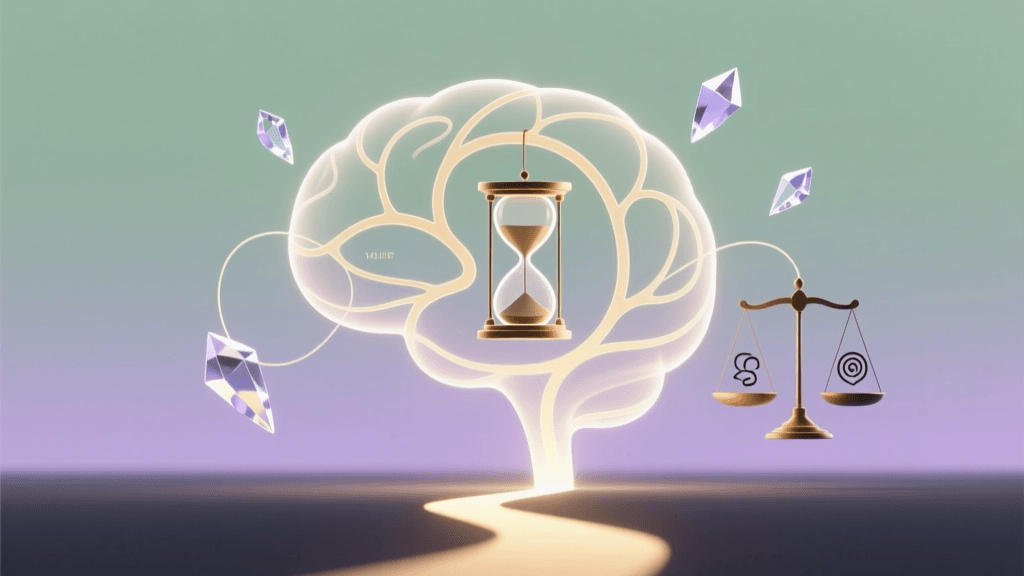
How INFP Makes Decisions
The INFP personality type—often called the Mediator or Healer—approaches decision-making through a profoundly values-driven, internally reflective lens. As a dominant Introverted Feeling (Fi) type with auxiliary Extraverted Intuition (Ne), the INFP’s decision framework is neither purely rational nor impulsively emotional. Instead, it operates as a quiet, layered synthesis of personal ethics, empathic resonance, future possibilities, and deeply held ideals.
Unlike types that prioritize objective data (e.g., ESTJ) or external consensus (e.g., ESFJ), the INFP begins every significant choice by asking: Does this align with who I am—and who I aspire to be? This internal moral calibration isn’t abstract idealism; it’s a rigorous, often unspoken standard against which all options are measured. A career shift isn’t evaluated solely on salary or prestige but on whether it honors authenticity, fosters compassion, or contributes meaningfully to human flourishing. A relationship decision isn’t weighed by compatibility metrics alone—but by whether shared values feel viscerally true.
Research from the Myers & Briggs Foundation confirms that Fi-dominant types rely on an internal value hierarchy—developed over years of introspection—to guide choices. For INFPs, this hierarchy isn’t static; it evolves with lived experience, artistic expression, and moral reflection. Their auxiliary Ne adds a crucial dimension: they instinctively generate multiple interpretations, alternative outcomes, and ‘what-if’ scenarios—not to stall action, but to ensure no meaningful possibility is overlooked. This makes their process inherently expansive, imaginative, and ethically nuanced.
Crucially, INFP decision-making is rarely linear. It resembles a spiral: reflect → imagine → weigh values → revise assumptions → re-reflect. This recursive rhythm allows for depth, but also sets the stage for delay when external demands conflict with inner coherence.
Analysis Paralysis Patterns for INFP
“Analysis paralysis” is frequently mischaracterized as indecisiveness—or worse, laziness. For INFPs, it’s a neurocognitive and ethical response to complexity. When faced with decisions involving moral ambiguity, interpersonal impact, or long-term identity implications, the INFP brain doesn’t freeze—it over-engages. Their Ne generates endless branching paths; their Fi insists each path be assessed for alignment with core values; their tertiary Sensing (Si) may surface past regrets (“What if I choose wrong again?”); and their inferior Extraverted Thinking (Te) remains underdeveloped, making it difficult to impose pragmatic deadlines or cut off low-yield options.
This creates distinct patterns:
- The ‘Perfect Alignment’ Trap: Waiting for a choice that satisfies all values simultaneously—authenticity, kindness, creativity, sustainability, growth—despite real-world trade-offs.
- Empathic Overload: Absorbing others’ emotions so deeply that their own preferences blur. An INFP may delay saying “no” to a request not out of people-pleasing, but because they feel the other person’s disappointment as physical discomfort.
- Future-Looping: Using Ne to simulate cascading consequences across years—“If I take this job, will I resent it in five years? Will it distance me from my creative practice? Will it compromise my environmental values?”—without anchoring in present evidence or thresholds for acceptable uncertainty.
- Revisionist Spiral: Reopening closed decisions after new information (real or imagined), even when stakes are low. Choosing a coffee order becomes a meditation on fair-trade ethics, caffeine sensitivity, and the barista’s mood.
A 2021 study published in Personality and Individual Differences found that high-Fi individuals report significantly higher levels of decision-related distress when choices involve moral conflict—even when objectively low-risk—compared to high-Fe or high-Te types (Dong et al., 2021). This isn’t weakness—it’s the cognitive cost of sustaining integrity in a world full of compromises.
Understanding these patterns is the first step toward compassionate self-intervention—not correction, but calibration.
Risk Tolerance and Comfort Zone
INFPs are often stereotyped as ‘risk-averse’, but that label misses nuance. Their risk calculus is fundamentally different. They may leap into emotionally vulnerable acts—a raw confession, a public poem, leaving a stable job to volunteer abroad—while hesitating over seemingly trivial choices like selecting a health insurance plan. Why?
Because INFPs assess risk not by probability or loss magnitude, but by moral and identity consequence. A ‘safe’ option that violates their values feels far riskier than an uncertain path aligned with purpose. Conversely, a statistically risky venture—like launching an indie publishing house—feels low-risk if it serves their vision of beauty, truth, or healing.
Consider this comparison:
| Risk Domain | Typical INFP Perception | Common Misinterpretation | Reality Check |
|---|---|---|---|
| Financial Risk | Low concern if aligned with values (e.g., investing in regenerative agriculture) | “They’re irresponsible with money” | Often highly frugal and intentional—spending reflects ethics, not impulsivity |
| Social Risk | High concern if it threatens authenticity or causes harm (e.g., speaking up in meetings) | “They’re shy or avoidant” | May initiate deep 1:1 conversations fearlessly—but avoid performative or inauthentic group dynamics |
| Creative Risk | Low threshold for experimentation (writing, art, advocacy) | “They’re impractical dreamers” | Many INFPs build meticulous portfolios, revise work obsessively, and seek mastery—not just expression |
| Structural Risk | High anxiety around rigid systems (corporate hierarchies, standardized testing) | “They can’t handle responsibility” | Excel in self-directed, mission-driven roles—often founding NGOs, teaching, or therapeutic work |
This explains why INFPs thrive in contexts offering autonomy and ethical resonance—such as counseling, writing, design, environmental science, or spiritual leadership—while struggling in environments demanding rapid, value-neutral decisions (e.g., high-frequency trading, emergency triage without debrief). Their comfort zone isn’t small—it’s meaningfully bounded. Stepping outside it isn’t about courage deficits; it’s about ensuring the expansion serves their inner compass.
Intuition vs Logic — The INFP Balance
When people ask, “Are INFPs intuitive or logical?”, they’re framing a false dichotomy. INFPs are both—but their logic (Te) is inferior and unconscious, while their intuition (Ne) is auxiliary and highly developed. This asymmetry shapes how they engage with reason.
INFPs use logic in service of insight, not as a primary arbiter. They’ll research climate policy not to debate statistics, but to understand how systemic change might honor intergenerational care. They’ll learn coding not to optimize algorithms, but to build tools that amplify marginalized voices. Their logic is values-anchored reasoning: “Given that human dignity is non-negotiable, what structural levers produce equitable outcomes?”
This contrasts sharply with dominant-Te types (ESTJ, ENTJ), for whom logic is the architecture—the system must function efficiently, and values are integrated *within* that framework. For INFPs, values are the foundation—the logic is the scaffolding built to uphold them.
Imbalance arises when Te remains undeveloped. Under stress, inferior Te can manifest as:
- Hyper-criticism—suddenly fixating on flaws in others’ logic while dismissing their own emotional data;
- Rigid rule-following—adopting arbitrary efficiency standards (“I must reply to every email within 2 hours”) as a brittle substitute for inner clarity;
- Self-blame loops—using logic to dissect past decisions (“I should have known better”) rather than integrating them with compassion.
Healthy integration looks different: Te becomes a trusted collaborator. The INFP learns to ask:
- “What’s the smallest actionable step that honors my values *right now*?”
- “Which data point would most reliably indicate alignment—or misalignment—with my core intention?”
- “If I explained this decision to someone I deeply respect, what would I need to show them—not just tell them—to earn their trust?”
As psychologist Dr. Dario Nardi notes in Neuroscience of Personality, INFPs show distinctive EEG patterns during decision tasks—heightened activity in the anterior cingulate cortex (associated with value-based conflict monitoring) and right temporal lobe (linked to narrative and metaphor processing). Their brains don’t ‘choose between’ intuition and logic—they weave them into a single neurocognitive tapestry where meaning precedes method.
Decision-Making Under Pressure
Pressure doesn’t erase INFP decision-making style—it distorts it. In time-constrained, high-stakes scenarios (e.g., medical emergencies, sudden layoffs, family crises), their usual reflective process compresses, often triggering inferior Te or shadow functions. The result isn’t panic, but a kind of ethical fragmentation: values become oversimplified (“I must protect everyone”), Ne spirals into catastrophic imagining (“Everything will collapse”), and Fi retreats into silent withdrawal or passive compliance.
Three evidence-informed pressure responses observed in clinical and coaching settings include:
- The Silent Exit: Disengaging entirely—ghosting responsibilities, avoiding communication, retreating into art or solitude. Not avoidance, but nervous system preservation.
- The Value Override: Making a swift, values-aligned choice (e.g., resigning immediately after witnessing injustice)—followed by intense doubt and rumination once adrenaline fades.
- The Proxy Delegate: Outsourcing decisions to trusted others (“You decide—I trust your judgment”)—which works only if the delegate shares their ethical framework.
Effective pressure strategies honor neurobiology. According to trauma-informed frameworks from the Trauma Center at Justice Resource Institute, INFPs benefit from grounded value anchoring before escalation:
- Pre-define 1–3 non-negotiable values (e.g., “truth-telling,” “non-harm,” “creative integrity”) and keep them visible—on a phone lock screen, notebook cover, or wristband.
- Create a ‘pressure protocol’: A 90-second ritual (e.g., box breathing + whispering one value aloud) to interrupt sympathetic activation and reconnect with Fi.
- Use Ne constructively: Instead of “What’s the worst that could happen?”, ask “What’s *one* small way this situation could reveal deeper alignment?”
Importantly, pressure resilience isn’t about becoming more ‘Te-like’. It’s about trusting Fi’s speed—because values, once embodied, operate faster than analysis. A nurse INFP may intuitively redirect a patient away from a harmful treatment not by calculating odds, but because her body registers dissonance before her mind names it. That’s not irrational—it’s somatic wisdom.
Improving Your Decision Process
Improvement for INFPs isn’t about eliminating reflection—it’s about designing reflection. Below are field-tested, type-specific strategies grounded in cognitive psychology and MBTI development theory:
1. The Values-Weighted Decision Matrix
Replace generic pros/cons lists with a matrix weighted by personal values. Example for choosing between two job offers:
- List 4–5 core values (e.g., Autonomy, Creative Expression, Community Impact, Learning Growth, Work-Life Harmony).
- Rate each value’s importance to you on a 1–10 scale.
- Score each job on how well it supports *each* value (1–10).
- Multiply importance × support score per value, then sum totals.
This quantifies qualitative priorities—honoring Fi’s depth while engaging Te’s structure. It prevents ‘equal weighting’ bias (e.g., giving equal weight to salary and spiritual fulfillment).
2. The 48-Hour Ne Filter
For non-urgent decisions, set a hard deadline: “I will gather input and imagine possibilities for 48 hours—then choose.” Use that window intentionally: journal 3 possible futures, interview one person whose values mirror yours, sketch symbolic representations of each option. At the 48-hour mark, choose—not based on certainty, but on which option feels most resonant in stillness. This trains Ne to serve Fi, not overwhelm it.
3. Te Skill-Building Micro-Practices
Strengthen inferior Te without suppressing Fi:
- Time-boxed research: Set a timer for 25 minutes to gather facts—then stop, even mid-sentence.
- Decision deadlines: Assign realistic timelines (“I’ll decide on the apartment by Friday noon”) and publicly commit to them.
- ‘Good Enough’ audits: Review past decisions where you delayed seeking perfection. What was the actual cost of imperfection? Did the outcome truly suffer—or did your anxiety?
4. Fi-Ne Integration Rituals
Weekly practices to harmonize dominant and auxiliary functions:
- Values Mapping: Draw a circle labeled “Who I Am.” Around it, place 5–7 words representing active values. Connect each to a recent decision—how did it express that value?
- Future Self Letters: Write a letter from your 80-year-old self to your present self about one current decision. What does elder-you emphasize? (This activates Ne’s long-view while grounding Fi’s legacy concerns.)
These aren’t productivity hacks—they’re identity-preserving technologies. As Jungian analyst John Beebe writes, “The goal of type development isn’t to become balanced, but to become *whole*: letting each function speak its truth, in its right season.” For INFPs, wholeness means trusting that their slowness is sacred, their empathy is strategic, and their intuition is intelligence.
FAQ
Do INFPs struggle with everyday decisions, like what to eat or wear?
Not inherently—but they may when those choices carry symbolic weight. Choosing cereal isn’t stressful—unless one brand funds deforestation, another uses exploitative labor, and a third is gluten-free but contains palm oil. INFPs don’t overthink trivialities; they notice hidden ethical dimensions others overlook. A practical fix: designate ‘low-stakes domains’ (e.g., meals, commute routes) where values alignment is pre-established (“I buy local, organic, and package-free where possible”)—freeing mental bandwidth for decisions with higher identity impact.
Is analysis paralysis a sign of immaturity in INFPs?
No—it’s often a sign of advanced moral development. Research by Lawrence Kohlberg and later scholars shows that post-conventional ethical reasoning (Stage 6) involves weighing universal principles over laws or social norms—a hallmark of mature INFP cognition. Paralysis occurs not from lack of maturity, but from the burden of holding complex, competing goods. Maturity emerges when they learn to act *with* uncertainty—not wait for its absence.
Can INFPs become more decisive without losing their empathy?
Absolutely—and decisiveness often deepens empathy. Indecision can harm others through ambiguity, broken commitments, or delayed action on injustices. One INFP activist told us, “Learning to say ‘I choose X’—and hold that choice with humility—gave me more space to listen deeply, because I wasn’t drowning in ‘what ifs.’” Decisiveness isn’t cold logic; it’s the courage to steward your values actively.
How do INFPs handle decisions that hurt someone they love?
This is among their most painful dilemmas. Their Fi feels the other’s pain as visceral, while Ne imagines every ripple effect. Healthy resolution requires distinguishing responsibility from control. An INFP can commit to honesty (their value) while accepting they cannot control the other’s reaction (beyond offering compassion and space). Therapy models like Acceptance and Commitment Therapy (ACT) provide tools for this—see resources from the Association for Contextual Behavioral Science.
What’s the biggest myth about INFP decision-making?
That they’re ‘too emotional’ to be effective leaders or strategists. In reality, INFP-led organizations—from the ACLU to independent publishing houses—demonstrate extraordinary long-term vision, ethical consistency, and adaptive innovation. Their decisions may take longer, but they’re less prone to short-term exploitation, burnout cycles, or cultural betrayal. As organizational psychologist Adam Grant notes in Give and Take, ‘otherish’ givers (a profile overlapping strongly with INFP) build the most resilient, trusted institutions—precisely because their decisions integrate care and clarity.
Ultimately, the INFP decision-making framework isn’t a flaw to fix—it’s a finely tuned instrument for navigating a morally complex world. Its power lies not in speed or certainty, but in fidelity: to truth, to tenderness, to the quiet, unwavering voice that whispers, “This is who I am—and this is how I walk forward, with both feet on the earth and my eyes on the horizon.”