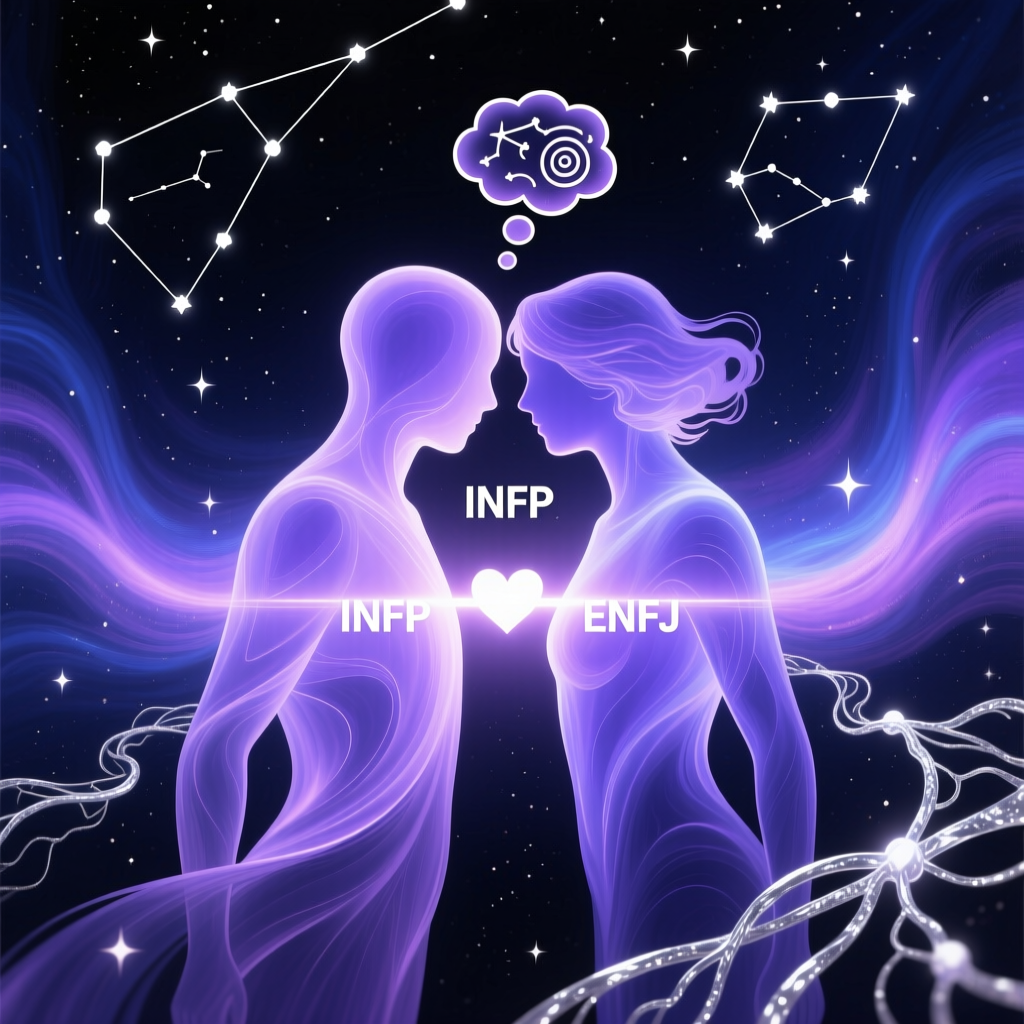
When two idealists cross paths, the resulting connection often feels less like a simple meeting of minds and more like a profound recognition of souls. The relationship between the INFP personality type (The Mediator) and the ENFJ personality profile (The Protagonist) is widely considered one of the most deeply fulfilling pairings in the Myers-Briggs Type Indicator system. Both types belong to the NF (Intuitive-Feeling) temperament, meaning they navigate the world through a lens of empathy, future possibilities, and a relentless search for deeper meaning.
However, a successful long-term partnership requires more than just shared idealism; it requires intentional growth alignment. The INFP and ENFJ relationship is a beautiful dance of introverted authenticity and extraverted harmony. When these two types consciously align their personal growth trajectories, they create a sanctuary where both partners can actualize their highest potential. This comprehensive guide explores the romantic dynamics, cognitive interplay, and practical strategies necessary for an INFP and ENFJ couple to thrive together.
Cognitive Function Interplay: Fi-Ne Meets Fe-Ni
To truly understand the magic and the challenges of this pairing, we must look beneath the four-letter acronyms and examine their cognitive function stacks. The INFP leads with Introverted Feeling (Fi) and supports it with Extraverted Intuition (Ne). The ENFJ leads with Extraverted Feeling (Fe) and supports it with Introverted Intuition (Ni). This creates a fascinating dynamic of complementary opposites.
The Feeling Axis: Fi vs. Fe
The INFP’s dominant Fi is an internal compass. It constantly evaluates situations based on personal authenticity, core values, and internal emotional resonance. INFPs ask, "How do I truly feel about this, and does it align with my moral compass?" Conversely, the ENFJ’s dominant Fe is focused on external emotional harmony and the collective well-being of the group. ENFJs ask, "How does everyone else feel, and what is the most harmonious outcome?"
In a growth-aligned relationship, this axis becomes a powerful tool for mutual development. The ENFJ helps the INFP navigate social complexities and consider the broader impact of their actions, gently pulling them out of their internal shell. In return, the INFP acts as a grounding force for the ENFJ, reminding them to check in with their own authentic needs rather than constantly sacrificing themselves for others. The INFP teaches the ENFJ the value of boundaries, while the ENFJ teaches the INFP the beauty of communal connection.
The Intuitive Axis: Ne vs. Ni
The INFP’s auxiliary Ne is a brainstorming engine, constantly generating new possibilities, alternative perspectives, and creative ideas. The ENFJ’s auxiliary Ni, on the other hand, is a focusing lens. It synthesizes information to form a singular, long-term vision or insight. Together, they form an incredible visionary team. The INFP provides the expansive field of possibilities, and the ENFJ selects the most viable path and creates a structured roadmap to get there. This cognitive synergy is the bedrock of their shared dream-building, whether they are planning a life together, starting a creative project, or simply mapping out their next vacation.
Romantic Dynamics: Nurturing the Soul Connection
The romantic bond between an INFP and an ENFJ is often characterized by intense emotional intimacy and a shared desire for a "soulmate" connection. Both types despise superficial interactions and crave a partner who is willing to explore the deepest corners of the human experience. For a deeper look into how these types approach love, you can explore our guides on INFP relationship habits and ENFJ relationship habits.
The Honeymoon Phase: A Meeting of Minds
In the early stages of romance, the ENFJ is often captivated by the INFP’s quiet depth, creativity, and gentle warmth. The ENFJ’s natural charisma and attentive nature make the INFP feel incredibly seen and cherished. The ENFJ intuitively senses the INFP’s unspoken needs, often anticipating them before the INFP even has to ask. This creates a deeply nurturing environment where the INFP feels safe enough to lower their guarded exterior.
Long-Term Growth: The Cheerleader and the Anchor
As the relationship matures, the ENFJ naturally steps into the role of the supportive cheerleader. They are deeply invested in their partner’s potential and will actively encourage the INFP to pursue their passions, share their art, or step into leadership roles. However, this is where the "growth alignment" must be carefully managed. The ENFJ must learn the difference between supporting the INFP’s growth and trying to fix or manage the INFP’s life.
The INFP, in turn, becomes the emotional anchor for the ENFJ. Because ENFJs spend so much energy managing the emotions of the outside world, they often return home emotionally depleted. The INFP provides a quiet, non-judgmental, and deeply accepting sanctuary where the ENFJ can take off their "social mask" and simply exist without having to perform or lead.
Communication Styles: Bridging the Introvert-Extravert Gap
While both types are highly empathetic and value deep conversations, their communication rhythms differ significantly due to their introverted and extraverted preferences. Misunderstandings usually arise not from a lack of love, but from a mismatch in processing speed and emotional expression.
Processing Speed and Verbal Expression
The ENFJ processes their thoughts and feelings externally. When faced with an issue, an ENFJ wants to talk it out immediately, using conversation as a tool to discover how they feel and to reach a harmonious resolution. The INFP, however, processes internally. When faced with emotional stress or a complex problem, the INFP needs to retreat into their inner world to untangle their feelings before they can articulate them.
If the ENFJ pushes for an immediate resolution, the INFP may feel overwhelmed and cornered, leading to withdrawal. If the INFP withdraws without explanation, the ENFJ’s Fe-driven anxiety spikes, fearing that the relationship’s harmony is broken. Growth alignment requires establishing a communication protocol: the INFP must learn to say, "I need a few hours to process this, but we will talk about it tonight," and the ENFJ must learn to respect that silence is a processing tool, not a punishment.
The Language of Affirmation
Both types thrive on verbal affirmation, but they require different flavors of it. The ENFJ needs to hear that their efforts are appreciated and that they are successfully fostering harmony and connection. The INFP needs to hear that their authentic self—their quirks, their quiet moments, and their unique worldview—is deeply valued. Couples who master the art of speaking their partner's specific emotional language will find that their bond becomes virtually unbreakable.
Conflict Resolution: Navigating Emotional Storms
Conflict is inevitable in any relationship, but for two Feeling types who prioritize harmony and authenticity, disagreements can feel particularly destabilizing. How an INFP and ENFJ handle conflict is the true test of their long-term compatibility.
The Danger of Conflict Avoidance
Because both types dislike discord, there is a high risk of conflict avoidance. The ENFJ might suppress their own needs to keep the peace (a shadow side of Fe), while the INFP might simply agree to end an uncomfortable argument, even if their core Fi values feel compromised. Over time, this unexpressed resentment can build into a wall of passive-aggression or emotional distance.
Strategies for Healthy Resolution
To achieve true growth alignment, the couple must reframe conflict not as a threat to the relationship, but as a necessary tool for deeper understanding.
- Scheduled Check-Ins: Implementing a weekly "state of the union" conversation allows both partners to bring up minor grievances in a low-stakes, structured environment before they boil over.
- The "No-Fix" Rule: When the INFP is venting about a problem, the ENFJ must resist the urge to immediately offer solutions. The INFP often just needs empathetic listening and validation, not a strategic action plan.
- Value-Based Compromise: When making decisions, the couple should explicitly state their core values regarding the issue. Once both partners understand the why behind the other's stance, finding a compromise that honors both sets of values becomes much easier.
Friendship Patterns & Workplace Synergy
The synergy between the INFP and ENFJ extends far beyond romance. Whether they are navigating a platonic friendship or collaborating in a professional environment, their complementary strengths make them a formidable team.
Friendship: The Philosophical Companions
As friends, INFPs and ENFJs are the duo you will find staying up until 3 AM discussing the meaning of life, psychology, literature, and the future of humanity. The ENFJ brings a wide social circle and ensures the INFP is gently included in group activities without being overwhelmed. The INFP offers the ENFJ a rare, judgment-free zone where they can express their doubts and fears without worrying about disappointing anyone. Their friendship is built on a foundation of mutual intellectual respect and profound emotional loyalty.
Workplace Synergy: Vision and Execution
In the workplace, this pairing is exceptionally well-suited for mission-driven organizations, non-profits, counseling, education, and the creative arts. The ENFJ naturally gravitates toward leadership, team-building, and project management. They excel at reading the room, motivating staff, and keeping the team aligned with the organization's mission.
The INFP thrives in roles that require deep focus, creative problem-solving, and empathetic one-on-one interactions. While the ENFJ manages the macro-level team dynamics and external stakeholders, the INFP can focus on the micro-level details of content creation, individual client care, or innovative strategy. Together, they balance the "people management" (ENFJ) with the "purpose and authenticity" (INFP) required to make any meaningful project a success.
Practical Tips for Long-Term Growth Alignment
To ensure that the relationship continues to evolve and deepen over time, INFP and ENFJ couples should actively practice the following growth-oriented strategies:
- Protect the INFP’s Solitude: The ENFJ must recognize that the INFP’s need for alone time is a biological and psychological necessity, not a rejection of the relationship. Encourage the INFP to take solo retreats or dedicate uninterrupted hours to their solitary hobbies.
- Guard the ENFJ’s Energy: The INFP must actively help the ENFJ set boundaries with the outside world. Remind your ENFJ partner that it is okay to say "no" to social obligations and that their worth is not tied to how much they do for others.
- Cultivate Individual Identities: Because NF types tend to merge deeply with their partners, it is vital to maintain separate hobbies, friendships, and goals. A healthy relationship consists of two whole individuals choosing to share their lives, not two halves trying to complete each other.
- Develop the Inferior Functions: Support each other in developing your weaker cognitive functions. The ENFJ can help the INFP develop their inferior Extraverted Thinking (Te) by assisting them with practical organization, goal-setting, and logical decision-making. The INFP can help the ENFJ develop their inferior Introverted Thinking (Ti) by encouraging them to analyze their own internal logic and detach emotionally from problems to find objective solutions.
For a broader perspective on how these types interact with others, be sure to read our complete MBTI compatibility guide.
Frequently Asked Questions
Are INFP and ENFJ a good match for marriage?
Yes, the INFP and ENFJ are considered an exceptionally strong match for marriage. Their shared NF temperament ensures that they both prioritize emotional intimacy, personal growth, and shared values over purely practical or material concerns. As long as they actively work on their communication differences—specifically balancing the ENFJ’s need for external harmony with the INFP’s need for internal authenticity—they can build a deeply resilient, loving, and lifelong partnership.
How do INFP and ENFJ handle financial decisions?
Finances can be a blind spot for both types, as neither naturally prioritizes material wealth over emotional or spiritual fulfillment. The ENFJ may be prone to overspending on others or charitable causes, while the INFP might avoid looking at bank statements if it causes them stress. To achieve growth alignment here, the couple should automate their savings and bill payments. Utilizing budgeting apps that require minimal daily maintenance allows them to ensure their financial security without letting money management drain their emotional energy.
What are the biggest dealbreakers for an INFP-ENFJ couple?
The most significant dealbreaker for this pairing is a fundamental misalignment of core moral values. Because both types lead with Feeling functions (Fi and Fe), their ethical compasses are central to their identities. If an ENFJ’s desire for social status or external approval consistently forces the INFP to compromise their internal authenticity, the INFP will eventually withdraw completely. Conversely, if the INFP’s rigid adherence to personal values consistently humiliates or isolates the ENFJ in social settings, the ENFJ will feel deeply unloved and unsupported.
Can an INFP and ENFJ maintain a long-distance relationship?
While challenging, an INFP and ENFJ can maintain a long-distance relationship if they leverage their intuitive strengths. Their shared love for deep, meaningful communication translates well to long phone calls, video chats, and writing lengthy letters or emails. The ENFJ will appreciate the dedicated, focused attention during virtual dates, while the INFP will enjoy the built-in physical space that long-distance naturally provides. However, they must establish a clear, tangible timeline for eventually closing the distance, as both types ultimately crave deep, physical, and emotional presence with their partner.