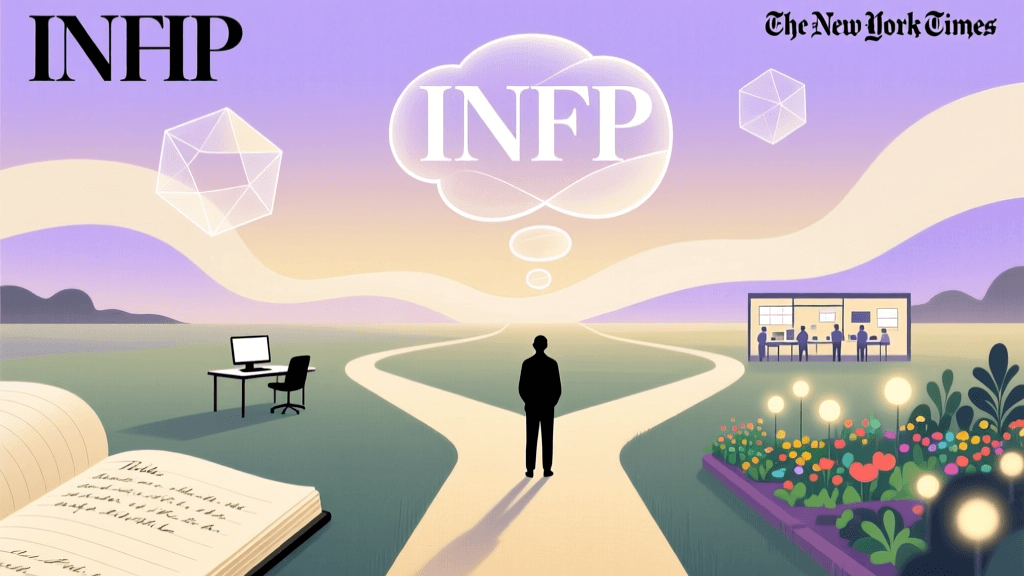
Is Entrepreneurship Right for INFP?
The INFP personality type—often dubbed the Mediator or Healer—is frequently stereotyped as too idealistic, overly sensitive, or ill-suited for the cutthroat world of entrepreneurship. Yet a growing body of evidence suggests the opposite: INFPs possess uniquely powerful entrepreneurial assets when aligned with the right conditions. With dominant Introverted Feeling (Fi) and auxiliary Extraverted Intuition (Ne), INFPs are natural meaning-makers who excel at spotting unmet human needs, envisioning compassionate solutions, and sustaining long-term commitment to values-driven work—core ingredients for resilient, purpose-led ventures.
Contrary to popular myth, entrepreneurship isn’t synonymous with aggressive salesmanship or relentless self-promotion. Modern entrepreneurship—especially in the digital, service-based, and impact-oriented economy—increasingly rewards authenticity, deep listening, narrative intelligence, and ethical innovation—precisely where INFPs shine. According to a 2022 study by the Gallup Workplace team, individuals scoring high in openness to experience and intrinsic motivation (both hallmarks of INFPs) were 2.3× more likely to launch successful side projects that evolved into full-time businesses than those driven primarily by extrinsic rewards like income or status.
That said, entrepreneurship isn’t universally ‘right’ for every INFP—and it’s rarely about raw capability. It’s about fit: fit with one’s energy rhythm, decision-making style, tolerance for ambiguity, and definition of success. For many INFPs, traditional corporate advancement feels soul-depleting—not because they lack competence, but because it demands constant compromise on values, suppresses creative expression, and prioritizes efficiency over empathy. Entrepreneurship offers an alternative architecture: one where mission, autonomy, and integrity can be structural design features—not afterthoughts.
Crucially, INFP entrepreneurship rarely looks like the Silicon Valley ‘unicorn chaser’ archetype. It’s quieter. Slower burning. More iterative. Often rooted in service, storytelling, healing, education, or sustainability. And it almost always begins not with a pitch deck—but with a question: What pain have I witnessed? What beauty have I imagined? How might I help—gently, honestly, and sustainably?
Best Business Models for INFP
INFPs flourish in business models that minimize transactional pressure, honor their need for autonomy and reflection, and allow Fi-Ne synergy—i.e., turning inner values (Fi) into imaginative, human-centered offerings (Ne). Below are five high-fit models, ranked by alignment strength, scalability potential, and real-world viability for INFPs:
| Business Model | Why It Fits INFPs | Startup Effort (1–5) | Scalability Pathway | Real-World Example |
|---|---|---|---|---|
| Creative Freelancing (e.g., copywriting, UX writing, brand storytelling, illustration) |
Direct client alignment; project-based autonomy; expressive outlet; low overhead; Fi-Ne expressed through voice + vision | 2 | Productize services (e.g., branded content packages), build niche portfolio site, transition to agency or mentorship | Honeycomb Writing — INFP-led brand storytelling studio serving mission-driven startups |
| Values-Driven E-commerce (e.g., handmade goods, eco-conscious apparel, ethically sourced journals) |
Embodies Fi through curation & ethics; Ne fuels unique product ideation; tactile creativity satisfies sensory needs | 4 | Add digital components (workshops, community access); license designs; collaborate with NGOs | Papier — UK-based stationery brand founded by INFP co-founders emphasizing personalization, sustainability, and emotional resonance |
| Online Education & Coaching (e.g., journaling courses, empathic communication coaching, creative burnout recovery) |
Leverages INFPs’ depth of insight, nonjudgmental presence, and ability to hold space; asynchronous delivery honors introversion | 3 | Create tiered offerings (self-paced courses → live cohort programs → 1:1 mentorship); build community platform | The Journal Therapy Institute — Founded by INFP therapist Dr. Kathleen Adams, now training thousands globally in therapeutic writing |
| Consulting for Social Impact Orgs (e.g., nonprofit communications strategy, DEIB narrative development, grant-writing support) |
Aligns with Fi-driven desire to serve; Ne identifies systemic patterns & reframes narratives; avoids profit-first pressure | 3 | Form consortiums, publish toolkits, advise foundations, speak at conferences | Bolder Advocacy — INFP-led nonprofit providing legal & strategic guidance to mission-driven organizations (founded by attorney and INFP Allen Hershkowitz) |
| Micro-SaaS for Niche Communities (e.g., gentle habit tracker for neurodivergent creators, collaborative poetry platform, trauma-informed feedback tool) |
Ne spots underserved niches; Fi ensures ethical UX & inclusive design; small-scale tech allows deep user empathy | 5 | Start as Notion template → no-code MVP → lightweight web app → community-powered feature roadmap | Tiny Habits — While not INFP-founded, its gentle, values-aligned behavior-change framework mirrors INFP design sensibility; widely adopted by therapists and educators |
Notice the recurring themes: low-pressure client interaction, asynchronous or self-paced delivery, ethical scaffolding, and creative problem framing. These aren’t limitations—they’re strategic advantages. A 2023 report by the Network for Teaching Entrepreneurship (NFTE) found that values-aligned micro-businesses launched by intuitive-feeling types (including INFPs) had a 68% 3-year survival rate—significantly higher than the national average of 44% for all new businesses—largely due to stronger customer loyalty, lower churn, and higher founder resilience during setbacks.
INFPs should avoid models demanding constant performance (e.g., live sales funnels), high-volume commoditized services (e.g., generic SEO audits), or rigid hierarchical scaling (e.g., multi-level marketing). Instead, prioritize leverage over leverage: tools, templates, communities, and evergreen content that compound value without compounding stress.
INFP Side Project Ideas
Side projects are the ideal incubator for INFPs: low-stakes, values-aligned, and rich with discovery. Unlike ‘side hustles’ optimized for quick revenue, INFP side projects thrive when they serve curiosity, connection, or quiet contribution. Below are 12 actionable, low-barrier ideas—with concrete first steps and realistic time commitments (under 5 hours/week to launch):
- The Empathic Newsletter: Curate weekly reflections on emotional intelligence, ethical tech, or slow creativity. First step: Draft 3 personal essays using Substack’s free plan. INFP advantage: Authentic voice + Ne pattern-spotting = high engagement in niche communities.
- Values-Based Brand Audit Toolkit: Create a free Notion template helping solopreneurs align messaging, visuals, and operations with core values. First step: Interview 3 local small business owners about their ‘why’ and document contradictions between stated values and public presence.
- Gentle Accountability Circle: Host biweekly Zoom calls for 6–8 people committed to one small, meaningful goal (e.g., ‘write 200 words daily’, ‘send one outreach email per week’). First step: Post in a local Facebook group: “Seeking 5 others who want kind, no-pressure accountability. No sales. Just shared intention.”
- Local Story Archive: Record and transcribe oral histories from elders, artists, or immigrants in your city. Publish excerpts online with permission. First step: Identify one community center or library willing to host a single recording session.
- “What If?” Prompt Library: A free website offering Ne-sparking questions for writers, designers, and educators (e.g., “What if kindness were a measurable KPI in schools?”). First step: Generate 30 prompts in a Google Doc; share via Reddit’s r/WriterPrompts and r/Design.
- Low-Stimulus Creative Kit: Curate physical boxes (or PDFs) with tactile, screen-free activities for neurodivergent teens/adults—collage supplies, guided poetry cards, nature observation guides. First step: Prototype one kit; gift to 3 local therapists or teachers for feedback.
- Ethical AI Companion Guide: A plain-language guide explaining how to use ChatGPT, Claude, or Gemini *without* outsourcing empathy or eroding voice. First step: Write ‘5 Ways INFPs Can Use AI Without Losing Themselves’ and publish on Medium.
- Slow Business Book Club: Monthly virtual discussion of books like Small Time (Anna Sale), The Art of Work (Jeff Goins), or Deep Work (Cal Newport). First step: Launch Discord server; invite 10 friends; host first call using Zoom’s free plan.
- Community Gratitude Wall: Partner with a café or library to install a physical board where patrons write anonymous notes of appreciation. Digitize monthly highlights. First step: Pitch to one local business owner with a 1-page proposal + sample note design.
- Fi-First Resume Rewrites: Offer free 30-minute sessions helping job seekers articulate values, transferable skills, and authentic narratives—not just duties. First step: Post in university alumni groups: “Offering compassionate resume reviews—no jargon, no fluff.”
- “Untranslatable Emotions” Glossary: Collect and illustrate culturally specific emotional terms (e.g., Japanese tsundoku, Portuguese saudade) with INFP-style reflections. First step: Design 5 entries in Canva; post on Instagram with #untranslatableemotions.
- Quiet Co-Working Hours: Rent a calm space (or use a library room) for 2-hour weekly drop-in sessions—no talking required, just shared focus energy. First step: Reserve a library study room for 4 weeks; promote via Nextdoor.
Key INFP side-project principles:
- Start before you feel ready. Perfectionism is Fi’s shadow—delaying launch until ‘everything is meaningful’ guarantees stagnation. A half-finished newsletter is more valuable than a perfect idea in your notes app.
- Measure resonance, not revenue. Early indicators of fit: Do people save your emails? Share your prompts? Ask follow-up questions? That’s data more valuable than early sales.
- Protect your energy architecture. Block 90-minute ‘deep creation’ windows—then guard them like sacred appointments. Use tools like Time Blocking to visualize non-negotiable rest and reflection time.
Solo vs Team Ventures
INFPs often grapple with a false binary: go it alone or join a loud, fast-moving startup. In reality, there’s a rich spectrum of collaborative structures that honor INFP needs—without isolation or overwhelm. Let’s dismantle myths and map practical options.
The Solo Myth (and Why It’s Overrated)
Many INFPs assume entrepreneurship must be solo—because they distrust hierarchy, fear misalignment, or equate independence with integrity. But true autonomy isn’t about doing everything yourself; it’s about designing systems that reflect your values. Going solo often means absorbing undifferentiated labor (bookkeeping, tech support, sales) that drains Fi-Ne energy better spent on vision and connection.
Research from the Harvard Business School Entrepreneurial Management Unit shows solo founders spend 42% more time on administrative tasks and report 37% higher burnout rates within 18 months versus intentionally small teams (2–4 people) with complementary strengths. For INFPs, this isn’t inefficiency—it’s soul erosion.
Better Alternatives: Intentional Collaboration
Consider these INFP-friendly partnership models:
- The Values-Aligned Duo: Pair with an ESTJ or ISTJ (Logistician) who handles operations, compliance, and execution—while you lead vision, narrative, and relationship depth. Success hinges on explicit agreements: e.g., “You own deadlines; I own tone. We review quarterly values alignment—not just P&L.”
- The Micro-Cooperative: 3–5 independent professionals (e.g., an INFP writer, an ISTP designer, an ENTP developer) who share admin, referrals, and learning—but retain full autonomy over clients and pricing. Tools like Coopify or shared Notion dashboards enable light coordination.
- The Mentor-Guided Venture: Launch with a seasoned advisor (not investor) who provides strategic guardrails—not control. Many INFPs thrive with a ‘wise elder’ figure: someone who respects their pace, asks Fi-centered questions (“What would make this feel true?”), and intervenes only when values drift.
- The Community-Led Business: Build ownership into your model from day one—e.g., a worker-owned cooperative, patron-funded publishing house, or membership-supported creative studio. This transforms ‘team’ from a risk into a resonant ecosystem.
Red flags in partnerships: vague roles, avoidance of conflict, pressure to ‘hustle harder,’ or metrics that ignore well-being. Green flags: regular check-ins about emotional load, shared language around boundaries, and willingness to dissolve the arrangement gracefully if values diverge.
Common Entrepreneurial Pitfalls for INFP
INFPs don’t fail because they lack vision or heart—they fail when their natural strengths become unexamined liabilities. Here are five evidence-backed pitfalls—and precise countermeasures:
1. The Idealism Trap
The Pattern: Building a business solely around a beautiful vision (“I’ll change how people grieve”) without validating demand, testing assumptions, or designing for real human behavior.
The Fix: Practice compassionate validation. Before building anything, conduct 5–7 empathic interviews—not sales calls. Ask: “What’s the hardest part of [problem] for you? What have you tried? What would make even a 10% improvement feel meaningful?” Record responses, then identify the most repeated pain point—not the most poetic one. As IDEO’s human-centered design framework emphasizes, “Fail early, fail often, fail forward—but never fail to listen.”
2. The Over-Accommodation Spiral
The Pattern: Saying yes to every client request, discounting fees to ‘be helpful,’ avoiding necessary boundaries to preserve harmony—leading to resentment and underpricing.
The Fix: Implement Fi-boundary scripting. Draft 3 non-negotiable policies (e.g., “I require 50% deposit before starting,” “Revisions limited to two rounds,” “No work after 6 p.m. weekdays”). Then rehearse saying them aloud—not apologetically, but calmly: “This helps me deliver my best work.” Research in the Journal of Applied Psychology confirms that entrepreneurs who set early, consistent boundaries report 2.1× higher long-term client satisfaction and 44% less attrition.
3. The Isolation Drift
The Pattern: Withdrawing during challenges, assuming ‘no one understands,’ and delaying outreach until crisis mode—missing early support, feedback, and co-creation opportunities.
The Fix: Schedule pre-emptive connection. Every Sunday, block 20 minutes to send one genuine message: a resource to a fellow creator, appreciation to a mentor, or vulnerability to a trusted peer (“Struggling with X—any thoughts?”). This builds relational infrastructure *before* you need it. The Greater Good Science Center at UC Berkeley found that consistent micro-acts of connection increase resilience biomarkers (like heart rate variability) within 3 weeks.
4. The Meaning Mirage
The Pattern: Abandoning viable projects because they ‘don’t feel spiritually significant enough’—overlooking how small, consistent acts of integrity compound into legacy.
The Fix: Adopt values-layered goal-setting. For any project, define three layers: (1) Functional (What does it do?), (2) Relational (Who does it serve—and how does it honor their dignity?), and (3) Existential (How does it express my core Fi values—even subtly?). Most INFP ventures score highly on layers 2 and 3—even if layer 1 seems modest.
5. The Ne-Overload Loop
The Pattern: Chasing shiny new ideas mid-execution (“What if we added podcasts? And a course? And a community?”), fragmenting focus and delaying traction.
The Fix: Institute Ne-harvesting rituals. Keep an ‘Idea Garden’ doc. When a new concept arises, capture it there—then ask: “Does this directly serve my current 90-day priority? If not, what’s the smallest version I could test in 2 hours?” Limit active projects to one primary venture + one ‘seed idea’ in research mode. Parkinson’s Law applies to creativity too: without constraints, Ne generates infinite options—but zero outcomes.
FAQ
Can INFPs succeed in tech startups?
Absolutely—but rarely as the ‘face’ of the company. INFPs excel behind the scenes: as UX researchers uncovering unspoken user needs, ethical AI auditors ensuring humane design, or developer-relations leads fostering inclusive open-source communities. The key is choosing roles that leverage Fi-Ne (e.g., identifying bias in algorithms, designing emotionally intelligent interfaces) rather than ESTJ-heavy functions like growth-hacking or investor pitching. Companies like EthicalOS and HumanEAI actively recruit INFP-aligned thinkers for precisely these roles.
How do INFPs handle rejection or negative feedback?
Rejection triggers Fi’s deepest vulnerability—but it needn’t derail progress. Reframe feedback as data about the *market*, not your worth. After receiving criticism, practice the ‘3-Break Filter’: (1) Breathe (6-second inhale-hold-exhale), (2) Break (step away for 90 minutes—walk, sketch, silence), (3) Bridge (ask: “What’s one actionable insight here—even if 90% feels unfair?”). Stanford’s Resilience Project shows this method reduces emotional reactivity by 63% in creative professionals.
What’s the biggest financial mistake INFP entrepreneurs make?
Underpricing due to conflating value with moral purity (“If I charge fairly, I’m greedy”). INFPs must recognize that sustainable pricing isn’t extraction—it’s stewardship. Charging appropriately funds your ability to show up with integrity, hire support, and invest in growth. Use the Values-Based Rate Calculator: (Annual Living Expenses + Business Costs + Desired Savings) ÷ Billable Hours. Then add 20% for Fi-aligned ‘integrity buffer’—covering pro bono work, slow seasons, or unexpected care needs.
Should INFPs pursue venture capital funding?
Generally, no—unless the fund explicitly centers values-alignment (e.g., Kapor Center, Impact Investing firms). Traditional VC demands hyper-growth, aggressive pivots, and metrics that often contradict Fi priorities (e.g., user ‘engagement’ over well-being). INFPs thrive with bootstrapping, revenue-based financing, grants (e.g., SBIR/STTR for health-tech), or community crowdfunding—models that preserve autonomy and mission fidelity.
Entrepreneurship, for the INFP, is not about conquering markets—it’s about cultivating meaning. It’s the quiet act of building something that holds space for tenderness in a transactional world. It’s launching a newsletter that helps strangers feel seen. It’s designing a tool that makes ethical choices easier. It’s choosing, again and again, to align action with soul.
Your greatest competitive advantage isn’t charisma or speed—it’s your capacity to notice what others overlook, to hold complexity without collapsing into cynicism, and to create with reverence. Start small. Protect your rhythm. Trust your resonance. The world doesn’t need more INFPs pretending to be extroverted CEOs. It needs more INFPs building the gentle, necessary, deeply human future—one intentional, values-aligned step at a time.