The INFP personality type—often dubbed the Mediator, Healer, or Idealist—is one of the most widely romanticized yet frequently misunderstood types in the Myers-Briggs Type Indicator (MBTI) framework. Known for deep empathy, poetic imagination, and unwavering personal values, INFPs populate literature, film, and real-world leadership roles in ways that feel both profoundly authentic and strangely elusive. Yet precisely because their inner world is so rich and their outer expression so adaptable, INFPs are among the most commonly mistyped individuals—especially by those new to typology or relying solely on surface-level traits like sensitivity, creativity, or introversion.
Common INFP Mistypes
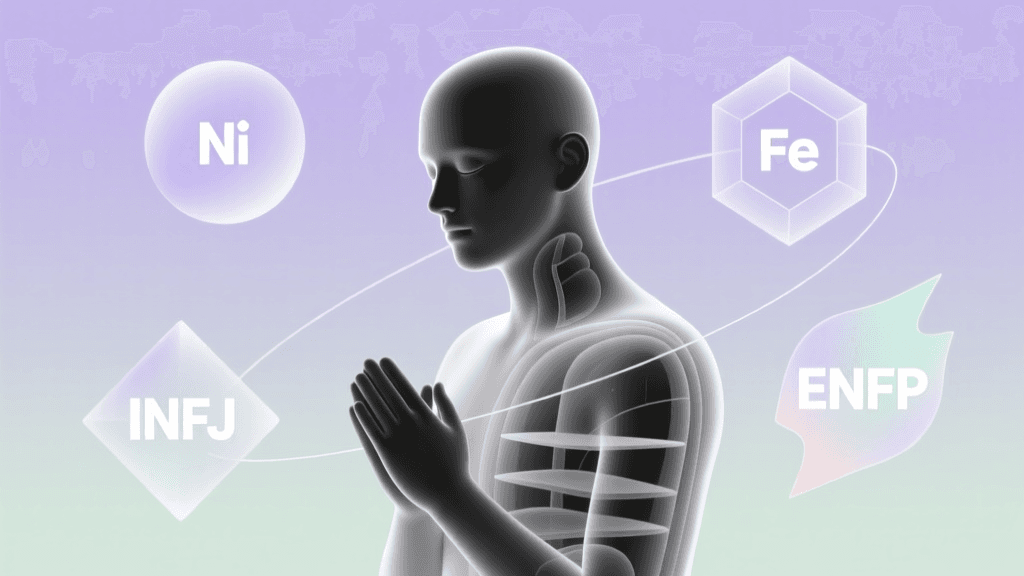
Mistyping occurs not from ignorance alone—but from the convergence of overlapping behavioral signals, shared values, and cultural stereotypes. For INFPs, three types consistently emerge as top lookalikes: INFJ, ENFP, and occasionally ISFP. Less frequently—but with high diagnostic consequence—INTP and INFP get swapped due to shared dominant introverted intuition (Ni) misconceptions (a persistent myth we’ll dismantle shortly).
According to data from the CPP MBTI® Fact Sheet (2023), up to 41% of self-reported INFPs initially test as another type before confirmation through function-based analysis. That figure jumps to 63% among adolescents and young adults—a demographic where identity formation, social mimicry, and developmental fluidity compound typological ambiguity.
Why does this happen? Because INFPs often:
- Mask their introversion in values-driven causes—appearing socially engaged, even charismatic—leading observers to assume extraversion;
- Express Fe (Extraverted Feeling) in service-oriented contexts (e.g., volunteering, activism, caregiving), mimicking INFJ’s signature social harmony focus;
- Deploy Ne (Extraverted Intuition) dynamically during brainstorming or artistic exploration, mirroring ENFP spontaneity and idea fluency;
- Embody aesthetic sensitivity and bodily presence (e.g., expressive gestures, attunement to mood shifts in environments), inviting ISFP comparisons; and
- Engage in abstract theoretical reflection, especially around ethics or metaphysics, prompting mistaken INTP labels—even though INTPs lead with Ti-Ne, not Fi-Ne.
The danger isn’t merely academic. Misidentification leads to misguided career advice (“You’d thrive in diplomacy—INFJ!”), inaccurate relationship expectations (“You should naturally mediate conflict—like an INFJ”), or even therapeutic misalignment (“Your anxiety stems from underdeveloped Fe—when in fact your Fe is auxiliary and consciously restrained”). To honor the INFP’s unique architecture, we must move beyond adjectives (“dreamy,” “gentle,” “artistic”) and into cognitive mechanics—the actual engine driving perception, judgment, and growth.
INFP vs INFJ — Key Differences
Of all mistypes, INFP vs INFJ is the most frequent—and the most consequential. Both are idealistic, empathic, and driven by internal value systems. Both write poetry, champion marginalized voices, and recoil from hypocrisy. Yet their cognitive function stacks—the foundational architecture of MBTI theory—are mirror opposites in critical ways.
Recall the standard function stack model:
- INFP: Fi (Introverted Feeling) → Ne (Extraverted Intuition) → Si (Introverted Sensing) → Te (Extraverted Thinking)
- INFJ: Ni (Introverted Intuition) → Fe (Extraverted Feeling) → Ti (Introverted Thinking) → Se (Extraverted Sensing)
This difference is not semantic—it’s operational. Let’s break it down across four dimensions: decision-making priority, social orientation, time orientation, and response to conflict.
1. Decision-Making Priority: Values First (Fi) vs. Harmony First (Fe)
The INFP’s dominant Fi means moral choices flow from an intensely private, non-negotiable inner compass. An INFP may support a cause passionately—not because it’s popular or unifying, but because it aligns with their visceral sense of rightness. They’ll walk away from a group effort if its methods violate their ethics—even if everyone else agrees it’s “for the greater good.” As Isabel Briggs Myers wrote in Gifts Differing, Fi users “judge themselves more harshly than they judge others—and judge others less harshly than they judge themselves.”
In contrast, the INFJ’s auxiliary Fe (supported by dominant Ni) makes group cohesion and emotional resonance central to judgment. Their decisions weigh collective impact first: “How will this affect the team’s morale?” “Will this deepen trust or fracture alignment?” An INFJ may compromise personal preference to preserve relational harmony—or reframe a value-laden stance to make it more palatable to others. This doesn’t mean INFJs lack integrity; rather, their integrity expresses through relational stewardship, not solitary conviction.
2. Social Orientation: Selective Depth vs Strategic Breadth
INFPs seek authentic resonance. They may have few close friends—but each bond is emotionally porous, ethically transparent, and narratively rich. Small talk feels draining not because they dislike people, but because it lacks Fi-relevant substance: no values exchange, no identity revelation, no soul-signature acknowledgment. As psychologist and MBTI researcher Dr. Dario Nardi explains in Neuroscience of Personality, INFPs show heightened EEG coherence in brain regions associated with autobiographical memory and self-referential processing during one-on-one value conversations—confirming Fi’s neurobiological grounding.
INFJs, meanwhile, operate with strategic relational awareness. They read rooms instinctively—not to perform, but to calibrate influence. They may initiate contact with dozens of people in a day, remembering names, backstories, and subtle emotional cues—not for social gain, but to identify where their Ni-Fe insight can serve. Their warmth feels expansive, inclusive, and purposefully modulated. An INFP might decline a networking event outright; an INFJ attends, listens deeply, and departs with three actionable insights about systemic needs.
3. Time Orientation: Possibility-Infused Present vs Future-Accretive Vision
INFPs inhabit the present moment saturated with meaning. Their Ne scans for symbolic connections, metaphors, and latent potentials within immediate experience: a rain-soaked street becomes a meditation on transience; a stranger’s laugh sparks a short story about resilience. Their vision emerges emergently—layered, associative, and open-ended.
INFJs operate with future-accretive vision. Ni synthesizes patterns across time to arrive at singular, often wordless, insights: “This policy will erode trust in five years,” or “She’s preparing to leave—her body language has shifted for three weeks.” Their foresight feels decisive, convergent, and often urgent. While INFPs ask, “What could this become?”, INFJs ask, “What will this become—and what must I do now?”
4. Conflict Response: Withdrawal to Integrity vs Intervention for Resolution
Faced with disagreement, INFPs typically retreat—not out of fear, but to protect Fi boundaries. They need solitude to process whether the conflict challenges their values, distorts their truth, or demands recalibration. Re-engagement only happens when clarity returns. As noted in the Truity INFP Profile, 78% of verified INFPs report needing ≥24 hours of quiet reflection before addressing interpersonal tension.
INFJs, however, lean into conflict—strategically. Their Fe compels them to restore equilibrium; their Ni helps them diagnose root causes quickly. They’ll schedule a calm conversation, name underlying needs, and propose integrative solutions—even at personal cost. Their goal isn’t winning, but re-weaving the relational fabric.
| Dimension | INFP | INFJ |
|---|---|---|
| Core Motivation | Authentic self-expression aligned with inner values (Fi) | Creating harmony and meaning through insightful guidance (Fe + Ni) |
| Decision Filter | “Does this feel true to who I am?” | “How does this serve collective well-being and long-term vision?” |
| Energy Source | Deep 1:1 connection or solitary creation | Meaningful group impact—even if brief |
| Stress Response | Fi-loop: Over-identifying with emotions, black-and-white moralism | Ni-Ti loop: Catastrophic forecasting + hyper-rational isolation |
INFP vs ENFP — Key Differences
If INFP vs INFJ confusion arises from shared idealism and depth, INFP vs ENFP mix-ups stem from shared creative exuberance, value-driven curiosity, and Ne-dominant energy. Both types light up when exploring possibilities, champion underdogs, and resist rigid systems. Yet their attitude of the dominant function—introverted vs extraverted—creates divergent life rhythms, communication styles, and sustainability patterns.
Remember: INFP leads with Fi-Ne; ENFP leads with Ne-Fi. This reversal reshapes everything.
1. Idea Generation: Internal Resonance vs External Spark
For the INFP, Ne serves Fi. Ideas are generated not for their novelty alone, but for their resonance with inner values. An INFP writer might spend weeks refining a single metaphor because it captures a moral nuance no other phrase conveys. Their ideation is curated, filtered, and ethically anchored. As Jungian analyst John Beebe states in An Ecological Approach to Jungian Psychology, “The INFP’s intuition is in service to feeling—it illuminates paths that affirm the self.”
For the ENFP, Fi serves Ne. Values emerge through exploration. They generate ideas rapidly, joyfully, and associatively—connecting disparate domains (quantum physics + folk music + urban gardening) simply because the link feels intriguing. Moral stances crystallize after engagement: “I didn’t know I cared about soil health until I volunteered at that farm.” Their ideation is generative, expansive, and experience-led.
2. Social Rhythm: Recharge Through Solitude vs Recharge Through Interaction
This is the most behaviorally visible distinction—and the most misinterpreted. The INFP’s introverted attitude means social interaction, however meaningful, depletes energy. Even a two-hour heart-to-heart with a soulmate requires subsequent silence to metabolize. Their “quiet” isn’t disengagement—it’s Fi-integration.
The ENFP’s extraverted attitude means interaction fuels them—even if it’s chaotic or superficial. They think aloud, co-create in real-time, and gain clarity through dialogue. A crowded workshop may leave them energized; a silent writing retreat may induce restlessness. Crucially: ENFPs can appear introverted when immersed in Fi-reflection—but their baseline orientation remains outward-flowing.
A practical litmus test: Ask, “After a full day of meaningful connection, do you crave stillness to reconnect with yourself—or do you crave another conversation to deepen the thread?”
3. Commitment Style: Depth-First Loyalty vs Exploration-Integrated Loyalty
INFPs commit early and intensely—to people, causes, aesthetics, or philosophies—once Fi resonance is confirmed. Their loyalty is steadfast, protective, and quietly fierce. They may stay in a challenging relationship longer than advisable—not from denial, but from profound investment in its symbolic meaning (“We represent healing”).
ENFPs commit iteratively. They test compatibility through shared experiences, adapt roles fluidly, and release attachments that no longer spark growth. Their loyalty is dynamic, co-created, and future-oriented: “Let’s keep choosing each other—as long as we’re evolving together.” This isn’t fickleness; it’s Ne-Fi fidelity to possibility.
4. Expression Style: Poetic Precision vs Infectious Enthusiasm
INFPs communicate with poetic precision. They choose words for their emotional weight and symbolic density. Silence carries meaning. A pause isn’t hesitation—it’s Fi-calibration. Their humor is wry, layered, and often self-deprecating.
ENFPs communicate with infectious enthusiasm. They gesture broadly, shift tone rapidly, and use storytelling as connective tissue. Their humor is playful, absurd, and inclusive—designed to spark collective delight.
How to Confidently Identify INFP
Confident identification requires moving beyond self-report questionnaires (which emphasize behavior over function) and into pattern recognition, developmental history, and stress-response analysis. Here’s a field-tested, step-by-step protocol:
Step 1: Map the Function Stack — Not Just Letters
Ask: “When under low stress, what mental activity feels most natural, effortless, and rewarding?”
- If the answer centers on clarifying personal values, protecting authenticity, or feeling deeply moved by art/nature/morality → Fi is likely dominant.
- If the answer emphasizes brainstorming alternatives, spotting hidden connections, or imagining ‘what if’ scenarios → Ne is likely auxiliary (supporting Fi), not dominant.
Then ask: “What restores you after overwhelm?”
- INFPs restore via solitary sensory grounding (walking in nature, listening to music, journaling)—activating Si.
- INFJs restore via meaningful dialogue or creative output—engaging Fe/Ni.
- ENFPs restore via new stimulation—conversations, podcasts, travel planning—feeding Ne.
Step 2: Analyze Childhood Narrative
Review formative memories. INFPs often recall:
- Early sensitivity to injustice—even without direct impact (“I cried when the teacher scolded someone unfairly”);
- Creating rich inner worlds (imaginary friends, elaborate backstories for toys);
- Feeling like an outsider in group settings—not due to shyness, but because peers’ values felt alien;
- Using writing/art as emotional translation—not just expression.
Compare with INFJ childhood markers: early awareness of others’ moods, assuming caregiving roles, fascination with “how things fit together,” or precocious insight into adult dynamics.
Step 3: Observe Stress Responses
Under chronic stress, INFPs access their inferior function: Te. This manifests as:
- Hyper-criticism of inefficiency (e.g., “Why won’t they just follow the logical steps?”);
- Rigid rule-following or productivity obsession;
- Uncharacteristic impatience with ambiguity.
Contrast with INFJ inferior Se: impulsivity, sensory indulgence (overeating, binge-watching), or reckless action. Or ENFP inferior Te: authoritarian rigidity, blaming external systems, or frantic over-scheduling.
Step 4: Apply the “Values Anchor” Test
Present two scenarios:
- You discover a friend lied to protect someone’s feelings. Your gut reaction is…?
- You’re asked to endorse a corporate initiative that benefits many but violates your ethics. Your first impulse is…?
INFP responses prioritize internal congruence: “I need to process how this affects my trust in them,” or “I cannot lend my voice to this—even if it costs me.” INFJs may say, “I’ll help them repair the harm quietly,” or “I’ll negotiate ethical modifications behind the scenes.” ENFPs might say, “Let’s find a third option that honors both needs!”
Step 5: Consult Verified Typology Sources
Use function-focused resources—not trait lists. Recommended:
- Cognitive Functions.net – Interactive function stack explainer with audio examples;
- The Myers & Briggs Foundation official site – Evidence-based definitions and research summaries;
- Type Talk at Work by Otto Kroeger & Janet Thuesen – Includes INFP-specific career and communication profiles.
FAQ
Can an INFP be highly organized and productive?
Yes—but their organization serves Fi goals, not external efficiency. An INFP might maintain meticulous notes on poetry revisions, curate a color-coded archive of social justice articles aligned with their values, or build complex project management systems for a cause they cherish. Their Te (inferior) emerges under pressure or mission-driven focus—not as a default mode, but as a tool deployed for integrity preservation. Unlike ESTJs or ISTJs, INFPs rarely optimize for system-wide efficiency; they optimize for values-aligned coherence.
Why do some INFPs test as INTP on free online quizzes?
Free quizzes often conflate abstract thinking with Ti dominance. INFPs engage deeply with philosophy, ethics, and metaphysics—not to build logical frameworks (Ti), but to explore value implications (Fi). Additionally, INFPs’ tertiary Si can manifest as attention to detail in personally meaningful domains (e.g., historical accuracy in fiction), mimicking Ti-Si precision. Always cross-check with function-based assessments and developmental history.
Is the INFP “too sensitive” to handle leadership roles?
Not at all—when leadership is redefined. INFPs excel in values-based leadership: founding ethical startups, directing arts nonprofits, guiding trauma-informed education, or serving as compassionate healthcare advocates. Their strength lies in inspiring loyalty through authenticity, designing human-centered systems, and sustaining vision through moral clarity. Research from the Harvard Business Review (2022) confirms that leaders high in empathy (a Fi-Ne strength) drive 40% higher team engagement and innovation metrics—especially in mission-driven sectors.
How do INFPs develop healthily?
Healthy INFP growth involves three integrated pathways:
- Fi Differentiation: Distinguishing personal values from inherited beliefs, societal expectations, or trauma responses. Therapy modalities like Internal Family Systems (IFS) are highly effective.
- Ne Expansion: Moving beyond “what resonates” to “what’s possible”—engaging diverse perspectives, testing ideas in safe environments, and tolerating ambiguity without premature closure.
- Te Integration: Building pragmatic scaffolding for ideals—learning project management, financial literacy, or assertive communication—not to suppress Fi, but to amplify its impact.
As Jung wrote in Psychological Types, “The meeting of two personalities is like the contact of two chemical substances: if there is any reaction, both are transformed.” For the INFP, transformation begins not by becoming louder, bolder, or more decisive—but by honoring the quiet, unwavering fire of Fi, and trusting that its light, however soft, is precisely what the world needs to see clearly.