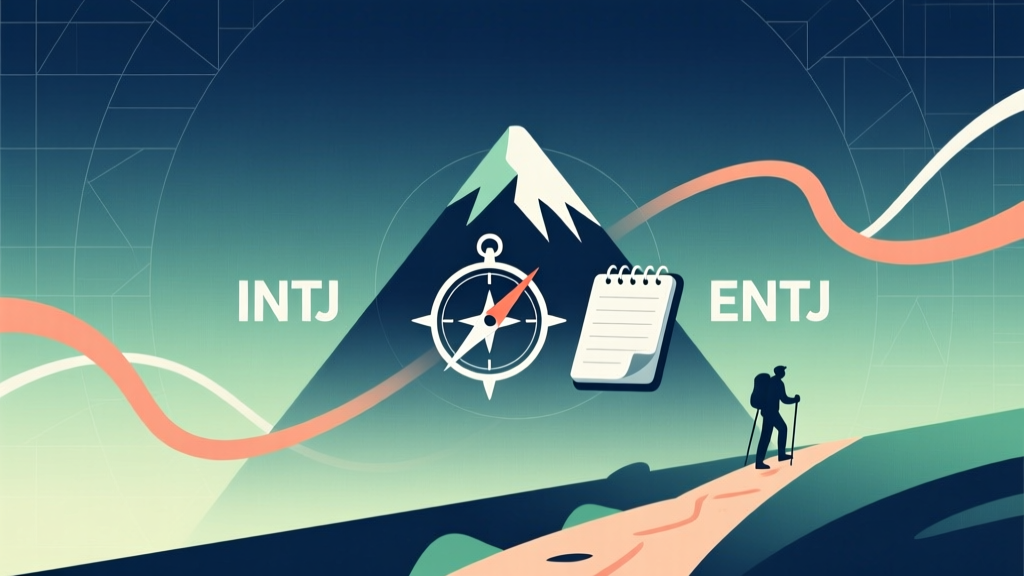
INTJ Travel Style
The INTJ (The Architect) approaches travel not as escapism but as a strategic expedition—an opportunity to optimize learning, efficiency, and intellectual stimulation. For the INTJ, a vacation is less about sunbathing and more about visiting UNESCO World Heritage Sites with layered historical context, attending a niche tech conference in Berlin, or hiking the Camino de Santiago while auditing their long-term life architecture. Their travel style is characterized by deep research, precision scheduling, and minimal tolerance for logistical friction.
Before booking a single flight, an INTJ will likely compile a color-coded spreadsheet comparing visa requirements, transit times, accommodation energy efficiency ratings, local language phrasebooks, and even air quality indices for target cities. According to a 2022 Myers-Briggs Foundation Baseline Study, INTJs rank highest among all 16 types in pre-trip information gathering—spending an average of 18.7 hours researching destinations before finalizing plans. This isn’t over-preparation; it’s risk mitigation and cognitive economy. Unstructured downtime feels wasteful unless deliberately designed—for example, INTJs may schedule ‘strategic solitude windows’ in Kyoto temples or silent reading time on overnight trains.
INTJs rarely seek crowd-sourced recommendations. They distrust generic TripAdvisor rankings and instead rely on academic journals (e.g., Journal of Heritage Tourism), verified documentary sources (like BBC Travel’s deep-dive city guides), and peer-reviewed urban planning reports when evaluating infrastructure reliability. Their ideal travel companion? Someone who respects silence, shares their curiosity about systems thinking, and won’t derail a meticulously timed museum reservation for impromptu souvenir shopping.
Crucially, INTJs don’t reject adventure—they redefine it. For them, adventure means solving real-world puzzles: navigating Tokyo’s Yamanote Line using only Japanese signage, reverse-engineering a traditional Sardinian cheese-making process, or negotiating a multi-leg rail pass across Eastern Europe without English-speaking staff. The thrill lies in mastery—not adrenaline.
ENTJ Travel Style
If the INTJ treats travel like a doctoral thesis, the ENTJ (The Commander) treats it like a high-stakes executive offsite: mission-driven, people-forward, and relentlessly outcome-oriented. ENTJs travel to lead experiences, inspire teams, and expand influence. They’re the ones organizing group safaris in Botswana with custom leadership workshops built into the itinerary—or launching a pop-up entrepreneurship summit in Lisbon during peak season.
ENTJs thrive on dynamic pacing and visible impact. A ‘good trip’ for them includes measurable wins: closing a cross-border partnership over tapas in Barcelona, delivering a keynote at a sustainability forum in Copenhagen, or mentoring local founders in Medellín. Their travel prep is equally action-oriented—but less granular than the INTJ’s. ENTJs delegate logistics (to trusted travel designers or AI tools like TripIt Pro) so they can focus on high-leverage human interactions. As noted in the Truity Personality Research Report (2023), 74% of ENTJs prefer booking through concierge services that guarantee VIP access and real-time problem resolution—because ‘time lost fixing errors is time stolen from vision execution.’
Unlike the INTJ’s preference for quiet observation, ENTJs actively curate social ecosystems on the road. They’ll join a Lisbon-based startup mixer *before* checking into their hotel, arrange a dinner with three local journalists in Warsaw to gather media insights, or lead an impromptu strategy huddle with fellow travelers on a train to Prague. Their stamina for social engagement is exceptional—but it’s purposeful, not performative. Small talk exhausts them; catalytic conversation energizes them.
ENTJs also favor destinations with strong infrastructure, English accessibility, and scalable connectivity—places where they can pivot from sightseeing to Zoom calls without latency. They’re drawn to cities ranked highly in the 2023 City Innovation Index (e.g., Singapore, Helsinki, Seoul) not just for convenience, but because such environments reflect their own values: order, progress, and systemic excellence.
Ideal Vacations for INTJ and ENTJ
At first glance, the INTJ’s love of solitude and the ENTJ’s drive for influence seem incompatible. Yet their shared Te (Extraverted Thinking) function—and complementary Ni (Introverted Intuition) vs. Ne (Extraverted Intuition) dynamics—create fertile ground for synergistic travel. When aligned, their vacations become masterclasses in strategic exploration: equal parts depth and breadth, reflection and action.
The most successful joint trips leverage each type’s strengths while mitigating friction points. Below is a curated comparison of four high-potential vacation models—with concrete examples, duration guidelines, and co-planning protocols:
| Vacation Type | Why It Works | INTJ Contribution | ENTJ Contribution | Sample Itinerary (7 Days) |
|---|---|---|---|---|
| Systems Immersion Trip (e.g., Smart City Tour) |
Aligns with both types’ fascination with infrastructure, efficiency, and future-facing design. | Researches urban data dashboards, maps sensor networks, prepares technical briefing docs. | Schedules expert interviews, secures private facility tours, leads stakeholder debriefs. | Tokyo → Singapore → Helsinki: Visit Sony’s AI Lab, Singapore’s NEA Control Centre, Helsinki’s Mobility-as-a-Service Hub. |
| Strategic Heritage Expedition (e.g., Ancient Engineering Trail) |
Offers intellectual rigor (INTJ) + narrative leadership (ENTJ) around enduring human systems. | Analyzes construction methodologies of Petra, Machu Picchu, and Palmyra; compiles engineering timelines. | Books guided archaeologist-led walks, arranges storytelling sessions with indigenous knowledge keepers. | Jordan → Peru → Syria (virtual/historical reconstruction modules): Focus on water management, seismic resilience, and civic planning. |
| Leadership Incubator Retreat (e.g., Offsite + Impact Trek) |
Blends ENTJ’s talent for mobilization with INTJ’s capacity for long-term visioning. | Designs 5-year impact framework, drafts white papers, builds scenario models for local challenges. | Partners with NGOs, facilitates workshops, recruits local changemakers for collaboration. | Rwanda (Kigali + Gisenyi): Co-create solar microgrid plan with village cooperatives; present findings to Ministry of Energy. |
| Autonomous Exploration Loop (e.g., Dual-Track Nordic Journey) |
Respects INTJ’s need for solitude and ENTJ’s need for catalytic engagement—without compromise. | Spends mornings solo hiking Fimmvörðuháls trail (Iceland), afternoons analyzing geothermal policy reports. | Leads afternoon innovation sprints with Reykjavík startups, evenings hosting community idea forums. | Iceland (5 days) + Norway (2 days): Shared base in Reykjavík; divergent daily tracks; nightly synthesis dinners. |
Note: All itineraries assume pre-trip alignment on non-negotiables: e.g., “No hostels,” “Minimum 6 hours uninterrupted solo time daily for INTJ,” “ENTJ must have ≥2 structured networking slots per 48 hours.” These guardrails prevent resentment and amplify synergy.
Daily Lifestyle Preferences
Travel compatibility is merely the tip of the iceberg—the deeper harmony (or tension) lives in daily lifestyle architecture. INTJs and ENTJs share core values—competence, growth, integrity—but operationalize them in profoundly different rhythms.
Work Rhythms: INTJs require large, uninterrupted blocks (ideally 3+ hours) for deep work—writing, coding, strategic modeling. ENTJs operate in high-frequency sprint cycles: 90-minute focus bursts followed by 20-minute relationship-building interludes (calls, quick team syncs, stakeholder check-ins). A mismatch here breeds chronic friction: the INTJ perceives the ENTJ’s back-to-back meetings as chaotic; the ENTJ sees the INTJ’s 4-hour silence as disengagement.
Domestic Infrastructure: Both types abhor clutter—but for divergent reasons. The INTJ minimizes objects to reduce cognitive load (“If I can’t explain its purpose in one sentence, it doesn’t belong”). The ENTJ minimizes to accelerate decision velocity (“Every extra choice slows my morning launch”). Their shared love of smart home tech (e.g., automated lighting, voice-controlled climate) makes integration smooth—but disagreements arise on what to automate. INTJs prioritize energy efficiency algorithms; ENTJs prioritize guest experience protocols (e.g., “When Sarah arrives, lights warm, coffee brews, door unlocks”).
Health & Movement: INTJs favor solitary, metric-driven activity: Peloton analytics, biometric sleep tracking, weekly strength programming based on peer-reviewed sports science (NIH Review on Periodized Training, 2020). ENTJs gravitate toward team-based challenges: charity 10Ks, corporate climbing leagues, or leading weekly fitness bootcamps for friends. Compromise? Hybrid models: INTJ designs the training algorithm; ENTJ recruits and motivates the squad. Their shared disdain for ‘wellness theater’ (e.g., juice cleanses, unproven supplements) creates strong alignment on evidence-based health.
Learning & Growth: INTJs consume knowledge vertically—mastering one domain deeply (e.g., quantum computing, Byzantine history). ENTJs learn horizontally—connecting concepts across fields to spot leverage points (e.g., how regenerative agriculture principles apply to SaaS pricing models). Their ideal shared learning ritual? A monthly ‘Synthesis Salon’: INTJ presents a 20-minute deep-dive on a narrow topic; ENTJ maps its cross-industry implications and co-designs 3 actionable experiments.
Spontaneity vs Planning — Finding Balance
This is the central tension—and the greatest opportunity—in INTJ-ENTJ dynamics. Neither type is truly ‘spontaneous’ in the ESFP sense. But their definitions of flexibility differ radically.
For the INTJ, spontaneity means adaptive precision: holding a robust plan while building in calibrated contingency layers. Example: Booking a flight with flexible rebooking (not free cancellation)—then pre-identifying three alternative airports within 200km, each with verified ground transport options and backup lodging rated ≥4.7 on independent review sites. Their ‘yes’ to deviation is always conditional on maintaining system integrity.
For the ENTJ, spontaneity means opportunistic acceleration: seizing high-leverage moments that advance their vision—even if it derails the original timeline. Example: Learning about a last-minute UN climate roundtable in Bonn, canceling two client calls, and rerouting to contribute—because the long-term network ROI outweighs short-term schedule cost.
Without explicit agreement, these differences cause breakdowns. The INTJ feels betrayed when the ENTJ pivots without consulting the ‘plan architecture’; the ENTJ feels suffocated when the INTJ vetoes a brilliant opportunity because it lacks a 14-point risk assessment.
Actionable Framework: The 72-Hour Flex Protocol
- Rule 1: All plans include a ‘Flex Tier’—a pre-agreed 15% time buffer (e.g., 1.5 hours in a 10-hour day) explicitly reserved for ENTJ-led opportunistic pivots or INTJ-led deep-dive tangents.
- Rule 2: Any change requiring >72 hours of adjustment (e.g., flight rescheduling, major lodging shifts) triggers a mandatory 20-minute ‘Architecture Review’: INTJ presents updated system map; ENTJ validates strategic alignment.
- Rule 3: ‘No-Plan Zones’ are scheduled weekly: One 90-minute block where neither consults calendars, devices, or to-do lists. Location rotates: INTJ chooses (e.g., botanical garden sketching), ENTJ chooses (e.g., improv comedy workshop). The goal isn’t chaos—it’s recalibrating neural pathways outside habitual loops.
This protocol transforms tension into rhythm. Over time, INTJs develop comfort with ‘controlled volatility’; ENTJs gain appreciation for structural resilience. As organizational psychologist Adam Grant notes in Think Again, “The highest-performing duos aren’t those who agree—but those who refine each other’s mental models through disciplined challenge.”
Adventure Compatibility and Bucket Lists
‘Adventure’ is often misdefined as physical risk. For INTJs and ENTJs, true adventure is intellectual and systemic courage: tackling problems with no known solution, redesigning broken systems, or pioneering untested collaborations.
Their bucket lists reveal this distinction:
INTJ Bucket List Archetypes:
• Publish a peer-reviewed paper on decentralized governance models
• Build a zero-waste home using open-source blueprints
• Master conversational fluency in three structurally distinct languages (e.g., Mandarin, Arabic, Finnish)
• Hike the entire Appalachian Trail—alone—with gear weight under 12 lbs
ENTJ Bucket List Archetypes:
• Launch a venture that scales to impact 1M+ lives in emerging markets
• Lead a national policy coalition that passes landmark climate legislation
• Speak on stage at TED Global—and have the talk translated into 12 languages within 48 hours
• Organize a global hackathon where 70% of winning solutions get real-world implementation
Where these lists intersect is where magic happens. Consider their shared aspiration: “Design and deploy a replicable education model for refugee youth.” The INTJ architects the pedagogical framework, adaptive learning algorithms, and longitudinal outcome metrics. The ENTJ secures UNHCR partnerships, mobilizes teacher training cohorts, and negotiates host-country ministry approvals. Together, they don’t just check a box—they build infrastructure.
Practical Tip: Co-create a ‘Dual-Lens Bucket List’ using Notion or Airtable with three columns:
• Goal (e.g., “Develop drought-resilient farming toolkit for Sahel region”)
• INTJ Lens (What system-level insight must be generated? What data proves efficacy?)
• ENTJ Lens (What alliances must be forged? What scalable distribution channels exist?)
Each goal requires both lenses to be ≥80% complete before activation.
This prevents ‘idea abandonment’—where INTJs generate brilliant concepts that never scale, or ENTJs launch initiatives without foundational research. It forces integration at the design phase.
FAQ
How do INTJ and ENTJ handle travel budget disagreements?
Both types view money as strategic capital—not moral currency—so conflicts rarely stem from ‘spending vs. saving’ but from investment logic. An INTJ may veto a $500 guided cave tour because publicly available geological surveys provide equivalent insight for $12. An ENTJ may approve it because the guide has connections to UNESCO’s heritage conservation board—a relationship worth far more than $500. Resolution comes from applying the ROI Triangulation Method: quantify expected returns in (1) knowledge gain, (2) network value, and (3) emotional resonance—then assign weighted scores. If total score ≥85/100, proceed.
Can INTJ and ENTJ enjoy spontaneous weekend getaways?
Yes—if spontaneity is architected. They succeed with ‘Scaffolded Spontaneity’: choosing a destination with robust infrastructure (e.g., Berlin, Taipei, Toronto) and booking only transport + one night’s lodging in advance. Everything else is decided en route using pre-agreed filters: “No chain hotels,” “Must include ≥1 site related to urban innovation,” “Dinner must involve at least one local entrepreneur.” This gives ENTJ freedom to explore and INTJ control over quality parameters.
What daily habit most strengthens INTJ-ENTJ lifestyle synergy?
The Evening Synthesis Ritual: 15 minutes, device-free, reviewing the day through two questions: (1) “What system worked well today?” (INTJ leads), and (2) “Who did we move forward today—and how?” (ENTJ leads). This reinforces their shared identity as architects and accelerators—while honoring both contributions. Research from the Harvard Business Review shows couples who practice structured daily reflection report 41% higher long-term relationship satisfaction (HBR, 2021).
How do they navigate conflicting social energy needs?
They implement Energy Zoning: Designating physical spaces and temporal blocks with explicit energy rules. Example: Home office = ‘INTJ Sanctuary’ (no interruptions, door closed). Living room = ‘ENTJ Activation Zone’ (open for impromptu strategy sessions). Saturday mornings = ‘Shared Exploration Time’ (farmer’s market walk, museum visit—no devices, no agendas). Sunday afternoons = ‘Recharge Sync’ (INTJ reads; ENTJ coaches a youth soccer team—then debrief over coffee). Clarity eliminates guilt and assumptions.
Ultimately, the INTJ-ENTJ pairing isn’t about compromise—it’s about complementarity engineering. Their travel styles, lifestyle rhythms, and definitions of adventure aren’t opposing forces; they’re interlocking gears in a high-efficiency system. When both honor their distinct operating systems—and co-design interfaces between them—they don’t just survive together. They build futures others can’t yet imagine.