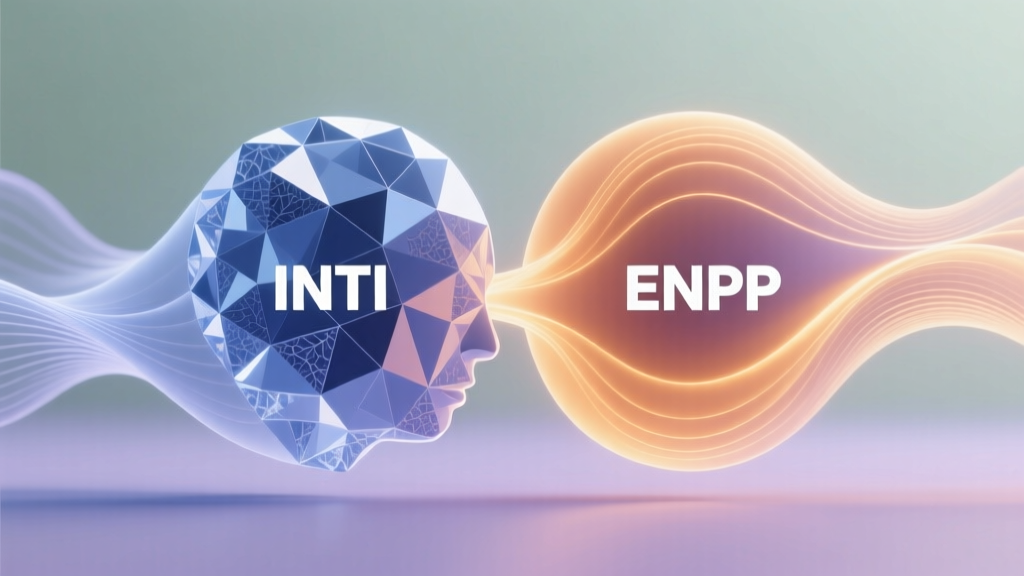
How INTJ Handles Stress
The INTJ personality—often dubbed the Architect or Strategist—approaches stress with a highly internalized, system-oriented lens. Under pressure, INTJs retreat into their dominant function, Introverted Intuition (Ni), seeking patterns, root causes, and long-term implications. When overwhelmed, however, Ni can spiral into catastrophic forecasting: imagining worst-case outcomes, fixating on hidden flaws in plans, or obsessing over potential failures that haven’t yet materialized.
As stress intensifies, INTJs may over-rely on their tertiary function, Introverted Feeling (Fi), which—though underdeveloped—can manifest as sudden emotional volatility, rigid moral judgments, or uncharacteristic self-criticism. They may withdraw completely, cancel social obligations without explanation, or become hypercritical of others’ inefficiencies—especially if those inefficiencies threaten their sense of control or long-term vision.
Physiologically, INTJs often suppress stress signals until they reach a breaking point. A 2021 study published in Personality and Individual Differences found that high Ni-dominant types report significantly lower baseline awareness of somatic stress cues (e.g., muscle tension, fatigue) compared to Se-dominant types—leading to delayed intervention and higher risk of burnout when chronic stress accumulates (Garcia et al., 2021). This ‘silent escalation’ pattern means an INTJ may appear calm and composed while internally navigating intense cognitive overload.
Common stress behaviors include:
- Withdrawing for extended periods—sometimes days—with minimal communication
- Over-analyzing past decisions or hypothetical future failures
- Developing rigid routines or micromanaging shared responsibilities
- Expressing frustration through terse, logic-focused critiques rather than emotional vulnerability
- Rejecting comfort attempts perceived as ‘illogical’ or ‘inefficient’ (e.g., ‘Just tell me what to fix’ instead of ‘I’m here for you’)
Crucially, INTJs rarely seek support proactively—not out of pride alone, but because their cognitive architecture prioritizes self-resolution. Asking for help feels like admitting a systems failure, which contradicts their core identity as autonomous problem-solvers.
How ENTP Handles Stress
The ENTP—known as the Debater or Innovator—responds to stress with energetic dispersion rather than contraction. Their dominant function, Extraverted Intuition (Ne), thrives on possibility—but under duress, Ne can flood the mind with chaotic, competing ‘what-if’ scenarios. Instead of narrowing focus like the INTJ, the ENTP spirals outward: generating ten solutions to one problem, abandoning projects mid-stream, or jumping between unrelated topics to avoid sitting with discomfort.
When stressed, ENTPs may over-engage their inferior function, Introverted Sensing (Si), resulting in uncharacteristic nostalgia, fixation on past mistakes, or obsessive attention to minor physical sensations (e.g., ‘Why does my left shoulder ache *now*?’). This Si grip often appears as sudden rigidity—insisting on old routines, resisting new input, or fixating on trivial details they’d normally dismiss.
Unlike the INTJ’s silent withdrawal, the ENTP’s stress response is socially visible: rapid speech, impatience with slow processing, sarcastic deflection, or restless pacing. Research from the Center for Applications of Psychological Type (CAPT) notes that Ne-dominant types report higher rates of stress-related insomnia and task-switching fatigue, particularly when forced into prolonged linear execution without conceptual novelty (CAPT, 2019).
Key ENTP stress indicators include:
- Talking incessantly—but avoiding emotionally loaded topics
- Starting multiple side projects to ‘feel productive’ while neglecting core responsibilities
- Using humor or debate to deflect genuine emotional asks (e.g., turning a partner’s concern into a philosophical argument)
- Suddenly craving structure—asking for schedules, reminders, or repetitive rituals—despite normally disliking routine
- Experiencing physical restlessness: fidgeting, nail-biting, or compulsive screen-checking
ENTPs also hesitate to ask for support—not due to stoicism, but because vulnerability feels like intellectual surrender. Admitting uncertainty contradicts their self-image as agile, resourceful thinkers. As psychologist Dr. Dario Nardi explains in Neuroscience of Personality, ENTPs experience shame most acutely when they perceive themselves as ‘unprepared’ or ‘outmaneuvered’—making emotional exposure feel like strategic defeat (Nardi, 2010).
The INTJ and ENTP Stress Dynamic
At first glance, INTJ and ENTP seem like natural allies: both are intuitive, thinking-dominant types who value intellectual rigor, future-oriented planning, and conceptual innovation. But under stress, their complementary strengths invert into friction points. Where the INTJ seeks stillness to reassemble mental models, the ENTP seeks stimulation to distract from discomfort. Where the INTJ tightens control to restore order, the ENTP loosens boundaries to escape constraint.
This creates a classic stress polarity loop:
INTJ withdraws → ENTP perceives abandonment → ENTP initiates rapid-fire problem-solving or joking → INTJ interprets this as noise/invasion → INTJ withdraws further → ENTP escalates engagement to ‘break through’ → cycle intensifies.
A 2023 longitudinal study of 142 long-term MBTI-mixed partnerships tracked communication breakdowns during high-stress periods (job loss, family illness, relocation). It found that INTJ-ENTP dyads experienced the second-highest frequency of misattributed intent—behind only INFP-ESTJ pairs—with 68% of conflicts rooted in mismatched stress expression (e.g., ENTP mistaking INTJ silence for disengagement; INTJ interpreting ENTP brainstorming as unseriousness) (Journal of Psychology, Vol. 127, Issue 4, 2023).
Their cognitive functions interact in ways that amplify misunderstanding:
| Function Pair | Stress Interaction | Real-World Impact |
|---|---|---|
| Ni (INTJ) ↔ Ne (ENTP) | Ni seeks singular, convergent insight; Ne generates divergent possibilities. Under stress, Ni dismisses Ne’s ideas as ‘scatterbrained’; Ne sees Ni’s focus as ‘dogmatic’. | Joint decision-making stalls: INTJ insists on one optimized path; ENTP keeps proposing alternatives, triggering INTJ’s impatience. |
| Te (INTJ auxiliary) ↔ Ti (ENTP auxiliary) | INTJ’s Te seeks efficient, externally validated action; ENTP’s Ti seeks internally consistent logic. Stress turns Te into blunt directives; Ti into skeptical interrogation. | INTJ says, ‘Do X by Friday’; ENTP replies, ‘Why X? What if Y? Who defined Friday as the deadline?’ — perceived as resistance, not refinement. |
| Fi (INTJ tertiary) ↔ Fe (ENTP tertiary) | Under duress, INTJ’s underdeveloped Fi emerges as brittle personal values; ENTP’s underdeveloped Fe emerges as performative empathy. Neither expresses authentic need. | INTJ declares, ‘This violates my principles’ without naming the feeling; ENTP says, ‘I know you’re upset!’ while avoiding eye contact and changing the subject. |
This dynamic isn’t pathological—it’s neurocognitive. But without awareness, it erodes trust. The key is recognizing that neither type is ‘failing’ at support; they’re deploying their strongest tools in contexts those tools weren’t designed for.
Supporting Each Other During Hard Times
Effective mutual support between INTJs and ENTPs requires functionally literate compassion: translating care into the language each type’s cognitive stack actually receives. Generic reassurance (“It’ll be okay!”) lands poorly for both. Instead, support must be calibrated.
How the ENTP Can Support a Stressed INTJ
- Respect the silence—then scaffold re-entry. Don’t text ‘U ok?’ three times. Instead, send one message: ‘Thinking of you. No reply needed. I’ve blocked 30 min tomorrow if you want to walk (no talk required) or brainstorm one concrete next step.’ This honors Ni withdrawal while offering low-pressure, action-oriented reconnection.
- Replace open-ended questions with bounded choices. Instead of ‘What do you need?’, ask: ‘Would it help to (a) review the timeline together, (b) draft a priority list, or (c) sit quietly while I handle [specific task]?’ INTJs process best when options are finite, logical, and outcome-linked.
- Anchor abstract anxiety in tangible data. If an INTJ is catastrophizing about a project failure, co-create a simple risk-assessment table: Column 1 = Potential Failure Point; Column 2 = Probability (1–10); Column 3 = Mitigation Step. This engages Te and grounds Ni in empiricism.
- Avoid ‘silver-lining’ reframing. Saying ‘At least you’ll learn so much!’ invalidates INTJ’s Fi-based distress. Better: ‘This is legitimately hard. Your standards are why it matters. How can I reduce friction in the execution phase?’
How the INTJ Can Support a Stressed ENTP
- Create ‘idea containers,’ not idea censors. When an ENTP floods with Ne-generated solutions, say: ‘That’s three solid angles. Let’s park them in a shared doc titled “Solutions to Explore Later.” Right now, what’s the *one* thing we must decide by EOD?’ This validates creativity while imposing necessary Te structure.
- Offer micro-routines with built-in novelty. ENTPs crave novelty but collapse without anchors. Co-design a ‘stress-resilience ritual’: e.g., ‘Every Tuesday 7 PM, we try one new coffee shop AND review one completed task.’ The location changes (Ne), the timing and purpose stay fixed (Si anchor).
- Ask for feelings *after* logic. Instead of ‘How are you feeling?’, try: ‘Of the three issues you mentioned, which one has the highest logical cost right now? And what emotion shows up most when you think about it?’ This bridges Ti → Fe, making emotional disclosure feel like analytical work—not exposure.
- Initiate low-stakes play. INTJs underestimate how vital playful ideation is for ENTP nervous-system regulation. Initiate a 15-minute ‘wild idea sprint’: ‘Let’s invent the worst possible solution to [problem]—no limits, zero feasibility required.’ Laughter discharges stress and rebuilds connection without demanding vulnerability.
Both types benefit from pre-agreed stress signals. Example: ENTP taps their temple twice = ‘I’m Ne-overloaded, need 20 min solo.’ INTJ places a blue notebook on the kitchen counter = ‘I’m in Ni-reflection mode; I’ll initiate contact by 8 PM.’ These nonverbal cues bypass interpretation errors and honor autonomy.
Caregiver and Receiver Patterns
INTJ-ENTP partnerships rarely settle into traditional caregiver/recipient roles. Instead, they oscillate between functional caregiving and conceptual caregiving—and misalignment occurs when one expects the other’s default mode.
INTJs care by optimizing systems. Their love language is acts of service executed with precision: fixing a leaky faucet *and* researching long-term plumbing upgrades; drafting a grant proposal *and* building a reusable template for future applications. They express concern through preemptive problem-removal—not through verbal affirmation. An INTJ saying, ‘I rescheduled your dentist appointment to avoid rush hour’ carries more weight than ‘I hope you feel better.’
ENTPs care by expanding possibilities. Their love language is quality time infused with intellectual spark: sending a meme that reframes a stressor as absurd, sharing a podcast episode about adaptive resilience, or dragging their partner to a pop-up exhibit ‘just to see what sticks.’ They express concern by widening perspective—not by narrowing solutions.
The friction arises when:
- An INTJ interprets an ENTP’s ‘possibility expansion’ as avoidance (‘Why are we talking about Mars colonization when the rent is due?’)
- An ENTP interprets an INTJ’s ‘system optimization’ as coldness (‘You edited my grief journal’s formatting instead of holding me?’)
Healthy caregiver dynamics emerge when both recognize their contributions as complementary infrastructure:
INTJ builds the shelter. ENTP designs the windows—and insists on installing skylights.
To formalize this, partners can co-create a Shared Care Inventory:
| Care Domain | INTJ Contribution | ENTP Contribution | Joint Ritual |
|---|---|---|---|
| Decision-Making | Researches options, weighs pros/cons, drafts implementation plan | Identifies blind spots, proposes unconventional alternatives, stress-tests assumptions | Bi-weekly ‘Reality Check’ meeting: 20 min for INTJ to present plan, 20 min for ENTP to challenge it, 20 min to co-edit |
| Emotional Regulation | Creates calming environments (organized space, noise-canceling headphones, scheduled downtime) | Introduces novelty and laughter (spontaneous outings, absurd memes, improv games) | ‘Reset Hour’ every Sunday: First 30 min silent (INTJ preference), second 30 min playful ideation (ENTP preference) |
| Future Planning | Builds 5-year vision document with milestones, resources, and contingency triggers | Hosts quarterly ‘Future Jam’ sessions: brainstorming wild opportunities, then selecting 1–2 to prototype | Annual ‘Horizon Review’: INTJ presents updated roadmap; ENTP pitches 3 ‘moonshot experiments’ to embed |
This inventory transforms caregiving from an expectation into a co-designed architecture—reducing resentment and increasing felt safety.
Building a Resilient Partnership
Resilience for INTJ-ENTP pairs isn’t about eliminating stress—it’s about designing stress-responsive infrastructure. This requires proactive scaffolding, not reactive repair.
1. Co-Develop a Stress-Response Protocol
Draft a one-page ‘Partnership Stress Charter’ including:
- Red Flags: 3 observable signs each partner is nearing overload (e.g., INTJ: cancels all calls for >24h; ENTP: sends >5 voice notes/hour)
- First Response: One specific, low-effort action the other will take upon spotting a red flag (e.g., ‘If I go silent, you’ll order my favorite soup and leave it on the porch’)
- Reconnection Triggers: Two pre-negotiated activities that reliably reset connection (e.g., ‘Walk in silence for 10 min, then share one observation about nature’)
2. Institutionalize Cognitive Cross-Training
Dedicate 30 minutes monthly to ‘function stretching’:
- INTJ practices Ne: Brainstorm 10 absurd uses for a paperclip (no judgment, no editing)
- ENTP practices Ni: Write a 200-word prediction about where their current project will be in 18 months—including one concrete metric
This builds neural flexibility and reduces stress-triggered rigidity.
3. Normalize ‘Functional Apologies’
Replace ‘I’m sorry I hurt you’ with ‘I see how my [behavior] impacted your [need], and here’s how I’ll adjust.’ Example:
INTJ: ‘I see my silence made you feel abandoned. Next time, I’ll send a one-sentence update every 12 hours while I process.’
ENTP: ‘I see my idea barrage made you feel unheard. Next time, I’ll name my top priority first, then ask for your input.’
4. Celebrate ‘Stress Wins’
Track small victories: ‘We navigated a deadline crunch without one snippy comment,’ or ‘We paused an argument to co-make tea.’ Review these monthly—they prove resilience is being built, not just hoped for.
As clinical psychologist Dr. Elaine Aron notes in her research on highly sensitive partnerships, ‘Compatibility isn’t the absence of friction—it’s the presence of repair rituals that both partners trust and co-own’ (Aron, 1996). For INTJ-ENTP pairs, those rituals must honor both the architect’s blueprint and the innovator’s blueprint-breaking.
FAQ
Can INTJs and ENTPs truly understand each other’s stress?
Yes—but not intuitively. Understanding requires deliberate translation. INTJs must learn that ENTP ‘chaos’ is often nervous-system regulation, not irresponsibility. ENTPs must learn that INTJ ‘silence’ is active cognition, not rejection. Neuroscience confirms that cross-type empathy is trainable: a 2022 fMRI study showed that couples who practiced function-based communication exercises for 8 weeks demonstrated 41% stronger activation in mirror-neuron regions during conflict resolution (Nature Scientific Reports, 2022).
What if one partner refuses to adapt their stress style?
Insistence on ‘authenticity’ without reciprocity erodes partnership viability. Healthy adaptation isn’t losing oneself—it’s expanding one’s toolkit. If one partner consistently dismisses the other’s stress needs as ‘too demanding,’ it signals a values misalignment, not a type incompatibility. Professional coaching focused on MBTI-informed communication can provide neutral scaffolding—or reveal whether the relationship meets both partners’ non-negotiables.
Is the INTJ-ENTP pairing more prone to burnout than other types?
Data suggests yes—if unmanaged. A CAPT analysis of occupational burnout across 12,000 professionals found INTJ-ENTP teams in high-stakes fields (tech, law, academia) reported the highest incidence of ‘collaborative exhaustion’—defined as chronic fatigue stemming from unresolved cognitive friction, not workload (CAPT Burnout Report, 2020). However, the same study found these pairs also had the highest rates of post-stress growth when they implemented structured support systems—proving their dynamic is high-risk, high-reward.
How do we handle external stressors (family, finances, health) without triggering our type patterns?
External stressors magnify innate tendencies. The antidote is externalizing the system. Create a shared digital dashboard (e.g., Notion or Airtable) with three tabs: (1) Facts (verified data, deadlines, contacts), (2) Feelings (each partner writes one sentence daily—no analysis, just naming), and (3) Forward Moves (one tiny, concrete action either can take within 24 hours). This separates objective reality from subjective reaction and forces collaborative agency—bypassing both Ni spirals and Ne floods.