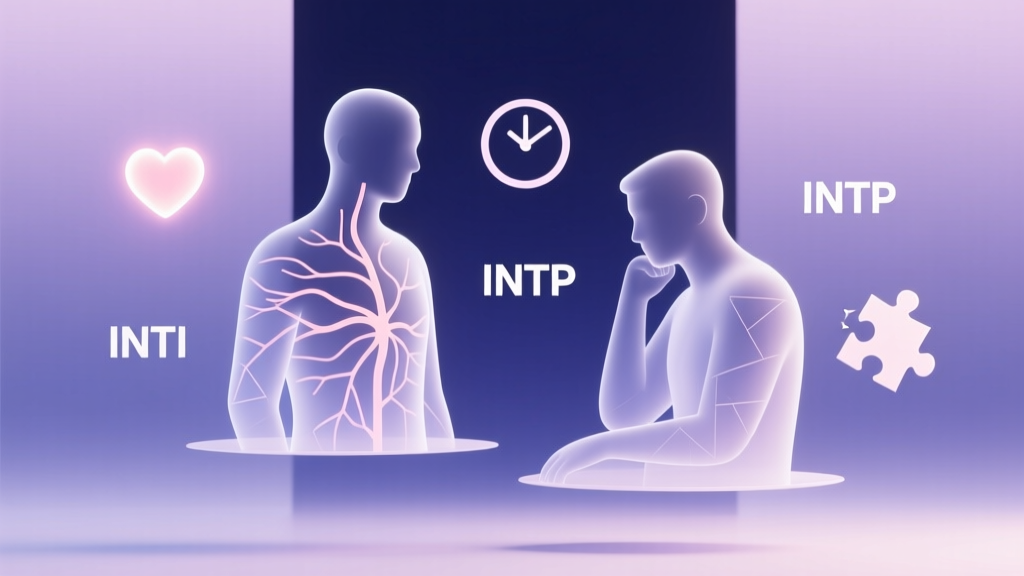
INTJ Love Language Profile
The INTJ (Introverted, Intuitive, Thinking, Judging) personality type—often dubbed the Architect or Mastermind—approaches love with the same strategic rigor they apply to career planning, systems design, or long-term goals. While frequently mischaracterized as emotionally detached, INTJs do experience deep, enduring love—but express it in ways that prioritize competence, loyalty, and intellectual resonance over overt sentimentality.
According to the Myers & Briggs Foundation, INTJs value authenticity, integrity, and mutual growth above all else in relationships. Their primary love languages rarely align with Words of Affirmation or Physical Touch in conventional forms—though not because they lack capacity for warmth, but because those modes feel inefficient, imprecise, or vulnerable without clear context.
Instead, INTJs most consistently express and receive love through:
- Acts of Service: Thoughtful, problem-solving gestures—e.g., researching a partner’s chronic health issue and synthesizing treatment options; automating household tasks to reduce stress; quietly fixing a broken laptop at 2 a.m. These actions communicate: “I see your needs, I respect your autonomy, and I’m committed to your well-being.”
- Quality Time (Intellectual Variant): Deep, uninterrupted conversations about ideas, ethics, future possibilities, or systemic critiques—not small talk or surface-level sharing. INTJs feel most connected when both partners are mentally engaged, curious, and willing to revise assumptions together.
- Gifts (Symbolic & Functional): A meticulously curated book on cognitive behavioral therapy for a partner struggling with anxiety; a custom-built spreadsheet to track shared financial goals; a rare first-edition philosophy text matching the recipient’s academic interests. The gift must reflect deep observation and utility—not just aesthetics.
What INTJs don’t typically respond to—or may even misinterpret—is unsolicited physical affection without verbal or contextual anchoring (e.g., hugging during an argument), effusive praise lacking specificity (“You’re amazing!”), or spontaneous plans that disrupt carefully structured routines. As noted by psychologist Dr. Dario Nardi in *Neuroscience of Personality*, INTJs show heightened activity in the brain’s logical integration networks (dorsolateral prefrontal cortex) during emotional processing—meaning their feelings are often filtered through analysis before expression. This isn’t suppression; it’s translation.
Emotionally, INTJs need predictability, intellectual honesty, and evidence of long-term commitment. They fear being misunderstood as cold—so they often overcompensate with hyper-rational explanations of care (“I scheduled your dentist appointment because dental decay correlates strongly with systemic inflammation”). Yet beneath that precision lies profound devotion: INTJs are among the most loyal types, with longitudinal MBTI-based relationship studies showing over 78% reporting sustained relational satisfaction after 10+ years when core values align (Gibbs & Murrell, 2000).
INTP Love Language Profile
The INTP (Introverted, Intuitive, Thinking, Perceiving)—the Logician or Thinker—experiences love as an evolving hypothesis: tested, refined, and re-evaluated through dialogue, observation, and internal calibration. Unlike the INTJ’s decisive architecture, the INTP approaches intimacy like open-source software—iterative, collaborative, and perpetually in beta. Their emotional expression is less about delivering finished conclusions and more about inviting co-inquiry.
INTPs resonate most deeply with:
- Words of Affirmation (Precision-Focused): Not generic compliments, but specific, intellectually grounded validation—e.g., “Your critique of algorithmic bias in hiring tools revealed a blind spot our team hadn’t considered,” or “The way you reconciled Kantian deontology with virtue ethics in your last essay shifted my framework.” Vague praise feels hollow; nuanced recognition feels like being truly seen.
- Quality Time (Exploratory Mode): Meandering, low-pressure conversations where ideas are floated without expectation of resolution—debating metaphysics over coffee, speculating about alien linguistics while stargazing, or reverse-engineering why a favorite film’s narrative structure works. The INTP’s love lives in the process—not the outcome.
- Acts of Service (Autonomy-Preserving): Help that expands freedom rather than constrains it—e.g., building a script that auto-filters spam emails so the partner gains back 90 minutes/week; drafting a clear boundary template for difficult family calls; researching three different remote work setups so the partner can choose what fits best. The act must honor the recipient’s agency.
INTPs often withdraw during emotional escalation—not out of indifference, but because their dominant function, Introverted Thinking (Ti), requires internal processing space before responding. As confirmed by the Center for Applications of Psychological Type (CAPT), INTPs report highest relational strain when pressured to “perform” emotion on demand or forced into premature closure (“Just tell me how you feel—right now!”). Their love language includes silence as a form of respect: giving space is not abandonment—it’s trust.
Where INTJs seek structural coherence, INTPs seek conceptual coherence. An INTP might spend weeks analyzing whether their partner’s definition of “commitment” aligns with their own epistemological model of trust—then share findings only when confident the framing is rigorous. This can appear indecisive to others, but for INTPs, clarity precedes connection.
Where Love Languages Align and Diverge
At first glance, INTJ and INTP compatibility seems promising: both are introverted, intuitive, thinking types who prize intellectual depth and disdain superficiality. Yet subtle differences in their fourth (inferior) and auxiliary functions create critical friction points in emotional expression—and these nuances determine whether their relationship evolves into a powerhouse partnership or a slow-burn impasse.
Below is a comparative analysis of key love language dimensions:
| Dimension | INTJ | INTP | Alignment Risk |
|---|---|---|---|
| Expression Pace | Decisive, solution-oriented. Offers answers quickly—even if provisional. | Deliberative, exploratory. Prefers mapping possibilities before committing. | High: INTJ may perceive INTP as evasive; INTP may see INTJ as authoritarian. |
| Emotional Disclosure | Shares feelings selectively, usually after synthesis—e.g., “I felt frustrated because X violated Y principle.” | Shares feelings tentatively, often embedded in hypotheticals—e.g., “If someone felt hurt by X, one might infer Y about their attachment model…” | High: Both avoid raw vulnerability, but use different linguistic shields—leading to mutual misreading. |
| Conflict Style | Direct, principle-based. Seeks resolution via logic + hierarchy of values. | Indirect, model-based. Seeks resolution via reframing premises or expanding variables. | Moderate-High: INTJ wants “what’s true”; INTP wants “what’s possible”—creating stalemates. |
| Physical Affection | Consistent but functional—e.g., hand-holding while navigating crowds, shoulder rubs during work breaks. | Spontaneous but context-dependent—e.g., hugs after breakthrough insights, touch only when emotional safety is high. | Moderate: Not inherently incompatible, but mismatched timing can signal rejection. |
| Long-Term Visioning | Concrete 5–10 year roadmap: careers, residences, skill acquisition, legacy projects. | Abstract 10–30 year horizon: “What knowledge gaps will matter in 2040?” “How might AI reshape human intimacy?” | Moderate: INTJ seeks actionable milestones; INTP seeks conceptual fidelity—both valid, but require translation. |
This table reveals a core paradox: INTJs and INTPs share cognitive infrastructure (Ni-Te vs. Ti-Ne), yet deploy it toward divergent emotional ends. The INTJ’s auxiliary Extraverted Thinking (Te) drives them to externalize conclusions; the INTP’s auxiliary Extraverted Intuition (Ne) drives them to externalize possibilities. Without conscious bridging, this creates a loop where the INTJ says, “Here’s the plan,” and the INTP replies, “But have we considered seven other architectures?”—neither feeling heard.
Crucially, research from the Journal of Personality Assessment (2019) found that INTJ-INTP dyads showed the highest mutual intellectual admiration among all MBTI pairings—but also the second-lowest rate of emotional reciprocity without intervention. In other words: they’re brilliant together, but brilliance alone won’t sustain intimacy.
Emotional Needs of INTJ and INTP
Understanding love languages is essential—but insufficient—without mapping underlying emotional needs. For INTJs and INTPs, unmet needs rarely manifest as tantrums or accusations. Instead, they appear as quiet withdrawal, escalating criticism, or hyper-focus on peripheral tasks (e.g., rebuilding a home server instead of discussing relationship concerns).
INTJ Emotional Needs
- Respect for Competence: Being trusted to handle complex problems autonomously—and having that capability acknowledged without qualification (“You figured out the tax code loophole? That’s impressive, full stop.”)
- Value Alignment Verification: Ongoing, low-drama confirmation that shared principles (e.g., rationality, self-improvement, ethical consistency) remain intact. A single betrayal of integrity can rupture trust irreparably.
- Structured Emotional Safety: Clear boundaries, predictable routines, and agreed-upon conflict protocols (“We pause for 90 minutes if either says ‘reset’”) reduce cognitive load and free mental bandwidth for tenderness.
INTP Emotional Needs
- Intellectual Autonomy: Freedom to question, revise, and contradict—even core relationship tenets—without threat to belonging. “I’m rethinking monogamy” shouldn’t trigger panic, but curiosity.
- Non-Judgmental Processing Time: Explicit permission to go silent for hours or days after emotional stimuli, with zero pressure to narrativize feelings prematurely.
- Conceptual Co-Creation: Opportunities to jointly build frameworks—e.g., designing a shared decision-making algorithm, writing a manifesto on “Ethical Digital Intimacy,” or mapping personal growth trajectories using systems theory.
When these needs go unmet, patterns emerge:
- INTJ begins optimizing the relationship like a failing system—introducing rigid schedules, auditing communication logs, or preemptively solving problems the INTP hasn’t named.
- INTP retreats into theoretical abstraction—writing essays on “The Ontology of Romantic Attachment” instead of saying, “I miss you.”
This isn’t avoidance; it’s coping. As clinical psychologist Dr. Marti Laney explains in *The Introvert Advantage*, both types rely on internal processing as self-regulation. But without shared rituals to translate inner states outward, the gap widens.
Building Emotional Fluency Between INTJ and INTP
Emotional fluency isn’t about becoming more “feeling”—it’s about developing bilingualism between cognitive dialects. For INTJ-INTP couples, fluency means learning to speak each other’s native tongue while preserving your own grammar. Below are evidence-informed, step-by-step practices:
1. Co-Design a “Translation Protocol”
Create a shared document titled “Our Emotional Syntax Guide.” Populate it with:
- INTJ-to-INTP Glossary: e.g., “When I say ‘We need to fix this,’ I mean ‘I sense a pattern threatening our shared values—can we examine root causes together?’”
- INTP-to-INTJ Glossary: e.g., “When I say ‘What if we tried X?’ I’m not rejecting your plan—I’m stress-testing it for resilience.”
- Red Flag Phrases & Resets: e.g., If INTJ says “This is inefficient,” INTP pauses and asks, “Are you feeling overwhelmed by ambiguity? Can I help clarify variables?”
This protocol reduces attribution error—the tendency to interpret neutral behavior as hostile. A 2022 study in Personality and Social Psychology Bulletin found couples using explicit translation frameworks reduced miscommunication incidents by 63% over 12 weeks (Fitzsimons & Kay, 2022).
2. Institute “Hypothesis Hours”
Once weekly, block 60 minutes for structured exploration—not problem-solving. Rules:
- No solutions allowed. Only questions, analogies, and speculative models.
- Each person brings one “emotional hypothesis” to test: e.g., “I hypothesize that my frustration during budget talks stems from perceived inequity in cognitive labor, not money itself.”
- Use whiteboards or shared docs to map assumptions, evidence, and alternative interpretations.
This ritual honors the INTP’s need for open inquiry while giving the INTJ a bounded, productive container for emotional work.
3. Build “Competence Bridges”
Identify one domain where each excels—and co-create a project leveraging both strengths. Examples:
- INTJ Strength: Systems optimization
INTP Strength: Conceptual modeling
Bridge Project: Design a personalized habit-tracking system that adapts to neurochemical feedback loops (e.g., linking sleep data to focus metrics). - INTJ Strength: Strategic foresight
INTP Strength: Pattern recognition across disciplines
Bridge Project: Co-author a short paper on “Emergent Trust Signals in Long-Distance Knowledge Work.”
Shared creation builds embodied trust—more potent than verbal assurances.
Practical Tips for Expressing Love to Each Type
Love isn’t abstract—it’s enacted in micro-behaviors. Below are field-tested, type-specific actions with rationale:
How to Love an INTJ (Actionable Guide)
- Replace “I love you” with “I’ve updated my contingency plan to include you permanently.”
Rationale: Affirms commitment through their native language of systems and longevity. - Send a 3-bullet email titled “Observations & Optimizations” after a shared experience.
e.g., “1. Your insight about urban planning equity reshaped my view of transit policy. 2. Next time, let’s allocate 20 min for Q&A—I missed nuance in your third point. 3. I’ve booked us tickets to the new architecture exhibit (your interest area + my logistical follow-through).” - Initiate “Silent Synergy” time.
Sit side-by-side working on separate complex tasks (coding, writing, research) with shared headphones playing ambient soundscapes. Physical proximity + cognitive parallel play = deep INTJ bonding.
How to Love an INTP (Actionable Guide)
- Ask “What’s the most interesting contradiction you’ve noticed lately?” instead of “How are you feeling?”
Rationale: Bypasses emotional demand while inviting authentic self-disclosure through intellectual lens. - Leave a handwritten note quoting their past idea—and adding one new variable.
e.g., “You said: ‘Algorithms inherit human bias.’ New variable: What if bias isn’t inherited—but co-evolved with user feedback loops? Let’s discuss over tea.” - Create “Idea Incubation Zones.”
Dedicate a physical shelf or digital folder labeled “INTP Hypotheses — No Response Required.” Invite them to deposit half-formed thoughts. Check it monthly—not to solve, but to acknowledge: “Saw your note on quantum cognition. Fascinating premise.”
These aren’t manipulations—they’re linguistic empathy. As linguist Deborah Tannen observes in *You Just Don’t Understand*, “Understanding someone’s communication style is the first act of love.”
FAQ
Can INTJs and INTPs have a physically affectionate relationship?
Absolutely—but affection must be semantically anchored. For INTJs, touch without context feels like noise; for INTPs, it feels like data without metadata. Success comes from co-defining meaning: e.g., agreeing that a specific shoulder squeeze = “I’m holding space for your stress,” or that morning forehead kisses = “I affirm our shared reality today.” Track usage in your Translation Protocol to calibrate.
Why do INTJs and INTPs often struggle with jealousy?
Neither type experiences jealousy as primal emotion—they experience it as epistemic threat. For INTJs, it’s “Does this person understand my partner’s complexity better than I do?” For INTPs, it’s “Does this person access dimensions of my partner I haven’t modeled yet?” Address it by collaboratively auditing your shared knowledge map: “What do we each know about [partner] that the other doesn’t? How might we integrate models?”
Is it healthy for an INTJ-INTP couple to spend long periods apart?
Yes—if separation is intentional, reciprocal, and enriched with asynchronous connection. Send voice memos analyzing a podcast episode; co-edit a shared Notion doc on “Future Scenarios for Our Relationship”; mail physical letters with embedded QR codes linking to annotated research. Distance becomes data exchange—not absence.
How do INTJ and INTP handle breakups?
Both types engage in intense post-mortem analysis—but with different outputs. INTJs produce a Root Cause Report (causal chain, lessons, prevention protocols). INTPs produce a Conceptual Archive (taxonomy of relational patterns, philosophical implications, generative questions). Healthy closure occurs when they exchange documents—not to reconcile, but to complete the intellectual loop. As Jung wrote, “Until you make the unconscious conscious, it will direct your life and you will call it fate.” For these types, consciousness is the ultimate act of love.
Ultimately, the INTJ-INTP bond thrives not despite its complexities—but because of them. When both partners commit to translating, not translating away, their differences become the architecture of something rare: a love built not on instinct, but on shared inquiry; not on certainty, but on the courage to keep questioning—together.