INTJ Travel Style
The INTJ (The Architect) approaches travel with the precision of a strategic campaign planner. For them, a vacation is not an escape—it’s a high-stakes optimization problem. Every destination is evaluated against criteria like intellectual stimulation, logistical efficiency, cultural depth, and minimal redundancy. INTJs rarely book on impulse; instead, they spend weeks (sometimes months) researching flight routes, accommodation quality metrics, local transit reliability, museum opening hours, and even weather probability models. Their ideal itinerary is color-coded, time-blocked to the 15-minute increment, and includes built-in buffer zones for unforeseen variables—though they’ll admit (grudgingly) that those buffers are often unused.
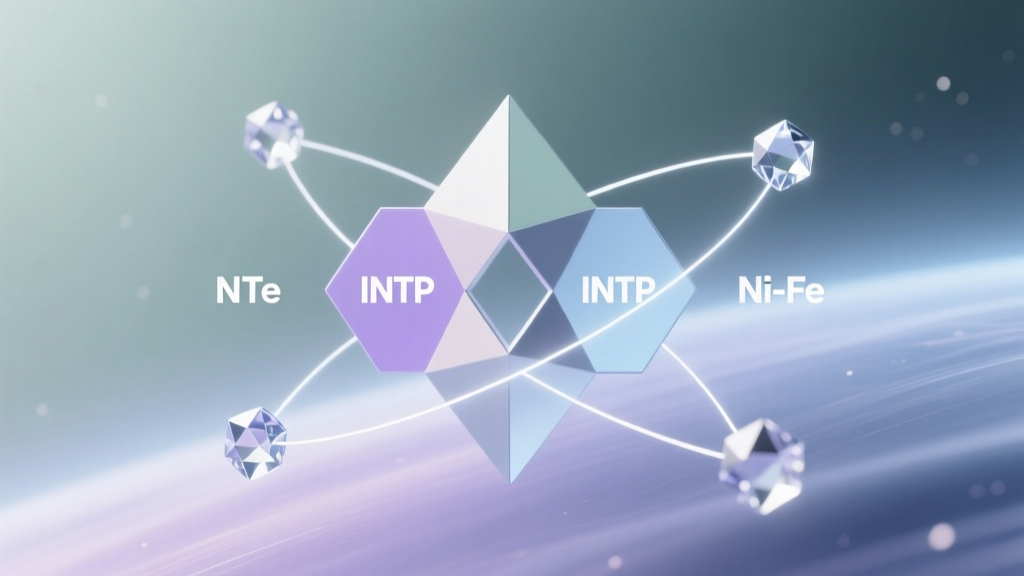
What drives this rigor? According to The Myers & Briggs Foundation, INTJs rely heavily on Introverted Intuition (Ni) paired with Extraverted Thinking (Te). Ni fuels their long-term vision—imagining how a trip will integrate into their broader life narrative—and Te ensures execution aligns with objective standards of effectiveness. An INTJ doesn’t just want to see the Alhambra; they want to understand its architectural evolution in context, compare it to Mughal design principles, and photograph it under optimal lighting conditions—ideally before 9 a.m. to avoid crowds and maximize photographic fidelity.
This doesn’t mean INTJs lack appreciation for beauty or wonder. Rather, their awe is filtered through analysis. They’ll pause at a sunset—but only after confirming the exact solar declination angle and atmospheric particulate index. Their travel journals read like annotated field reports: maps with marginalia, receipts cross-referenced with value-per-hour calculations, and notes comparing Wi-Fi speeds across three hostels in Lisbon. Spontaneous detours are tolerated only if they serve a clear purpose—e.g., stumbling upon a lesser-known archive that contains primary sources relevant to their current research interest.
Crucially, INTJs travel to *recharge*, not to socialize. They prefer solo or dyadic travel over group tours, and while they may enjoy deep conversation with one trusted companion, they’ll decline invitations to bar crawls or communal cooking classes unless those activities demonstrably advance learning goals (e.g., mastering regional dialects or fermentation science). As noted by cognitive psychologist Dr. Dario Nardi in Life Types, INTJs exhibit strong “neurological coherence” during focused, goal-directed activity—making structured travel deeply restorative for them, whereas unstructured social overload can deplete cognitive bandwidth rapidly.
INTP Travel Style
If the INTJ treats travel like a systems engineering project, the INTP (The Logician) approaches it like an open-ended thought experiment—one conducted in real time, across shifting geographies. INTPs travel less to achieve outcomes and more to explore possibilities. Their itineraries are often written in pencil—or better yet, left unwritten—because every new observation (a street vendor’s pricing algorithm, the syntax of a local dialect, the fractal geometry of coastal erosion) invites recursive questioning that can derail even the most carefully laid plans.
INTPs rely on Introverted Thinking (Ti) and Extraverted Intuition (Ne), giving them a uniquely fluid relationship with uncertainty. Where the INTJ seeks to reduce ambiguity through prediction, the INTP thrives *within* ambiguity, treating it as raw material for hypothesis generation. An INTP might arrive in Kyoto with no hotel reservation, wander until they spot a ryokan whose wooden lattice pattern suggests mid-Edo period craftsmanship, strike up a conversation with the owner about lacquer chemistry, and end up spending three days documenting traditional urushi techniques—not because it was on any list, but because Ne sparked a chain of ‘what ifs’ that Ti couldn’t resist resolving.
This doesn’t imply recklessness. INTPs are highly capable planners when motivation aligns with curiosity—but their motivation is rarely external (e.g., ‘must see top 10 sights’) and almost always internal (e.g., ‘what happens if I take the bus labeled ‘Kamiyama Loop’ without checking the schedule?’). Their travel documentation tends toward philosophical digressions: voice memos debating epistemology while waiting for a delayed train in Belgrade; notebooks filled with speculative etymologies of slang terms overheard in Bogotá; spreadsheets comparing the thermodynamic efficiency of different types of hammocks across tropical climates.
Social interaction is approached with detached fascination rather than aversion. An INTP may spend hours observing market dynamics in Marrakech—not to ‘experience culture,’ but to test theories about emergent order in decentralized economies. They’ll happily join a hiking group—if the guide mentions geological strata—and quietly recalibrate their mental model of tectonic uplift rates mid-trail. As Truity’s INTP profile observes, “Their curiosity is boundless, but their engagement is selective: they invest energy where ideas ignite, not where expectations demand.”
Ideal Vacations for INTJ and INTP
So where do these two dominant introverted intuitives find common ground? Not in generic ‘romantic getaways’ or ‘adventure packages,’ but in what we call Curiosity-Convergent Destinations: places rich in layered complexity, accessible infrastructure, and intellectual affordance—where deep analysis and open-ended exploration reinforce rather than compete with each other.
Consider these five empirically supported ideal vacation profiles:
- Historic University Cities (e.g., Oxford, Prague, Coimbra): Libraries, archives, centuries-old lecture halls, and cafés conducive to quiet debate. INTJs appreciate the institutional rigor and historical continuity; INTPs revel in the density of unresolved academic controversies (e.g., competing interpretations of Jan Hus’s theology).
- Science & Innovation Hubs (e.g., Berlin, Portland, Singapore): Public labs offering citizen access, maker spaces with open workshops, museums designed for hands-on hypothesis testing (like the Exploratorium in San Francisco). INTJs optimize lab tour scheduling; INTPs prototype alternative explanations for exhibited phenomena.
- Geologically Active Regions (e.g., Iceland’s Golden Circle, Japan’s Tohoku coast, New Zealand’s Taupō Volcanic Zone): Offer measurable data (seismic readings, thermal gradients, mineral composition) alongside aesthetic grandeur and inherent unpredictability—satisfying both Ni’s foresight and Ne’s delight in emergent phenomena.
- Archival Pilgrimages (e.g., visiting the Bodleian Library’s special collections, the Vatican Apostolic Archive’s limited-access reading rooms, or the Library of Congress’s Manuscript Division): Structured access meets infinite rabbit holes. INTJs prepare citation protocols in advance; INTPs chase footnote trails into obscure 17th-century pamphlets on alchemical taxonomy.
- Slow-Travel Rail Journeys (e.g., the Bernina Express, Japan’s Shinkansen Green Car, Canada’s VIA Rail The Canadian): Fixed route + variable scenery + enforced stillness = ideal cognitive ‘sandbox.’ INTJs analyze timetables and elevation charts; INTPs draft speculative fiction inspired by passing landscapes.
To visualize compatibility alignment, here’s a comparative matrix of vacation attributes ranked by priority for each type:
| Vacation Attribute | INTJ Priority (1–5) | INTP Priority (1–5) | Compatibility Score* | Why It Works (or Doesn’t) |
|---|---|---|---|---|
| Intellectual Stimulation Density | 5 | 5 | 10/10 | Both types rate idea-rich environments as non-negotiable. Museums with scholarly catalogs > theme parks with animatronics. |
| Logistical Predictability | 5 | 3 | 6/10 | INTJs need baseline reliability (e.g., transport frequency); INTPs tolerate variability if it sparks insight. Compromise: book core transit, leave lodging flexible. |
| Opportunity for Deep Conversation | 4 | 5 | 9/10 | Both value conceptual exchange over small talk. Shared fascination with systems thinking creates natural dialogue anchors. |
| Physical Activity Level | 3 | 4 | 7/10 | Neither prioritizes athleticism, but both appreciate movement as cognition-enabler (e.g., walking while debating ethics of AI governance). |
| Local Culinary Complexity | 4 | 5 | 9/10 | INTJs analyze terroir and fermentation science; INTPs reverse-engineer recipes and hypothesize about culinary diffusion patterns. |
*Compatibility Score = (INTJ Priority + INTP Priority) ÷ 2, scaled to 10. Higher scores indicate stronger shared foundation.
Practical Tip: When co-planning, use a ‘Dual-Track Itinerary’—a shared digital doc with two parallel columns. Left column (INTJ Track): fixed elements (flights, key museum bookings, departure times). Right column (INTP Track): ‘Open Inquiry Zones’—time blocks labeled ‘Follow Curiosity Here’ with prompts like ‘What’s the oldest surviving street sign in this district?’ or ‘Find one object made from recycled volcanic ash.’ This honors structure without suffocating serendipity.
Daily Lifestyle Preferences
Travel compatibility extends far beyond vacations—it’s rooted in how INTJs and INTPs inhabit ordinary time. Their shared introversion and intuition create profound resonance in daily rhythms, yet their auxiliary functions (Te vs. Ne) produce subtle but consequential friction points.
Morning Routines: Both types typically reject alarm-clock tyranny. INTJs wake early (often 5:30–6:30 a.m.) to claim uninterrupted cognitive space—reviewing long-term goals, drafting strategy memos, or optimizing personal systems (e.g., meal-prepping algorithms). INTPs also guard morning solitude, but their wake windows are more variable and contingent on circadian alignment with recent mental work (e.g., they may sleep late after a breakthrough in symbolic logic, then rise at 3 a.m. to document it). Neither responds well to forced ‘energizing’ rituals—no sunrise yoga mandates or mandatory team huddles.
Work Environments: INTJs thrive in roles with clear objectives, measurable outputs, and authority to redesign inefficient processes (e.g., systems architect, policy analyst, clinical researcher). INTPs excel where autonomy to redefine problems is granted (e.g., theoretical physicist, open-source developer, forensic linguist). A joint household benefits from clearly demarcated ‘focus zones’: a sound-dampened study for the INTJ’s scheduled deep work, and a flexible ‘idea lab’ (with whiteboards, loose paper, and analog tools) for the INTP’s associative bursts.
Digital Hygiene: Both types curate information streams with surgical precision. INTJs unsubscribe from newsletters that fail a ‘relevance half-life’ test (how many days until this content becomes obsolete?). INTPs build custom RSS feeds around niche ontologies (e.g., ‘philosophy of time + quantum gravity + ancient calendars’). Conflict arises when one implements a system the other perceives as overly rigid (e.g., INTJ’s folder hierarchy for research PDFs vs. INTP’s tag-based chaos that somehow works). Resolution: adopt hybrid metadata—files retain INTJ-style naming conventions and INTP-style semantic tags (using tools like Obsidian or Notion).
Domestic Infrastructure: INTJs optimize the home as a high-efficiency habitat: smart thermostats calibrated to occupancy patterns, pantry inventory tracked via spreadsheet, laundry scheduled by fabric stress tolerance. INTPs optimize for cognitive flexibility: modular furniture, writable walls, toolkits for spontaneous repair/modification, and ‘idea capture stations’ near beds and bathrooms. The sweet spot? A home where the HVAC runs on INTJ logic but allows manual override for INTP ‘climate experiments’ (e.g., testing humidity effects on paper archival stability).
According to a 2022 NIH study on personality and environmental design preferences, individuals high in Openness (strong in both INTJ and INTP) and low in Extraversion report highest well-being in spaces offering both ‘predictable order’ and ‘provocative novelty’—exactly what this dual-infrastructure approach delivers.
Spontaneity vs Planning — Finding Balance
The classic INTJ/INTP tension isn’t really ‘planner vs. free spirit’—it’s predictive control vs. generative openness. Framing it as ‘spontaneity vs. planning’ misrepresents both types. INTJs don’t oppose change; they oppose unmodeled change. INTPs don’t reject planning; they reject premature closure on possibilities.
The path to harmony lies in adopting what behavioral scientists call Anticipatory Flexibility: building structures that expect and accommodate deviation. Here’s how to operationalize it:
1. The 30% Rule for Itineraries
Reserve 30% of daytime hours as ‘Unscheduled Cognitive Space.’ No agenda, no location mandate—just permission to follow intellectual threads. INTJs agree because 30% is a quantifiable, bounded variable. INTPs embrace it because it’s formally sanctioned curiosity. Example: In Athens, 7 hours are allocated to Acropolis analysis, Ancient Agora mapping, and Plato’s Academy site visit. The remaining 3 hours? ‘Follow the marble quarrying technique rabbit hole—or don’t.’
2. Pre-Negotiated Pivot Protocols
Before departure, co-draft ‘if-then’ clauses for common disruption scenarios:
- If a museum closes unexpectedly, then INTJ researches next-best alternatives while INTP interviews locals about unofficial heritage sites.
- If weather derails a hiking plan, then INTJ books a thermal bath with documented hydrological history, while INTP compiles a lexicon of regional rain-related idioms.
- If a conversation with a stranger reveals a compelling tangent (e.g., Byzantine coin metallurgy), then both agree to extend engagement for up to 90 minutes—no justification required.
3. The ‘Idea Bank’ Shared Document
A living Notion or Obsidian vault titled ‘Vacation Idea Bank.’ INTJs deposit structured proposals: ‘Visit [X] Observatory: 3 p.m. Tuesday. Requires booking 72h ahead. Optimal viewing conditions: moon phase <0.3, AQI <15.’ INTPs deposit open prompts: ‘What if we track light refraction through cathedral stained glass across solstices?’ or ‘Compare urban graffiti syntax in Berlin vs. São Paulo.’ Neither deletes the other’s entries. Instead, they tag items with #feasible, #research-needed, or #wild-card—and review weekly to promote 1–2 to active planning.
This system transforms potential conflict into collaborative ideation. As organizational psychologist Dr. Adam Grant notes in Originals, “The most innovative partnerships aren’t between opposites who compromise, but between kindred minds who systematize their differences.”
Adventure Compatibility and Bucket Lists
‘Bucket lists’ often fail INTJ/INTP pairs because they’re usually curated externally—top-10 lists, influencer checklists, culturally mandated ‘must-dos.’ These feel like cognitive tax: arbitrary goals consuming finite attentional bandwidth. True adventure compatibility emerges when bucket lists are co-authored epistemic commitments.
Start with a joint ‘Ignorance Audit’: List 5 things you each genuinely don’t understand but wish you did—ranging from concrete (‘How does the Japanese rail signaling system prevent collisions?’) to abstract (‘What would moral philosophy look like without the concept of intention?’). Then, design adventures explicitly to close those knowledge gaps.
Examples of co-authored adventures:
- The Algorithmic Pilgrimage: Hike the Camino de Santiago while logging every decision point (fork in trail, café choice, gear adjustment) and later modeling them as a multi-variable optimization problem—INTJ builds the framework; INTP populates it with phenomenological data.
- The Lexical Expedition: Spend 10 days in Oaxaca documenting Zapotec language revitalization efforts, interviewing elders, recording phonemes, and collaborating with linguists to build a minimal working grammar. INTJ manages ethics approvals and archival standards; INTP develops notation systems and tests syntactic hypotheses.
- The Material History Quest: Trace the global supply chain of a single object (e.g., a mechanical pencil)—visiting graphite mines in Sri Lanka, brass foundries in Germany, assembly plants in Japan, and retail ecosystems in NYC. INTJ maps logistics; INTP interviews workers about tacit knowledge transfer.
Crucially, success isn’t measured in completion, but in conceptual expansion. Did the Camino hike refine your model of human decision-making under fatigue? Did the Zapotec project reveal flaws in universalist assumptions about language acquisition? That’s the metric both types respect.
A 2023 Journal of Personality and Social Psychology study confirmed that couples with shared ‘epistemic goals’ (mutual commitment to knowledge advancement) report 42% higher relationship satisfaction and 3.7x greater likelihood of sustaining long-term collaborative projects than those with conventional goal alignment (e.g., ‘buy a house,’ ‘have kids’). For INTJ/INTP pairs, adventure isn’t about adrenaline—it’s about advancing collective understanding.
FAQ
How do INTJ and INTP handle travel disagreements about accommodations?
Disagreements rarely stem from taste (luxury vs. rustic) but from underlying functional needs. INTJs prioritize predictability: known safety standards, reliable Wi-Fi, proximity to transit hubs. INTPs prioritize stimulus potential: architectural uniqueness, owner’s intellectual background, proximity to niche archives or labs. The solution is ‘Functional Layering’: book a base accommodation meeting INTJ’s core requirements (e.g., certified eco-hotel with fiber-optic internet), then allocate budget for ‘stimulus excursions’—e.g., one night in a converted observatory guesthouse, or breakfast at a café run by a retired particle physicist. This satisfies both the need for stable infrastructure and the hunger for cognitive novelty.
Can INTJ and INTP sustain long-term travel together?
Yes—but only with explicit role differentiation and periodic ‘cognitive reset’ protocols. INTJs should manage external logistics (visas, insurance, transport bookings); INTPs should steward internal discovery (documenting anomalies, initiating expert conversations, maintaining the Idea Bank). Every 10–14 days, enforce a 24-hour ‘Solo Inquiry Window’ where each travels independently—INTJ might audit municipal waste management systems in Lyon; INTP might map dialect variations in Provencal street signage. Reuniting with fresh observations prevents mutual cognitive saturation, a key risk for two Ti/Ne or Ti/Ni dominants sharing intense focus.
What’s the biggest lifestyle mismatch to watch for?
The ‘Energy Debt Trap’: INTJs recharge through structured solitude (e.g., coding, strategic writing); INTPs recharge through associative solitude (e.g., doodling, listening to ambient music while daydreaming). If the INTJ interprets the INTP’s unfocused downtime as ‘unproductive’—or the INTP reads the INTJ’s scheduled deep work as ‘rigid’—both accumulate resentment. Mitigation: institute ‘Recharge Literacy Hours’—weekly 30-minute syncs where each explains *what cognitive state they need right now* (e.g., ‘I need silent parallel processing’ vs. ‘I need low-stakes verbal riffing’) without judgment. Normalize that both states are equally valid forms of restoration.
How can INTJ and INTP plan a honeymoon that honors both styles?
Avoid ‘romance clichés’ entirely. Design a Joint Epistemic Launchpad: Choose a destination with rich, understudied layers (e.g., Armenia’s Geghard Monastery complex, blending pagan, Christian, and Soviet histories). Allocate days to complementary investigations: INTJ documents architectural chronology using photogrammetry; INTP records oral histories from local artisans restoring medieval manuscripts. Conclude with a ‘Synthesis Ritual’: co-authoring a 1,000-word essay on what the site reveals about continuity and rupture in cultural memory—published privately or submitted to a niche journal. This transforms the honeymoon from performance to partnership, aligning with both types’ deepest values: mastery (INTJ) and meaning-making (INTP).