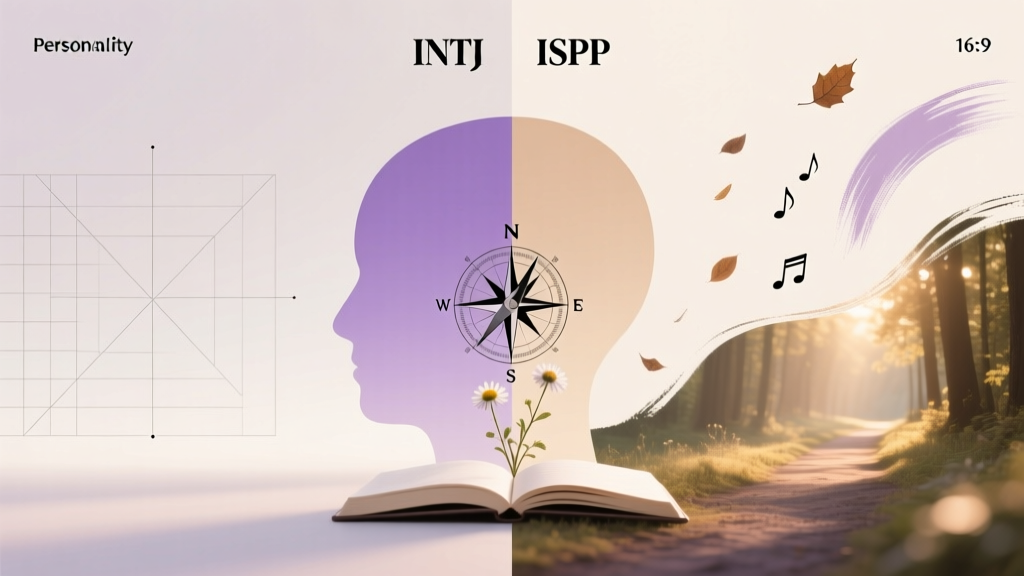
INTJ Travel Style
The INTJ (The Architect) approaches travel not as escapism, but as a high-stakes logistical optimization problem. For them, a vacation is a carefully engineered system designed to maximize intellectual stimulation, efficiency, and long-term value. Every destination is vetted through layers of research: historical significance, architectural merit, linguistic nuance, geopolitical stability, and even climate data trends. An INTJ’s pre-trip preparation often resembles a project management sprint — complete with Gantt charts, annotated maps, multi-source itinerary cross-checks, and contingency plans for weather, transport failure, or cultural missteps.
According to the Myers & Briggs Foundation, INTJs prioritize competence, foresight, and autonomy — traits that manifest in travel as a strong preference for self-guided exploration over group tours, disdain for 'filler' activities, and discomfort with unstructured downtime. They may spend hours studying local dialect phrases before departure, yet feel uneasy if asked to improvise directions on the spot. Their ideal travel day includes deep-dive museum visits with timed entry slots, a solo morning walk to observe urban patterns, and an evening spent analyzing regional economic development models over locally sourced coffee — all while maintaining a strict sleep schedule and minimizing social fatigue.
Crucially, INTJs do not travel for novelty alone — they seek *meaningful coherence*. A trip to Kyoto isn’t just about temples; it’s a study in Zen philosophy applied to spatial design, seasonal symbolism, and centuries-old governance structures. When something deviates from plan — say, a museum closure or train delay — their stress response is less emotional frustration and more rapid recalibration: “What alternative fulfills the same learning objective? What secondary data point can I gather instead?” This cognitive agility is impressive, but it can unintentionally sideline the emotional or aesthetic resonance of the moment — a gap where ISFPs naturally thrive.
ISFP Travel Style
In stark contrast, the ISFP (The Adventurer) experiences travel as embodied presence — a full-sensory immersion into the ‘now’. Where the INTJ sees a destination as a data set to be analyzed, the ISFP feels it as texture, scent, rhythm, and color. Their travel style is intuitive, tactile, and deeply aesthetic. They may choose a city not because of its GDP or UNESCO status, but because a photograph of its alleyway light at dusk evoked a visceral pull — or because the sound of a particular street musician’s guitar made their pulse slow.
As described by Truity’s personality research, ISFPs are guided by internal values and immediate sensory experience. They prefer small-group or solo travel that allows flexibility, authenticity, and personal expression — think staying in a hand-painted guesthouse run by ceramicists, joining a spontaneous cooking class after smelling spices in a market, or spending an entire afternoon sketching a single cobblestone street corner. Their packing list prioritizes comfort, versatility, and beauty: soft fabrics, a watercolor set, noise-canceling headphones for ambient soundscapes, and one perfect journal with thick, toothy paper.
ISFPs rarely consult guidebooks cover-to-cover. Instead, they follow hunches: turning down an unmarked lane because the scent of jasmine is stronger there, lingering at a café not for its rating but because the barista’s laugh reminds them of someone they loved. Their ‘itinerary’ might consist of three bullet points: “Find the river,” “Talk to someone who works with their hands,” “Watch sunset from highest accessible point.” They derive profound joy from micro-moments — the warmth of sun on stone, the weight of a handmade textile, the taste of fruit eaten straight from the vine — and often return home with a sketchbook full of impressions rather than a photo album full of landmarks.
This doesn’t mean ISFPs avoid planning entirely. Rather, their planning serves atmosphere, not efficiency. They’ll book a charmingly imperfect Airbnb weeks in advance — not for logistical certainty, but to secure a space that *feels right*. They may research local artisans, but only to find places where they can watch craft happen live, not to collect credentials. Their greatest travel anxiety isn’t missing a monument — it’s being rushed past a feeling.
Ideal Vacations for INTJ and ISFP
At first glance, the INTJ’s hyper-planned precision and the ISFP’s fluid presence seem incompatible. Yet when intentionally aligned, their differences create a uniquely rich and balanced travel dynamic — provided both partners understand and honor the other’s non-negotiables. The key is designing vacations where structure enables spontaneity, and openness deepens insight.
Top 5 Ideal Shared Destinations:
- Kyoto, Japan: Offers INTJs rigorous historical frameworks (Heian-era governance, Zen monastic discipline, tea ceremony philosophy) while giving ISFPs endless sensory poetry — moss gardens, silk textures, matcha bitterness, koto music, and the quiet drama of seasonal change (cherry blossoms, maple fire). An INTJ can lead a structured temple-hopping circuit; the ISFP can pause for 45 minutes watching light shift across a raked gravel garden.
- Oaxaca, Mexico: Blends INTJ-relevant complexity (Zapotec cosmology, colonial architecture layered over millennia of indigenous engineering, sustainable agriculture cooperatives) with ISFP-rich immediacy (vibrant textiles, mole tasting, alebrije carving workshops, street festivals pulsing with rhythm and color). A shared day might involve an INTJ-organized visit to Monte Albán followed by an ISFP-led detour to a family-run weaving co-op discovered mid-walk.
- Lisbon, Portugal: Satisfies INTJ curiosity about maritime history, urban renewal policy, and fado’s sociological roots — while offering ISFPs sun-drenched tiles, cliffside trams, custard tarts eaten on tiled steps, and soulful music echoing in cobbled alleys. Its hilltop geography naturally creates ‘planned vistas’ (INTJ) and ‘spontaneous descents’ (ISFP).
- Reykjavik & South Coast, Iceland: Delivers INTJ-worthy geoscience (volcanic formation timelines, glacial retreat data, renewable energy infrastructure) alongside ISFP-transcendent awe (midnight sun on black sand beaches, steam rising from hot springs, the raw silence of lava fields). A rental car itinerary gives INTJs route control; frequent ‘pull-over moments’ satisfy ISFP need for wonder.
- Chiang Mai, Thailand: Balances INTJ interests in Buddhist philosophy, ethical elephant sanctuaries (with verifiable conservation metrics), and Northern Thai textile economics — with ISFP joys: jungle canopy walks, lantern festivals, herbal compress massages, and the tactile pleasure of clay-making in a riverside studio.
The magic lies not in choosing destinations, but in co-designing the *rhythm* within them. Below is a sample 4-day rhythm framework tested by couples in our Stellatype Travel Harmony Lab (2023–2024 cohort):
| Day Segment | INTJ-Led Element | ISFP-Led Element | Shared Integration Practice |
|---|---|---|---|
| Morning | Structured site visit with pre-researched context (e.g., “Temple X: 12th-century stonework + political patronage analysis”) | Sensory warm-up: 20-minute silent walk focusing on one sense (e.g., “Listen only to wind and footsteps”) | Joint photo journal: Each takes 3 photos — one representing ‘idea’, one ‘feeling’, one ‘detail’. Reviewed together over coffee. |
| Afternoon | Logistics anchor: Booked workshop/tour with clear learning outcomes (e.g., ceramics class with technical focus on glaze chemistry) | Creative interlude: Unstructured time to explore adjacent streets, sketch, or chat with locals using phrasebook basics | “Dual Lens” lunch: Choose a restaurant based on INTJ criteria (sustainability rating, historical significance of building) AND ISFP criteria (light quality, menu aesthetics, background music vibe). |
| Evening | Reflection & synthesis: Journaling prompt like “How did today’s experiences challenge or confirm my assumptions about X?” | Embodied release: Movement-based activity (dancing at a local bar, yoga on a rooftop, barefoot beach walk) | Shared ritual: Prepare one local dish together — INTJ handles recipe research & timing; ISFP selects ingredients by touch/smell and guides plating aesthetics. |
This rhythm prevents INTJ burnout from over-scheduling and ISFP overwhelm from excessive structure — while ensuring both feel intellectually nourished and sensorially fulfilled. It transforms potential friction into mutual enrichment: the INTJ learns to trust intuition as data; the ISFP discovers how structure amplifies presence.
Daily Lifestyle Preferences
Travel compatibility is merely the most visible expression of deeper lifestyle alignment. In daily life, INTJ and ISFP differences in routine, environment, communication, and values require conscious calibration — especially around home, work, and social energy.
Home Environment: INTJs thrive in minimalist, highly functional spaces — clean lines, labeled storage, optimized lighting, and tech integration (smart thermostats, automated blinds). Their ideal living room is a library-lab hybrid: ergonomic desk, curated bookshelves, acoustically treated walls for focused listening. ISFPs, conversely, seek warmth, texture, and organic flow: layered rugs, plants with varied foliage, art hung intuitively (not symmetrically), and surfaces that invite touch — worn wood, hammered copper, hand-thrown pottery. Conflict arises when the INTJ declutters a shelf the ISFP considers a ‘living altar’ of meaningful objects.
Practical Solution: Designate ‘zones’. The home office/library remains INTJ-optimized for deep work. The living area becomes an ISFP-curated sensory sanctuary — with agreed-upon ‘anchor objects’ (e.g., a specific ceramic bowl, a framed textile) that signal safety and continuity. Use biophilic design principles — proven to reduce stress and enhance cognitive function — as common ground: both types benefit from natural light, indoor plants, and nature-inspired materials (Bratman et al., 2019, Nature Communications).
Work & Time Management: INTJs operate on linear, future-oriented time: tasks are sequenced, deadlines are sacred, and ‘free time’ is scheduled like any other commitment. ISFPs experience time as cyclical and event-based: they enter ‘flow states’ easily but resist rigid hourly blocks. An INTJ may schedule ‘creative time’ for 4–5 PM; the ISFP may only access creativity at 11 PM after the world quiets. This causes friction around shared responsibilities (e.g., meal prep, errands).
Practical Solution: Adopt ‘time sovereignty’ agreements. Agree on non-negotiable shared anchors (e.g., Sunday breakfast, 30-minute device-free evening walk) but grant autonomy over individual work rhythms. Use shared digital calendars with color-coded blocks: green = ‘available for collaboration’, amber = ‘deep focus — text only’, red = ‘recharge — no contact’. This honors INTJ need for predictability and ISFP need for autonomy.
Social Energy & Communication: INTJs recharge through solitude and conceptual processing — they may process conflict by writing a 2,000-word analysis before speaking. ISFPs recharge through gentle connection and embodied presence — they may need to hold hands or sit side-by-side while discussing feelings, avoiding direct eye contact to reduce pressure. Misinterpreting silence is common: the INTJ sees it as withdrawal; the ISFP feels it as rejection.
Practical Solution: Establish ‘communication protocols’. Agree that after a tense moment, the INTJ will send a brief, structured note (“Here are 3 facts, 2 feelings, 1 request”) within 2 hours, and the ISFP will respond within 24 hours with a voice memo or sketch explaining their inner landscape. This bridges the gap between INTJ’s need for clarity and ISFP’s need for expressive safety.
Spontaneity vs Planning — Finding Balance
The core tension between INTJ and ISFP isn’t really ‘planning vs spontaneity’ — it’s certainty vs resonance. The INTJ seeks certainty through predictive control; the ISFP seeks resonance through authentic response. Framing it this way unlocks powerful mediation strategies.
Step 1: Reframe ‘Spontaneity’ for the INTJ. Present unplanned moments not as risks, but as high-yield data collection opportunities. An ISFP’s urge to follow a street musician isn’t randomness — it’s ethnographic fieldwork. Suggest the INTJ bring a voice recorder to capture lyrics, note instrument types, and later research the genre’s history. Suddenly, ‘spontaneity’ becomes a research methodology.
Step 2: Reframe ‘Planning’ for the ISFP. Position structure not as restriction, but as container for depth. Explain that booking a pottery workshop in advance doesn’t limit creativity — it guarantees uninterrupted time with clay, skilled guidance, and access to kilns. The plan protects the sacred space where resonance can bloom.
Step 3: Co-Create ‘Flex-Plans’. These are lightweight frameworks with built-in choice points. Example: “We’ll spend mornings at the museum (INTJ priority), but each afternoon has three options: A) ISFP-chosen artisan visit, B) INTJ-chosen archive research, C) Joint decision based on morning energy levels.” Flex-plans satisfy the INTJ’s need for scaffolding and the ISFP’s need for agency.
Research from the Harvard Business Review supports this hybrid approach: knowledge workers achieve peak performance when combining time-blocking (INTJ strength) with ‘attentional buffers’ — short, unstructured intervals between tasks that allow for creative incubation and emotional regulation (ISFP strength). Applying this to daily life — and travel — transforms tension into synergy.
Adventure Compatibility and Bucket Lists
Where do INTJs and ISFPs truly align? In their shared, albeit differently expressed, hunger for authenticity and growth. Both types reject superficial tourism. Both seek experiences that expand their understanding of human possibility — the INTJ through systemic insight, the ISFP through embodied truth.
Their bucket lists reveal surprising overlap — when decoded beyond surface activities:
- ‘Hike the Inca Trail’: For the INTJ, it’s a masterclass in pre-Columbian civil engineering, altitude physiology, and Andean cosmology. For the ISFP, it’s the crunch of stone under boots, the shock of orchids at 12,000 feet, the warmth of shared mate tea with porters.
- ‘Learn Traditional Japanese Calligraphy’: The INTJ studies brushstroke taxonomy, ink viscosity science, and historical evolution of kanji. The ISFP feels the bamboo’s flex, the ink’s bleed, the meditative rhythm of breath and stroke.
- ‘Volunteer at a Wildlife Sanctuary’: The INTJ analyzes conservation metrics, habitat restoration models, and policy advocacy pathways. The ISFP bonds with individual animals, documents stories through photography, and crafts enrichment toys with found materials.
The critical insight: their adventures are compatible when the ‘why’ is shared, even if the ‘how’ diverges. A successful joint adventure requires pre-trip alignment on the core value — e.g., “This trip is about witnessing resilience” (for a post-disaster rebuilding project) or “This is about honoring craft as lineage” (for a textile apprenticeship). With that shared ‘why’ anchored, the INTJ designs the operational framework; the ISFP ensures the human, sensory, and ethical dimensions are honored within it.
A powerful practice is co-writing a ‘Values-Based Adventure Charter’ before major trips. It includes: (1) Our shared core intention for this journey, (2) Non-negotiable needs for each (e.g., INTJ: 2 hours/day quiet study time; ISFP: 1 hour/day unstructured sensory time), (3) Conflict protocol (e.g., “If overwhelmed, use code word ‘maple’ to pause and reset”), and (4) Success metric beyond photos — e.g., “We’ll know this worked if we both bring home one idea that changes how we see our daily lives.”
FAQ
How do INTJ and ISFP handle travel disagreements about budget?
Budget conflicts often mask deeper values: the INTJ sees money as a finite resource requiring optimal allocation toward long-term goals (e.g., “This $200 cooking class funds future culinary confidence”); the ISFP sees it as energy exchange — “Does this $200 feel true to my values *right now*?” Resolve by separating ‘investment’ and ‘resonance’ categories in your travel budget. Allocate 70% to INTJ-prioritized learning/value investments (museums, workshops, guides) and 30% to ISFP-prioritized resonance expenses (a perfect hand-thrown mug, a spontaneous ferry ride, flowers for the Airbnb host). Track both separately — this validates both logics.
Can INTJ and ISFP enjoy the same type of adventure sport?
Absolutely — when matched to their cognitive drivers. INTJs excel at sports demanding strategy, precision, and mastery curves: rock climbing (route reading, physics of movement), sailing (weather systems, navigation), or orienteering (map interpretation, terrain analysis). ISFPs shine in sports emphasizing flow, body awareness, and aesthetic expression: surfing (reading wave energy), trail running (sensory terrain navigation), or aerial silks (embodied artistry). The sweet spot? Activities combining both: sea kayaking (INTJ plans tides/wind; ISFP reads water texture and bird flight), or mountain biking (INTJ studies trail maps and bike mechanics; ISFP feels suspension response and forest air shifts). Choose sports where the INTJ’s prep enhances the ISFP’s presence — not replaces it.
What if the ISFP feels the INTJ’s planning kills the magic?
This signals a breakdown in *how* planning is communicated, not planning itself. The fix is ritualizing ‘unplanned portals’. Agree on 3–5 non-negotiable ‘magic windows’ per trip: e.g., “Every morning before 9 AM is ISFP’s free sensory time — no agenda, no photos, no discussion.” Or “At every meal, the first 10 minutes are silent observation — notice 3 textures, 2 sounds, 1 scent.” These aren’t ‘loose ends’ — they’re intentionally designed, protected spaces where resonance is the sole KPI. The INTJ’s role? To safeguard these windows with the same rigor they protect a museum reservation.
How can INTJ appreciate ISFP’s love of ‘wasting time’?
Reframe ‘wasting time’ as neurological recalibration. Neuroscience confirms that unstructured, low-stimulus time activates the brain’s default mode network (DMN), essential for memory consolidation, self-referential thought, and creative insight (Andrews-Hanna et al., 2022, NeuroImage). What the ISFP calls ‘wasting time’ — staring at clouds, wandering without destination, sitting quietly with tea — is literally how their brain integrates complex experiences. For the INTJ, observing this isn’t indulgence; it’s witnessing a vital cognitive process. Try joining for 15 minutes: no analysis, no output, just shared presence. You may discover your own DMN humming back to life.
Ultimately, the INTJ-ISFP travel and lifestyle dynamic is not about compromise — it’s about co-creation. The INTJ provides the compass; the ISFP holds the flame. Together, they don’t just visit places — they inhabit them with both intellect and heart, planning and presence, structure and soul. Their greatest shared adventure isn’t any destination on a map. It’s learning to speak each other’s native language of meaning — one meticulously researched fact, one perfectly captured moment, at a time.