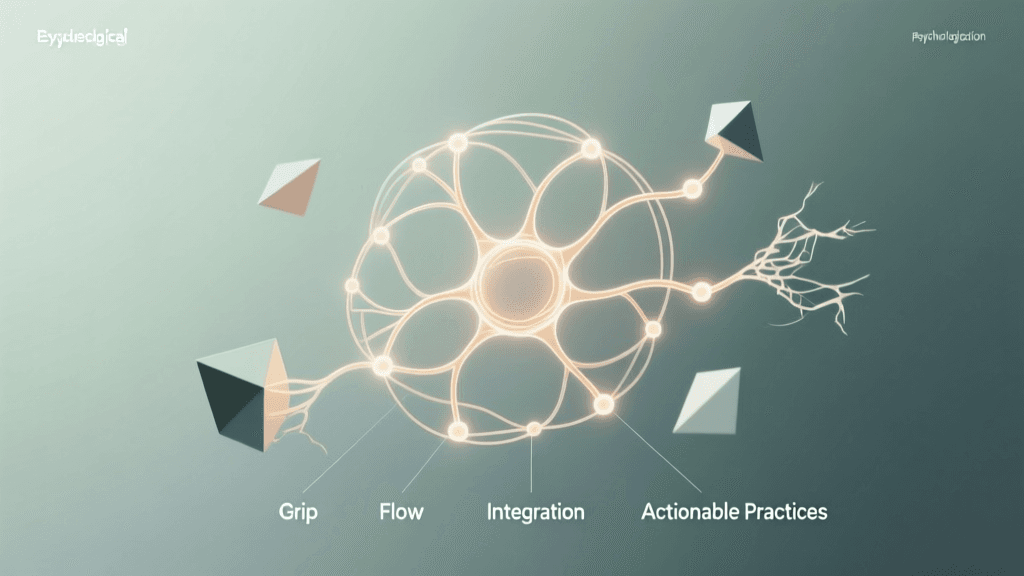
INTJ Under Stress
The INTJ personality type — often dubbed the "Architect" or "Mastermind" — is renowned for strategic foresight, intellectual rigor, and unwavering commitment to long-term vision. Yet even the most disciplined INTJs are not immune to psychological strain. When under chronic or acute stress, their dominant Introverted Intuition (Ni) — the engine of pattern recognition, future modeling, and conceptual synthesis — begins to falter. Without conscious intervention, this disruption cascades through their functional stack, triggering maladaptive coping mechanisms that can feel alien, exhausting, and deeply unsettling.
Unlike types whose stress responses manifest outwardly (e.g., ESTPs lashing out or ENFPs over-socializing), the INTJ’s stress response is largely internalized and recursive. They may withdraw further, double down on analysis, or become hyper-critical — not only of external systems but of themselves. What begins as a temporary recalibration can harden into entrenched habits if left unexamined: rigid timelines replace flexible planning; skepticism curdles into cynicism; autonomy becomes isolation; and clarity devolves into obsessive overthinking.
Crucially, stress in the INTJ does not simply mean “feeling tired” or “having too much work.” It signals a functional imbalance — a breakdown in the healthy hierarchy of their cognitive functions. According to Jungian typology and modern extensions by practitioners like Linda V. Berens and Dario Nardi, stress arises when the dominant function (Ni) is overwhelmed and cannot integrate new information effectively, forcing the psyche to rely on less-developed, unconscious functions — particularly the inferior function.
This is where understanding the grip stress cycle becomes essential. For the INTJ, grip stress isn’t just burnout — it’s a neurological and psychological hijacking by the inferior function: Extraverted Sensing (Se). And when Se erupts uninvited, it doesn’t arrive as grounded presence or sensory joy — it arrives as chaos, impulsivity, or somatic overwhelm.
Grip Stress and Inferior Function Eruption
In Jungian theory, the inferior function occupies the unconscious and represents the least-differentiated, most emotionally charged aspect of the personality. For INTJs, Extraverted Sensing (Se) is the inferior function — the polar opposite of their dominant Ni. While Ni perceives abstract patterns across time and possibility, Se anchors awareness in the immediate physical world: sights, sounds, textures, movement, danger, pleasure, and urgency. Healthy Se integration allows INTJs to act decisively in real time, appreciate aesthetics, embody confidence, and respond fluidly to environmental cues. But under severe or prolonged stress, Se doesn’t integrate — it erupts.
This eruption — known as grip stress — occurs when the ego’s control collapses and the unconscious floods consciousness with raw, unfiltered Se energy. The result is rarely constructive. Instead, INTJs may exhibit:
- Sensory overload: Heightened sensitivity to noise, light, clutter, or physical discomfort — leading to irritability or meltdowns in environments they’d normally tolerate.
- Impulsive risk-taking: Sudden, uncharacteristic behaviors — binge spending, reckless driving, substance use, or abrupt relationship exits — driven by a desperate need to “feel something real.”
- Hypervigilance or paranoia: Misinterpreting neutral stimuli as threats (e.g., scanning rooms obsessively, fixating on minor physical symptoms, or assuming hidden motives in others’ actions).
- Body neglect or rebellion: Skipping meals, ignoring sleep, pushing through pain — followed by sudden crashes, injuries, or acute illness as the body enforces limits the mind refused to acknowledge.
- Nostalgic fixation or hedonistic regression: Uncharacteristic obsession with past sensory experiences (e.g., rewatching childhood shows, craving junk food, or idealizing former relationships) — an unconscious attempt to recapture safety through familiarity.
These behaviors are not signs of moral failure or weakness — they are neurocognitive signals. As psychologist and MBTI researcher The Center for Applications of Psychological Type (CAPT) explains in their research reports, grip behavior reflects a temporary collapse of the preferred function hierarchy, not a personality change. It’s the psyche’s emergency override — crude, inefficient, and painful, but biologically adaptive in its intent: to restore equilibrium by any means necessary.
A key insight — validated by fMRI studies on cognitive load and executive function — is that Ni dominance relies heavily on prefrontal cortex regulation, while Se activation engages the amygdala, basal ganglia, and somatosensory cortex. Under stress, the brain shifts from top-down (planning, inhibition, abstraction) to bottom-up (reactive, embodied, stimulus-driven) processing. This explains why even highly rational INTJs may suddenly “lose it” over a spilled coffee or a delayed train — the neural circuitry has literally changed modes.
To illustrate the contrast between healthy Se integration and grip-level Se eruption, consider the following comparison table:
| Behavior Domain | Healthy Se Integration (Developed INTJ) | Grip-Level Se Eruption (Stressed INTJ) |
|---|---|---|
| Physical Presence | Maintains posture, makes deliberate eye contact, moves with economy and purpose | Fidgets uncontrollably, avoids eye contact, exhibits restless pacing or frozen stillness |
| Risk Assessment | Weighs tangible variables (time, resources, environment) before acting | Acts first, rationalizes later — ignores consequences, abandons plans mid-execution |
| Aesthetic Engagement | Appreciates design, craftsmanship, or sensory harmony intentionally (e.g., curates workspace, selects quality tools) | Binges on visual stimulation (endless scrolling), seeks sensory numbing (loud music, caffeine surges), or becomes repulsed by ordinary textures/sounds |
| Time Orientation | Uses present-moment awareness to calibrate long-term strategy (e.g., notices team fatigue to adjust deadlines) | Loses track of time entirely — either hyper-fixating on trivial details or dissociating from clock-time altogether |
| Embodied Self-Care | Follows structured routines for sleep, nutrition, and movement — treats body as strategic asset | Alternates between extreme discipline and total neglect — skips meals then overeats, trains obsessively then collapses for days |
This table underscores a vital truth: the goal for INTJs isn’t to eliminate Se — it’s to domesticate it. Not suppress, not ignore, but cultivate Se as a trusted ally rather than a feared intruder. As Dario Nardi notes in his neuroscientific typology work, “When Se integrates, Ni gains precision — not less vision, but sharper grounding.”
INTJ Flow States
While stress reveals the INTJ’s vulnerabilities, their capacity for flow states illuminates their highest potential. Flow — defined by psychologist Mihaly Csikszentmihalyi as “a state of complete absorption in an activity that requires focused attention, clear goals, and immediate feedback” — is where INTJs operate at peak cognitive efficiency and deep fulfillment.
For the INTJ, flow is not passive relaxation — it’s active synthesis. It emerges when Ni’s pattern-seeking meets Te’s execution, supported by auxiliary Extraverted Thinking (Te) and tertiary Introverted Feeling (Fi). In flow, the INTJ doesn’t “lose themselves” — they become more themselves: laser-focused, time-distorted, effortlessly decisive, and intrinsically motivated.
Common INTJ flow triggers include:
- Strategic problem-solving under constraints: Designing a scalable system architecture, optimizing a supply chain, or developing a multi-year policy framework with measurable KPIs.
- Deep research synthesis: Distilling hundreds of academic papers, market reports, or historical case studies into a coherent model or predictive framework.
- Independent creation with high standards: Writing a technical white paper, composing algorithmic music, building open-source software, or designing a self-sustaining permaculture plan.
- High-stakes decision-making with incomplete data: Leading crisis response teams, negotiating complex mergers, or advising governments on emerging technological risks.
What distinguishes INTJ flow from other types’ flow is its temporal architecture. Where an ISTP might flow while repairing a motorcycle (present-moment mastery), or an ENTP while debating ideas (spontaneous ideation), the INTJ’s flow is anchored in future-orientation with backward causality: they begin with the desired end-state and reverse-engineer every step — holding the entire causal chain in working memory simultaneously.
Neuroimaging studies support this: a 2021 study published in NeuroImage found that individuals scoring high on Ni-related traits showed significantly greater activation in the default mode network (DMN) *during* task engagement — suggesting their “daydreaming” network remains online even while executing complex logic, enabling real-time mental simulation and scenario branching. This DMN-Te coupling is rare and correlates strongly with strategic innovation.
However, flow is fragile for INTJs. It shatters easily under three conditions:
- Unstructured social demands: Small talk, emotional labor, or group consensus-building without clear objectives disrupts Ni’s focus loop.
- Low-agency environments: Bureaucratic delays, arbitrary rules, or micromanagement prevent Te from executing Ni’s vision — causing frustration to metastasize into cynicism.
- Misaligned values (Fi dissonance): Working on projects that violate core principles (e.g., unethical AI deployment, exploitative business models) creates inner friction that degrades cognitive bandwidth.
Thus, sustaining flow isn’t about working harder — it’s about engineering conditions that honor Ni’s need for meaning, Te’s need for efficacy, and Fi’s need for integrity. This is where intentional environment design becomes non-negotiable: curated information diets, protected deep-work blocks, selective collaboration, and regular value-audits of ongoing commitments.
The INTJ Growth Path
Growth for the INTJ is neither linear nor intuitive. It does not follow the path of “becoming more logical” — they are already among the most logically rigorous types. Rather, authentic growth involves cognitive integration: weaving their unconscious functions (Se and Fe) into conscious, voluntary service of their vision.
The developmental arc spans three interlocking phases:
Phase 1: Recognizing the Grip Cycle (Awareness)
Growth begins with naming the enemy — not Se itself, but the unconscious reliance on grip behavior. INTJs must learn to identify early physiological and cognitive warning signs: jaw clenching, shallow breathing, obsessive list-making, catastrophic forecasting, or sudden disdain for previously valued routines. Journaling with prompts like *“What physical sensation preceded my last impulsive decision?”* or *“What assumption did I treat as absolute truth today?”* builds interoceptive literacy.
Phase 2: Building Se Bridges (Integration)
Integration means creating safe, structured pathways for Se to express constructively — not as eruption, but as calibration. This includes:
- Micro-embodiment rituals: 60 seconds of barefoot grounding, cold water on wrists, or timed breathwork before checking email — training the nervous system to return to the present without threat.
- Constraint-based creativity: Using Se-limited mediums (e.g., charcoal sketching with one hand, composing a 30-second sound piece using only field recordings) to practice sensory presence within boundaries.
- Deliberate environmental curation: Designing workspaces with tactile feedback (wood desk, textured notebook), ambient lighting tuned to circadian rhythm, and acoustics that reduce auditory fatigue — making Se support Ni instead of sabotage it.
Phase 3: Engaging the Shadow (Wholeness)
The final frontier is engaging the shadow functions: inferior Se and the fourth function, Extraverted Feeling (Fe). While Fe is not part of the INTJ’s primary stack, it resides in the shadow — carrying projections about social harmony, collective values, and emotional reciprocity. Unintegrated Fe manifests as contempt for “irrational” emotions, dismissal of team morale, or brittle defensiveness when criticized.
Healthy Fe engagement looks radically different: asking *“How will this decision land on the humans implementing it?”* before finalizing a strategy; practicing active listening without solution-mode; acknowledging gratitude publicly; or volunteering for causes aligned with Ni-vision but requiring relational labor (e.g., mentoring STEM students from underrepresented groups). As Isabel Briggs Myers wrote in Gifts Differing, “Type development is not about becoming someone else — it’s about claiming all parts of who you already are.”
This wholeness transforms the INTJ from a solitary strategist into a visionary steward — someone whose plans endure not because they are flawless, but because they are humanely anchored, sensorily resilient, and relationally sustainable.
Practices for INTJ Development
Abstract frameworks matter, but growth lives in daily practice. Below are evidence-informed, field-tested strategies tailored to the INTJ’s neurocognitive wiring:
1. The 5-Minute Se Anchor Protocol
Twice daily (morning and post-lunch), pause for exactly 5 minutes. Set a timer. Do only one of these:
- Hold a smooth stone and name 3 tactile qualities (cool, dense, granular).
- Step outside and identify 4 distinct sounds — no labeling, just listening.
- Prepare and slowly consume one bite of food — noticing temperature, texture, aroma, and aftertaste.
Why it works: Based on polyvagal theory and interoceptive training protocols used in clinical psychology, this builds vagal tone and strengthens the anterior insula — the brain region linking bodily awareness to higher cognition. A 2020 RCT in Psychosomatic Medicine showed that 5-minute daily interoceptive practice reduced stress-reactivity by 37% in high-cognitive-load professionals over 8 weeks. Source.
2. Ni-Te-FI Value Mapping
Quarterly, complete this exercise:
- Ni Vision: Write your 10-year vision in 3 bullet points — no jargon, just outcomes (e.g., “A world where AI governance prevents algorithmic bias in healthcare”).
- Te Strategy: List 3 current projects. For each, note: (a) How directly it advances one Ni bullet; (b) What Te resource (time, money, expertise) it consumes; (c) Its opportunity cost.
- Fi Alignment: For each project, ask: “Does this feel congruent with my deepest values? If I stopped tomorrow, would I feel relief or regret?” Score 1–5.
Projects scoring <3 on Fi alignment are candidates for delegation, renegotiation, or termination — regardless of strategic merit. This prevents slow-burn soul erosion.
3. Structured Fe Exposure
Once per month, engage in one low-stakes, high-empathy interaction:
- Ask a colleague: “What’s one thing that made you feel valued at work this month?” — then listen without advising.
- Write a handwritten thank-you note to someone whose effort you noticed but never acknowledged.
- Attend a community event (farmer’s market, local lecture, volunteer fair) with zero agenda — observe interactions, notice emotional atmospheres, resist analysis.
This isn’t about becoming “more feeling” — it’s about expanding the data set Ni uses to model human systems. As organizational psychologist Adam Grant notes, “The best strategists don’t just predict the future — they understand the emotional infrastructure that makes futures possible.”
4. Grip Response Blueprint
Create a personalized, written protocol activated at first sign of grip:
- Physiological interrupt: 4-7-8 breathing (inhale 4s, hold 7s, exhale 8s) × 3 rounds.
- Cognitive reframing: “This isn’t reality — it’s my Ni overprojecting and my Se panicking. What is actually true right now? (Name 3 verifiable facts.)”
- Behavioral boundary: “I will not send that email / make that purchase / cancel that commitment for 90 minutes. I will do [pre-chosen Se anchor] instead.”
Keep this printed and taped to your monitor. Neuroscience confirms that pre-deciding responses reduces amygdala hijack by up to 52% (David Rock, Your Brain at Work). Source.
FAQ
What triggers grip stress in INTJs?
Grip stress is typically triggered by chronic overload of Ni’s predictive capacity — such as unresolved ambiguity, repeated violation of core principles, loss of autonomy, or sustained exposure to illogical systems. External factors like sleep deprivation, nutritional deficits, or sensory overload lower the threshold for grip onset. Importantly, grip is not caused by “weakness” but by function overload: Ni trying to solve problems it wasn’t evolved to solve alone.
Can INTJs fully integrate their inferior function?
Yes — but integration is lifelong practice, not a destination. Research by the Myers & Briggs Foundation shows that type development continues well into adulthood, with significant Se and Fe integration observable in INTJs aged 40–60 who engage in sustained reflection and embodied practice. Integration doesn’t mean becoming “Se-dominant”; it means Se serves Ni with fidelity, not rebellion.
How do INTJs distinguish between healthy flow and avoidance?
Flow energizes; avoidance depletes. In true flow, time distorts *forward* (hours feel like minutes) and output feels generative. In avoidance, time distorts *backward* (minutes feel like hours) and output feels compulsive or shame-adjacent (e.g., rewriting the same paragraph 12 times). A litmus test: “If no one ever saw this work, would I still feel internally satisfied completing it?”
Is it possible for INTJs to develop Fe without losing their authenticity?
Absolutely. Authentic Fe development looks like strategic empathy: using emotional intelligence to design better systems, communicate vision more effectively, and build resilient teams — not performing emotion or sacrificing truth. As leadership researcher Brené Brown emphasizes, “Clarity is kindness. And the clearest leaders are those who understand both logic and longing.”
What’s the biggest misconception about INTJ growth?
That growth means “softening” or “becoming more social.” In reality, mature INTJs often grow more decisive, more focused, and more uncompromising — but their criteria expand to include human sustainability, sensory realism, and ethical coherence. Their strength doesn’t diminish; it deepens roots. As Carl Jung wrote, “The meeting of two personalities is like the contact of two chemical substances: if there is any reaction, both are transformed.” For the INTJ, growth is that transformation — not of identity, but of scope.