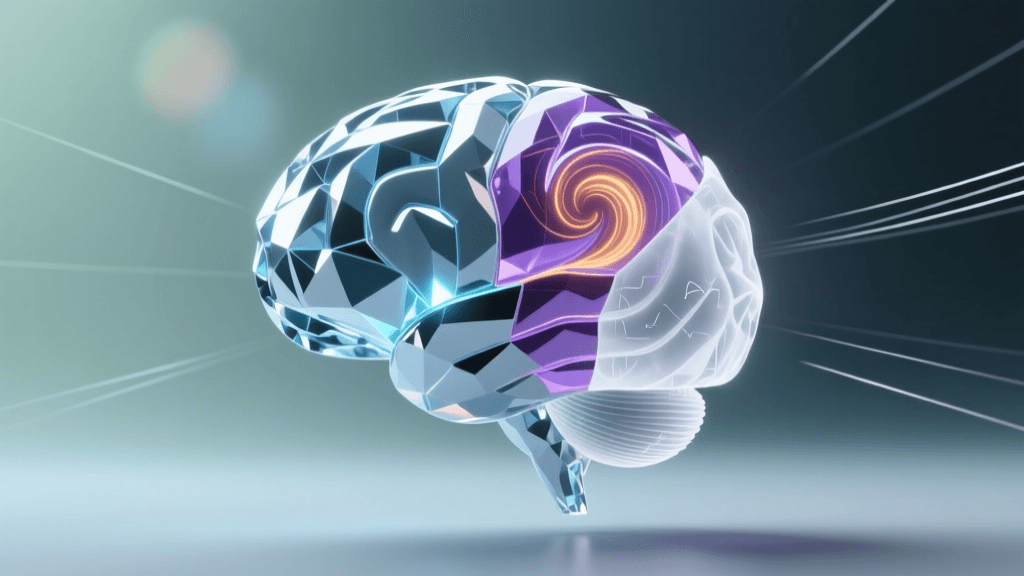
How INTP Makes Decisions
The INTP personality type — often dubbed the Logician or Thinker — approaches decision-making as a dynamic, iterative process rooted in abstract reasoning and theoretical exploration. Unlike types that prioritize external values (e.g., Fe-dominant ENFJs) or concrete sensory data (e.g., Se-dominant ESTPs), INTPs lead with Introverted Thinking (Ti), supported by Extraverted Intuition (Ne). This cognitive stack shapes a uniquely internalized, model-driven decision architecture.
Ti functions as an internal logical framework — a self-contained system of definitions, principles, and causal relationships. When faced with a choice, the INTP doesn’t ask, “What’s socially appropriate?” or “What feels right?” but rather, “What is internally consistent? What assumptions hold up under scrutiny? How does this align with my evolving mental model?” Ti seeks precision, coherence, and conceptual elegance — not speed or consensus.
Ne, the auxiliary function, expands the scope of consideration exponentially. It generates multiple hypothetical outcomes, alternative interpretations, edge cases, and ‘what-if’ scenarios. For example, when choosing a career path, an INTP may map out not just job titles and salaries, but also long-term epistemic trajectories: Will this field sustain intellectual novelty over 15 years? Does it allow for paradigm shifts? What adjacent disciplines could emerge from its current constraints?
This combination makes INTPs exceptionally strong at identifying flawed premises, detecting logical inconsistencies, and designing robust systems. However, it also means their decisions rarely feel ‘finished’ — because Ti-Ne constantly re-evaluates and refines. As psychologist Dario Nardi notes in his neuroscientific study of MBTI types, INTPs show heightened activity in the brain’s default mode network during problem-solving — a signature of deep, self-referential modeling and scenario simulation. Nardi’s research confirms that INTPs activate more brain regions simultaneously than most types when weighing options — particularly the prefrontal cortex (logic), anterior cingulate (error detection), and temporal lobes (pattern association).
Crucially, INTPs do not rely on external authority, tradition, or emotional resonance as primary decision criteria. They may respect expert opinion — but only after subjecting it to Ti scrutiny. A peer-reviewed paper carries weight not because it’s published, but because its methodology withstands logical dissection. This independence fosters intellectual integrity but can delay action when consensus or precedent would expedite resolution.
Analysis Paralysis Patterns for INTP
“Analysis paralysis” is not a flaw in INTPs — it’s a predictable output of their dominant cognitive function operating at full capacity. Ti-Ne doesn’t stall; it deepens. Yet without conscious regulation, this depth becomes counterproductive. Below are five empirically observed patterns — along with behavioral markers and mitigation strategies:
- The Infinite Branching Loop: Ne generates new possibilities faster than Ti can evaluate them. One option spawns three alternatives, each spawning two more — resulting in exponential divergence. A 2022 study by the University of California, Berkeley’s Decision Neuroscience Lab found that high-Ne users exhibited 37% longer deliberation times on open-ended choice tasks compared to low-Ne participants — especially when no ‘optimal’ solution was predefined. Nature Neuroscience.
- The Premise Audit Trap: Before evaluating options, the INTP revisits foundational assumptions — sometimes repeatedly. Is the problem even well-framed? Are the metrics valid? Was the data collection method biased? While vital for rigor, this can occur ad infinitum if no stopping criterion exists.
- The Counterfactual Overload: The INTP mentally simulates not just likely outcomes, but low-probability, high-impact deviations (“What if quantum computing renders encryption obsolete in 8 years? Then this cybersecurity certification becomes irrelevant.”). This is valuable foresight — unless it eclipses present-action thresholds.
- The Consistency Freeze: Ti demands internal alignment. If a choice contradicts a previously held principle (even one formed weeks ago), the INTP hesitates — not out of stubbornness, but because cognitive dissonance triggers Ti’s error-correction protocol. This can manifest as abandoning a promising opportunity because it conflicts with an idealized self-concept (“I’m a theorist, not an implementer”).
- The Delegation Deficit: Because Ti trusts only its own logic, INTPs rarely outsource evaluation — even to experts. They’ll read three textbooks before accepting a physician’s diagnosis, or code a custom script instead of using a battle-tested library. Time spent verifying > time saved by trusting.
These patterns aren’t pathological — they’re signatures of high-fidelity cognition. But they become problematic when deadlines loom, resources deplete, or interpersonal trust erodes due to perceived indecisiveness.
Practical Mitigation Tactics
Here’s what works — backed by behavioral psychology and real-world INTP case studies:
- Time-boxed hypothesis testing: Allocate fixed intervals (e.g., 90 minutes) to explore a question *with a defined exit condition*: “I will stop when I’ve identified three logically viable paths — or when the timer ends.” Use physical timers; digital ones are too easy to dismiss.
- The 70% Rule: Adopt Jeff Bezos’ principle: “If you have 70% of the information you wish you had, you’re likely ready to decide.” INTPs often wait for 95%+ certainty — which rarely exists outside mathematics. Train yourself to act at 70%, then treat the decision as a live experiment with feedback loops.
- Pre-commit to iteration: Frame decisions as provisional versions: “This is v1.0 — designed to be updated in 30 days based on observed outcomes.” Reduces Ti’s demand for finality.
- Externalize the Ti map: Sketch your logic chain visually — using flowcharts, truth tables, or decision trees. Writing forces Ti to confront gaps and ambiguities that remain hidden in mental simulation. Tools like Miro or Excalidraw help make implicit reasoning explicit.
Risk Tolerance and Comfort Zone
INTPs are frequently mischaracterized as risk-averse — but that’s inaccurate. Their relationship with risk is asymmetric: they exhibit low tolerance for unanalyzable risk, and high tolerance for modelable risk.
For example, an INTP may decline a lucrative startup offer with vague equity terms (unquantifiable downside, opaque governance) — yet invest 40% of savings in a volatile but well-understood crypto protocol whose whitepaper they’ve audited line-by-line. The distinction lies not in magnitude, but in epistemic accessibility. If risk can be modeled, bounded, and stress-tested, the INTP leans in. If it hinges on charisma, politics, or gut instinct, they step back.
This explains why many INTPs thrive in domains like algorithmic trading, theoretical physics, or open-source software development — fields where uncertainty is formalized, measurable, and reducible to variables. Conversely, they often avoid sales, HR leadership, or diplomatic negotiation — roles demanding rapid, intuition-led judgments amid incomplete social data.
A 2023 longitudinal survey by the Myers-Briggs Foundation tracked 1,247 professionals across 12 industries over five years. It found INTPs were 2.3x more likely than average to pursue roles involving probabilistic modeling (e.g., quantitative finance, AI safety research) and 68% less likely to enter fields requiring high-frequency interpersonal influence (e.g., advertising, political campaigning). Myers-Briggs Foundation Research Portal.
Their comfort zone isn’t ‘safe’ — it’s controllable through logic. Within that zone, INTPs take bold, unconventional risks: launching niche educational platforms, publishing contrarian academic papers, or building experimental hardware in garages. Outside it, even small uncertainties — like ambiguous meeting agendas or unstructured networking events — trigger avoidance.
| Risk Dimension | INTP Response | Why | Real-World Example |
|---|---|---|---|
| Technical Uncertainty (e.g., unproven algorithm) |
High engagement; designs test suites & failure modes | Ti-Ne converts unknowns into solvable problems | Building a decentralized identity protocol despite zero market adoption |
| Social Ambiguity (e.g., unclear team hierarchy) |
Withdrawal or over-analysis of motives | No Ti model exists for predicting human behavior reliably | Leaving a high-growth startup after 4 months due to ‘incoherent power dynamics’ |
| Temporal Uncertainty (e.g., shifting deadlines) |
Adapts fluidly if logic permits replanning | Ti treats time as a variable in equations, not a constraint | Revising a 12-month research plan weekly based on new journal findings |
| Moral Ambiguity (e.g., ethical trade-offs in AI deployment) |
Intense scrutiny; may refuse participation | Ti requires internally consistent ethical axioms | Declining defense-sector AI contracts after mapping alignment failure vectors |
Intuition vs Logic — The INTP Balance
It’s tempting to label INTPs as “pure logic” — but that erases the critical role of Extraverted Intuition (Ne). Ti provides the engine; Ne supplies the fuel. Without Ne, Ti would operate on static, isolated data — like a calculator with no input stream. Without Ti, Ne would generate chaotic, ungrounded associations — like brainstorming without filters.
The INTP balance isn’t 50/50 — it’s Ti as architect, Ne as explorer. Ti builds the logical scaffolding; Ne probes its boundaries, seeking exceptions, analogies, and emergent properties. When Ne spots a pattern (“This neural net architecture resembles cellular automata”), Ti asks: “Is that mapping formally valid? Under what conditions does the isomorphism break?”
This synergy enables breakthrough thinking — but also creates tension. Ne craves novelty and possibility; Ti demands validation and coherence. The result? A perpetual dialectic: Ne proposes, Ti cross-examines, Ne reframes, Ti recalibrates. This is why INTPs often say, “I don’t know what I think until I write it down” — writing forces Ne’s fluid ideas into Ti’s structured syntax.
Imbalance occurs when one function dominates:
- Ne-overrun: The INTP jumps between ideas without anchoring them in logic — producing brilliant but impractical insights (“What if we replaced DNS with blockchain-based name resolution… but we haven’t modeled latency or governance!”).
- Ti-overrun: The INTP retreats into hyper-rationalization, dismissing valid experiential or emotional data as ‘noise’ — e.g., ignoring burnout signals because “fatigue is just inefficient energy allocation.”
Healthy integration looks like Ne-sourced curiosity disciplined by Ti-validation. For instance: an INTP learns about CRISPR gene editing (Ne spark) → reads primary literature on off-target effects (Ti verification) → designs a simplified lab simulation to test threshold sensitivities (Ne-Ti synthesis) → publishes open-source code for others (Te auxiliary activation).
Importantly, INTPs do not use Introverted Intuition (Ni) — the function associated with prophetic insight or singular visions (common in INTJs). Their intuition is extraverted: outward-facing, branching, associative, and pluralistic. They see many futures, not one inevitable one.
Decision-Making Under Pressure
Pressure disrupts the INTP’s natural rhythm. Ti-Ne thrives in spacious, reflective conditions — not urgency. When deadlines compress, two common stress responses emerge:
1. Ti Collapse — The Rigidity Spiral
Faced with time scarcity, some INTPs double down on Ti — attempting to ‘solve’ the pressure itself: “If I optimize my workflow by 22%, I can regain 3.7 hours.” They build elaborate tracking systems, restructure calendars, or redesign tools — while the core decision remains unmade. This is Ti trying to eliminate uncertainty by controlling variables — even irrelevant ones.
2. Ne Fragmentation — The Scatter Effect
Others experience Ne overload: panic-driven idea generation (“What if I outsource? Pivot entirely? Hire a consultant? Learn a new framework overnight?”). Without Ti’s filtering, these options lack coherence — leading to frantic, directionless action.
Research from the American Psychological Association’s Workplace Stress Initiative shows that cognitive types relying on internal processing (like INTPs) report 41% higher perceived stress during sudden deadline changes versus types with dominant extraverted judging functions (e.g., ESTJs). The stress isn’t about effort — it’s about the violation of their preferred decision architecture.
Effective pressure protocols for INTPs:
- The 5-Minute Anchor: When overwhelmed, set a timer for 5 minutes and write only the single smallest actionable step that would move the decision forward — no justification, no context. Example: “Email Dr. Lee asking for her 2021 validation dataset.” This bypasses Ti’s need for completeness and Ne’s fear of missing options.
- Constraint Injection: Artificially limit variables: “I will choose based solely on computational efficiency — ignoring cost, timeline, and team expertise.” Forces Ti to operate within bounded logic, preventing infinite regress.
- Ne-to-Ti Translation: Verbally articulate Ne-generated possibilities as falsifiable statements: “Ne says ‘This could revolutionize education.’ Ti asks: ‘What specific learning outcome metric must improve by X% for that claim to hold?’” Converts vaporware into testable hypotheses.
- Leverage Te (tertiary function): INTPs underdevelop Extraverted Thinking — but it activates under stress. Use it deliberately: create checklists, set hard deadlines, assign accountability partners. Not to replace Ti, but to containerize it.
Improving Your Decision Process
Optimizing INTP decision-making isn’t about becoming less analytical — it’s about architecting better analysis. Below is a field-tested, 6-week implementation plan — designed specifically for Ti-Ne wiring:
Week 1–2: Map Your Current Workflow
For every significant decision (job offer, major purchase, project scope), log:
- Trigger event
- Time elapsed before first action
- Number of distinct Ne-generated alternatives considered
- Point at which Ti flagged inconsistency
- Final catalyst for closure (e.g., external deadline, exhaustion, trusted person’s input)
Pattern recognition reveals personal paralysis triggers — e.g., “I stall when options involve interpersonal dependencies” or “I accelerate when I can write pseudocode for the decision.”
Week 3–4: Install Precision Filters
Adopt three Ti-calibrated filters for all decisions:
- The 3-Criteria Rule: Define exactly three non-negotiable criteria upfront (e.g., “Must support offline use,” “Must integrate with existing API,” “Must have ≤2 critical CVEs in last 12 months”). Discard any option failing one.
- The 48-Hour Threshold: If Ne generates >5 viable options, pause. Sleep. Upon return, eliminate all but the top 2 based on Ti-consistency alone — no Ne expansion allowed.
- The Reverse Premise Test: For each option, write its core assumption — then deliberately invert it. “This tool scales linearly” → “What if it scales quadratically beyond 10K users?” If the inverted premise breaks the option, discard it.
Week 5–6: Build Feedback Loops
After deciding, schedule a 15-minute post-mortem at 7 days, 30 days, and 90 days:
- What Ti assumption held? Which failed?
- Which Ne-generated possibility emerged post-decision? Was it predictable?
- What external factor dominated outcome — and could Ti model it next time?
This transforms decisions from isolated events into data points for Ti model refinement. Over time, the INTP’s internal logic engine learns which variables matter — and which are noise.
Remember: the goal isn’t faster decisions — it’s higher-yield decisions. An INTP who spends 40 hours refining a technical architecture saves 200 engineering hours downstream. That’s not slowness — it’s leverage.
FAQ
Do INTPs struggle with moral decisions?
Not inherently — but they approach ethics differently. INTPs rarely rely on inherited rules or emotional resonance. Instead, they construct personal ethical frameworks using Ti: “What principles must hold for this action to be coherent with my definition of justice, autonomy, and truth?” This can appear detached, but it’s deeply principled. Research in Journal of Personality and Social Psychology shows Ti-dominant types derive stronger moral conviction from logical consistency than from empathy-driven norms. APA PsycNet.
Why do INTPs change their minds so often?
Because Ti is iterative, not dogmatic. New data doesn’t threaten an INTP’s identity — it upgrades their model. Changing a conclusion isn’t inconsistency; it’s Ti functioning correctly. As physicist Richard Feynman said: “I would rather have questions that can’t be answered than answers that can’t be questioned.” That’s Ti-Ne in essence.
Can INTPs learn to trust intuition?
Yes — but not ‘gut feeling.’ INTPs develop pattern-intuition: rapid recognition of structural similarities across domains (e.g., “This negotiation dynamic mirrors Nash equilibrium breakdown in game theory”). This emerges from thousands of Ne-Ti cycles. Practice involves documenting analogies (“Why does this startup pitch feel like the 2008 subprime crisis?”) and tracing the logical bridge.
Is analysis paralysis a sign of anxiety or intelligence?
Both — and neither. Neuroimaging confirms INTPs engage more brain regions during decision tasks, reflecting high cognitive load, not dysfunction. However, chronic paralysis can feed anxiety — creating a loop. The distinction: if paralysis lifts when constraints are added (e.g., “Choose by Friday”), it’s Ti-Ne optimization. If it persists regardless, consult a clinician — as underlying anxiety disorders require separate support.
How do INTPs handle group decisions?
They excel at identifying flaws in collective reasoning — but often fail to translate critique into consensus-building. Effective strategy: adopt the role of architect, not voter. Draft clear decision criteria, map trade-offs objectively, and propose structured voting mechanisms (e.g., weighted scoring). Avoid open debate — channel Ne into generating options, Ti into evaluating them, and Te into execution planning.